
Melvyn Minnaar: Wine’s enduring role in opera
By Melvyn Minnaar, 8 April 2026
-
Share:




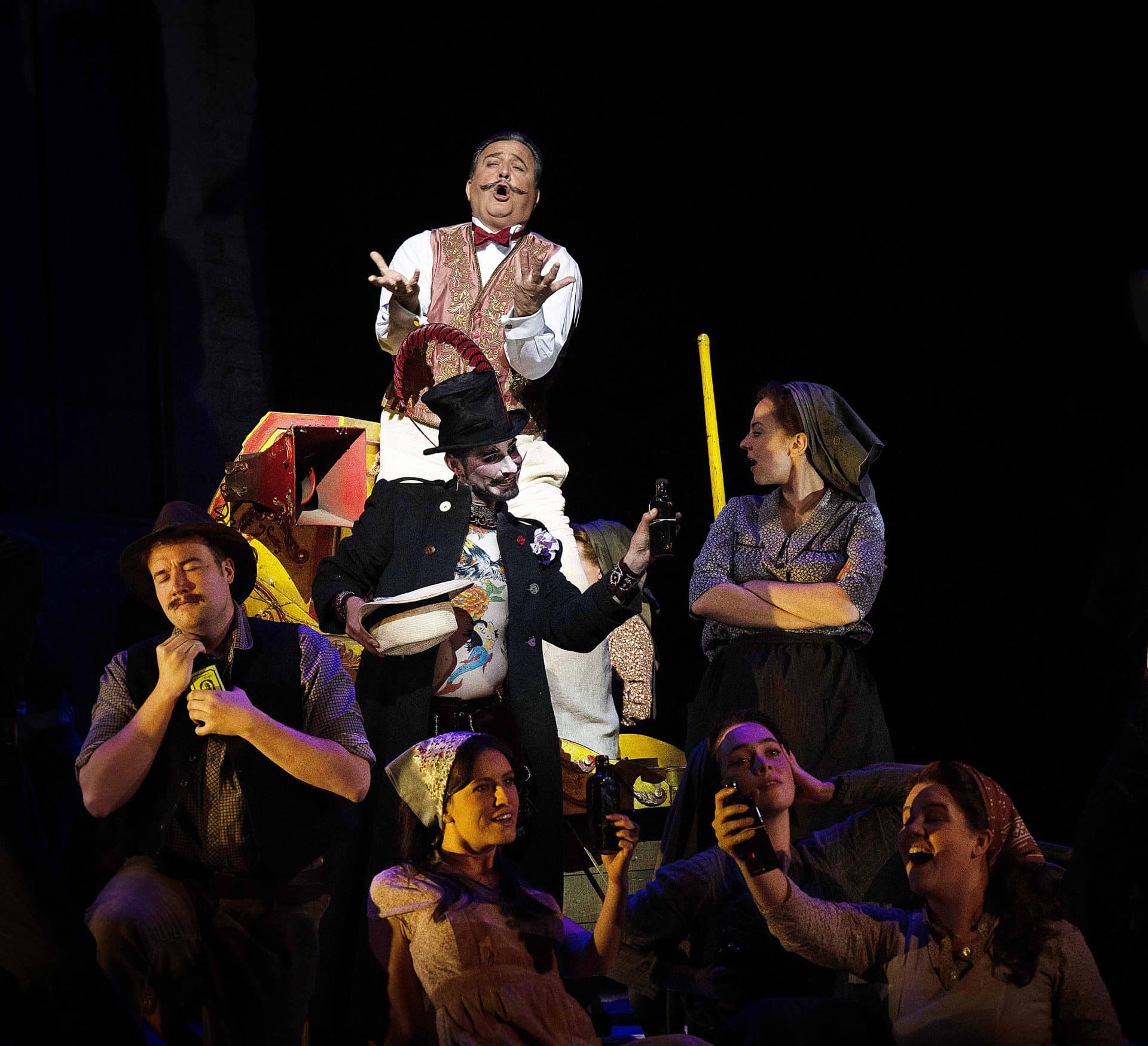
An elegant, silver-plated hip-flask is one of my most treasured memories of a glorious time in the company of stage artists. On the front of the classic slug-fit shape (easily fitting a jacket pocket) it boasted ‘l’Elisir d’ amore’, finely engraved. Its origin was a special event: a Capab Opera production of that dazzlingly lovely opera buffa, a mini masterwork by Gaetano Donizetti.
Everyone knows its most famous, beguiling aria ‘Una Fortiva Lagrima’ sung by Nemorino, the young, simple chap in love with Adina, who has been shunning him in favour of the charmer Belcore. Would he, Nemorino, tearfully, die of love? Or will an ‘elixir of love’, provided by the travelling quack Dr Dulcamara, change things blissfully?
As we all know, it turned out for the best in the romantic end. But maybe not everyone recalls how Dulcamara tricked Mr. ‘Little Nobody’ with a cheap bottle of red wine, most likely some cheerful plonk from Bordeaux. Somehow that bottle did do the job of turning the tables in this delightful comical plot. All make-believe and, of course: belief in love, mystery and the sensual and romantic faculties of wine.
Wine and opera have a jolly history. This stretches beyond the clinking tradition of bubbly glasses in opera house foyers before the show – never a bad idea before the languid joy of watching music magic. In plot and theme – especially in the denouement of comic and tragedy – it is not only the work and effect of the alcohol in play, but the joy of its drinking pleasure that brings wine as prop and character into the scenario. It offers plenty on the operatic stage.
In Mozart’s musically-drenched Don Giovanni the don sings the impressive ‘champagne aria’, ordering wine and music and inviting women for the party where he later confronts his operatic sins by toasting, yes, women and wine: “Fin ch’han dal vin”.
The latter is served just before the fires of hell ends his hedonistic life: “Pour the wine! Excellent Marzimino!” Marzimino Camboni is a red wine from the northern part of Italy. More schooled opera-wine fundies imagine that Giovanni had it in a passito style. Unlike Nemorino, our Don didn’t have the best of luck with his potion. Was it that bad?
More cheerful and uplifting, of course, is the glorious rousing opening of Verdi’s La Traviata in which Violetta and Alfredo toast their party guests with bubbly in a brindisi to love and pleasure. (Usually a spectacular introduction for the famous opera with plenty of clinking glasses, Capab Opera, in my days, excelled in this showmanship.)
Another beautiful brindisi to sparkling wine is central to Pietro Mascagni’’s famous Cavalleria Rusticana. With “Viva, il vino spumeggiante”, Turridu, well in love, invites his pals for a drink after church.
The motive of the ‘brindisi’ (drinking song) is clearly to get the company at hand to fill and empty their glasses.
In Strauss’ Der Fledermaus (once a wonderful new year operetta tradition in Cape Town), with “Trinke, Liebchen, trinke schnell” Alfred encourages his mistress Rosalinde to drink to happiness. At the great ball later in this entertaining show, the host, Count Orlofsky, introduces the swinging champagne song “Im Feuerstrom der Reben” for the entire company’s jollification.
An English brindisi that also takes me back to my Capab days is the one from The Student Prince – that glorious 1924 musical by Sigmund Romberg. Although the students were singing to foaming tumblers of beer and not wine, the lyrics have never left me: “Drink, drink! Let the toast start! May young hearts never part! Drink, drink, drink! Let every true lover salute his sweetheart!”
And why not?
In the spirit of the provenance of that pretty (and useful!) hip flask etched as ‘L’elisir d’amore’, I filled it sometimes with red wine. But unlike Dr Dulcamara’s scam, it usually was a smart Stellenbosch Bordeaux-style blend I poured into it – always accompanied by a quiet toast to that simple shepherd fellow called Nemorino.
- Melvyn Minnaar has written about art and wine for various local and international publications over the years. The creativity that underpins these subjects is an enduring personal passion. He has served on a few “cultural committees”.
-
Share:

Related articles
Opinion & Analysis
Melvyn Minnaar: Remembering D.J. Opperman, his poetry and enduring love of wine
2 February 2026
My poetry professor drank himself to death. So the gossip went. Red wine. Other students and colleagues suggested he polished off six bottles a day. The liver couldn’t deal with...
Opinion & Analysis
Melvyn Minnaar: Art, wine and their shared history of deceit
3 November 2025
Whenever a wise guy pooh-poohs my fierce argument about the parallels between art and wine, I point out how these two human productive endeavours share a history of mischief. “Creative...

1
Opinion & Analysis
Melvyn Minnaar: Those quirky international wine days
1 July 2025
A few weeks or days ago it was International Potato Day. I didn’t know about it. Perhaps you did – I mean we are all fans of the mashed, the...
Comments
0 comment(s)
Please read our Comments Policy here.