
Editorial: A tumultuous two decades in Cape wine
By Christian Eedes, 12 October 2026
-
Share:




South Africa’s national wine-grape vineyard peaked at just over 102,000 hectares in 2006, following the red-wine planting boom that began after political transformation in the 1990s. It has been in decline ever since.
Look back at the wines, winemakers and businesses that commanded attention in 2006 and it becomes clear that continuity is hard to achieve: some brands have endured, but many have changed hands, lost ground or disappeared. The Cape wine industry is in a constant state of flux, and succession remains one of its more difficult challenges.
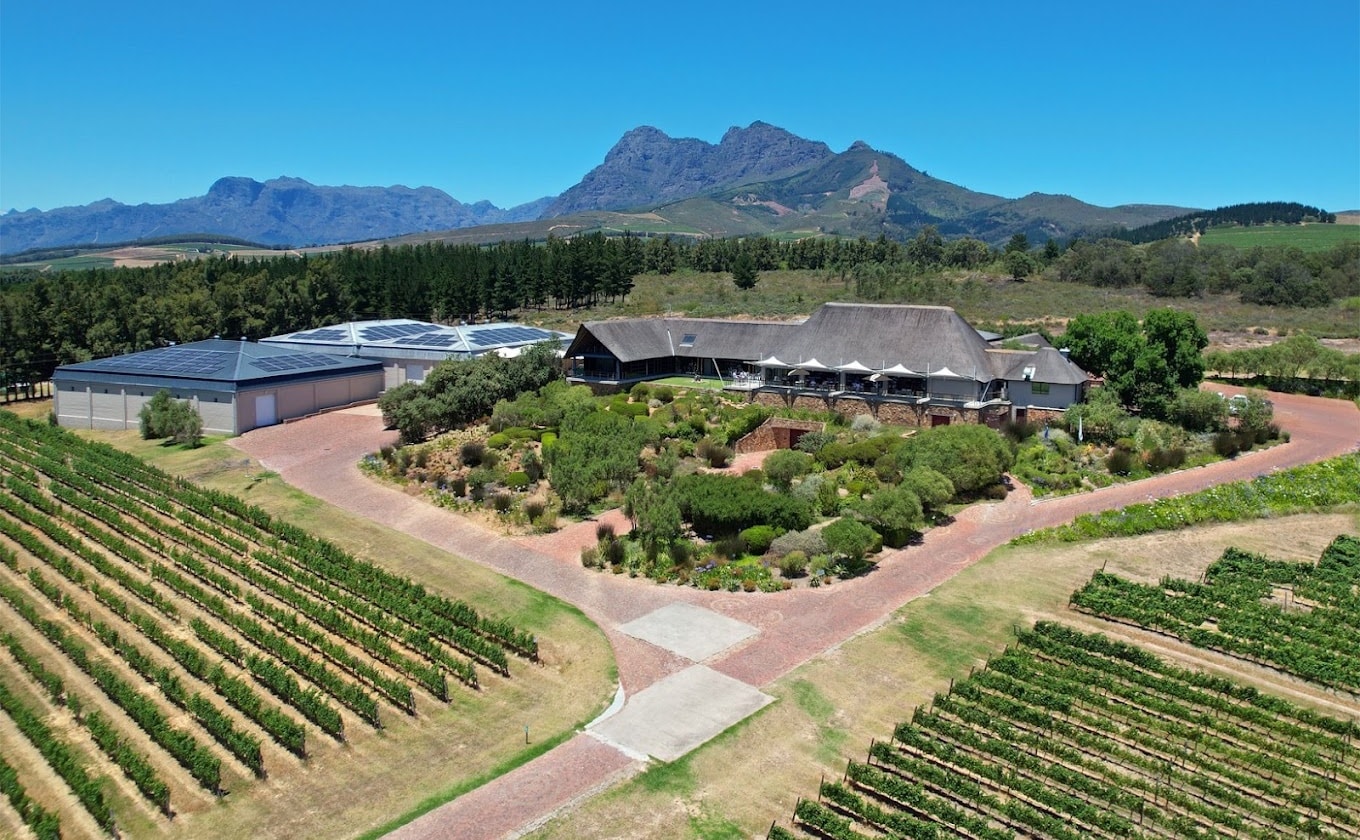
The Platter’s 2006 edition, published towards the end of 2005, awarded just 10 Five Star ratings. Wine of the Year was Glen Carlou Syrah 2004, made by David Finlayson. His father, Walter, founded the Paarl property in 1985; Swiss businessman and art collector Donald Hess bought out the family in 2003. Hess then sold Glen Carlou to the South African Pactolus Consortium in December 2016. David had left in 2009 to establish his own brand, Edgebaston. The property and its winemaker had taken different paths.
Consulting old copies of Wine magazine shows, however, that some things do endure. Boplaas dominated the Port category then, as it does now, while Raats was already setting the pace for Cabernet Franc. Spier, too, continues to make its presence felt in Chenin Blanc: its Private Collection 2004 won the TOPS at SPAR Chenin Blanc Challenge then, while its 21 Gables 2024 earned Double Gold at this year’s Veritas. The Nel family at Boplaas and Bruwer Raats at Raats Family Wines retain control of their respective businesses. Spier, orders of magnitude larger, demonstrates that family ownership and active custodianship can sustain a distinctive identity and remain competitive at scale.
Michel Rolland, the influential French consultant winemaker who died earlier this year aged 78, had advised Rupert & Rothschild since 1999 and was also a shareholder in Remhoogte. His involvement reflected the international influences shaping Cape wine, including a shift towards riper, more opulent reds that appealed to critics such as Robert Parker. Foreign investment has hardly been a passing phase: it continues to bring capital, expertise and market access to South African wine, and the industry would arguably be in a considerably more precarious position without it. The challenge is to harness that investment while retaining the character and credibility of Cape wine.
Laibach 2003 was named the best Merlot in a category tasting convened by Wine magazine. Kanonkop acquired the property around the turn of 2021–22 and subsequently absorbed it into the larger operation. Former Laibach winemaker François van Zyl became Kanonkop head winemaker in late 2024, seemingly the ideal successor to the long-serving Abrie Beeslaar, before leaving unexpectedly in June 2026. His departure underlined the difficulty of succession: finding the right person is one thing; keeping them is another.
Pinot Noir was a hotly contested, if small, category: 27 wines featured in the tasting, with only two earning Four Stars, Sumaridge 2004 and Hamilton Russell Vineyards 2004. Hamilton Russell remains a significant producer, if not necessarily the unchallenged leader of the category. Sumaridge was acquired by Belgian couple Céline Haspeslagh and Frederik Herten in 2021 and relaunched as Hasher Family Wines. Sumaridge never really established a strong brand identity, and its successor has yet to do so either.
Vergelegen was the most successful producer at the fifth annual Trophy Wine Show, with André van Rensburg at the height of his powers. He left the Somerset West property in 2022 after 25 harvests, an unusually long tenure in an industry where winemakers frequently move between properties. Saxenburg Private Collection Shiraz 2003, meanwhile, was named the best wine overall in the Shiraz Challenge, made by the veteran Nico van der Merwe, who left in 2017 to concentrate on his own label. Their departures illustrate how difficult it can be to sustain a successful winemaking identity beyond the person most closely associated with it.
Vin de Constance 2001 from Klein Constantia took top honours in the natural sweet wine category. The Jooste family sold the property in 2011 to Czech-American businessman Zdeněk Bakala and Englishman Charles Harman. The Vin de Constance name and reputation have endured under new ownership, but inheritance alone is no guarantee of continuity. The brand has been expertly managed, demonstrating that while consumer loyalty may be inherited, sustaining it requires skill and commitment.
Chris Mullineux and his then-fiancée Andrea (née Kozlowski) were beginning to attract attention after taking charge at Tulbagh Mountain Vineyards in November 2002. They would go on to establish Mullineux Wines in the Swartland, becoming two of the defining figures of a new generation.
Rustenberg John X Merriman 2003, made by Adi Badenhorst, was the leading Cape Bordeaux-style red blend in the category tasting, with a Four-and-a-Half-Star rating. Badenhorst would later leave the Stellenbosch property in 2007, also to establish himself in the Swartland. Rustenberg remains commercially successful, but it is arguable that it has not enjoyed the same level of critical attention since.
The winner of the Amorim Cork Cap Classique Challenge, then still convened by Wine magazine, was Desiderius Pongrácz 2001, made by Wilhelm Pienaar. Pienaar moved to Hermanuspietersfontein to focus mainly on Sauvignon Blanc in 2013, following Bartho Eksteen’s departure.
White blends, whether Bordeaux-inspired or built around Chenin Blanc in a more distinctly Cape idiom, were just beginning to attract serious attention. Two leading examples identified by the Wine magazine panel were Palladius 2004, only the third vintage of Eben Sadie’s ambitious white blend, and Cape Point Vineyards Isliedh 2005. Duncan Savage joined Cape Point in 2002 and remained there until 2016, before concentrating on Savage Wines. Today, Palladius is an established reference point for Swartland white blends, while Isliedh remains part of the Cape Point story, despite uncertainty over ownership.
The year ended with the announcement of Gottfried Mocke as Diners Club Winemaker of the Year for Chamonix Reserve 2005. Mocke left the Franschhoek property in 2015 to join Boekenhoutskloof.
The upshot is that while some brands and properties have proved remarkably durable, others have been reshaped by new owners, new winemakers or changing commercial realities.
The industry’s current challenges are considerable: a shrinking vineyard area, pressure on margins, changing patterns of consumption and the need to make South African wine relevant to a new generation of drinkers. Yet the past 20 years suggest that the next chapter will not unfold as anyone expects. The people who seem indispensable today may be gone tomorrow; properties that appear securely established may change hands, while unheralded producers may become the names everyone wants to talk about.
Wine is an agricultural product, a commercial undertaking and a cultural expression, all at once. It is shaped by forces no single winemaker or owner can fully control. Continuity matters, but so does renewal. The challenge is not to prevent change, but to manage succession well enough to preserve the best of what has been built. The past two decades offer no reliable template for what comes next.
-
Share:

Comments
0 comment(s)
Please read our Comments Policy here.