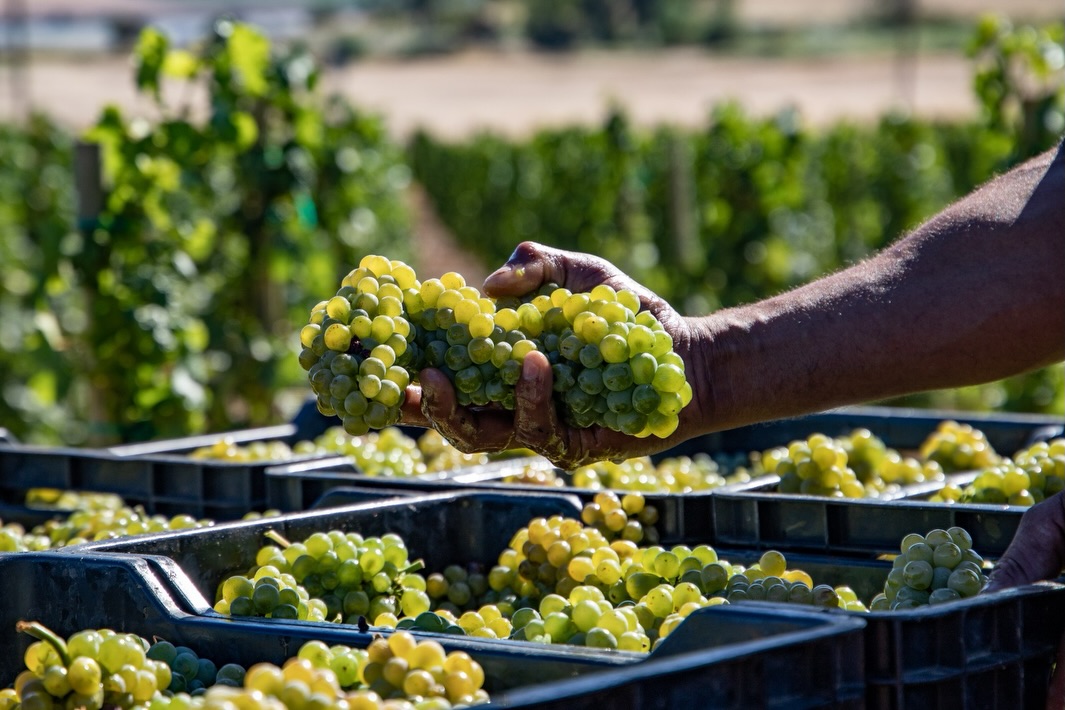
Anxiety and pessimism about declining alcohol consumption together with a declining interest in wine across all classes and categories has left the wine producers everywhere in disarray. This isn’t something new though the evidence is now become inescapable – and since the inexorability of the trend became clear (once the post-Covid euphoria had passed), it has been a constant refrain in trade publications. So unless you want to read about Elton John’s zero alcohol fizz, you will have to flagellate yourself with the increasingly grim stats.
From its peak a little over fifteen years ago the total market for wine worldwide has shed about 20% of its volumes, and continues to fall. Since Covid this has been particularly evident in the West. With the Chinese market also in free-fall, there are no big newcomers entering the consumption stakes in a way which would mitigate or disguise what is really happening.
This is not a subject which has escaped the commentariat. We have all, at various times, offered our own explanations, many supported with hard data. Some of these are well known and recognised accordingly: the number of consumers in first world countries is shrinking, partly because the population is shrinking. Rates of reproduction are declining so unless newcomers drink more per capita than their parents, total volumes must drop.
Then, so we are told, marijuana is cannibalising sales, so are health drinks. Alcohol has had a bad press for too long so it’s out of fashion. New consumers don’t have the money: many are still living with their parents into their 30s because employment options are fewer and houses/apartments cost more. Those with qualifications are battling to pay off their student debt. We’ve all read these – and a host of other explanations – all cogent, all applicable to a degree, all suggesting that mostly the problem is structural and very little can be done about it. You can’t suddenly conjure up new consumers imbued with increased discretionary spending power.
A consequence of buying into these analyses in their entirety is that the industry is relieved of its responsibility for its own crisis. If everything is about demographics and economics, then everything lies beyond the control of producers and marketers. But what if this bed has been – at least partly – of our own making? What if we have been tone deaf for too long; what if we have mis-read the trends, what if we have tarnished, perhaps even destroyed, the message and image of the product we purport to love because we have misconceived what it is that we are actually selling?
Let’s start with the use of the word “beverage.” Heineken bought Distell and changed the name of its business (to incorporate beer as well as ciders and wine) to Heineken Beverages. This is merely an example of how the industry does not see wine in the same way as our parents and grandparents – and all our ancestors back at least to the days of the Old Testament. By calling wine a “beverage” we are inviting it to compete with beer and hard seltzers.
Once we slipped into that elementary trap, the next step to perdition arrived so suddenly we didn’t even realise that we had stumbled into a chasm. We are told that wine “needs to be simplified.” It’s rules and rituals are too arcane to attract the numbers buying into beers and cider. Make it instantly accessible (no one has place to age wine these days anyway). Eliminate guidelines which suggest “needs additional ageing” or even “keep for a bit.”
Even the nomenclature needs too much explanation, so the arguments go. People get confused between cabernet sauvignon and sauvignon blanc. So do away with varieties, with vintages, with origin. Exactly the elements which give wine its USP have become millstones. Marketers tell us that consumers arrive at the wine shelves of a supermarket and they are so lost that in the end they abandon their quest, and buy something else instead. There was even a speaker at a VinPro day a few years ago who suggested that the industry needed to offer a half a dozen styles and choices, with a few major brands carrying the full panoply of choice. Brand A Dry Red or Sweet red or Dry White or Sweet White. Ditto Brand B and C and possibly Brand D. Nothing else. The success of beer as a category was simply the result of strong brands and limited choice, so we were told.
If we carry on this way we will be buying tickets in the front of the plane as it enters its death spiral. We need to go back to what defines wine as wine, not as another industrial beverage. We need to embrace the language, the code, the vernacular. As Henry Jeffreys has pointed out, if you want to be part of the community of football fans you need to know the basics – the names of the teams, the rules of the game. These exist not as gate-keepers but because they are essential. If you dumb things down, it’s not a club anyone in their right mind would want to join.
We need to make more of the rituals, of what Aubert de Villaine at the Domaine de la Romanée-Conti called “the spirituality.” The whisky markets of the world were rejuvenated with the arrival in wider distribution of a broad range of malt whiskies. They added nuance, complexity, an aspirational quality. Nespresso did the same for coffee. George Clooney was never going to be the face of Nescafé.
We need to go back what what defines wine as wine, and sell it for what it is: not the Nescafé of fermented grape beverages, but a craft product which delivers in every bottle the unique expression of the nexus of nature and human intervention.
The centenary of Pinotage has come and gone. Did last year’s celebrations amount to anything meaningful? I’m not sure. There were dinners, tastings, specially minted medallions and plenty of back-slapping, yet it’s hard to say whether the year shifted perceptions or merely reinforced existing positions. If anniversaries are supposed to be moments of recalibration, then Pinotage’s hundredth birthday may have been more polite nod than hard look in the mirror.
Michael Fridjhon, in his usual acute way, noted that Pinotage is an unusually successful varietal crossing. Whereas most crossings die quietly in research labs or linger as curiosities in obscure vineyard corners, Pinotage occupies around 7.5% of South Africa’s national vineyard. Whatever your feelings about it, this grape will always be with us. The question is not whether Pinotage has a future, but what kind of future it should have.
At present, the style most visibly rewarded is, more often than not, big and bold. Dense colour, high alcohol, plenty of extract, ample oak: these remain the attributes that perform well in competitions and traditional critical spaces. This isn’t to take anything away from the skill involved in making such wines, nor from the pleasure they can give. But it does mean the debate around Pinotage has become oddly narrow, as if the variety’s legitimacy rests on producing muscular statements rather than something more varied and responsive to context.
In this regard, Kanonkop, Beyers Truter and the Absa Top 10 competition have had an outsized influence on how Pinotage is understood. Again, this is not a criticism of the wines themselves, many of which are excellent, nor of the people involved. But the cumulative effect has been to frame Pinotage as a grape that proves its worth primarily through power and performative seriousness. Alternative expressions have emerged over the years, but they’ve tended to be treated as asides rather than part of the main conversation.
One argument that stubbornly refuses to die is the fixation on Pinotage’s parentage. Pinot Noir and Cinsault, we are constantly told, are “elegant” and hence Pinotage, too – yet in practice, elegance often remains more aspiration than reality. It’s worth asking whether dwelling on its origins is even useful. David Trafford of De Trafford neatly skewered this thinking recently by pointing out that Cabernet Franc and Sauvignon Blanc gave us Cabernet Sauvignon. Family resemblances are at best passing limited to a vague shared “greenness.” What matters is not where a grape comes from, but what it can do here and now, in the hands of thoughtful growers and winemakers.
Far more relevant is the context in which Pinotage now finds itself. The market is steadily moving away from high-alcohol, heavily extracted reds. This isn’t a fad but a recalibration, driven by growing health awareness and a shift away from wines that dominate the table. Freshness, drinkability and energy are increasingly prized, not as markers of simplicity, but as signs of confidence and restraint.
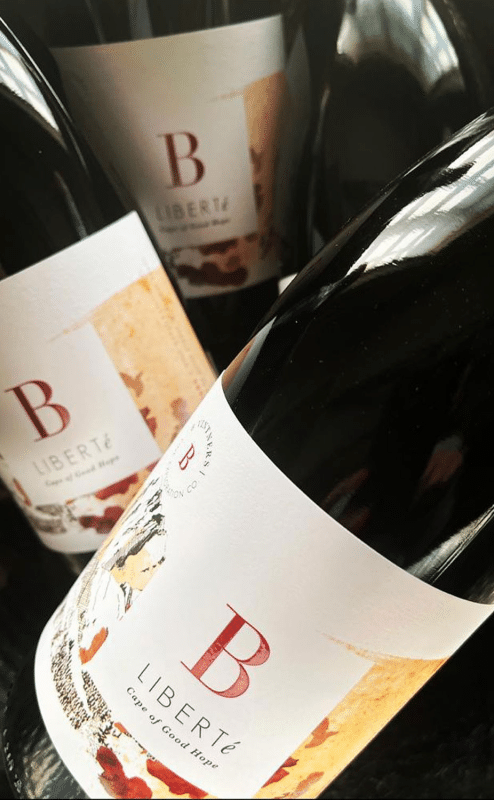
It’s into this space that some of the more compelling recent Pinotages comfortably fit. Gavin Slabbert of Bruwer Vintners speaks explicitly about targeting a new generation of consumers, with Liberté Pinotage at the centre of that strategy. The ambition is to change perceptions by giving the grape a new identity, one that can occupy its own niche rather than constantly competing, and losing, against Cinsault, Grenache, Pinot Noir or Syrah. He notes growing awareness of “New Wave” Pinotages, showing greater restraint and vibrancy, but admits these are yet to be fully embraced. Part of the problem, Slabbert suggests, is a lack of intent in communicating these wines.
Lucinda Heyns of Illimis is more forthright. The old guard, she argues, has tended to be dictatorial about what Pinotage should be, stylistically. That approach may once have provided direction, but it now feels constraining; the category needs a bigger circle, not a tighter one. Different styles don’t dilute Pinotage’s identity; they create talking points, and talking points are the lifeblood of relevance.
If you want evidence that this isn’t just theory, consider a growing list of Pinotages quietly but determinedly defying expectation. Liberté from B Vintners and Illimis have already been mentioned. Angus Paul’s Transient Lands may not be the centrepiece of his range, yet it is elegant and understated. Beaumont Arturo’s Pinotage 2023, sold at last year’s CWG Auction, shows particular finesse, while the standard Jackals River label is similarly premised on understatement. Dorper, as made by Reg Holder, Kottabos from Reenen Borman, and Alex McFarlane’s Saturdays Child all approach the grape with a delicacy that feels deliberate rather than apologetic. Radford Dale offers both Vinum and Frankenstein as emphatically “light reds,” while Atlantikas and Féniks from Bernard Bredell of Scions of Sinai display his deft touch. Wolf & Woman, by Jolandie Fouché, again proves that Pinotage doesn’t need to be pumped up on steroids to impress.
What these wines share is less a single flavour profile than an attitude. They prioritise freshness and work effortlessly at the table, particularly in warm weather or al fresco settings. They suit menus increasingly focused on purity of ingredients and simplicity of preparation. In such contexts, there is no room for wines that intrude or demand attention at the expense of everything else.
If the centenary of Pinotage achieved anything, perhaps it was to remind us that enduring alone is not enough. Pinotage doesn’t need defending so much as reimagining. The debate needs a shake-up, not to discard what has been achieved, but to make room for what is already emerging. As Pinotage enters its second century, we need more wines that charm and satisfy. And to lose the idea that subtlety equals insignificance.
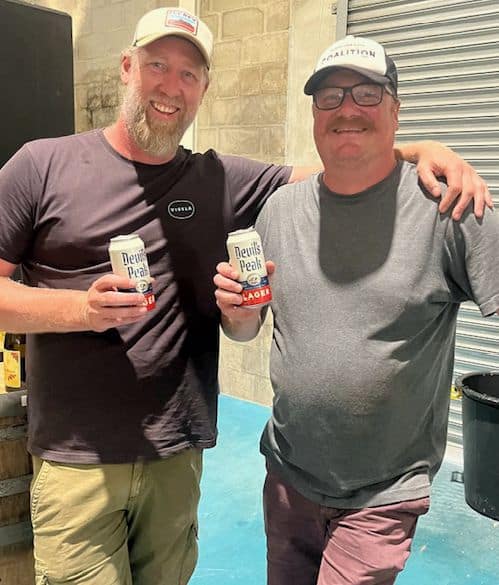
A silly, sentimental and conventional thought it doubtless was – but there you are. Or there I was, at the small and rather joyful Cinsault Fest organised for the trade by Mick and Jeanine Craven in their Stellenbosch winery, with something more than a dozen of the Cape’s best producers of wines from this grape. And it occurred to me how nice it would have been if the great IA Perold could have seen and tasted what was on offer – and, I suspect, would have with even more interest discussed viticulture with some of the people there.
I daresay he’d be even more surprised and impressed at a modern pinotage fest than at this, devoted to one of the grapes he crossed to produce that increasingly less controversial variety. He wrote interestingly about cinsault in the book I mentioned last week as celebrating its centenary this year, the Handboek oor Wynbou / Treatise on Viticulture. He there discusses the grape as hermitage, of course, giving cinsaut as one of the synonyms (without the ell, which is better,I think, but the other version has become dominant), and points out with acceptable pride that “I was the first to prove the identity of the Cape Hermitage with the Cinsaut of the South of France”.
At the time of his writing, 1927, he says, “fully 75 per cent” of the Cape’s red wines were made from cinsaut, on account of its high productivity. He mentions the extreme case of a farm near Durbanville that was producing just under 300 hectolitres of (unsurprisingly!) “thin, light red wine” per hectare – probably a world record he says. It remained the most planted variety here until chenin took over in the 1960s.
Some of the producers at the Craven Fest will be getting about 10% of that volume per hectare, and some rather less. And if we would agree to call some of those on show “light” (in colour and volume), we wouldn’t mean Perold’s “thin, light”.
Some of the cinsaults I sampled last week were designed to be lighter than others – we are by now accustomed to revel in the range of styles. But all were of impeccable quality and all delicious in their own ways – we’re accustomed to that too, happily. It does seem, though, that the really overt, rather simplistic (and ultimately rather boring) whoosh of perfume is not to be found at the more ambitious end.
Forgive me, if you’re still quite young in spirit at least and want to view wine as a competition, but this experience was a lesson in tolerance. Strangely, I find tolerance and a reduced temptation to be judgmental coming more easily as I age, though personal prejudices and preferences remain. In cinsault, they guide me to those wines that downplay the perfumed charm and easy, sometimes trivial lightness, and stress the grape’s potential for structure, and have genuine dryness. More body, interest and concentration come with greater ripeness of fruit, but crucially – as ever, whatever the variety – must involve a balance with freshness. But I know that not everyone wants, in all circumstances, more than charm, exquisitely presented.
A good thing at this little show was that many of the producers brought an older vintage along with the current. That included some of the lighter-stylists like Craven, whose 2018 is drinking beautifully now, with just a touch more complexity than the current sweet-fruited 2024. I doubt if there’d be much point keeping it as long as Badenhorst’s Ramnasgras – the 2012 vintage of that was remarkably impressive, mildly tertiary and with deliciously balanced tannins. Sadie’s even older, appealing 2010 Pofadder showed elements of the expected elegance and depth in its aliveness, etc, but the tannins seem now a touch exposed by receding fruit. I had a bottle of the 2014 at home recently, and that was more satisfying, with room to go. As Eben says, they’re making the wine better these days, and the 2024 combines a gorgeous richness with subtle perfume and effective structure. Fine wine.
Natte Valleij’s Stellenbosch version (there were also the admirable Darling and Coastal versions on show, as well as the only rosé in the room) from 2016 showed that cinsaut should not always be pushed too far in bottle. It was attractive, but showing a lot of development in colour and flavour, with just enough fruit left to balance the tannins. The current 2024 is lovely, from its aromatic opening to its firmly structured core.
The only current-release wine at the more “serious” end that I thought still too young to be really enjoyable, demanding more time in bottle to make it worth the substantial cost of buying it, was Leeu Passant Basson 2023, despite its having had two years in barrel and another in bottle already. The aromas are lovely and the wine is potentially great, but the big tannins need further ageing. What a splendid wine this will be was pointed to by the subtly perfumed, textured and suave 2017, where the tannins were still very present, but considerably more approachable (I actually remember tasting this wine in tank and being astonished at its massive structure). Both vintages show a little sweetness, but I think that is from fruit concentration and, probably, the (declared) high 14.5% alcohol.
There are two of the other producers present at this little Fest that I want to mention, although they didn’t have older comparisons. Donovan Rall had two wines, however. The Cinsault 2024 appealed to me greatly – beautifully dry and vibrant unique in its aromas, in which the usual perfume is underplayed. He also had the only Cinsault Blanc, a 2024. I hadn’t had this wine since the maiden 2017, which I hadn’t thought particularly highly of, but I found this one – savoury, bone-dry and elegant – entirely pleasing. Apart from anything else, Donovan says the vineyard has greatly improved since he first took grapes from it.
Incidentally, don’t wait for the 2025 Blanc, as all the grapes were eaten, or gathered, by locals before the official pickers arrived…. Cinsault is a delicious grape, and the Mullineux old Wellington vineyard, also near a major road, necessarily has a permanent guard as the grapes approach ripeness.
If there’s a touch of winning, elegant austerity on the Rall wines, so too is there on the two cinsaults from Van Loggerenberg, which have a real and rare complete dryness to them and not a shred of the frivolous vulgarity that can sometimes come with that cinsaut perfume. Characterful Geronimo 2022, with its chalky tannins, even has an edge of bitterness on the finish that I appreciated. But Lotter 2023, from the 1932 Franschhoek vineyard that Leeu Passant once drew from, is among the small handful of cinsaults that almost convince me that the grape can make a truly fine wine standing on its own: intense and powerful, but pure and refined, with that bit of austerity I mentioned, and promise of complexity. Again, bone-dry – which I’m increasingly regarding as my first condition for true excellence in red wine.
Stompie Meyer’s Piket-Bo-Berg project is now in its seventh year. His 10ha of vines typically yield just 1.5 to 2 tons per hectare. “Great for fruit concentration,” he says, “but I think my bank manager would prefer if we were farming proteas or buchu.”
Brutal! White 2025
Price: R270
From a Swartland Chenin Blanc vineyard planted in 1978. Five days of skin maceration prior to fermentation. Matured for 10 months in old oak. Cloudy in appearance, the nose shows potpourri, peach, orange and a hint of reduction. The palate is lean and sour yet flavourful, the finish intensely savoury and lightly grippy. Geeky in the best way. Alc: 12.12%.
CE’s rating: 92/100.
Liquid Skin 2025
Price: R270
From a Paardeberg Chenin Blanc vineyard planted in 1984. Five months on skins. Dull amber in colour. Enticing aromatics of fynbos, menthol, citrus and stone fruit along with faint spice and nuttiness. The palate has great presence and balance – quite broad and textured, the finish pithy. Alc: 13.05%.
CE’s rating: 94/100.
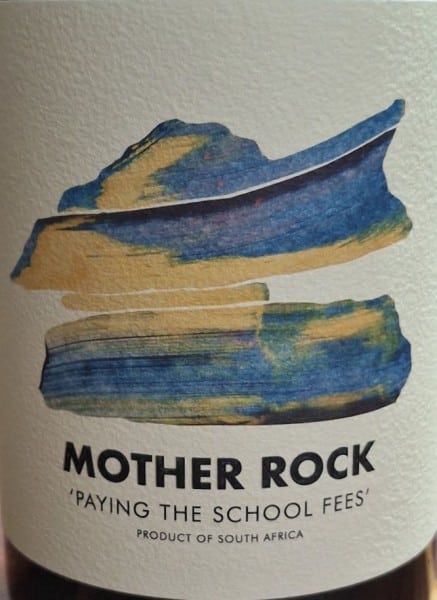 Paying the School Fees White 2024
Price: R350
From own fruit. 40% Grenache Blanc, 25% Chardonnay, 14% Chenin Blanc, 11% Sauvignon Blanc, 5% Roussanne, 2.5% Marsanne and 2.5% Clairette. Matured for 14 months in oak (including a new foudre) before a further eight months in concrete. The nose is somewhat shy with faint notes of peach, citrus, winter melon and herbs. The palate is surprisingly substantial given an alcohol of just 12.87% – dense fruit, creamy texture, bright acidity and a savoury finish.
CE’s rating: 93/100.
Cuveé Carbonic Pinot Noir 2025
Price: R270
From own fruit. Pretty aromatics of flowers, herbs and red cherry. Light and bright with chalky tannins, the finish savoury. Good fruit definition, balanced, lively – not too facile, entirely charming. Alc: 11.8%.
CE’s rating: 91/100.
Brutal Red! 2025
Price: R270
From own Grenache vineyards, one south- and the other north-facing. Matured for 11 months in barrel, a light flor developing during the process. A shy nose with faint notes of cherry, plum and earth. The palate is broad with soft tannins; flavour intensity is modest, fruit not to the fore, the finish nevertheless dry. A somewhat curious wine. Alc: 12.83%.
CE’s rating: 90/100.
The Building Blocks Red 2024
Price: R350
50% Grenache, 25% Pinot Noir and 25% Mourvèdre. 80% whole-bunch fermentation. Matured for 14 months in old oak before a further eight months in concrete. Intriguing aromatics of red berries, potpourri, some meatiness and spice – nothing overt. Medum bodied with bright acidity and fine tannins. Unshowy, taut and uncompromisingly dry on the finish. Alc: 12.78%.
CE’s rating: 92/100.
Check out our South African wine ratings database.
Spanish writer Miguel de Cervantes, creator of Don Quixote, lends his name to Bernard Bredell’s second-tier Scions of Sinai wines. The labels feature not tilting 17th-century knights but cowboys instead – make of that what you will. Whatever the semiotics, the wines themselves are reliably tasty.
Granitas 2025
Price: R225
60% Chenin Blanc, 28% Grenache Blanc, 7% Chardonnay, 5% Roussanne, all from vineyards on granite soils, Stellenbosch and Voor-Paardeberg. Fermented and matured for eight months in barrel, foudre and stainless steel. The nose is very primary at this stage with a faint floral top note before citrus, yellow apple and peach while the palate is clean and fresh with a gently savoury finish – a subtle wine, quite neutral in flavour but has some texture. Probably needs another six months, if not a full year, to come into its own. Alcohol: 12.47%.
CE’s rating: 90/100.
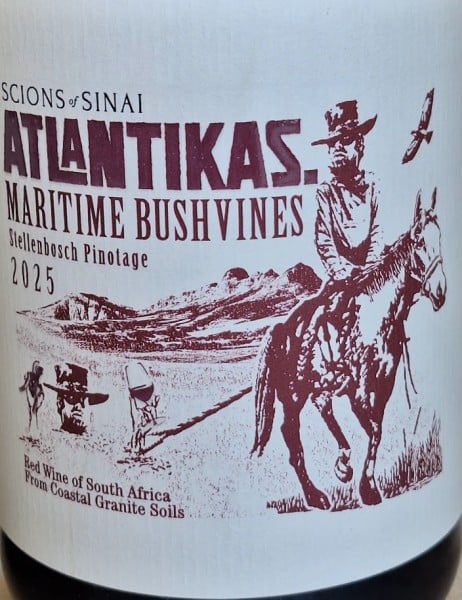 Atlantikas 2025
Price: R225
Grapes from three untrellised vineyards planted in 1976, 1996 and 1992 close to the ocean in Stellenbosch. Partial whole-bunch fermentation. Matured in tank although some older oak barrels used in 2025. Seductive aromatics of rose, cranberry, raspberry, pomegranate, fynbos and a hint of white pepper. The palate is light and energetic – great fruit purity, vibrant acidity and powdery tannins, the finish super-dry. Alc: 12.5%.
CE’s rating: 93/100.
Check out our South African wine ratings database.

Winemag.co.za is pleased to announce that shipping company Aspiring will serve as our official logistics provider for all competitions in 2026. Founded in 1996, Aspiring offers tailored packaging and delivery solutions for wine, art, and tourist curio clients.
Producers entering any Winemag.co.za tasting can choose between two submission methods: 1) collection by Aspiring, or 2) delivery to Aspiring’s premises at 37 Muscat Road, Saxenburg Park 1, Blackheath, Cape Town.
For this year’s Schedule of Reports, click here.
It’s that time of year again, when my social media feed is clogged up with proud South African parents posting endless pictures of their young ones heading off to primary school or off to high school for the first time. You know the shots… bright new blazers hanging down to the knuckles and white dress shirts with enough spare neck room they might last the poor kid until matric.
But I suppose something has to fill the conspicuous absence of wine-and-bottle “brag shots” on social media as countless wine folk succumb to the ever-growing trend of Dry January after an indulgent festive season. In the Sherwood household, things are a little more complicated. Having a youngest son with a New Year’s Day birthday rather puts paid to any notion of going dry from 1 January. And if you drink on the 1st, you might as well carry on for the rest of the month.
Personally, I have never been one for short-term trends or fads, but with Mrs Sherwood suddenly becoming one of the most enthusiastic No/Lo (no- or low-alcohol) consumers out there, I have recently found my liquor cabinet increasingly congested with every imaginable type of low or no alcohol spirits, aperitifs, vermouths, and Aperol-lookalikes.
However, it certainly seems Mrs Sherwood is not alone in her newfound No/Lo love affair. Speaking to a few industry colleagues recently, I was surprised to hear that the UK No/Lo market is currently experiencing a significant injection of growth, driven by health consciousness, changing consumer attitudes, and major brand investments, with sales volumes up 66% since 2020, though still a small fraction of the overall alcohol market.
Digging a little deeper, key trends for the No/Lo category include increasing product availability in UK pubs (one of the main gate keepers), the dominance of large alcohol companies, dynamic product diversification (spirits and Ready To Drink / RTDs), and a pricing gap where beer and cider often cost more, despite general affordability improvements recently.
Interestingly, it is also becoming increasingly difficult to stereotype No/Lo consumers who appear to be a very diverse group of customers, including heavy drinkers increasingly adopting No/Lo products even more so than lighter drinkers. Significantly for the wine trade though, key No/Lo growth drivers seem to be centred on several factors the wider wine trade has been keeping a very close eye on of late.
The rise of health and wellness trends means wine consumers are more aware of alcohol’s impact on physical and mental well-being, reducing consumption among an ageing cohort of Boomers, but also among younger Gen Z consumers. Add to this the well documented cost of living crisis affecting almost every consumer segment, and the shift to cheaper No/Lo options starts to make more sense.
But all major trends need serious market drivers to make significant impact and large companies in the UK like Diageo are investing heavily, expanding the production and marketing of many mainstream brands like Guinness 0.0 and other No/Lo alcohol beverages. Of course, whenever big players join the party, investment in marketing and innovation often see a distinct increase.
With the proliferation of no-alcohol spirits brands on the UK market, it is perhaps unsurprising that overall growth has begun to moderate. Even so, the category is still expected to post growth of around 7% in 2024 versus 2023. More troubling for the mainstream wine trade, low-alcohol wine sales declined by 5% over the same period, while no-alcohol wine grew by 8% b –a figure that looks modest when set against the 20% growth recorded by no-alcohol beer.
Wherever your tastes for No/Lo products lie, the difficulty in developing palatable, high-quality red and white wines remains a challenge for the industry. De-alcoholised white and sparkling wines certainly seem to have the lead on red wine products, although, while visiting Wine Paris 2025 last year, I did taste the very impressive Oh Là Là 0% Cabernet Sauvignon – Merlot produced by the Famille Meyre, a longstanding quality Medoc producer that has been bottling Chateau Bordeaux wines since 1810.
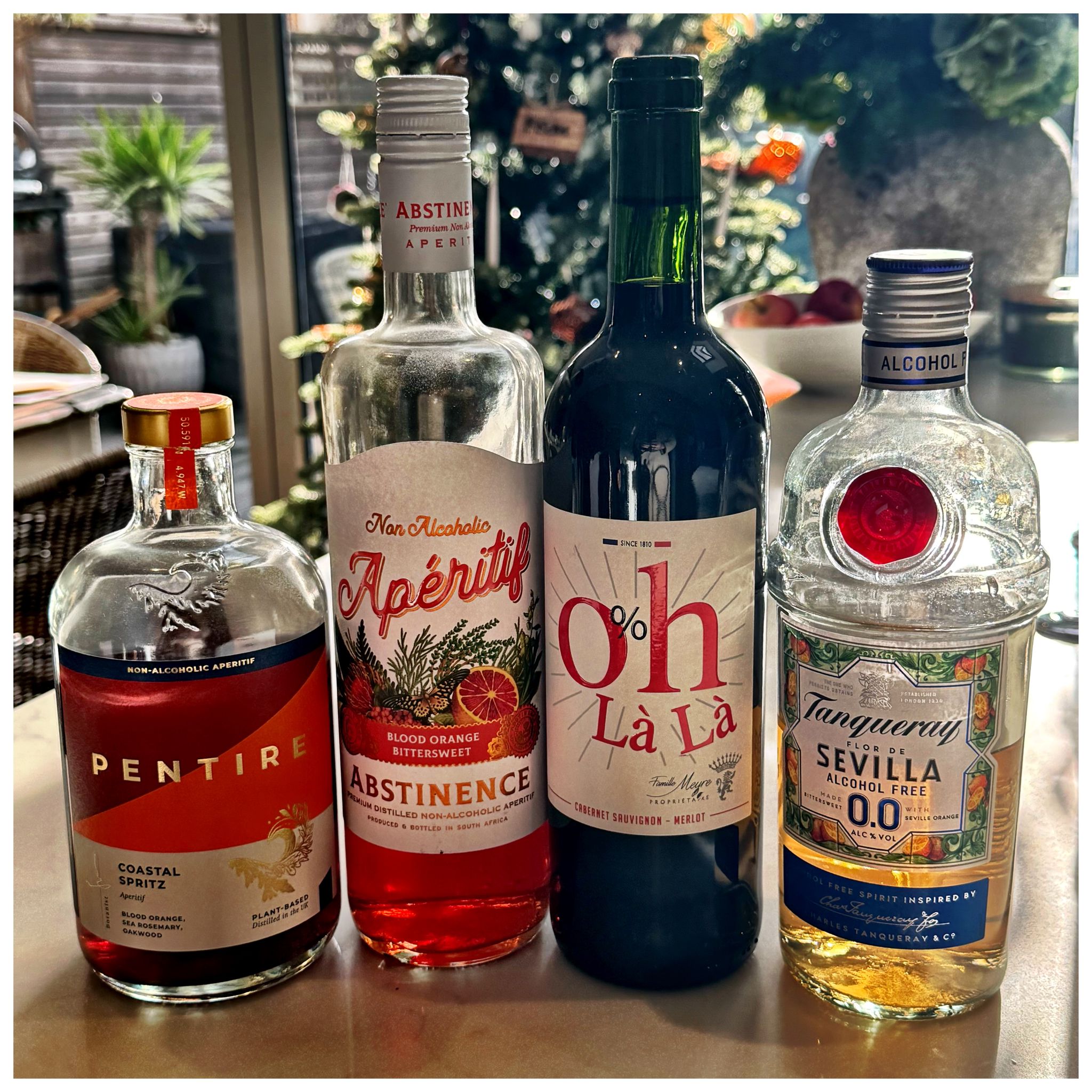
But what else is lurking in the Sherwood No/Lo liquor cabinet I hear you ask? Well, in true Tim James “spring cleaning” mode, I pulled a couple of Mrs Sherwood’s more interesting bottles out to taste and assess. Going from left to right (as per the featured bottle line up) I started with the Pentire Coastal Spritz Aperitif, a plant-based product distilled in the UK from blood orange, sea rosemary and oakwood. Made for blending with tonic and other mixers, this non-alcoholic aperitif is pretty spot on with more than enough botanical intensity without being too sweet. A solid 3.5/5 GSMW score.
Next up, the suitably named Abstinence Non-Alcoholic Aperitif made from blood orange. On the nose, this certainly made me recall hints of the very successful South African Bloedlemoen Gin that I used to be able to buy in the UK. Sweeter and rounder, this could make the perfect pithy, delicately bittersweet mocktail with the right dry Fever Tree tonic mixer. A big thumbs up and a solid 4/5 GSMW score.
Finally, the Tanqueray Flor de Sevilla Alcohol Free 0.0 Spirit made from bittersweet Seville oranges, has become another house favourite of mine. With all the lifted top notes of soapy, pithy, bitter botanicals, this is an incredibly accomplished Gin-lookalike, but without the picante alcohol burn on the finish. Matched with the delicately pithy Fever Tree Elderflower tonic with a splash of regular Angostura Bitters (OK, I know that is No/Lo cheating!) it makes an incredibly thirst-quenching mocktail. A solid 4.5/5 GSMW score.
Recent new launches are certainly pushing the limits of traditional no-alcohol segments with brands creating innovative alternatives using natural ingredients and often boasting health benefits. No-alcohol wine remains dominated by value-orientated legacy brands but new middle market and premium brands are growing faster and are the source of greater levels of innovation, but from a small base, according to the IWSR January 2025 figures.
Some in the traditional wine industry have already decided to jump ship and throw their lot in with the growing No/Lo category. Afterall, few in the UK wine trade will forget hearing the news in late 2020 that Ed Gerard, the respected head buyer of wines and spirits at the world-famous retailer Harrods, had quit his job after 19 years in the wine trade, to join Mocktail Beverages, a No/Lo company specialising in premixed alcohol-free cocktails. As the current Chief Commercial Officer in 2026, I am sure he has no regrets.
For all the media bravado surrounding the growing No/Lo alcohol category and the rapidly improving product innovation, I for one remain a steadfast fine wine disciple, from January to December. Mrs Sherwood’s profusion of No/Lo Aperitif bottles are perfectly safe in the back of the liquor cabinet.
 Winemag.co.za’s Report schedule is here! We’re gearing up for another year of expert panel tastings and both wine enthusiasts and producers can mark their calendars accordingly.
For full details concerning entry dates, download the following: Winemag Full Calendar 2026 FINAL
To join our producers’ mailing list for updates on competitions, click here.
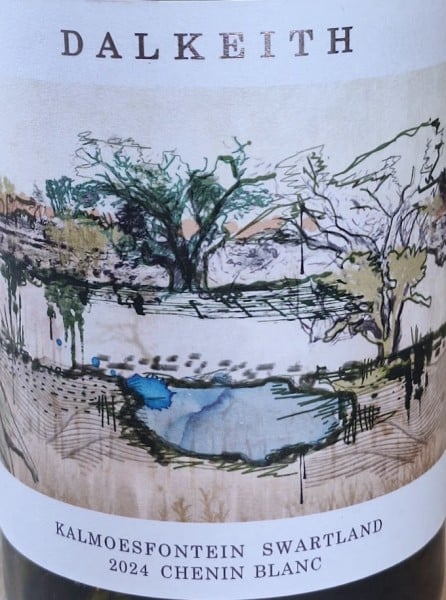 Dalkeith is a boutique label within the Jackson Family Wines stable, which also owns Capensis. Winemaking is overseen by Mario Damon, trusted lieutenant of the highly experienced Graham Weerts.
The grapes for the Kalmoesfontein Chenin Blanc 2024 are grown by Adi Badenhorst on his Swartland property of the same name. Fermentation was inoculated in tank, followed by nine months’ maturation in a combination of older oak and clay vessels.
The nose shows soft citrus and stone fruit, with notes of ginger and earth. The palate is rich and rounded (alcohol 13.9%), countered by tangy acidity and finishing dry with a faint, appealing bitterness. Well balanced and full of flavour. Price: R295 a bottle.
CE’s rating: 93/100.
[insert-button id="dalkkfcb24"]Check out our South African wine ratings database.
It might seem that Stellenbosch property Meerlust has entered a period of improved quality since the arrival of Wim Truter from KWV in 2020 to head up the cellar but credit should probably also go to his predecessor Chris Williams who instigated the process of vineyard renewal that is now bearing positive results. In wine, improvements are cumulative and slow to manifest…
Estate Red 2022
Price: R250
50% Cabernet Sauvignon, 40% Cabernet Franc and 10% Merlot. Matured for 16 months in barrel, 10% new. Red and black berries, rose, fynbos and oak spice on the nose. The palate is graceful and stylish – medium bodied with juicy fruit, bright acidity and fine tannins. Entirely engaging. Alc: 13.87%.
CE’s rating: 92/100.
[insert-button id="meerlustred22"]Merlot 2023
Price: R470
Red currant, cherry and a hint of cassis plus pencil shavings and oak spice on the nose. Matured for 18 months in barrel, 40% new. Luscious fruit, bright acidity and velvety tannins. Carefully crafted, this shows a finesse that local examples of the variety often lack. Alc: 14.71%.
CE’s rating: 92/100.
[insert-button id="meerlustmerlot23"]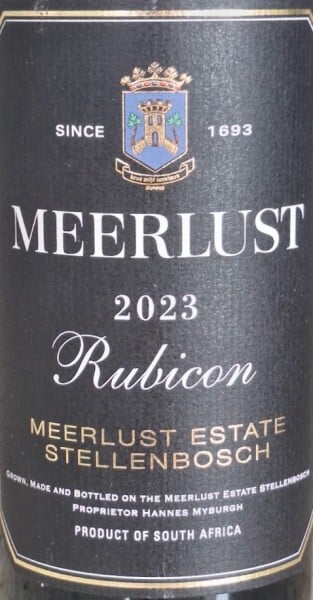 Rubicon 2023
Price: R610
46% Cabernet Sauvignon, 36% Merlot, 11% Cabernet Franc and 7% Petit Verdot. Majority of vineyards harvested before the rain of March. Matured for 18 months in barrel, 50% new. Red currant, cassis, violets, some leafiness, vanilla and oak spice on the nose. Good fruit definition, bright acidity and firm, age-worthy tannins. Not without weight, tightly knit, a classic SA take on the Bordeaux blend. Alc: 14%.
CE’s rating: 95/100.
[insert-button id="meerlustrub23"]Check out our South African wine ratings database.
Subscribers receive daily reviews and in-depth reports before release to the public. Cancel any time.
