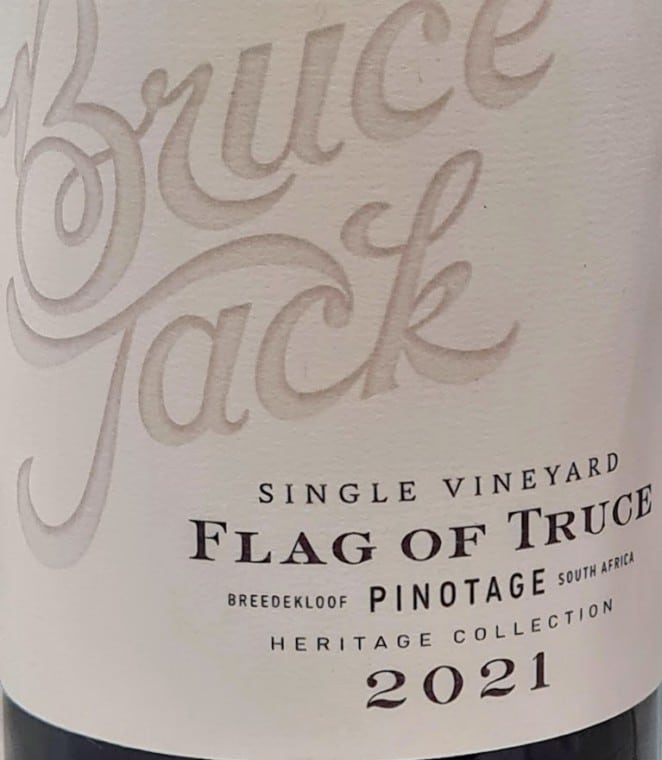
 “I’m not sure the carbonic, crunchy style of Pinotage has legs,” says Bruce Jack of Bruce Jack Wines referring to the new wave take on this always controversial variety. In any event, he’s come up with his own version in the form of the Heritage Collection Flag of Truce 2021 that might be considered just hipster enough.
Grapes from a high-lying Breedekloof vineyard, winemaking involved 20% carbonic maceration, 20% whole-bunch fermentation and a portion of sun-dried stems added back while maturation lasted 12 months in oak, 15% of which was new.
The nose has a floral top note before plums and red cherry plus hints of fynbos and spice while the palate is pure and energetic – good fruit concentration, bright acidity and, yes, slightly crunchy tannins. A vivid wine that offers great pleasure. Price: R573 a bottle.
CE’s rating: 95/100.
Check out our South African wine ratings database.
On the eve of Cape Wine 2022, Hemel-en-Aarde producers Newton Johnson Family Vineyards, Restless River and Storm Wines banded together under the banner of The Singles Club, defined as “a collective of likeminded friends passionate about single vineyards”, to show some of their wines against international counterparts.
And so, for instance, one flight of Pinot Noir featuring Bass Philip Premium 2018, Storm Vrede 2015 and Bruno Clair Gevrey-Chambertin Clos Saint-Jacques 1er Cru 2013 with the Storm impressing all and sundry (tasting blind, I rated it 96/100 on the night).
Next a flight featuring Newton Johnson Windansea 2021, Armand Rousseau Gevrey-Chambertin Les Cazetiers 1er Cru 2015 and Restless River Le Luc 2019. Here the Burgundy was compromised by spoilage yeast Brettanomyces but the two local wines again showed very well. I rated the Restless River 95 points, the same as I did on release in 2020 – see here. The Windansea is a new release and the only local wine I had not yet tasted.
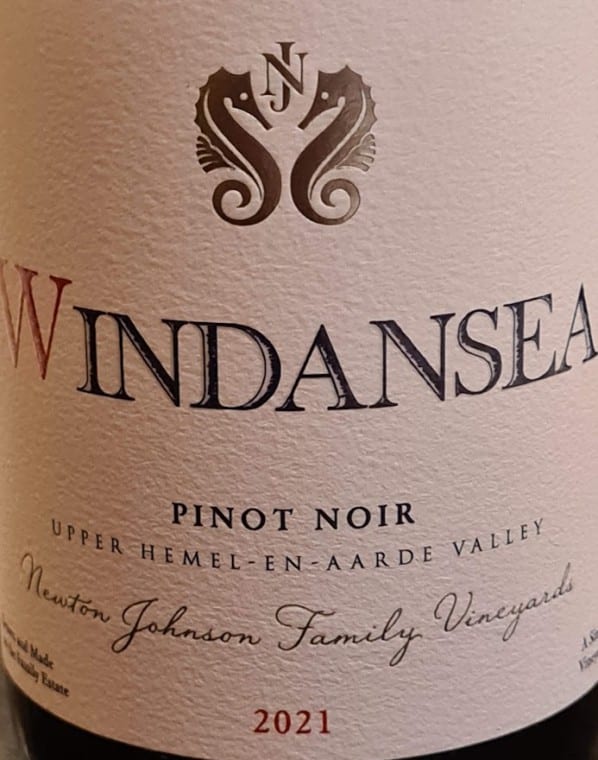 Grapes from a high-lying, north-facing vineyard planted in 2005 to clones 115 (50%), 113 (33%) and 777 (15%) on granite, winemaking involved partial whole-bunch fermentation. On the nose, red and black cherry, rose, herbs and some vanilla while the palate displays a dense core of fruit with bright acidity and very well managed tannins. Polished in the best sense.
CE’s rating: 95/100.
Check out our South African wine ratings database.

In the rarefied world of art, the concept of “collection” is a loaded one. The word suggests not so much a gathering of bounty as it endows the holder thereof – the collector – with cultural gravitas and prestige. In the contemporary world of wine, the word takes on some of this, but unlike a great Picasso or a panoramic Pierneef, such collections are, of course, subject to the effect of time on what is essential a consumable.
This is not the cheerful world of one’s childhood when a collection of stamps, cards, Dinky Toys, or, nowadays, Checkers’ Little Shop Mini Collectibles, provide in their gathered fulfilment a joyful sense of accomplishment.
When my friend Tim James recently wrote here about wine storage issues (wine collector worries!) and Greg Sherwood too enthused “Wine is intoxicating for collectors in so many more ways than purely from the effects of the alcohol!” the debate about collecting stuff returned to mind.
Is gathering and hoarding basic human conditions? How does wine fit in here?
I thought about my earlier travelling years when the labels of foreign bottles of wine, pleasurably emptied, were soaked off to be stuck in my ‘travelogue’: literally a collection of contentment memories, visual memes of historical experiences. So very, very different to the wine bottles stored on basement shelves, in ‘wine fridges’ or at pricey Wine Cellar – gambles to the tribulations of passing time. Those bottles, they say are the (unknown) future. My labels were pure past bliss recorded.
So what does “collecting” imply?
Let’s move back to art. In, let us say, a culturally more stable past, for an artist’s creation (painting, sculpture, etc) to be entered into a Collection (the capital is on purpose) came with rather significant kudos. For example, for an artwork to be taken up in the South African National Art Gallery’s Permanent Collection (nowadays under the flagship Iziko) signalled that that piece is of significance, the artist accomplished, and the work will have importance years from now and never leave the collection.
This accomplishment is preceded by careful vetting and expert debate among those making the gallery decisions not lightly taken. In a number of ways this decision is a benchmark. You understand the weight of ‘Collection’.
Until a few decades ago, this kind of connoisseurship was in the hands of museums (such as the Iziko SANG), academic institutions and sometimes culturally- highbrow corporations (Rembrandt, Sanlam). But things have changed quite dramatically. Nowadays it’s big money that set the tone of who’s in, what to collect, to buy for the rich, flashy Collector. (This is a new title usurped by hedge fund hunters and other billionaires. Private art museums by the wealthy are de rigueur in this late neocapitalist era.)
Collectors and too much money have upended many a cultural construct. I certainly include wine (and its ‘appreciation’) in this.
Art collecting takes on perhaps a more sinister, ironic notion when one considers, for example, that the warehouses of the Geneva Free Ports & Warehouses Ltd in Switzerland have a treasure trove of masterpieces locked away in the dark.
It is estimated that those precious and anonymous spaces house, among loads of booty, 1 000 Picasso pictures – never shown or seen by a soul, not to mention the public at large in galleries or museums. These are storage spaces for the ultra-rich who buy art (and wine and other things) only for their monetary worth – to have and to keep, and to brag about, and to hold as investment, and to sell for a solid profit when the time arrives.
Art has become the most tradable commodity among the wealthy. Art works are now their mobile currency. When the one-percent has all the super yachts, wives and wine estates they can play with, art is a delightfully colourful plaything when stock keeps on rising.
It has serious consequences for our very concept of what art is and could be. That is a complicated, long story. If you draw the parallel to wine-at-auction, we may be facing similar issues. Switch ‘art’ for ‘wine’ in the paragraphs above, and you may get my drift of concern.
Over the past years, wealthy South Africans too have been lured into this world of high prices and auction speculation. On the side, smart producers (such as identified by Christian Eedes here) have polished that appeal of luxury with ultra-pricing – the be-all of quality, worth and ‘enjoyment’.
So where does a ‘wine collector’ fit into this contemporary scheme of things?
What a contrast in styles the standard label and Barrel Fermented Chenin Blanc from Stellenbosch producer Stellenrust provides, the former providing unadulterated pleasure and the latter utter decadence. Tasting notes for the current releases as follows:
 Stellenrust Chenin Blanc 2022
Price: R82
Grapes are harvested from vineyards planted to decomposed granite and varying in age, but no younger than 30 years. Mostly tank fermented but a small portion treated in older oak. Enchanting aromatics with tops of floral perfume and fynbos before pear, peach, citrus and guava. The palate shows excellent fruit concentration, zingy acidity and a pithy finish. Tastes like summer.
CE’s rating: 92/100.
Stellenrust 56 Barrel Fermented Chenin Blanc 2020
Price: R240
Harvested from a 56-year-old dryland vineyard and hence the name. Spontaneously fermented and matured in predominantly older oak for nine months. Includes a small portion of botrytis-infected grapes. Potent aromatics of over-ripe orange, peach, apricot, honey, bee’s wax, ginger and spice while the palate is super-intense – big fruit volume matched by tangy acidity. Dense, thick textured and almost overwhelmingly flavourful.
CE’s rating: 91/100.
Check out our South African wine ratings database.
 Total sale amounted to R13 985 500 at the 38th Nedbank Cape Winemakers Guild Auction conducted by Strauss & Co this past Friday and Saturday, 1 898 cases (6 x 750ml) fetching an average price of R7 369 per case and an average price per bottle of R1 227. This compares to last year’s sales of just under R9.9 million for 1 734 cases, average price per case being R5 686 (average price per bottle: R948).
Kanonkop CWG Paul Sauer 2019 reached the highest average price of R2 457 per bottle, followed by Cederberg Teen die Hoog Shiraz 2020 selling at R1 861.
Top-performing white wine was Lismore Valkyrie Chardonnay 2021 which reached an average of R1 743 per bottle while the Mullineux Trifecta Chenin Blanc 2020 sold at R1 633. 30% of the lots were sold to international bidders. All prices quoted are exclusive VAT. The hybrid live/online-auction attracted bidding from 14 countries around the world, 30% of the lots going to international buyers.
 We’re offering you the chance to win one of five sets of two tickets (valued at R275 each) to WineX.
WineX is open to the public from 17h00 to 21h00 on Thursday 27 and Friday 28 October at the Sandton Convention Centre. Approximately 150 exhibitors will be showing more than 800 wines altogether.
To enter, all you have to do is 1) sign up for our free newsletter and 2) like our Facebook page.
To subscribe, click HERE.
To visit our Facebook page, click HERE.
Competition not open to those under 18 years of age and closes at 17h00 on Wednesday 19 October. Prizes do not include transport. Winners will be chosen by lucky draw and notified by mail. Existing subscribers are also eligible.
Bookings for WineX via Webtickets.co.za. Early Bird tickets are available until 14 October: Thursday R195, Friday R220. Thereafter and at the door: Thursday R245, Friday R275.

It is curious, at least to me, that while South Africa’s best modern-era wines are rightfully praised for their striking intensity and complexity, their age-worthiness goes largely without comment. Wine is one of the few foodstuffs that can improve with age, and indeed it is one of its key fascinations. I often get asked by those with only a passing interest in the subject how long this or that wine might be kept, and my stock reply is approximately five years from vintage for top-end whites and eight years for reds.
I am well aware that there are some of my colleagues who think the drinking windows I’m proposing above are unduly pessimistic, and I do always qualify my advice by saying that that the enjoyment of any wine past a certain point in its development comes down to the particular drinker’s individual tolerance for developed aromas and flavours. It does, however, seem sensible to accept that by far the minority of both white and red wines from anywhere in the world are destined to be more pleasurable and more interesting to drink when they are 10 years old than at one years old – a whole lot of complicated chemistry must turn out perfectly.
Despite all this, my sense is that wines from the 2000s and 2010s – supposedly a golden era for South African wine – have generally not aged nearly as well as collectors might have hoped (see the various editions of the 10-Year-Old Wine Report on this site). Moreover, this is not something that can be disregarded or swept aside because if South Africa, or more specifically the Cape, truly wants to be regarded as one of the great wine producing regions of the world, then age-worthiness is non-negotiable.
As to why the development in bottle of SA’s modern-era wines have been at least a little disappointing is perhaps not difficult to explain. When it comes to reds, it’s well documented that there was a shift to pick grapes later and riper throughout the 1990s and 2000s – critics, in particular the influential Robert Parker of The Wine Advocate, were inclined to reward a more brazen style while consumers were in any event opting for fruitier wines with less aggressive tannins. Determined to achieve acceptance by the global market post isolation, South Africa quickly fell in line with these trends. It is clear now that in many instances the desire to achieve extra weight and power was at the expense of ageing potential.
As for white wines, winemakers, consciously or unconsciously, have been making wines that are more accessible and demonstrative to build their reputations quickly among critics and punters alike. Low sulphur levels were also fashionable in hipster, non-conformist winemaking circles and this has done nothing to prevent the rapid development of wines in bottle. Climate change, especially the great drought of 2015 to 2018, has led to compromised vines and wines of greater ripeness and acidic softness. Unfortunately, the variability in performance of natural cork as a closure can’t be left out of the discussion.
Happily, I suspect that wines with real ageing potential might well be with us already or, at least, are coming very soon. The growth in proficiency regarding both viticulture and winemaking was slow in the period immediately after isolation but continues apace – the top end of the industry remains on an increasing-returns learning curve, if you will – and as a result, we are seeing wines that better lend themselves to extended maturation in terms of freshness and structure. It might also be said that winemakers are now much more inclined to be true to site rather than force a particular style on to their wines.
Of course, different vintages of the same wine mature at different rates depending on the respective climatic conditions that prevailed and, in that regard, Stellenbosch and the Cape in general has just had two vintages that should reward very long keeping, these being 2015 and 2017. By contrast, 2016 seems to be a vintage that should be drunk up – vintage variation is becoming more and more marked.
Lastly, there is significant precedent that the Cape CAN make wines that age magnificently, these being the reds of the 1960s and 1970s and even before. Stocks of these wines are inevitably limited but not so scarce that they never get shown and their longevity and evenness of quality is generally astonishing. From what little is known about winemaking technique, tartaric acid additions were routine so no shortage of freshness while maturation was typically in large-format vats so did not depend on oak to make an impression. The one further point I would make is that in the absence of any very binding legislation, these wines were typically blends that conformed to no pre-existing template.
The much-revered Chateau Libertas 1940 consists of predominantly Cabernet Sauvignon but includes Cinsault and some of the Port varieties (and is said to have an alcohol of 14.93%) for instance. Alto Rouge dates from the 1920s and the original recipe was apparently three parts Cinsault to one each Cab and Shiraz. The examples of Zonnebloem Cabernet Sauvignon from the 1960s appear to have been 1) non-vintage even though labelled as being from a specific year and 2) typically contained not insignificant portions of Cinsault and Pinotage. In the 1970s, KWV Roodeberg consisted mostly of low-yield Cinsault with varying amounts of Shiraz, Cabernet Sauvignon, Pinotage and Tinta Barocca…
It might well be argued that these wines came about solely for pragmatic reasons, but I’m inclined to wonder if part of their longevity is precisely due to their disparate parts. It has said that growing conditions in the Cape are more Mediterranean than continental which necessitates blending to achieve complexity. Whether this is entirely valid or not, there’s no denying that there are often large variations in soil and aspect over small distances making the successful cultivation of just one variety by the individual producer that much more difficult.
These historic wines have influenced at least some of today’s winemakers. Columella 2020 from Eben Sadie is a blend of 40% Syrah, the rest Mourvèdre, Grenache, Carignan, Cinsault and Tinta Barocca while Leeu Passant Dry Red 2019 from Andrea and Chris Mullineux is 56% Cabernet Sauvignon, 28% Cabernet Franc and 16% Cinsault and there are quite a few others (see this year’s Prescient Signature Red Blend Report). The question is: Do they get enough recognition relative to Cape Bordeaux Red Blends or single-variety Syrah?
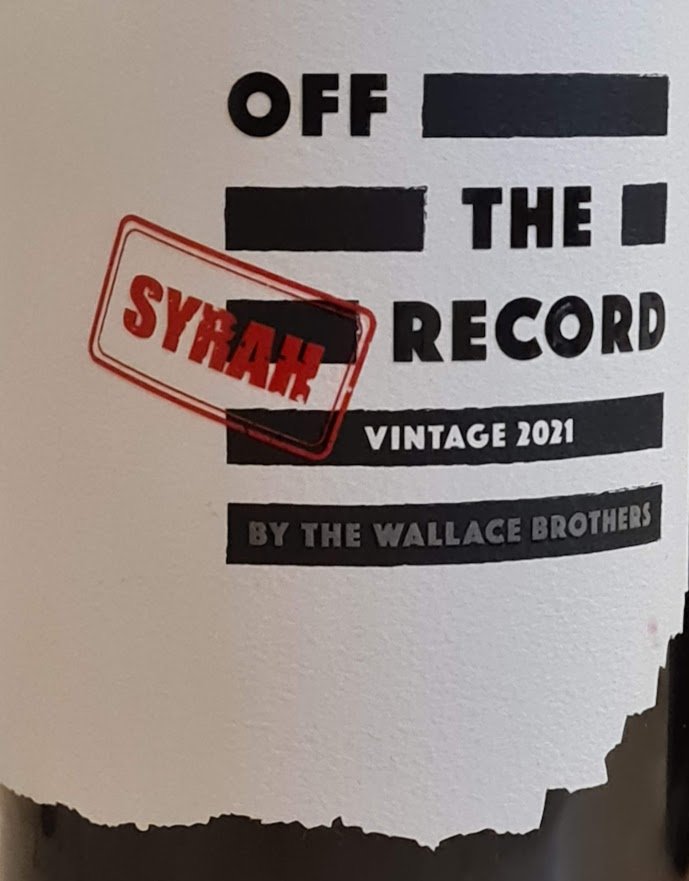 2020 was the maiden vintage of Syrah from Bobby Wallace (previously assistant at Iona and now winemaker at family undertaking Paul Wallace Wines) and brother Mark based in Australia. From Ceres Plateau grapes, I wrote “Pleasing but a little more mid-palate intensity wouldn’t go amiss” (see here).
The follow-up 2021 is a notch up when it comes to concentration and vigour. 100% whole-bunch fermented, it was matured for 10 months in fourth-fill barrels. Lots of floral perfume, red and black berries, coriander and pepper on the nose while the palate has a dense core of fruit, bright acidity and very grippy tannins. Undoubtedly compelling, although the challenge down the line will be to achieve a little more finesse. Price: R330 a bottle.
CE’s rating: 93/100.
Check out our South African wine ratings database.
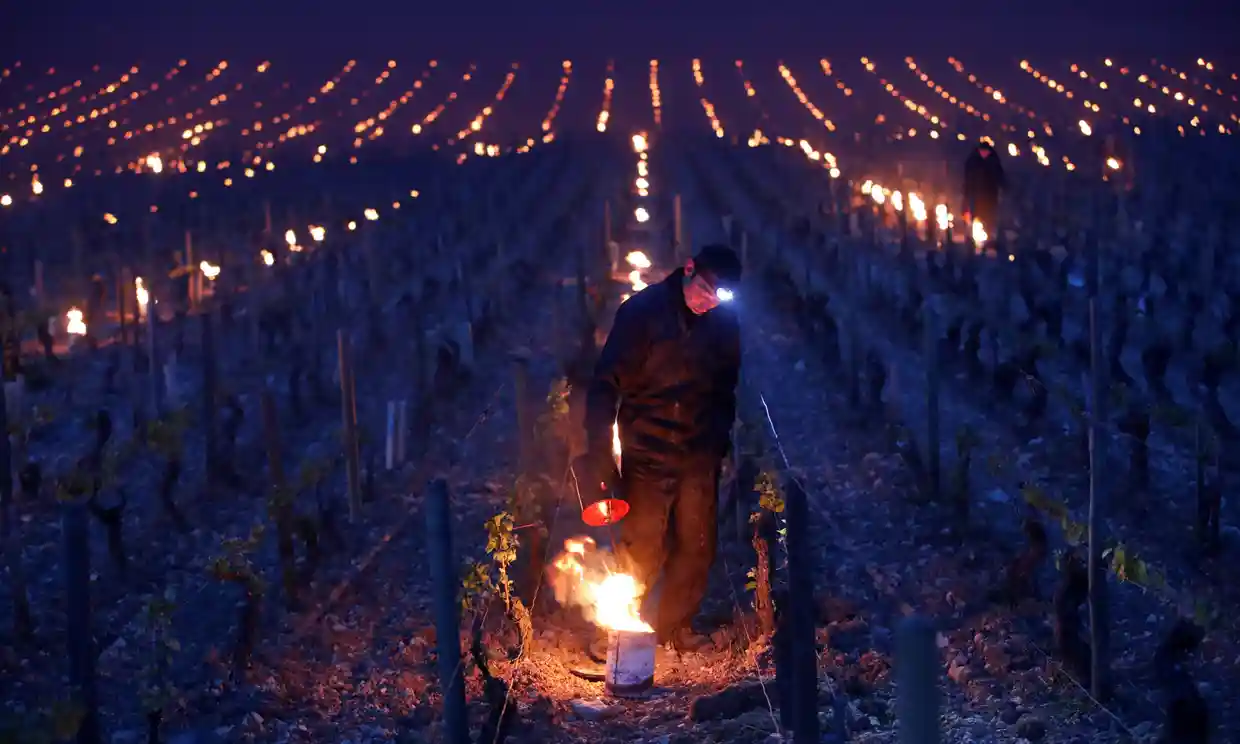
I prefer the term climate chaos to climate change. Change seems to understate the magnitude of what the planet is facing. Chaos better describes the unpredictability of the way that weather patterns seem to be so hugely messed up of late. It adds a sense of urgency to discussions about what we should do in response. And for viticulture we seem to be facing a crisis.
The planet’s ecology is largely determined by weather patterns. Climate is the average weather that a location experiences and there will be differences from year to year. These differences need to be within certain bounds, though, if plants and animals are able to cope with them. Plants tend to be the most sensitive, because they are usually fixed in one place. They are environmental computers that are able to calculate changes in climate and then respond appropriately to them. In temperate climates they have a period of dormancy over winter, and then begin growing in the spring, before entering dormancy again. This cycle is calculated to fit in with certain climatic boundaries: if the extremes are outside of the boundaries the plant can deal with, it will no longer grow in that place and another, better adapted plant will take its place. But it gets to a point where no plant can adapt to variations that are too extreme.
The grape vine is highly sensitive to climate. While some varieties are more sensitive than others, all varieties have a climate where they perform to their peak, and the bands are pretty narrow. It’s remarkable to think that the 2000 or so grape varieties grown round the world are all of one species, yet are capable of making such different wines. While many new world regions grow lots of different varieties, before too long they realize that with their climate or climates (some regions are more diverse than others in this respect), there are certain varieties that best suit them. The old world regions have spent a lot longer working out exactly what suits best, and they have recognized their talents and narrowed down their varieties. That careful matching of variety to place, however, depends on a relatively consistent climate: something we can no longer take for granted.
If climate chaos was as simple of global warming, there’d be the possibility of reworking varieties and moving vineyards from warmer sites to cooler sites where this is possible. We are seeing this happening in response to a definite warming trend across the globe’s wine regions. There have been a few winners: the UK now has 4000 hectares of vines, something unthinkable 30 years ago, and Germany’s wine regions, which were perhaps a bit too cool in many vintages, are thriving. There have been more losers, unfortunately. And some of the losses have been the result of the new unpredictability in climate. It’s always been difficult farming grapes, with unpredictable rainfall events, hail, frost and increased disease pressure, as well as drought. But it has become more difficult of late. Heat spikes previously unthinkable have caused damage in recent years; forest fires have impacted grape quality in many regions; and in Mediterranean-climate regions – including South Africa – aridity has become a particular problem.
It’s very hard to do anything about hailstorms, of which there seem to be more of later, and it’s expensive and not completely 100% effective to counter frost. Warmer starts to the season have led to earlier budding, and a much longer frost season in many regions. This all adds stress and cost to the practice of growing wine grapes.
And better adaptation to dry growing seasons is well underway. And where there’s altitude to play with, vineyard sites have moved a bit higher up. New vineyards have been planted in regions too cool previously. This is in evidence in South Africa. But it’s much trickier when your region is tied to a single variety, or just a few varieties.
The test case here is Burgundy, the home of Pinot Noir and Chardonnay (and, of late, Aligoté which is now getting a bit more recognition by the geeks at least). Vintages have been getting earlier and warmer here, which isn’t always a terrible thing, but is a trend that is scaring many in the region. The region built its reputation on its 930 climats, including some of the world’s most revered vineyards, organized in a hierarchical system with the Grand Crus at the top. The careful matching of climat and either Chardonnay of Pinot Noir, which has resulted in such revered wines, is now under threat. Performing at the limits of where they ripen fully, in interesting soils, these varieties have thrived. But with warmer conditions, the danger is that the fine differences that set these wines apart from other examples of these varieties might be lost. Some people might prefer Pinot Noir in a fruitier, richer style, but that’s no why people see this region as a place of vinous pilgrimage. They come here for the exceptional, fine, complex wines that often require some cellar time to show their best. They won’t pay a fortune for fruity pleasure bombs.
Lots of discussion has been taking place about what Burgundy will do. Should it switch varieties? Might we be seeing Syrah in Vosne-Romanée or Grenache in Nuits-Saint-Georges? Assyrtiko in Montrachet? The problem is that the region is so wedded to Chardonnay and Pinot Noir, this would probably be a step too far for consumers. The identity and magic of the place will be lost. Where a region is wedded to variety, tweaking the blend isn’t a possibility.
I don’t think it will come to this, but climate chaos is definitely a problem here, as in many other regions. The answer in the short term is to look for viticultural solutions. The best is to farm regeneratively, seeing the vineyard as an agroecosystem and creating more resilience. There might be different ways of managing the canopy, and particular the fruit zone leaf cover. More interventionist solutions such as shade cloth and kaolin clays might have some effect. Better approaches to frost control could be really helpful, too. What is clear, though, is that the wine world has to become creative in looking for solutions, and that as a result of the unpredictability of the climate, we might have to begin paying more for our wines.

The breadth, depth and quality of the Cape’s serious chenin offering is remarkable. We all know this, I think, perhaps to the point of being blasé about it, but sometimes one is obliged to recall and reaffirm the conviction. As I did last Saturday evening in Stellenbosch, at a grand tasting put on by the Old Vine Project as one of the events clustered around Cape Wine 2022, the large trade show taking place this week.
Wines were the focus, of course, but it must be mentioned that the gathering also saw it announced that OVP founder Rosa Kruger has been inducted into the Decanter magazine Hall of Fame – becoming what most such organisations call their “person of the year”. It’s undoubtedly a greatly prestigious award, which has previously won by some of the world’s most eminent winemakers, oenologists, critics, etc. This is the first time it has gone to a viticulturist – or to a South African. A happy moment, enthusiastically welcomed – not dashed by the fact that the award had been prematurely leaked on Twitter by an over-eager Tim Atkin, who’d been responsible for writing the accompanying Decanter article. Rosa made a characteristically modest and short speech, most memorably reminding everyone at the tasting of the work of many people involved in the larger old vine project, especially “the people in the fields”.
It was good to have this tribute to the people that enable or carry out the vision of any viticulturist and winemaker. And the wines at this tasting were a tribute also to the success of the Old Vine Project team, also fully recognised by Rosa. Not just wines from chenin, of course, but, given the Cape’s heritage, they are undoubtedly in the majority. Given my need to drive home afterwards, I decided to limit myself to chenin, especially those I hadn’t ever tried, or at least not for a while. Only some of them are mentioned below.
To emphatically make the point about the number of old-vine chenins, and the laudable determination of many winemakers to preserve these vineyards, consider the splendid array under the Roodekrantz label, a joint project of the Burgers of Roodekrantz farm and the Morkels of Diemerskraal. There are seven chenins in the Old Vines range at latest count, from widely sourced vineyards. Incidentally, the range does also make clear something that’s occasionally forgotten when fetishing old vines: that age in itself is not everything – some terroirs are more blessed than others. My two Roodekrantz favourites are the Brand se Berg, from Agter-Paarl vines planted in 1975, and Die Kliphuis (Swartland, 1968). Both are partially spontaneously fermented, matured in older oak; both lowish alcohol yet sufficiently vinous, and both lovely.

Tyrrel Myburg of Joostenberg with Kaalgat 2022.
Not well known to me are the wines of Old Road, but the Stone Trail Chenin Blanc 2019 is excellent – it has that grippy, focused and stony dryness that is augmented when at least part of a cuvée is matured in clay pots. Stone Trail also showed the fine Grandmère Semillon, but that was a brief bit of straying from my evening’s self-imposed brief. There’s a small semillon contribution to a new entry, both delightful and serious, to the old-vine ranks: Kattemaai 2021, part of the portfolio of the revived and now ever-improving Tempel Wines in Paarl. Also new, and on the fringes of the evening’s wine experience, perhaps, is a really attractive skin-contact chenin from Joostenberg’s Small Batch Collection: Kaalgat Steen 2022, which should be released within months, says Tyrrel Myburgh. Is it the only skin-contact wine (12 days it spent on the skins) made from old-vine fruit? It certainly works very satisfactorily, as one might expect from Joostenberg.
A wine I was particularly glad to see was Ken Forrester’s Dirty Little Secret from 1959-planted Piekenierskloof vines – this one again not vintaged and numbered Three, making it only the third since the first from 2015. At R1270 ex-producer it’s surely the most expensive regular white wine in the country. That sort of price tag was probably one reason I was rather rude in print about number One, greatly angering, I remember, the eminent Mr Forrester (to whom the chenin revival owes much recognition, of course). But I recall I was most exercised by the prominent label claim about this being a NATURAL WINE, despite it apparently not being made from organically grown fruit. As the original article has disappeared into the ether, I can’t check – but probably I owe some apology for intemperance. Anyway, Dirty Little Secret Three (which has dropped the “natural wine” reference from the label) is a most excellent wine, both elegant and deeply fruit with a real magic to it. It’s made from the fruit of four vintages, 2017–2020, but is full of life and freshness and should age beautifully, such is its inherent harmony. But hard to resist now. A great advertisement for Cape chenin and for old vines.
Subscribers receive daily reviews and in-depth reports before release to the public. Cancel any time.
