While attending an Entrepreneurs’ Organisation Accelerator session in Cape Town, I listened to a founder of a rapidly scaling payment platform describe a challenge he hadn’t anticipated.
In the early days, when the team was small, strategy and decision-making were contained – everyone in the room understood the context. But as the business grew, those same open conversations began to carry unintended consequences. Ideas, hypotheses, even passing thoughts were overheard and interpreted as instruction. People began acting on conversations that were never meant to be direction. Nothing had changed in what was being said – only in how it was being received.
It struck me how relevant this is to the current narrative around wine.
We are living in a time where access to information is immediate, constant, and overwhelming. Headlines, reports and opinions are consumed at such speed that they quickly become accepted as fact, often without interrogation. In many cases, a repeated narrative becomes reality. In the wine industry, the phrase “wine is in decline” has begun to take on this role – echoed so frequently that it is rarely challenged. But what if we are misinterpreting what we are hearing?
A broader look at global data suggests exactly that. Figures from the International Organisation of Vine and Wine (OIV), alongside United Nations population data, show that while per capita consumption has declined over time, total global wine consumption has remained relatively stable for decades – now hovering around 214 million hectolitres, the exact same volume as in 1961.
Admittedly, wine consumption peaked in 2018 at 244 million hectolitres, and gradually decreased. The peak of global wine consumption in the late 2010s did not mark the beginning of decline, but rather the end of an era defined by volume-driven consumption.
The decline from peak consumption is not the result of a single shock, but rather the convergence of multiple structural shifts – economic pressure, changing consumption habits, increased competition, and a move toward premiumisation. What appears on the surface as a decline in demand is, in reality, a recalibration of how wine is consumed. The category has not lost relevance; it has lost volume at the expense of value.
This shift becomes even clearer when we examine local market behaviour. According to recent SAWIS data, total domestic still wine sales declined by approximately 12% over the past year. At face value, this appears to support the narrative of a shrinking category.
But a deeper look at price segmentation tells a very different story. The sharpest declines are concentrated at the lowest price points, with wines below R40 dropping as much as 58%. In contrast, higher value segments are growing – particularly above R150, where growth exceeds 25%, and above R200, where demand is up more than 30%. Even the R40–R50 bracket has shown strong growth, suggesting a clear shift in consumer entry point.
If wine were truly in structural decline, this contraction would be evident across all price segments. Instead, it is isolated at the lower end, while premium categories continue to expand. This is not a loss of relevance, but a change in behaviour. Consumers are drinking with greater intent – placing more value on quality, occasion and experience than on sheer volume.
We have seen how quickly perception can drive reaction. During the COVID-19 pandemic, when the South African wine industry faced prohibition, one well-known producer pivoted into olive oil to remain commercially active. What stood out was not the idea itself, but the significant time, energy and cost required to execute that shift. It highlighted how quickly businesses can move away from their core in response to uncertainty. Businesses react quickly – sometimes irrationally – when the environment feels uncertain or threatening.
That does not mean we should resist innovation. But it does suggest we should remain grounded in our strengths and avoid overcorrecting in response to narratives that may not fully reflect reality. The data points to an industry that is evolving, not disappearing.
Perhaps the real risk is not declining consumption, but misreading the moment.
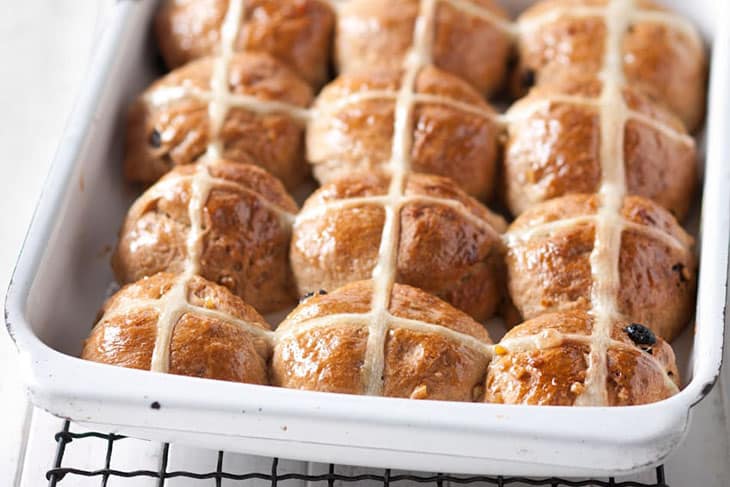
These hot cross buns aren’t just for Easter – you can enjoy them all year round!
This recipe makes 12 buns.
Normal people are going to opt for a cup of tea with their hot cross buns but why be normal? We suggest a Muscadel with a bit of age which will complement the fruit and spice of the bun. If Muscadel sounds just too sweet, then what about a more mature Cap Classique?
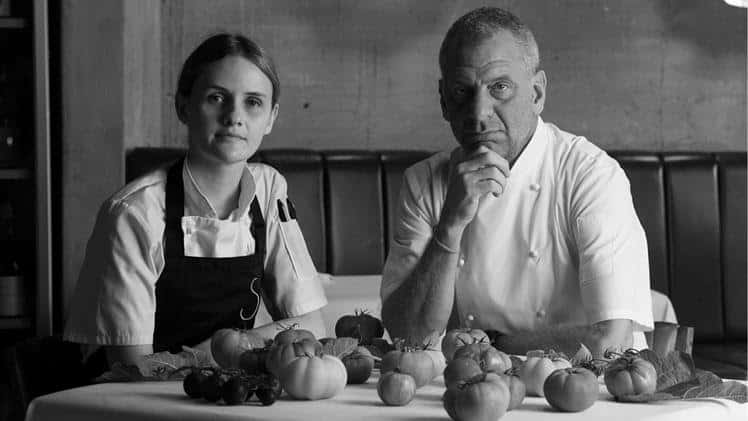
Carla Schulze and Luke Dale Roberts.
Luke Dale Roberts will launch a new restaurant at Tswalu Kalahari Reserve, South Africa’s largest private wildlife reserve, owned by the Oppenheimer family. The menu, developed with Carla Schulze (executive chef of Salon, former head development chef at The Test Kitchen) and Dillan Kannemeyer (currently Salon’s head chef), will showcase locally inspired, globally influenced cuisine in one of Africa’s most remote dining locations. Salon will close at the end of March 2026, with much of the team moving to Tswalu.
Klein JAN, the collaboration between Jan Hendrik van der Westhuizen and Tswalu Kalahari, closed after flooding in 2025 impacted parts of the reserve. The parties subsequently agreed to part ways. Dale Roberts is set to open his new venture in the second half of 2026, in a reimagined version of the space that previously housed Klein JAN.
 Introducing The Cold Soak, a podcast where we discuss what’s been happening in South African wine over the past month – new releases, industry chatter, bold moves and questionable decisions.
Hosted by Ex Animo Wine Co.’s David Clarke and Winemag.co.za editor Christian Eedes, it pairs two informed, independent voices with a clear sense of perspective.
Each episode cuts through the noise: key releases, sharp takes on Winemag reports, and candid discussion on where the industry is headed.
The approach is rigorous but unpretentious, analytical with a touch of humour – equally relevant to industry insiders and engaged drinkers alike.
Listen to the March review here.
Apparently Henry Ford didn’t quite say that “history is bunk” – he blinked, and included “more or less”. He added that he was talking about tradition, which, he said, we don’t want: “We want to live in the present and the only history that is worth a tinker’s damn is the history we make today.” Hmmm. A notable thing about many of those who have made Cape wine history this century is that remembering tradition and creatively absorbing it has been central to their project. I asked Eben Sadie just recently if he’d read the books that Desiderius Pongràcz wrote while working as a Cape viticulturist more than half a century back. He responded with an “of course”, and put the matter neatly: “If a viticulturist did not read Practical Viticulture, it would be like trying to go somewhere with no understanding of where you should have departed from.”
I suspect that, on a more formal level, history, as opposed to ideas of tradition, doesn’t have much appeal to South African wine lovers or to the industry as a whole. With a few honourable exceptions – mostly some decades back – even academics’ interest in local wine history has been remarkably lacking. Constantia (but only up to mid 19th century) and the earlier decades have been fairly well studied, but generally the 19th and early 20th centuries in particular have not. When I wrote my book on South African wine, I wanted to include a short historical survey. I thought it could be easily and lazily achieved by relying on secondary material, but mostly what I found, if anything, was other people having wanted to do similarly and repeating each others’ truths and mistakes; and always there were serious gaps. I ended up having to do much more proper research than I’d wanted to.
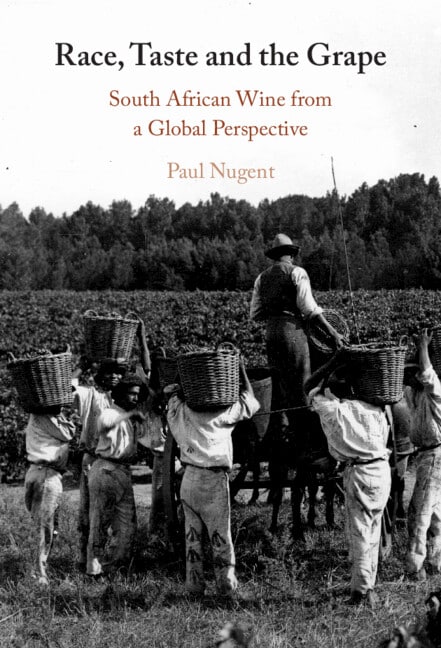 My history chapters would have been altogether easier and better if I’d had a copy of Paul Nugent’s 2024 book, Race, Taste and the Grape: South African Wine from a Global Perspective (published by Cambridge University Press and horribly expensive – R1,015 from Takealot for the paperback version, three times that for the hardback). Certainly for the late 19th century and the 20th, his focus period – though the major developments of the post-KWV era are also discussed. I did refer to the book recently as having prompted me to revisit the “chardonnay scandal”, and plan on being further prompted in the future.
Nugent, born and raised in South Africa, is Professor of Comparative African History at the University of Edinburgh, and this is very much a serious piece of academic work, directed primarily at those for whom history is far from being the account of one damn thing after another. It is theorised, engages with larger or smaller academic debates (hence, for example, the “global perspective” alluded to in the title”, and goes into a great deal of detail at times – the sort of stuff that is sometimes slightingly referred to by outsiders as “only of academic interest”.
I mention this, because it’s not an easy or a racy read, even for those who would claim a genuine interest in South Africa’s wine history. As I do, but there were times, as in the discussion of the struggles between different liquor companies, when I did more skipping of paragraphs or pages than I probably should have. Nugent’s writing is okay, but does tend to the dry and workmanlike, not really enlivened by the frequent clichés (people tend to “beat a path” to somewhere rather than simply “go”). I’m eager to welcome the book as an immense addition to our resources, but recommend it to “ordinary” readers with a warning that it’s not simply telling a story, but arguing and proving and adducing evidence and, as I said, often going into a load of detail that some might find tedious.
But if readers persist, they will learn a lot about Nugent’s categories of race, taste and grape. The first “signifier” there is obviously pervasive in the book, affecting all the discussions. It was, for example, crucial to the long-bubbling story of temperance movements and the racial full prohibition which was in place for some time. But that story more fully belongs to the “taste” theme, considering the ever-changings patterns of wine consumption among race, class and gender groupings. As for “grape” – that would account for farming and wine-making, including the major tensions between primary producers and the merchant dealers, as well as scientific and other developments.
Over it all the KWV looms large. The post-phylloxera decades were very much a pre-KWV period, in the sense of preparatory to its rise to immense quasi-statutory, bureaucratic power over the industry, the period that fills most pages of this book. Nugent reckons the gains, but I think it fair to say that his conclusions about the KWV are not positive. His final chapters look at the decades following the collapse of the KWV’s tight regulation (minimum prices, the quota system, etc), in the context of the new ANC government’s surprising (to some) embrace of open markets for agriculture, the expansion of South African wine into the world market, and the concern for expressing “terroir” amongst the most ambitious.
There are a few somewhat surprising omissions in the concerns of the book worth mentioning. One Nugent mentions himself, when he says that he chose to “pay less attention to labour issues” because so much excellent work already existed. Which latter point is true, but I do wonder at the author not engaging more with those debates. Not doing so weakens the “race” theme – which ideally should have been more fully articulated in terms of class.
Partly connectedly, I think, there’s an absence of considerations of gender, outside the matters of consumption (and aggressive non-consumption in the temperance movement). Undoubtedly, at the levels of activity that Nugent is most concerned with, most discussion about women would have had to be about their absence (though the pretty remarkable recent rise in the number of women winemakers would be worth some examination). There have always been a lot of women involved in producing Cape wine, but most of them have been doing grossly underpaid work in wineries and, especially, vineyards, where Nugent doesn’t venture far.
This book results from Nugent’s long and assiduous research (oh wow, some of it must have been boring!). A rather fascinating and shocking thing quietly emerges when he is discussing in his introduction the sources he used. He doesn’t quite say it, referring to “collateral damage”, but he clearly concludes that the KWV, fearing a “government takeover” in the 1990s, destroyed all its significant records – records amassed while the KWV was performing statutory functions. “In all probability,” Nugent says, “the single most important important set of records documenting the recent history of the Cape winelands has therefore been lost forever”. Just think of the largeness of that fact, and the culpability of those responsible. The authorities at the time were clearly remiss in allowing what was, I’d have thought, an illegal action to take place and never, to my knowledge, speaking of it. As for the KWV doing the shredding, it’s hardly surprising that they would commit this final act to conclude (and obfuscate) their role, at best controversial, in 20th century South African wine.
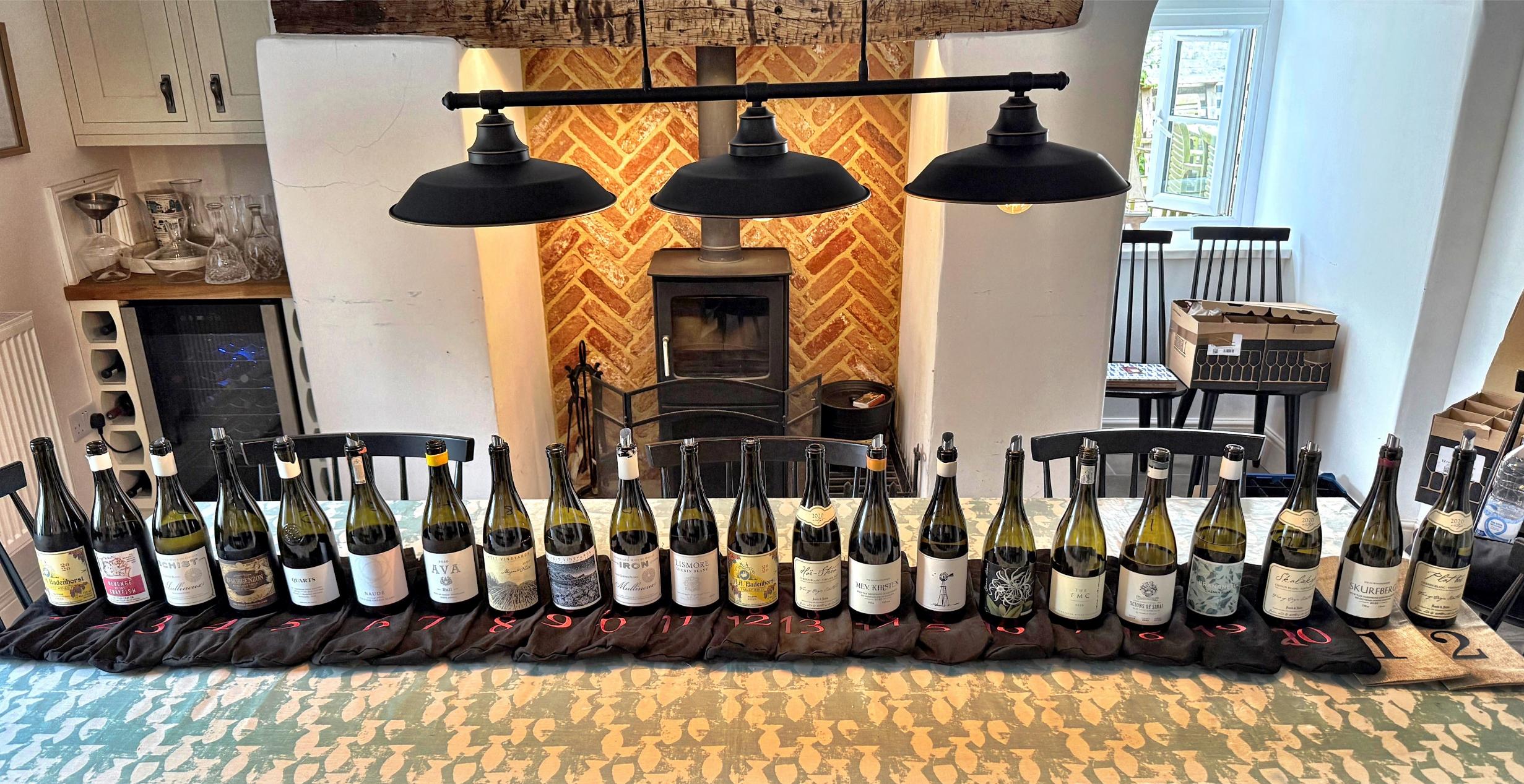
I have recently written a lot about the phenomenon of the Judgement of Wimbledon Blind Grenache Tasting held in London and its enduring growth, success and longevity – 2026 marking its 10th anniversary and it still going strong, mirroring the global rise of premium Grenache. But there is another ongoing tasting I’m involved with annually that is slowly building a steady head of steam: The Norfolk Wine Weekend (NWW).
This three-day, full-immersion wine weekend, held every June or July at a fellow South African friend’s Norfolk “cottage”, allows six or seven collectors and connoisseurs to gather each year to conduct a series of fabulous blind vertical and horizontal tastings. Some years, the main event is a Bordeaux Cru Classé blind horizontal; other years, a Skurfberg Chenin Blanc vertical – but always a diverse, enlightening selection that’s a lot of fun.
Already a few years back, out of respect for the premium category of South African Chenin Blanc, the group at the NWW started to assemble an annual blind Chenin Blanc horizontal tasting, and last year saw the 2020 vintage placed under the spotlight for assessment and analysis. I was reminded of that tasting after a mate recently pulled a case of 2020 from a prominent producer only to be disappointed by the condition of the wine…
At NWW 2025, 22 premium examples were assembled, rated by the seven tasters using the 100-point scoring system, with the lowest score for each wine discarded to help reduce “outliers” once the scores were averaged.
Of course, the 2020 vintage in South Africa will forever be defined by a paradox: a near-perfect growing season for premium Chenin Blanc that collided with the most existential crisis in the history of the Cape wine industry. To understand this vintage is to look at a year of “pristine isolation”, where the absence of heatwaves and a long, moderate ripening period produced wines of crystalline purity – even as wineries themselves faced the prospect of total collapse due to COVID-19 lockdown restrictions.
For premium Chenin Blanc, the variety that has become the torchbearer for South Africa’s “new wave”, 2020 supposedly represented a pivot towards elegance and structural longevity, marking a departure from the heavier, more tropical profiles of the drought-stricken years that preceded it. With this perception firmly lodged in tasters’ minds, we were all keen to see if it rang true, and whether the COVID-19 vintage would ultimately be viewed as a great success under duress.
In general, the 2020 vintage – which followed the gruelling multi-year drought (2015–2019) that had tested the resilience of South Africa’s old vine heritage – was promoted as a turning point for the industry, with reservoirs replenished after improved winter rains. However, the defining characteristic of the 2020 growing season was not just water, but temperature profile.
Unlike many recent vintages marred by sudden, searing February heat spikes, 2020 was characterised by a cool, moderate summer. This was supposedly particularly beneficial for Chenin Blanc, a grape notoriously sensitive to sunburn and rapid sugar accumulation. The lack of extreme heat should have allowed for excellent acid retention, slow and steady flavour concentration with lower alcohols, and smaller berries contributing extra weight, texture and grip.
Obviously, one cannot critique the quality of the 2020 vintage without acknowledging the logistical nightmare endured by producers and growers. On 26 March, South Africa entered one of the world’s strictest lockdowns. Initially, the wine industry was deemed “non-essential”, threatening to leave 20% of the crop to rot on the vines. A last-minute concession allowed the harvest to continue, but the psychological and financial strain on winemakers remained immense.
With tasting rooms closed and exports banned, winemakers were confined to their cellars – forced into singular focus, free from the usual distractions of marketing and tourism that accompany harvest in February, March and April. The assessment at the time was that this isolation might result in meticulously attentive winemaking, with every decision taken with almost monastic focus and intensity.
Looking back, the Cape wine industry’s impression of the 2020 Chenin Blancs was emphatically positive. The wines were widely hyped, described as possessing “vibrancy and nerve”, with “freshness, structural elegance and clear terroir transparency” – a vintage to buy for the cellar.
At this point, I should probably reveal a few hard truths and conclusions from this fascinating 22-wine tasting. But first, the line-up, with average blind scores (lowest outlier removed):
AA Badenhorst Kelder Steen 2020 – 93.4/100
AA Badenhorst Klipkop Steen 2020 – 91.4/100
Alheit Magnetic North 2020 – 90.4/100
Alheit Nautical Dawn 2020 – 92.2/100
Bernard Bredell Scions of Sinai Granietsteen 2020 – 93.25/100
Botanica Mary Delaney 2020 – 95/100
David & Nadia Hoë Steen 2020 – 90.6/100
David & Nadia Skalliekop 2020 – 92.2/100
DMZ Divas 2020 – 93.4/100
Domaine Belargus Quartz 2020 (Anjou, France) – 94.2/100
Donovan Rall Ava 2020 – 91.8/100
Ken Forrester FMC 2020 – 95.8/100
Lismore 2020 – 89.6/100
Mullineux Iron 2020 – 94.2/100
Mullineux Schist 2020 – 90.8/100
Naudé Old Vine Chenin Blanc 2020 – 89.4/100
Sadie Mev Kirsten 2020 – 91.6/100
Sadie Skurfberg 2020 – 96.6/100
Sakkie Mouton Revenge of the Crayfish 2020 – 90.6/100
Savage Never Been Asked to Dance 2020 – 93.2/100
Thistle & Weed Brandnetel 2020 – 92.4/100
David & Nadia Platbos 2020 – N/S (oxidised)
If truth be told, the tasting proved very, very interesting. If it can be summed up in one word, it would have to be “underwhelming”. Of course, the usual caveats apply: scores tend to come in a point or two lower when tasted blind, and averaging across tasters suppresses extremes. What matters more are the trends and group observations.
Some readers – and perhaps a few winemakers – may feel the scores are unduly harsh compared to release ratings. To that I’d say: shift them all up a point or two if you like; it won’t materially change the overall picture.
At release, the wines were described as those that “do not shout with the exuberant ripeness of a hot year; rather, they whisper of their site and soil with a clear, resonant voice.” Sadly, five years on, that whisper has, in some cases, faded to more of a whimper. The showing may also challenge the notion that hotter, drier, riper years are necessarily inferior for Chenin Blanc – the 2016 vintage being a case in point, combining depth and ripeness with remarkable freshness.
Overall, 2020 proved a relatively level playing field. Stellenbosch expressions varied subtly by terroir, particularly in Polkadraai Hills and the would-be ward of Helderberg, yielding wines with freshness, granitic spice and fynbos-tinged sapidity. Swartland wines tended towards precision over power, reflecting the realities of dry-farmed bush vines in warm conditions.
Mullineux’s single-terroir wines showed particularly well, while Sadie Family Wines Skurfberg and Mev. Kirsten displayed their characteristic mineral austerity and “salted lemon” intensity – though, as ever, the latter clearly requires more time in bottle.
The broader trend, however, pointed to acidities that, in some wines, felt a little flat. Acidity, of course, underpins vibrancy, minerality and structure, and without it, the “whisper” of terroir becomes harder to discern.
Across my notes and those of the group, recurring phrases included “lacks complexity”, “light on acid”, “slightly unfocused”, “straightforward” and “needs more acid”. On the plus side, oak usage was generally intelligent and sympathetic, and the wines were texturally sleek, soft, supple and harmonious. In short, many are drinking well now and will continue to do so over the next two to three years.
Many Winemag readers periodically grumble that not enough guidance is offered on when to drink premium South African whites. In this case, the consensus was clear: drink sooner rather than later – not because the wines are about to fall apart, but because they are unlikely to improve significantly, and many lack the acidity for extended ageing.
It has been suggested that any critique of Chenin Blanc – South Africa’s “golden child” – may not be well received. To that I would counter: these are not inexpensive wines, and consumers deserve to know how they are performing.
To the victors, the spoils. Hats off to the top five:
Lastly, I can report that among the seven NWW tasters, a considerable amount of premium 2020 Chenin Blanc remains in cellar. We all resolved – without exception – to break the shackles of collector hesitancy and start drinking more of these wines now. Readers should feel confident to do the same.
Next year, we move on to the much-anticipated 2021 vintage. That should be a tasting not to be missed.
Subscribers receive daily reviews and in-depth reports before release to the public. Cancel any time.

