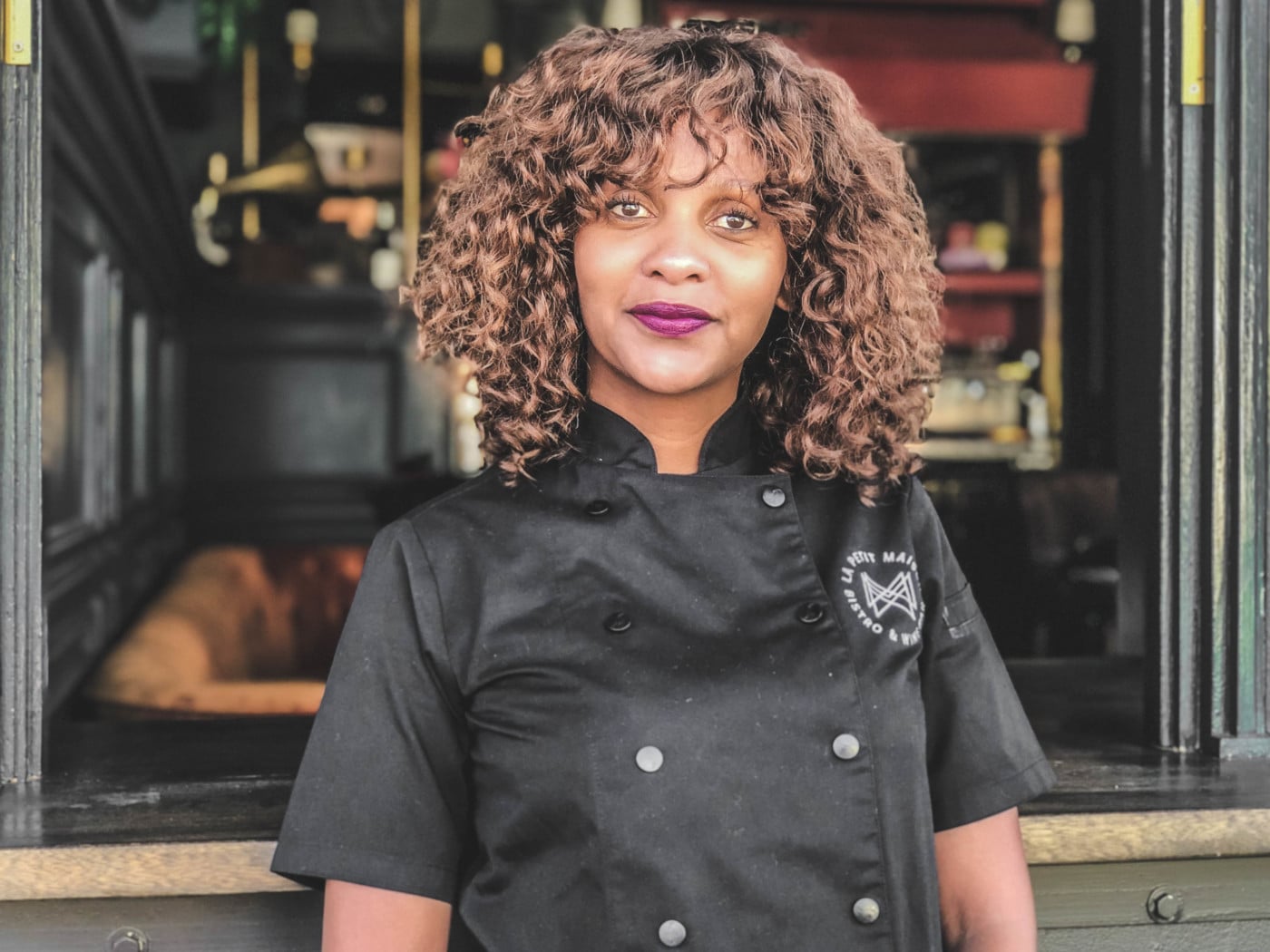
Chef Tyeya Ngxola of La Petite Maison.
Chefs Tyeya Ngxola and Timothy Stewart opened La Petite Maison in February 2019 and ran slap bang into the hell that was load shedding. Theirs was a baptism by fire (literally as none of the electrical appliances would work) and there were teething troubles in terms of quality and speed of food served. Initial reports were mixed. No one doubted the pair’s potential but consistency was a problem. Fortunately, necessity has been the mother of invention, modified menus have overcome Eskom’s inadequacies. Ngxola and Stewart are now maintaining the magic night after night.
Blink as you drive along the hustle and bustle of 7th Street and you might miss La Petite Maison. It is a teeny tiny sliver of a restaurant which can seat no more than 20 diners. Intimate and elegant, cobbled floors, upholstered velvet banquettes and low-key jazz set the scene. But for the absence of cigarette smoke and dog poo on the pavement outside the restaurant, a diner might imagine that they had passed through a portal into Paris.
The youth and beauty of Ngxola and Stewart belies their significant training, skill and international experience. The pair are graduates of Prue Leith Chef’s Academy, Centurion and Alma; La Scuola Internazionale di Cucuina Italiana, Parma, Italy. Between them, they have racked up some impressive kitchen time with stints at Cape Town’s The Test Kitchen and The Greenhouse followed by several Michelin-starred Italian eateries including La Fiorida and Antica Corte Pallavicina.
La Petite Maison’s menu reflects local and international influences. While the cooking methods are generally classic French and Italian, it is the South African land and seascape that provides epicurean inspiration. Lunch time diners are offered charcuterie and cheese platters but those eating in the evening are taken on three-, five- or seven-course culinary journeys with across our epicurean environment. Vegan and meat-based tasting menus are available in which each course represents a region. Prices are at the reasonable end of average for such fine food. Three courses without wine costs R400 and R550 with wine. Five courses without wine is R550. With wine it is R800. Those who splash out on the seven-course tasting menu will pay R750 without and R1100 with wine.
The wine list (like the food menu) is small and focused with an interest in quality ingredients, natural methods, seasonal suitability, and provenance. There is a refreshing willingness to take a chance on lesser known grape varietals and small, independent new winemakers. Plenty of chefs pay lip service to the importance of food and wine pairing but Ngxola and Stewart seem to actually understand and revere the symbiotic relationship between what’s on a plate and what’s in the glass. Their suggested wine pairings elevate in every instance.

Squid-ink risotto.
My meal started with an Atlantic Ocean inspired, jet-black swirl of squid-ink risotto topped with golden calamari coils. Contrasting textures came together with just the right amount of give and bite. Each fruity, fresh, lime-laden sip of 2015 Fledge and Co. Hoeksteen unwooded Chenin Blanc brought beautiful structure and clarity to the creamy, rich, rice.
The Karoo came next with a silky, dice of ostrich tartare dotted with bouffant blobs of aioli. A light, thirst quenching Magna Carta vin de soif white merlot quenched the saline tingle of crisp, fried capers. Is there any sound finer than the crunch of pork crackling between molars? Sometimes I think the snap, crackle and pop of ice meeting gin and tonic comes close but not today. Crunch gave way to tender fat and slow cooked, soft strands of belly meat in a rectangle of Magalies-bred pork. Slices of fresh fig and a glistening, chestnut brown, star anise-infused demi-glace sauce met and matched the intense ruby red berry, plump quince and subtle spice flavours of Holden Manz Visonaire, 2013.
Plums mark the moment when summer turns to autumn so it was slightly sad to see them served with the Hogsback-inspired poultry course. But not so sad that it wasn’t wonderful to taste their concentrated tang against the caramelized skin and rosy pink interior of bias cut duck breast. The addition of Catherine Marshall, Pinot Noir on Sandstone Soils 2017 not only underlined the dense fruity flavours but also added a layered, earthy savouriness. Palates were cleansed with a Tzaneen-inspired mango and rum granita.
Perhaps, the chefs sensed my need for reassurance that summer wasn’t on its way out when they sent a fruit forward froth of raspberry fool, topped with pistachios and cradled in alternating spheres of white and dark chocolate. I was having such a nice time that I forgot to ask the chefs or the charming waiter, Brian Dumani, more about the lovely unlabeled, accompanying noble late harvest. Whatever the wine was, it glowed with golden sunshine kissed, honey and almond scented cheer. A jolly good time was had by all.
Running a restaurant is exhausting at the best of times. Opening one against a backdrop of load-shedding is for superheroes. These superheroes are a great addition to the neighbourhood.
La Petite Maison: 010 593 7986; 1 7th Street, Melville, Johannesburg; https://www.facebook.com/pg/MaisonMelville

Gem of a sem.
Trizanne Barnard of Trizanne Signature Wines has crafted a particularly classy example of Semillon in the case of her 2017. Grapes from a 20-year-old Elim vineyard, winemaking involved spontaneous fermentation before maturation lasting 16 months in older oak.
The nose shows citrus, blackcurrant and a waxy note. The palate is super-concentrated with plenty of weight and texture but equally not short of freshness while the finish is long and savoury (alcohol: 12.9%). Only 900 bottles made so Sem geeks should make haste.
Editor’s rating: 92/100.

Find our South African wine ratings database here.
I had thought that I wouldn’t write about last week’s Cape Town tasting of the new releases of Van Loggerenberg and Craven as I knew they were to be covered by Christian Eedes on this website (and by Angela Lloyd elsewhere). But my response to many of the wines, especially the Van Loggerenbergs, was markedly different from Christian’s, so I decided to offer my observations, for the sake of making a second opinion available – concentrating on any differences of appreciation rather than similarities.
Lukas van L’s two 2018 chenins seemed to me pretty much in line with the 2017s, with Trust Your Gut (I wish I could come close to liking that name!) the more immediately charming, sweet-yellow-fruited of the two, with plenty of depth, flavour and character. Unlike Christian, I appreciated more the Kameraderie (nicer name too!). I relished its element of steely austerity abetted by a little phenolic grip – in the context of deliciousness making it a more complete and profound wine. Though I can understand that many would prefer the delights of the other one in youth.
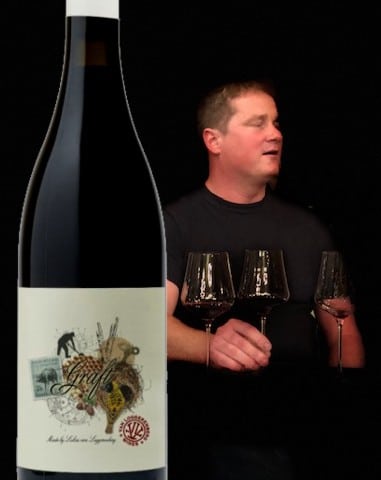
Lukas van Loggerenberg of Van Loggerenberg Wines.
As to the syrahs on offer that day, well; Christian and I often differ about syrah quality I think, and certainly, do over these. The Craven Firs 2018, from the Faure area of Stellenbosch, is, agreed, a most attractive, good wine, with a lovely structure despite (?) its modest 12.5% alcohol, with pure, perfumed fruit; very well balanced, light-feeling and fresh. But for me the Van Loggerenberg Graft, from Polkadraai Hills is altogether more complex and remarkable. This granite-soiled area is proving itself to be of the great and most recognisable terroirs for Cape Syrah – certainly, the finest yet to be revealed in Stellenbosch, with other particularly excellent examples coming from Reyneke (especially the Reserve Red), and Reenen Borman’s Sons of Sugarland Syrah. Carinus Syrah is there too. Graft 2018, with its spicy (pepper, cinnamon) dark and red fruit, the whole bunch pressing and the oaking contributing to but not dominating the character, is above all a first-rate product of the terroir – deep, expressive, already harmonious, and distinct and fine. Altogether, if I were to be obliged to score these two syrahs, I’d probably be content to swop around the 92 and 95 given by Christian, with my higher rating going to Graft.
Van Loggerenberg Breton is also from Polkadraai – three different parcels, however. Another wine accenting savouriness rather than obvious fruit, despite the fragrance and the depth of flavour, with tobacco and dried herbs amongst its subtle, youthful complexities. Beautifully dry, with a fresh acidity and a firm tannic structure that will be even more compelling. Perhaps it was the varietal herbal quality that restrained Christian’s scoring (91), but he also notes it as “angular”, which was not a description that occurred to me, and I clearly admired it more than he did.
Happily, Christian and I agree on the merits of the Geronimo Cinsault – one of a small handful of truly ambitious, serious wines made from this variety in the Cape; and totally delicious to boot. Agreement too about the savoury, grippy Break a Leg Blanc de Noir. Again, it’s a rare example of local seriousness in the genre, but I was a little disappointed in the 2018 compared with previous vintages, which I recall having more fruit intensity and tasty harmony.
Incidentally, I thought this release was the best showing yet of Jeanine and Mick Craven’s range. I suspect it’s less a vintage thing (though their performance in a difficult year is testament to especially Jeanine’s work and constantly paying attention to what the vines were doing), and more a matter of increasing their confident understanding of their grapes and of their own focus. They are all modest wines (in the very best sense of that word), light and fresh – but with none of them this year teetering on the lower edge of vinosity. I have previously described my pleasure in the new-look Craven Cabernet Sauvignon.
Altogether, from these two producers, a welcome new angle on what can be done in what remains the Cape’s foremost, though not most exciting or dynamic, region.
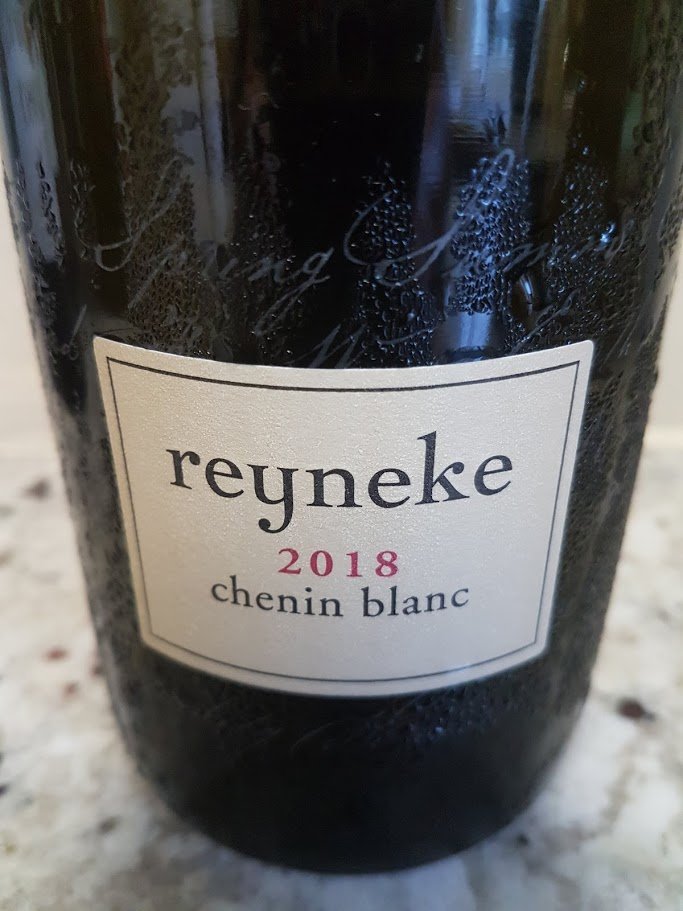
95/100.
Here are our five most highly rated current-release wines of last month:
Craven The Firs Syrah 2018 – 95/100 (read original review here)
Reyneke Chenin Blanc 2018 – 95/100 (read original review here)
Van Loggerenberg Trust Your Gut Chenin Blanc 2018 – 95/100 (read original review here)
Schultz Family Wines Skeleton Coast Chenin Blanc 2018 – 94/100 (read original review here)
Van Loggerenberg Geronimo Cinsault 2018 (read original review here)
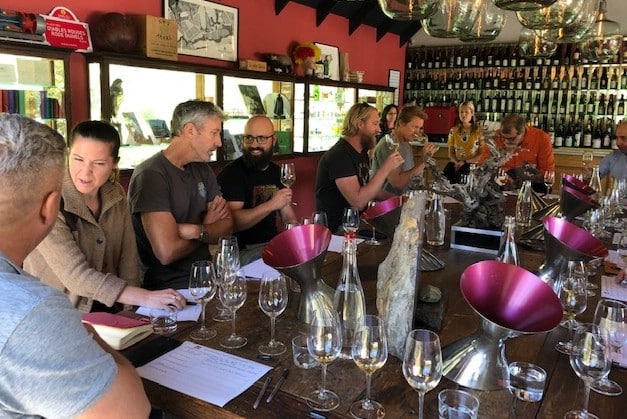
Tasting Portuguese wines at Boekenhoutskloof.
One of those wine days that come as a rare treat and privilege… Firstly a chance to learn something about the Portuguese coastal region of Bairrada, when Joaquim Sá, MD of Amorim Cork South Africa and unofficial local wine ambassador of Portugal, organised a fascinating tasting of Bairrada reds and whites going back to 1991. It was hosted by Boekenhoutskloof and presented by Emile Joubert to 18 or so people – mostly a wide assortment of winemakers whose common thread apart from eminence was presumably a degree of commitment to cork, plus a few viticulturists and, happily, me.
Although modern Bairrada allows for the standard international grapes, we focused on the two great traditional grapes of the area (and it’s hard to beat Portugal’s splendid range of indigenous winegrape varieties) – bical (white) and baga (red). Mostly from Luis Pato, the great traditional name in Barraida and a passionate exponent of baga, and a few each from his daughter Filipa Pato (these in perhaps a more modern, though resolutely hands-off style) and PáIacio do Bussaco (also grand and traditional).
I think most of the tasters agreed that the whites produced more stars on the day, including an impressive, still-fresh 1991 and two particularly fine 2003s. It was the brilliant acidity that counted, perhaps – as it did with the reds, which also packed a massive amount of tannin to help in their preservation. Baga is sometimes compared with nebbiolo on those grounds, but it seemed to me from the older reds here (1997 and 2001) that baga’s tannins are there for keeps, and won’t magnificently resolve in time as nebbiolo’s do. Incidentally, baga has a history of being the real workhorse variety of the region – Emile told us that it has historically been the grape in the famous (notorious) Mateus Rosé (at one time the biggest brand in the world, and certainly the first wine I ever bought at a restaurant – in London in the early 1970s – on the advice of my dining partner, I being totally ignorant). And like bical, baga finds its way into some traditionally made sparkling wines.
The baga wines were not disappointing, but less exciting than the white bicals and bical-based blends. Full of character, but the traditional ones rustic compared with good Italian nebbiolo. There was also a modern, youthful one made by the ubiquitous and invaluable Dirk Niepoort in typical fresh, whole bunch-ferment, less tannic style – it roused the great ire of one of the tasters who denounced it as a commercial traitor to the grape! Others saw this point but were more forgiving… A more successful modern style came from Filipa Pato, whose Baga Nossa Calcario managed to retain the character of the grape while making it more easily accessible to contemporary wine lovers. Marvellous wine.
So, an altogether interesting and delectable morning. Chat over lunch (such a good one – including pork, though not the suckling piglet traditional in Bairrada) was perhaps dominated equally by discussion of the wines tasted and, inevitably given the attendees, talk of the current vintage. Some of the winemakers present, like David Sadie, had long since taken in all their grapes; others, like Abri Beeslaar of Kanonkop only much more recently, and Craig Wessels of Restless River in the Hemel-en-Aarde still has cabernet ripening (hopefully) on the vine. And, as in all discussions I’ve heard about this harvest, a great deal of disparate experience and satisfaction – though most people seem to agree that there are plenty of weird aspects to vintage 2019.
One thing I’d heard quite a bit about is that chardonnay has been hit quite hard – though more in terms of yield than quality. I was sitting next to Andrea Mullineux and she invited me to call in, on my way home, to the Leeu Passant cellar on the edge of Franschhoek to taste especially her Stellenbosch Chardonnay – yields down perhaps 10%, but quality well up to scratch, she said.

Andrea Mullineux drawing a sample of 2019 cinsaut.
So I had my first taste of the 2019 vintage – and Leeu Passant chardonnay was a good introduction (followed by samples of cab franc and Cinsault). From two barrels representing two pickings (close in time, but one with still a few grams of unfermented sugar). What to say? Lovely wines – in fact, I could have taken a bottle home and drunk it with great satisfaction as a young, unoaked chard; but no, it has a long way to go in the care of Andrea and her winemaker in Franschhoek, Wade Sander. I left clutching a bottle of Wade’s own Brunia Pinot Noir – and Andrea insisted I needed a 2016 Leeu Passant Chardonnay to accompany it; they are still firmly closed (no need to cram them also into such a day) so I shall report on them some other time.
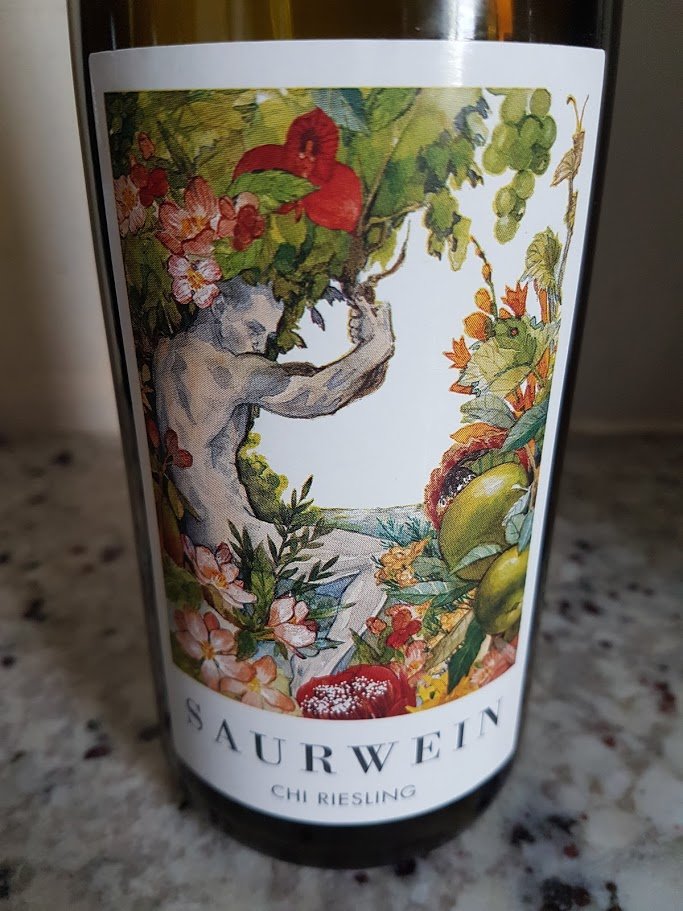
South African Riesling doesn’t get a lot of airtime but there’s increasingly good drinking to be had from this category. Here are four examples all from Elgin encountered recently that are worth seeking out:
Energy drink.
Saurwein Chi 2018
Wine Cellar price: R190
Lime, green apple and a subtle herbal note on the nose. Lean in the best sense with driving acidity – lovely fruit purity before a bone-dry finish. So very focussed.
Editor’s rating: 92/100.
Paul Cluver 2017
Approximate retail price: R110
The nose shows some floral fragrance, green apple, lime and spice while the palate shows great balance between residual sugar and acidity. 20% fermented in large oak fermenters. Alcohol: 10.9%.
Editor’s rating: 91/100.
Lothian Vineyards 2017
Approximate retail price: R105
The nose has an attractive reductive quality to go with green apple, lime and spice. The palate is light-bodied with well-integrated acidity, the finish nicely savoury. Alcohol: 12.5%.
Editor’s rating: 90/100.
90
Oak Valley Stone & Steel 2018
Wine Cellar price: R95
Some floral fragrance plus lime on the nose. The palate is super-lean with clean fruit, bracing acidity and a pithy finish. Alcohol: 12.32%.
Editor’s rating: 90/100.
Find our South African wine ratings database here.
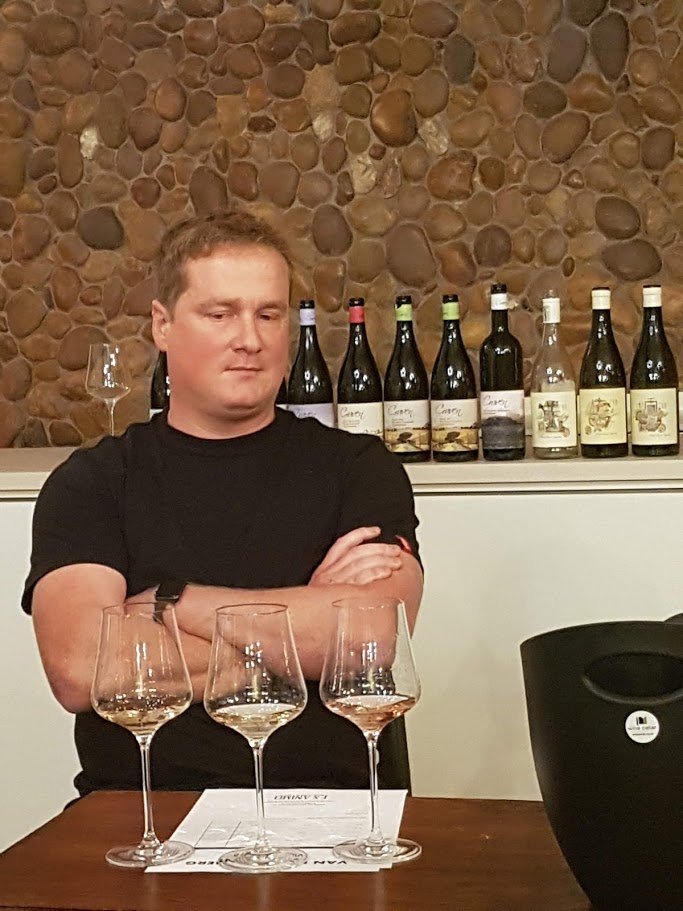
Lukas van Loggerenberg of Van Loggerenberg Wines.
The 2018s from Lukas van Loggerenberg are out and the fanboys and girls will need to free up some cellar space. Tasting notes and ratings as follows:
Van Loggerenberg Break-A-Leg Blanc de Noir 2018
Approximate retail price: R140
From Paarl Cinsault, a pink wine that’s not frivolous. Orange, wild strawberry and a subtle earthiness on the nose. Relatively medium bodied given an alcohol of just 11.7%. Has a nice freshness and a very dry finish.
Editor’s rating: 88/100.
Van Loggerenberg Trust Your Gut Chenin Blanc 2018
Approximate retail price: R370
This cuvee incorporates grapes from a variety of sources and this flexibility seems to have allowed for the best possible outcome in the challenging 2018 vintage. The nose shows a herbal top note before citrus, stone fruit, earth and spice. Super-dense on the palate but not short of verve thanks to lovely acidity, the finish long and pithy – gives great pleasure.
Editor’s rating: 95/100.
Van Loggerenberg Kameraderie Chenin Blanc 2018
Approximate retail price: R405
From a 2ha Paarl vineyard planted in 1960. A generally shy nose with vague notes of citrus and white peach while the palate seems relatively lean and impenetrable compared to previous vintages. May simply require time in bottle to show its true pedigree. Only 880 bottles made.
Editor’s rating: 92/100.
Van Loggerenberg Geronimo Cinsault 2018
Approximate retail price: R265
Now firmly entrenched as one of the most serious versions of the variety. This vintage exclusively from Stellenbosch grapes, winemaking involved 100% whole-bunch fermentation. A very fragrant nose of fynbos, cherries and plums while the palate has great fruit purity, fresh acidity and crunchy tannins. Possessing impressive clarity, this is compelling stuff.
Editor’s rating: 94/100.
Van Loggerenberg Breton Cabernet Franc 2018
Approximate retail price: R370
Very much Loire inspired. From three Polkadraai vineyards, winemaking involved 65% whole-bunch fermentation. A pronounced herbal note to go with red fruit and violets on the nose. Medium-bodied with fresh acidity and fine tannins, the finish super-salty. Seems a bit more angular than the much celebrated 2017 vintage.
Editor’s rating: 91/100.
Van Loggerenberg Graft Syrah 2018
Approximate retail price: R370
This vintage is exclusively from Syrah whereas the maiden 2017 contained a significant portion of Cinsault. 100% whole-bunch fermentation and matured for nine months in French oak, a third new. The nose shows a slight smoky note before dark fruit and pepper. The palate is forceful due to fruit density rather than high alcohol or extraction, the tannins firm and crunchy and again this probably needs at least 12 months in bottle to come into its own.
Editor’s rating: 91/100.
Find our South African wine ratings database here.
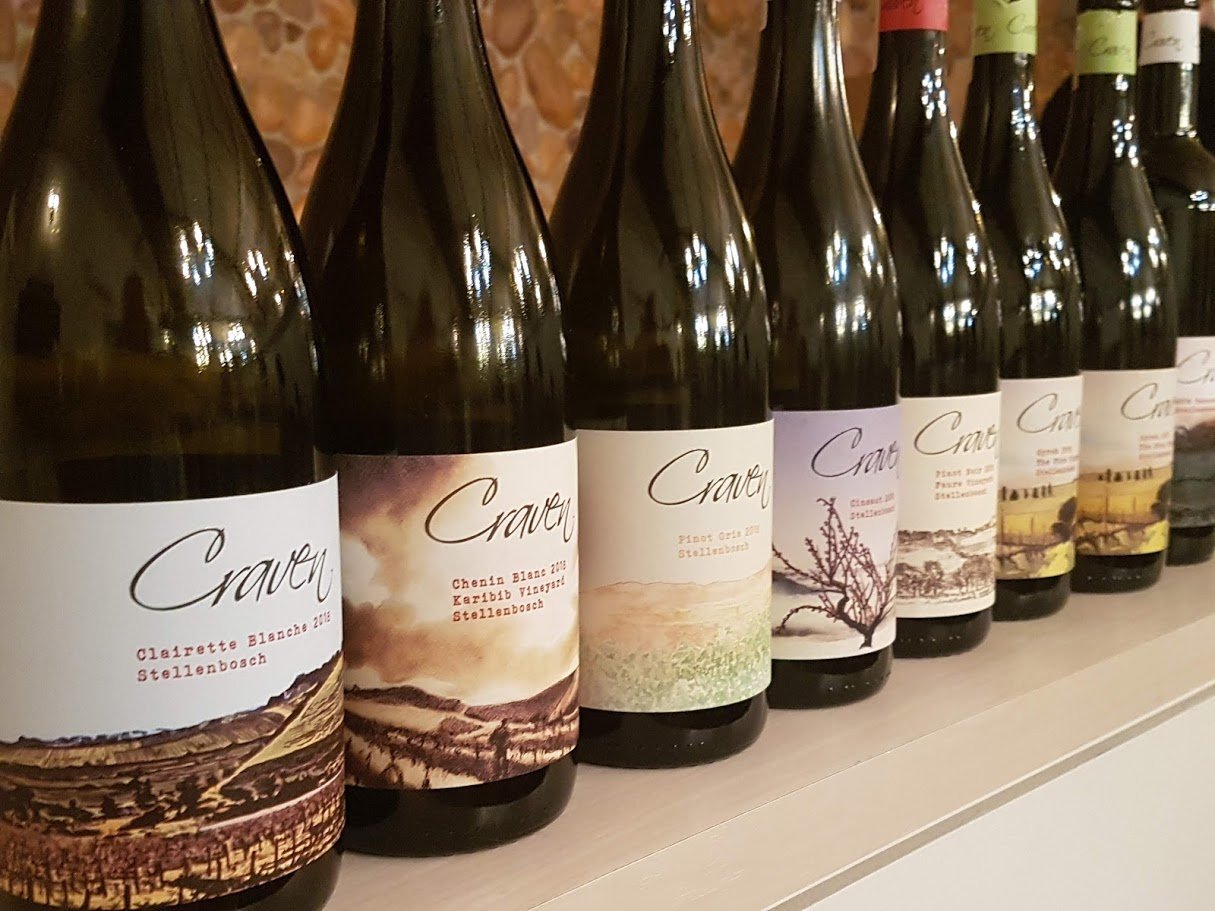
Studies in site.
Mick Craven of Craven Wines in Stellenbosch points out that vineyards were bearing the brunt of the recent Western Cape drought in 2018 and if producers did not pay close attention to their plantings during the growing season, they were likely to have been found out.
Craven Clairette Blanche 2018
Approximate retail price: R195
Sadly the last vintage of this particular variety by the Cravens (due to a change of farmer responsible for the vineyard in question) and the best to date. 60% of the juice spending six days on the skins, the nose is properly complex showing a floral top note before green apple and white peach plus bee’s wax and a little spice. Lean and fresh on the palate with a salty finish. Has a lovely intensity about it.
Editor’s rating: 93/100.
Craven Karibib Vineyard Chenin Blanc 2018
Approximate retail price: R230
From a Polkadraai vineyard planted in 1982. This wine seems to become ever more accomplished while remaining very much in the understated house-style. On the nose, peach, naartjie plus a hint of potpourri in the background. The palate is well balanced, delicate and fresh – pure fruit and a nicely dry finish.
Editor’s rating: 92/100.

Craven Pinot Gris 2018
Approximate retail price: R195
Six days on the skins and a very pretty light red in colour! A hint of rose petal before wild strawberry and raspberry. Juicy and fresh on the palate with a savoury finish – very appealing.
Editor’s rating: 90/100.
Craven Cinsault 2018
Approximate retail price: R230
From a 1988 Helderberg vineyard, all grapes destemmed. A subtle and alluring nose of red cherry, raspberry, fresh herbs, earth and spice. Light and fresh yet simultaneously flavourful and long. Very more-ish.
Editor’s rating: 91/100.
Craven Faure Vineyard Pinot Noir 2018
Approximate retail price: R265
100% whole-bunch fermentation. Red cherry, earth, fresh herbs and fynbos on the nose while the palate is lean and very savoury. Stops short of being sour and astringent but this is always a very particular take on the variety.
Editor’s rating: 89/100.
Craven The Firs Vineyard Syrah 2018
Approximate retail price: R265
Grapes from a vineyard planted on clays soils in Devon Valley. 100% whole-bunch fermentation. A tantalizing nose with subtle notes of red and black fruit, floral perfume and fynbos. The palate manages to combine delicacy with harmony – great fruit purity, bright acidity and fine tannins. Seamless and super-long, this is a wine of great finesse. This to be the only example of Syrah going forwards, the Faure Vineyard bottling discontinued.
Editor’s rating: 95/100.
Craven Cabernet Sauvignon 2018
Approximate retail price: R265
Winemaking involved 100% whole-bunch fermentation and maturation lasting nine months in old oak. Red and black fruit, violets and fresh herbs plus some earth on the nose while the palate is medium bodied with fresh acidity and fine tannins, the finish gently savoury. Possessing a lovely energy, this is the antithesis of conventional Stellenbosch Cab.
Editor’s rating: 90/100.
Find our South African wine ratings database here.
There’s nothing in the least bit homogenous about wine – not the soils which hold the vines, the climate which nurtures them, the way to make it (from the never evenly ripened grapes which come into the cellar), the routes to market, and the market itself. A new winemaker arrives at a venerable old property and her first vintage is so different from her predecessors you might well think she bought the grapes from somewhere else. That’s before she decides to change viticultural practices and planting philosophy.
A month or two later a new marketing team arrives. They decide to shift focus away from formal distribution, start by-passing their wholesale agents and develop a direct-to-consumer model. They segment their perceived customer base and decide that those most likely to respond to the call for a more direct relationship will be millennials, so they invest in social media, spend more on wine shows and less on conventional media, and research which of the wines in their range is more likely to appeal to the newly identified market.
The message comes back that they need to make more of merlot, the one variety which has always ticked along nicely without much sales effort from anyone. They tell the winemaker to consider a special merlot cuvée and they brief their design agency to come up with a suitably striking new look for the sales drive. And, contrary to the way these stories end most of the time, the project is a great success. They lose none of their existing merlot business, they don’t alienate anyone in their existing customer base, and they open an entirely new avenue through the thicket which lies between where wine is made and where it is consumed.
All this is possible – even if it rarely occurs. There are so many different ways of approaching how grapes are grown, wine is made, packaged, marketed and sold that it’s remarkable that there are any visible routes at all. The choice of merlot in this sadly fictional example was based on the fact that it is a cultivar beloved by the punters – even when it was being excoriated by the critics and wine judges. Now that there’s been a palpable improvement in the category as a whole – and certainly in the best known and most prestigious examples – sales volumes haven’t changed. It’s as if merlot buyers didn’t care one way or another what was being said about the variety. Of course, it was the safe and logical choice for a specially designed direct-to-consumer exercise.
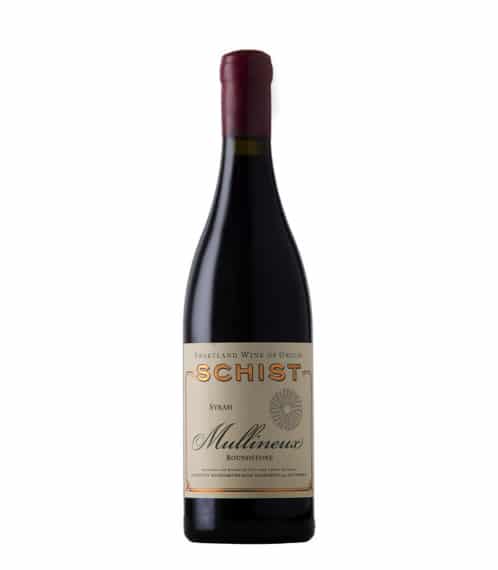
Darling of the critics but does it sell?
But what would have happened if the same, market-savvy team had decided that they should choose shiraz (or Syrah) instead of merlot. After all, it’s been getting a pretty good press and suitably generous ratings. The 2019 Platter Guide lists ten 5 star examples compared with only three merlot. The 2018 Guide had nine Shirazes, but only one merlot. The past five editions of the Old Mutual Trophy Wine Show would have yielded much the same ratio of Shiraz to merlot gold medals. On paper, merlot should be the hard sell, and shiraz producers should be supplying on allocation only (“One shiraz for every five merlot” – a kind of DRC approach).
This is not the case, though rumours of shiraz producers battling to sell their wines are probably exaggerated. Annual shiraz production is significantly more than merlot, which may in part account for the widely held view that it’s a hard sell: possibly it’s the last 10% that struggles to find a market, but this would be true of most high-volume varieties. There is certainly a disconnect between its status among critics and judges, and how it is perceived by everyday wine drinkers.
At its most austere (and therefore the style most popular with the critics) it is a little lean and fleshless – all pepper and no texture. It’s the kind of wine you can admire – like the tennis of Novak Djokovic – rather than love. (By the way, this doesn’t make Rafael Nadal the anthropomorphic metaphor for merlot, or Roger Federer for pinot noir). But this is not the only way you can handle the grape. It’s just as easy to make it juicy, with much the same flavour profile as merlot (which is why it was such a useful blending partner to cabernet in Bordeaux before its use was outlawed.)
Shiraz is capable of both styles, and the international success of the Australian wine industry from the 1980s onwards was largely achieved through the easy accessibility of Aussie-style shiraz. At the very top of the pyramid are wines like Grange, with massive American oak married to fabulously ripe intense berry fruit – not a whiff of pepper anywhere on the spectrum. Equally, as you progress towards greater volumes, via Penfold’s Bin 28, the various Wolf Blass and Peter Lehmann selections, to Koonunga Hill, just about every one of the wines which made an impact and reeled in consumers in vast numbers had a richness, a juiciness and a plushness to them. If merlot can be consumer-friendly and easy drinking, Shiraz can be all this, and more. Only it’s not there, at least not now and not yet in South Africa. It’s almost as if our wine producers have consciously decided not to play the Australians at their game, without having designed an alternative for the wine-drinkers seeking seduction ahead of intellectual engagement.
Just as geeky winemakers seem to steer clear of merlot, so the high-volume producers are not exploiting shiraz’s proven potential to make sumptuous, opulent wines. The long-term effect of this is that shiraz could have an image problem amongst the consumers who account for the big volumes – in the same way as merlot has an issue amongst the commentariat. I guess this poses the key question to producers regarding the crossroads at which shiraz finds itself in South Africa: if you had to choose – would you rather be where the call is for volume, or where the scores are high? The answer – it would seem – depends on whether you’re aiming to make a statement or simply to make money.
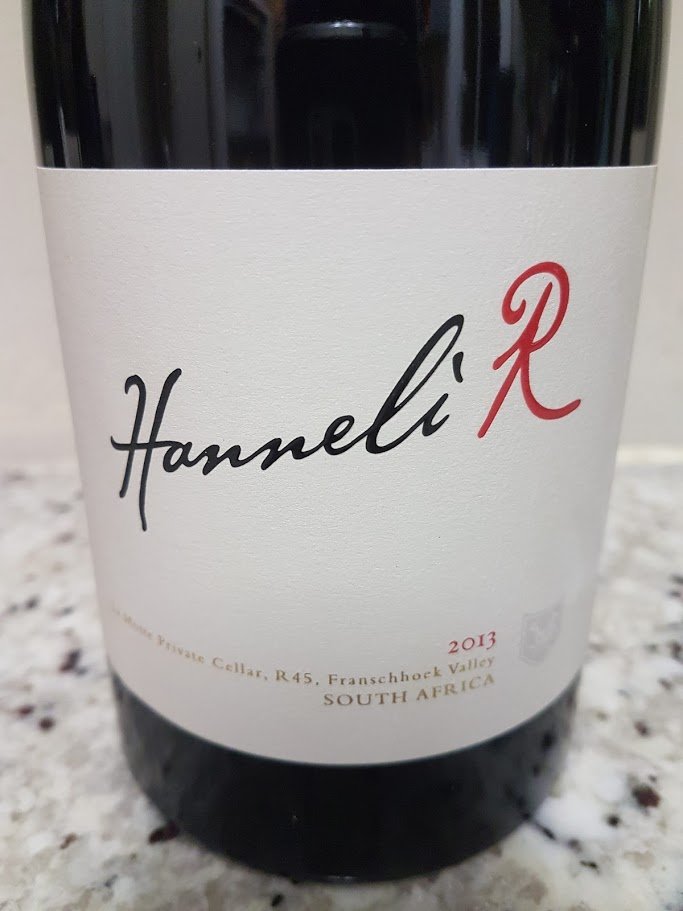
A riddle, wrapped in a mystery, inside an enigma.
I’ve never quite known what to make of the top-of-the-range red blend called Hanneli R from La Motte and the current-release 2013 is no exception (price: R1 300 a bottle).
Consisting of 60% Elim Shiraz, 30% Walker Bay Grenache and 10% Franschhoek Petit Syrah, the wine was matured for 40 months in 100% new oak. The nose shows cherries and plums, a slight maltiness, a touch of oak and a hint of spice. The palate is sweet in the best sense with moderate acidity and soft tannins. It’s quite broad although hardly a blockbuster (alcohol is a moderate 13.5%) and I’m always left wondering precisely what target market this wine is aimed at.
Editor’s rating: 90/100.
Find our South African wine ratings database here.
Subscribers receive daily reviews and in-depth reports before release to the public. Cancel any time.
