Krishan Peters is standing behind the counter of Prashad Café in Kloof Street. He’s wearing an Origin coffee apron; there’s a big, shiny coffee machine. There are potted plants and an Instagram-friendly mural. There’s no meat on the menu; indeed, nearly half the dishes are vegan-friendly.
None of this is terribly unusual, especially in the hipster-heavy City Bowl. Prashad Café is just one of Cape Town’s estimated 60 vegan- and vegetarian-friendly restaurants.
What’s unusual here is the food: It’s exceptional. The soya mince that’s used for the samosas is drained and rinsed so thoroughly it’s the best looky-likey meat samosa I’ve ever had. The egg-free roti and nan doughs are double-rested and double-kneaded to achieve a softness that makes them almost indistinguishable from regular Indian flatbreads. Instead of ghee or butter, the doughs are brushed with an oil and vegan butter combo.
The menu at Prashad Café is built around curry. This matters, from a foodie point of view. Why? Because the first ancients to develop a meat-free cuisine were Indian. Dishes like yellow dal have been perfected over 1500-plus years. The same cannot be said for lentil burgers and tofu nuggets.
Moreover, Peters has resto-pedigree. More than forty years ago, his grandfather opened Maharajah, one of Cape Town’s first Indian restaurants. It’s still attracting rave reviews from customers. Peters’ mother, Theresa, has been chef-owner at Maharajah Vegetarian in Rondebosch for over a decade. Prashad Café is just five months old but the recipes are much older: each one is an adaptation of Theresa’s most successful dishes.
The Chana Masala, a humble dish of tomatoes, potatoes and chickpeas, is exquisite. The tomato is slow-cooked, sweet. The spicing is gentle but warm; the chickpeas and potato firm but comforting.
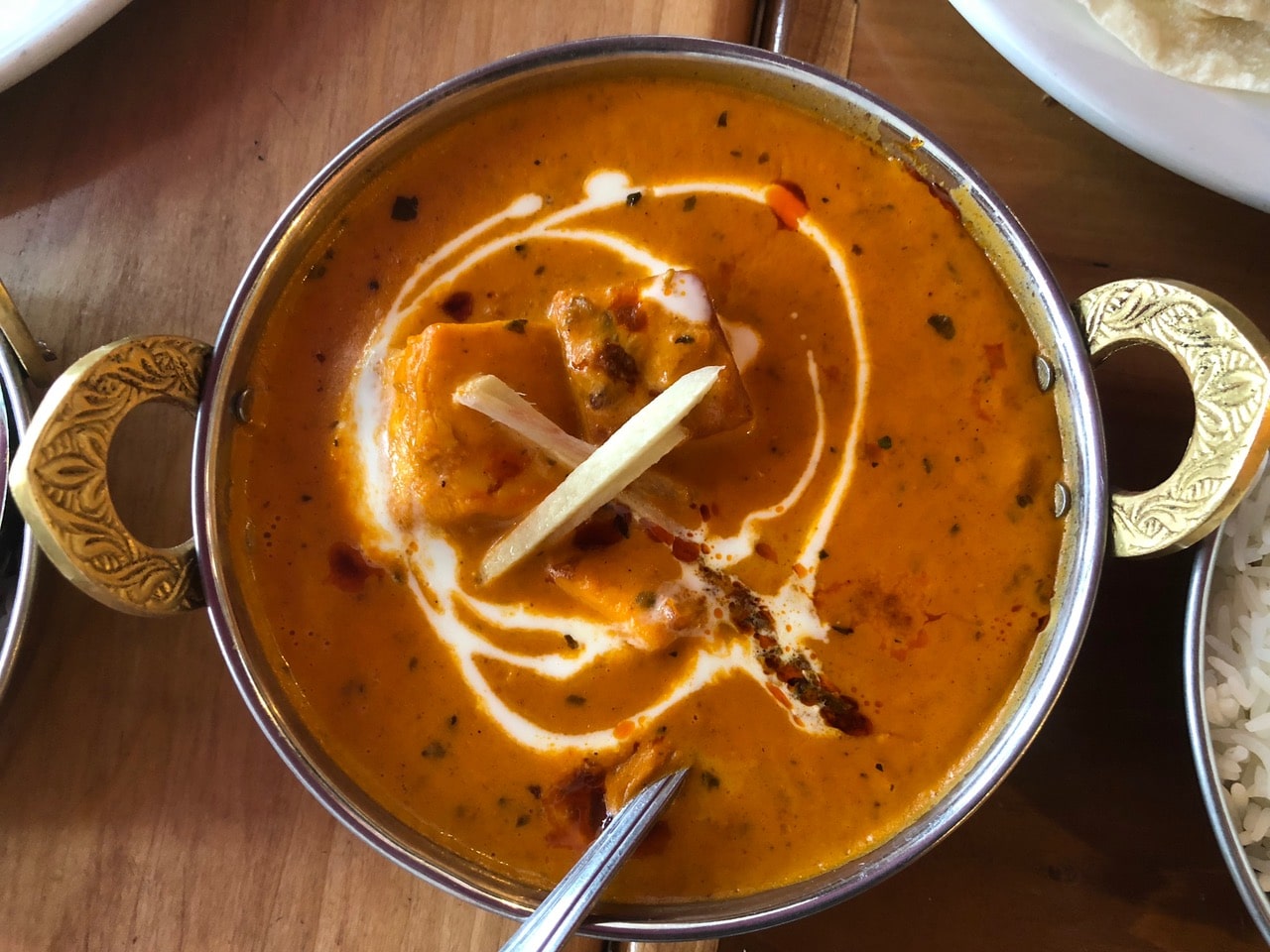
Paneer butter masala.
The paneer butter masala (pictured) is equally lovely: luxuriously smooth and rich, with unusually firm chunks of Indian cottage cheese.
The butter beans curry is justifiably famous. If rich “butter” sauces and dal makhani nod to the North Indian dishes that made Maharajah in Long Street famous, the butter beans curry points in the direction of the family’s Durban roots.
This curry is robust. The spices are lively. The beans are nutritious. It eats like a working man’s lunch on a humid summer’s day. It’s the obvious filling for the bunny chow.
The roti wraps – Cape Town’s version of a mobile curry – are enormous. I would recommend the mix veg curry here – instead of the saucy korma – simply for ease of eating.
One matter of personal taste: The soya “mock” chicken is neither stringy nor rubbery, but I don’t like the texture. Having said that, I notice that for some online reviewers the soya butter chicken is their raison d’etre.
The samosas deserve a special mention. The spinach and paneer filling is so freshly green it reminded me of a spanakopita. The potato coriander filling perfectly exemplifies how even the humblest of combinations can be distinguished by masterful cooking.
The mango lassi is a stand-out. Made with real fruit and home-made yoghurt, is everything a mango lassi should be: fruity-sweet not sugary-sweet; creamy but not cloying. It is a bright and tropical treat that elevates the mango, that most royal of Indian fruits. This mango lassi is the very opposite of what strawberry milkshakes are to strawberries.
Prashad Café is not licenced. However, as its name would suggest, it does do a good coffee. The cappuccino I drank would hold its own against any other Kloof Street coffee. Peters also serves vegan cakes.
Parking here is easy, a boon in this part of Gardens. Finally – unbelievably – it’s so affordable. Samoosas are R5 each – have all four types for R20, why don’t you? – and a wrap is R60. Curries are R80 each but the portions are so big your leftovers or doggy bag will do for supper tomorrow. A double shot espresso is just R18.
Prashad Café: Shop 11B, Palmhof Centre, Kloof Street, Gardens; (021) 422-0264; www.prashad.co.za
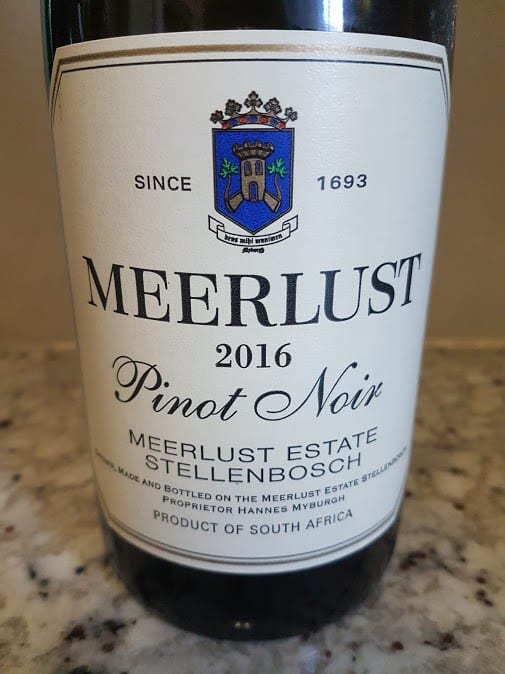
Not Rubicon.
Is there any other South African property which manages to apply both the Bordeaux and Burgundy template as convincingly as Meerlust in Stellenbosch? Famed for the Cab-driven Rubicon plus its single-variety takes on Cab and Merlot, you can’t overlook the straight Chardonnay and Pinot Noir, either.
The 2016 vintage of the Pinot was matured for 11 months in French oak, 50% new. On the nose, red cherry, musk and a subtle herbal note. The palate is light bodied (alcohol: 13.3%) with pleasantly tart acidity and fine, grippy tannins. The overall impression you’re left with is that this is a wine of some delicacy. Wine Cellar price: R295 a bottle.
Editor’s rating: 91/100.
 Find our South African wine ratings database here.
 In conjunction with multinational financial services company Prescient, winemag.co.za is pleased to announce the eighth annual Chardonnay Report.
Wines will be tasted blind by a three-person panel consisting of Christian Eedes as chairman as well as Roland Peens and James Pietersen, both of Wine Cellar, Cape Town merchants and cellarers of fine wine.
Entries are now closed. Results will be made public on Tuesday 16 October.
For the rules in full and the entry form, CLICK HERE.
Read last year’s report HERE.
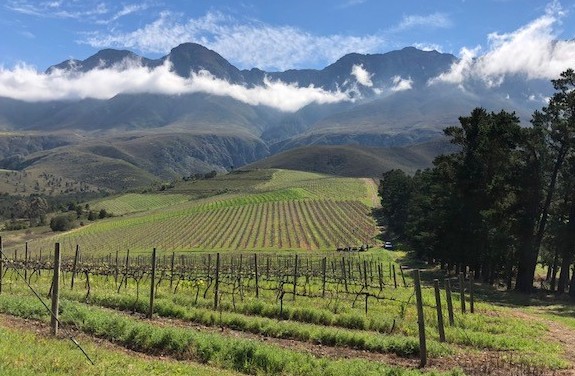
Lismore.
Greyton is a long way from the heart of the Cape winelands. It’s actually a long way from anywhere. But it’s a famously delightful, arty little village set in beautiful mountainous surroundings – and ten kilometres or so out of town is a wine estate producing remarkably fine wines. I was reminded of all this last week when I made the trek from Cape Town on a lovely spring day through an Overberg resplendent with hilly vistas of young green wheat and brilliant yellow rapeseed. Destination Lismore Estate.
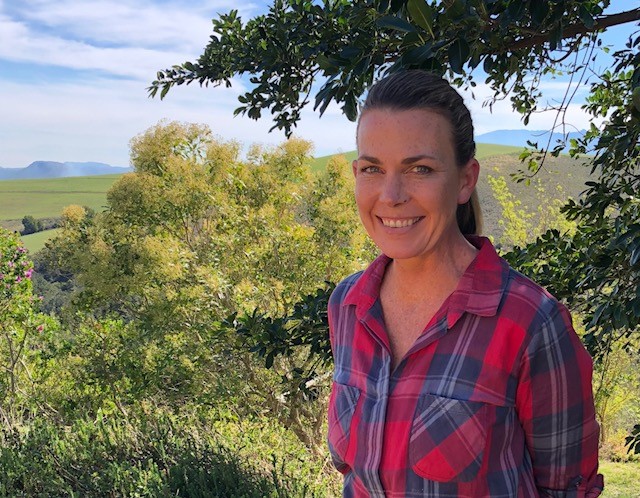
Samantha O’Keefe of Lismore.
Winegrower Samantha O’Keefe is a little bored, I think, with her own story – or at least with telling it. It’s a remarkable one, though: A young Californian woman with no background in wine abandons a successful career and moves to what couldn’t more literally be the other side of the world (because she’s going to have children and is determined that they won’t be brought up in America; I daresay there’s a bit more to the push-and-pull factors involved, but that’s sufficient); in 2003 she buys a lovely farm with magnificent views near Greyton, starts planting vines, and makes wine in a space beneath the house that’s she’s had built there (later she did her vinifying in Elgin and then the Breedekloof!). She has two children, but the marriage doesn’t work. Nor for some time does her business, though she has already gained some reputation for her small-production wines. At one point, things are touch and go and she has to sell off part of the farm in order to survive a little longer. Then comes international success, following Neal Martin’s glowing reports of her wine for Robert Parker’s Wine Advocate in her native country. Things get better and better. Things are good.
If that’s a ridiculously brief summary of the adventures, troubles and success of a clearly resilient, confident and talented person, you should hear her own short version: “I came to South Africa and now everything is fine…. I am a winemaker in South Africa.” Let’s leave the background story at that.
I’m rather proud to believe that I was the first journalist to ever go out to Greyton to visit Samantha and Lismore (OK, that’s not such a great achievement in South Africa, where few wine journalists travel further than Stellenbosch, and then only when the lunch or launch isn’t brought to them or them to it.) Anyway, it’s quite a few years since I was last there, so it was a great pleasure to cross the mountains, take the dirt road out of Greyton and the bumpier one up to Samantha’s isolated house and vineyards.
What is new? Samantha has perforce learnt viticulture as well as winemaking. She now has all four Northern Rhône varieties planted (syrah and viognier for quite some time, and younger plantings of marsanne and roussanne), as well as sauvignon blanc and chardonnay: all dryland-farmed and low-yielding in her shale soils and cool climate (the drought didn’t spare Lismore, by the way). And she has a proper winery of her own now, built in time for the 2017 vintage – spare and simple, but spacious and replete with barrels and tanks and eggs both plastic and cement. It’s clearly a source of great satisfaction to her, especially as she’s convinced that it has led to an “exponential growth in quality”.
And so to the wines, enjoyed on her veranda with its splendid views across the Overberg. The views did no harm to my pleasure, but weren’t needed, for the wines are very good indeed. The overall aesthetic is one of restraint and elegance, the wines fresh and energetic. It comes as a surprise to me every time I really enjoy a sauvignon blanc or a viognier and think I could be happy to spend an evening with it. I could do that with her Age of Grace 2017 viognier from Elgin, rich, textured but with fine acid and charming aromatics well controlled by oxidative handling. And with the blackcurranty, pure-fruited Barrel Fermented Sauvignon Blanc, including some grapes from elsewhere, with its brilliant but unaggressive acidity.
The wines entirely from grapes off Lismore’s extremely low-yielding vineyards now appear as Estate Reserves with a smart new look, including vintage neck-labels. And while I admired the lightly perfumed Lismore Syrah 2016 (my notes full of words like balance, restraint, fresh, textured), the maiden Estate Reserve Syrah 2017 adds greater complexity and depth. The Estate Reserve Chardonnay 2017 is also more complex, and richer, than the straight 2016 (with a Kaaimansgat component) – partly because of its new-oak component: a grander wine, but I understand Samantha’s slight feeling of loss of the pure, elegant understatedness of the old-oaked version. Her second red, a Pinot Noir from Walker Bay and Elgin (2017, the second vintage) has both perfumed charm and structure, bright and light-feeling – but I admire the syrahs more.
Some 70% of Lismore wines are exported, carrying some of the beauty of the Overberg with them to other parts, but look out for them locally, and enjoy. Most of them are undoubtedly in the upper tiers of their categories. Samantha O’Keefe came to South Africa and now everything is fine.
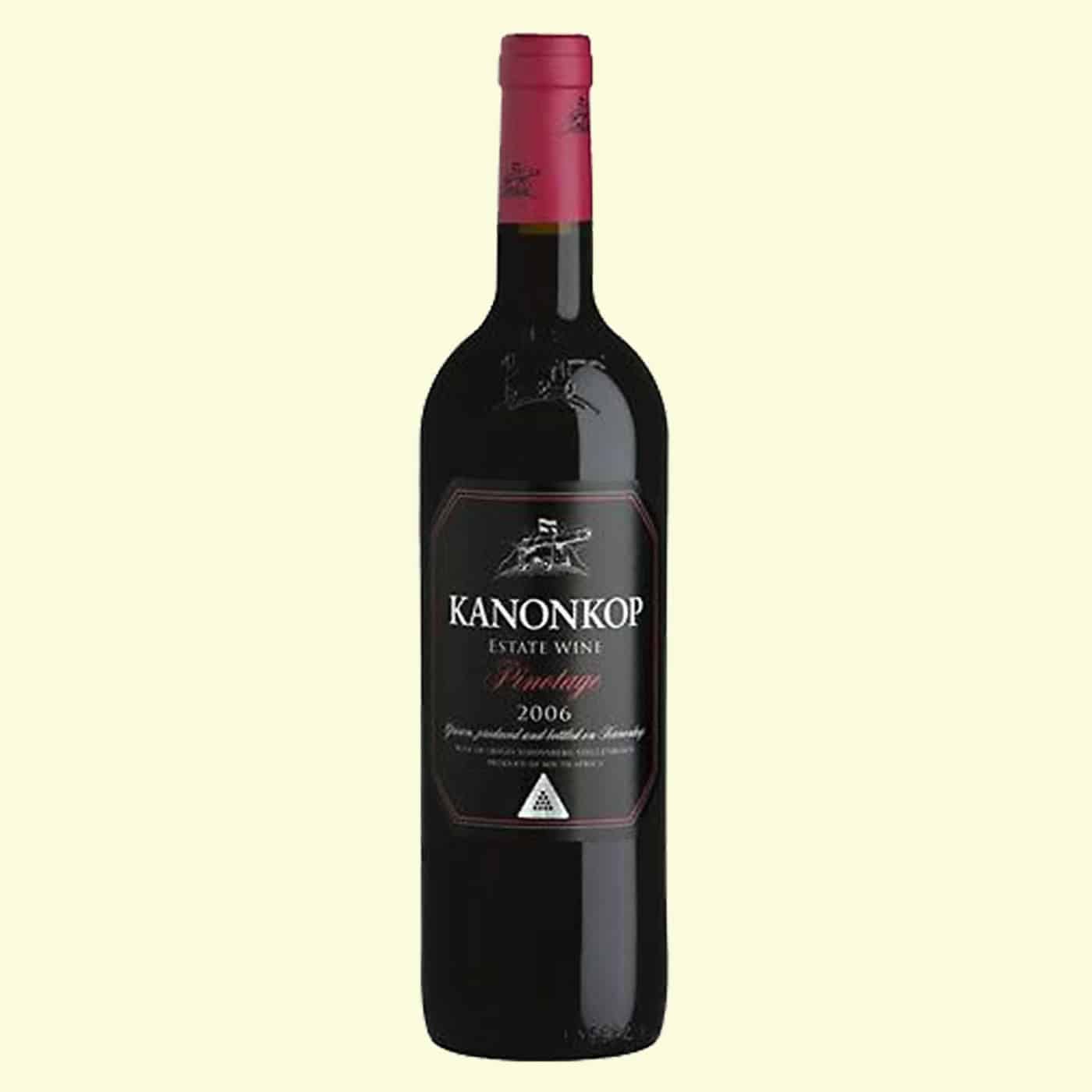 Win a bottle of Kanonkop Black Label Pinotage 2016 worth R1 750. Grapes from a single vineyard planted on granite in 1953, the wine underwent maturation for some 18 months in French oak, 100% new.
To enter, all you have to do is 1) sign up for our free newsletter and 2) like our Facebook page.
To subscribe, click HERE.
To visit our Facebook page, click HERE.
Competition not open to those under 18 years of age and closes at 17h00 on Friday 14 September. The winner will be chosen by lucky draw and notified by email. Existing subscribers also eligible.

Standard bearer.
Seven Flags is the designation for the top-of-the-range wines from Elgin property Paul Cluver Estate, the Pinot Noir 2016 made entirely from clone 113, fermentation begun spontaneously before inoculation with selected Burgundian yeast, maturation lasting 11 months in French oak, 20% new.
It has very appealing aromatics with notes of musk and cherry plus some oak char and spice. The palate shows good fruit definition, freshness and fine tannins – there’s a really nice energy about it and the finish is long and dry. Wine Cellar price: R705 a bottle.
Editor’s rating: 92/100.
Find our South African wine ratings database here.
 Total sales were just over R5.26 million for some 6 700 litres of wine (107 items from 63 producers) at this year’s Nederburg Auction – a rough calculation putting the average price per litre at R785, an all-time record and an increase on the average of R725 achieved last year.
The top buyers at the 2018 Auction were Pick ‘n Pay with 9% of total sales, followed by Conservation Company Singita with 5.5%, the Tsogo Sun at 4.3% and 3.7% for Big Five Duty Free making a combined total of 22.5%. In terms of country, South Africa accounted for 76% of all wines sold with the balance going to international buyers.
The highest priced item at the 2018 Nederburg Auction was a 1948 Monis Collectors Port being knocked down for R21 000 for 3 x 750ml bottles. In terms of varieties, the highest prices achieved per 750ml were:
Red – R5 000 per bottle of Chateau Libertas 1968
White – R833 per bottle of Hermanuspietersfontein Nr. 5 2012
MCC – R1 000 per bottle of Le Lude Vintage Brut Agrafe 2012
Port – R7 000 per bottle of Monis Collectors Port 1948
NLH – R1 500 per 375ml bottle Nederburg Edelkeur 1996
To read the keynote address by businessman Michael Jordaan, click here.
There’s nothing that Marc Kent – effectively the MD of Boekenhoutskloof, whatever his actual title, if any – nothing he loves more than a new project. And he’s clearly relishing the most interesting one since Boekenhoutskloof made its big push into the Swartland over the past decade – first buying Porseleinberg and establishing it as a stand-alone brand as well as the source for great volumes of syrah for the home winery in Franschhoek; then buying Goldmine, the farm on the slopes of Riebeekberg.
 The latest Boekenhoutskloof adventure is to be in the process of acquiring a significant land presence in the Upper Hemel-en-Aarde. With any luck that should be finalised soon – but already the 2017 maiden vintages of pinot and chardonnay under the new label are bottled, and Marc will be showing them publicly at Cape Wine next week for the first time. The name of the project is Cap Maritime, and the deeply etched and sand-blasted bottles, sealed with wax, show what appear to be the three ships of Jan van Riebeek in full sail (just the name of the variety differentiates the bottles for the two wines). Why the French name I’m not sure; nor am I entirely convinced by the move from classic paper labels – but I reckon those less conservative than me will happily accept the striking aesthetic of the latter (also French-designed, as it happens).
Right now, there aren’t any pinot or chardonnay vines on the land in question – they’re all in the mind and on the drawing board of viticulturist Rosa Kruger, who’s been engaged to design and plant the vineyards. Meanwhile, other vineyards in the same Upper Hemel-en-Aarde Valley ward have been leased and will be used until the new ones grow into sufficient maturity.
Nor is there a cellar, but Marc says they will “definitely build a winery there – sooner rather than later”. For the time being – as for the 2017 and 2018 vintages already – the grapes will be vinified at the Franschhoek winery, although there will be no brand association of Cap Maritime with the parent company: similarly to Porseleinberg, Cap Maritime will be totally independently branded and marketed.

Marc Kent and Gottfried Mocke of Boekenhoutskloof.
And in that Franschhoek cellar, taking in the grapes, is of course one Gottfried Mocke. He had a pretty illustrious relationship with chardonnay and pinot production when he was at Chamonix. It’s almost as though this project was dreamed up for him (and Marc Kent is nothing if not a dreamer – albeit a remarkably practical one), and it’s hard to think of it developing further without Gottfried; but I dare say we must wait and see what happens when there is a separate winery in the Hemel-en-Aarde.
As for the maiden release – I’ve had a preview and the two wines are excellent. The Pinot is typical of the Upper Hemel-en-Aarde Valley in its perfumed charm – less firmly structured by tannin than pinots from the other wards, especially the one closer to the Hermanus mouth of the valley. It has lovely pure fruit, again downplaying the savoury side. There’s real intensity and depth of flavour. No problem in predicting a reasonable future for the wine, though it’s approachable now. The Chardonnay is perhaps even finer, subtly showing all shades of citrus fruit, delicate but not without force, very refined, with a great vein of acidity and a long mineral-stony finish.
This new project is going to consolidate Boekenhoutskloof’s all-encompassing range – at the top end, of course; expanding the business’s terroir investment to now include property in Franschhoek, Swartland, Stellenbosch and the Cape South Coast. It will not do any harm, either, to the Hemel-en-Aarde, to have another well-resourced, substantial farm and winery in the area. Already, it’s the origin with the highest average bottle price in the Western Cape. And that’s not going to be dragged down by Cap Maritime. I asked Marc about the prices of the new wines. He was unhesitating: “The same as Hamilton-Russell”, he said firmly.
De Wetshof and Springfield are probably Robertson’s two most reliable producers when it comes to fine wine but the district needs some new-generation champions in this regard and one of the figures fulfilling that role is Lourens van der Westhuizen of Arendsig. Some tasting notes and ratings for the current releases as follows:

Redefining the debate.
95
Arendsig Inspirational Batch 3 Chenin Blanc 2017
Price: R175
Two batches fermented spontaneously in a 3 500-litre foudre then matured for 10 months in old oak. Hugely complex nose show a herbal top note before guava, citrus and peach plus some leesy complexity. Lovely fruit concentration and punchy acidity – big yet still intricate making for a really compelling take on the variety.
92
Arendsig Inspirational Batch 7 Pinotage 2017
Price: R175
From a vineyard planted on clay. Red and black berries with flowers and spice in the background. The palate is nicely balanced, providing a big mouthful of fruit with plenty of fresh acidity and fine tannins – altogether charming.
91
Arendsig 1000 Vines Viognier 2017
Price: R175
Press juice first clarified before being returned to the skins. Stone fruit, a slight nuttiness and spice. The palate is rich with tangy acidity and just a little phenolic grip on the finish to add interest.
91
Arendsig Inspirational Batch 8 Pinotage 2017
Price: R175
From a vineyard planted on shale-derived Scali soil. A hint of reduction before mulberry and black cherry, herbs, earth and spice. Pure fruit, fresh acidity and pleasantly firm tannins. Angular in a good way.
91
Arendsig Inspirational Batch 10 Out of the Earth Sauvignon Blanc 2017
Price: R175
Grapes from a McGregor vineyard farmed by the 93-year-old Patricia Werdmuller von Elgg. Fermented and matured for 12 months in a cement egg. An exciting and unusal nose, which shows lime, naartjie and kiwi fruit with some fynbos in the background. The palate is full but balanced with nicely coated acidity and a savoury finish.
90
Arendsig Inspirational Batch 2 Grenache 2017 – R175
Arendsig Single Vineyard Chardonnay Block A15 2017 – R150
Solara Block 2 Little Foxes Sauvignon Blanc 2017 – R130
89
Arendsig Inspirational Batch 2 Grenache 2016 – R175
Arendsig Inspirational Batch 4 Cabernet Sauvignon 2016 – R175
Arendsig Single Vineyard Shiraz Block A12 2017 – R150
87
Arendsig Single Vineyard Cabernet Sauvignon Block A9 2017 – R150
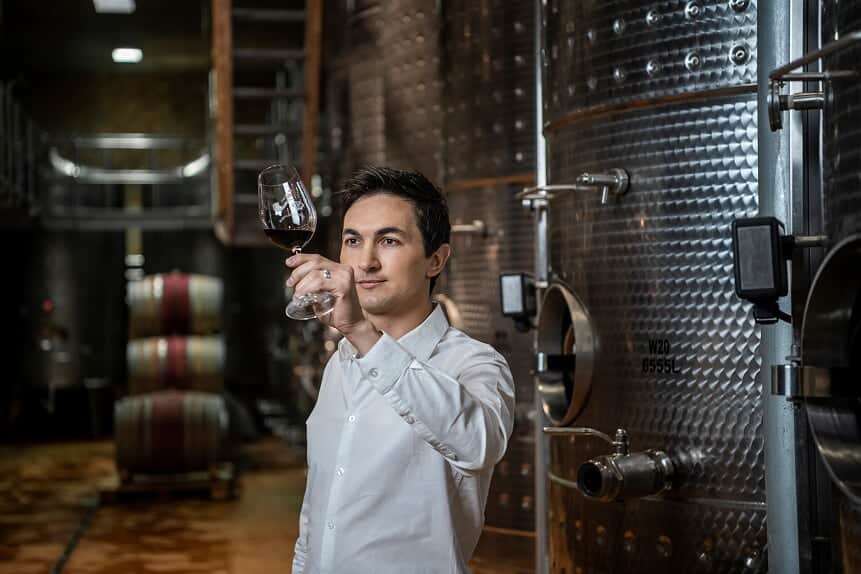
Klaas Stoffberg of Babylonstoren.
“You’ve got to cultivate your garden,” says winemaker of Babylonstoren, Klaas Stoffberg. The line comes from Voltaire’s novella Candide, and it inspired the name of the white blend Klaas is pouring us: Candide 2018 (Chenin Blanc, Viognier, Chardonnay, Sémillon), a nod no doubt to the farm’s world-renowned gardens. Klaas also sees it another way.
“Everybody is always in a hurry. It’s so important to take a breath,” he says. “I try and drink at least two glasses of wine a day.” I’m helping him with that task in the estate’s tasting room. Not to speak in clichés, but if ever a wine farm was a feast for the senses, Babylonstoren is it. Your eyes open a little wider here trying to take in all the detail.
At the entrance to the wine cellar and tasting room area, a diorama of cut out paper people and agricultural motifs, lit from behind, illustrate the farm’s history. Salvaged tools hang from the ceiling above a tribute inscribed with the names of all the farm workers from time immemorial. From there a set of stairs sweeps you up into the steel and glass tasting room, designed to make you feel as if you’re floating above the surrounding vineyards.
Importantly, from here you can see the conical Babylonstoren hill, from where the farm got its name. This koppie is said to have made the first owners of the farm think of the Tower of Babel and so named it ‘Babylon’s Toren’.
This kind of attention to detail suits Klaas. It’s how he approaches his winemaking, and well everything in his life. Snack platters have arrived, heaped with produce from the garden, and Klaas has systematically and very neatly organised the food on his plate before he begins to eat it. He laughs when I point it out, and agrees that it’s telling of his perfectionist nature.
Klaas is no stranger to farm life. He grew up as one of three brothers on a farm in the Swartland (grapes, sheep, cattle), and this is, of course, where his love for wine was born. The official story of why he became a winemaker, he says, is that he always wanted a job where he could blend nature and science, and that winemaking was the perfect combination of this. The unofficial story took place on the back of his dad’s bakkie. His dad would need to transport canisters of wine, and the three boys would hop on the back to help steady them. The containers had little air holes that the wine would slop out of and Klaas aged six, would sample some. “I told myself, one day I’ll make better wine than this!”
And so he has. He got his degree in Oenology and Viticulture at Stellenbosch University, where he met his now wife Ansoné, also a qualified winemaker—who works in exports and logistics for Neil Ellis Wines. (The pair has two children, a son and a daughter.)
Then, he went to go see the world. First was Napa, California.
“In America I learnt how to work with people, but it was in France that I truly fell in love with wine.” He says referring to his time in St Emillion. He also learnt in France how to slow down and appreciate life. “No matter how busy you were with harvest, we always had a two-hour lunch.”
In between his travels he was being schooled by some of South Africa’s best red winemakers. From interning at Rust en Vrede to an assistant winemaking position at Ernie Els, working under Louis Strydom. “It was great working for Louis, he always allowed me to experiment with my own ideas, while also learning from him.”
It was during this time that cellarmaster of Babylonstoren, Charl Coetzee reached out to him. Klaas jumped at the chance to become winemaker—but not before he made a deal as part of his contract. “I stipulated I wanted to keep travelling, working vintages around the world.”
As another mentor of his, Beyers Truter once said to him: “How can you make the best wine, if you don’t taste the best?”
With formative years like this, it’s no wonder the Babylonstoren Babel 2017 scored 93-points on the 100-point quality scale in the Signature Red Blend Report 2018.
“It’s Bordeaux meets Rhône,” says Klaas topping up fresh glasses with the award-winning wine, a blend of Syrah, Cabernet Sauvignon, Malbec, Petit Verdot, Merlot, Cabernet Franc and Pinotage—all the red cultivars on the farm.
“There are about 35 different components in the wine. I have quite a technical approach. From each block I do six different pickings. And I do this to learn from the block as well as to build complexity.
“I try different yeasts on the separate components; I ferment them at different temperatures. Then from the allocation tasting, the best of these will be blended.
“For sure it’s probably easier to pick whole bunch and just ferment it in one tank. But by doing it this way I never stop experimenting, and so I never stop learning. It’s about attention to detail—and trying to get to that perfect wine.
“What do they say? Shoot for the moon and even if you miss, you get the stars? That’s what I’m trying to do.”
Though committed to his craft, Klaas never forgets to cultivate his own garden. “It’s not only about making wine, but also about enjoying it.”
This is one winemaker who knows a thing or two about keeping it Klaasy.
Subscribers receive daily reviews and in-depth reports before release to the public. Cancel any time.
