
In my last column, I reviewed the scientific evidence with respect to wine and resistance exercise; i.e. the exercise that builds bulk muscle. In this column, I will look at recommendations concerning endurance or cardiovascular exercise with recommendations for the average couple Jane and John Smith who want to live healthily.
Jane and John are just like you and me: Two to three times a week they don their jogging shoes and head out for a 5-km run or put on the speedos and do a couple of laps in the pool; in the weekends they get on the bike and do the coffee run. How does their enjoyment of a glass of good wine with dinner impact on their athletic performance?
A couple of introductory remarks: First, alcohol abuse leads to muscle atrophy and cardiovascular compromise and is mentioned here only to be condemned. Second, when combing through the medical literature, while there are good data indicating that athletes are normal people and consume alcoholic beverages including wine just like you and me, there is an astonishing paucity on data how this impacts their performance. It is the more striking, that “sports nutritional experts” advertising their services and wares in the media often are very long and strident on opinion in this matter but base these opinions evidently on very little data. So, what is the evidence?
There are key components in wine that are of interest for physical fitness: Alcohol, antioxidants, minerals, vitamins and carbohydrates. The latter three are easier obtained from other sources as their concentrations in wine are low. Alcohol as such has been examined in detail. There is general agreement that from a blood alcohol concentration of 20 mmol/L the endurance performance declines directly in proportion to the increased blood alcohol concentration. However, a blood alcohol concentration of 20mmol/l corresponds to a more easily understood 1 promille, about twice the legal limit for driving a car in South Africa. It represents a stage of moderate inebriation. Performance suffers as multiple metabolic processes involving glucose and fat metabolism are impaired; energy supply to and utilization by muscle are compromised.
But not only that, also the recovery after exercise takes longer and is less complete. But then, everybody who has tried it will know that exercising while drunk is difficult; not only muscle metabolism but also other important aspects of physiology like coordination, thermoregulation, hydration and cardiovascular function suffer. I wish to posit here that the lab scenario is far from the reality of daily life.
To find a better approximation of what happens in real life, one must dig deep into the scientific literature. In a detailed examination of endurance performance Swiss researchers in the 1980s evaluated one tenth of the entire intake of the Swiss armed forces. Some 8,000 individuals were examined in the lab as well as in a field test. The results showed that the endurance performance did not differ between teetotallers and those who consumed alcoholic beverages. As a marker of the scientific quality of the research, even light smokers had a significant decreased performance versus the non-smokers. This leads to the conclusion, that the enjoyment of wine in moderate quantities will not impair cardiovascular exercise performance.
As for the other main component in wine, antioxidants have been shown convincingly in laboratory settings to enhance muscle recovery after endurance exercise. In the real world, however, this has not been confirmed as convincingly. In my opinion, this has been due to the concentration of the research on a single substance, resveratrol, which is only one of the many antioxidants in wine. As a reminder: Of all foodstuffs, wine offers the highest concentration of antioxidants together with blueberries.
But what about Jane and John Smith who exercise regularly in the morning and enjoy their glass of wine in the evening and don’t drink to excess? Here, the scientific point of view is that both exercise and wine enjoyment will not only enhance quality of life but also quantity. Muscle performance is not all; the beneficial effects of wine enjoyment for cardiovascular disease prevention will ensure, that Jane and John will be able to exercise together to a much older age than their abstinent peers. Cheers to that!
Sijnn, the pioneering Malgas property co-owned by David and Rita Trafford of De Trafford, has announced that Charla Haasbroek will be stepping down as winemaker after a distinguished tenure spanning from 2015 to the present. She leaves to focus on her own label, Charla Haasbroek Wines.
Haasbroek will be succeeded by Kruger Theunissen, who holds an Honours degree in Viticulture and Oenology from the University of Stellenbosch. Theunissen brings with him experience from Montagu, Bonnievale, and Franschhoek, along with international harvests in New Zealand, France, and Sonoma, USA.
Since its 2017 debut, Brookdale in Paarl has turned heads with a series of distinctive, uncompromising wines, often crafted from unconventional varieties. While the winemaking team changed in October last year – Xander Sadie and Shanice du Preez coming on board, the esteemed Duncan Savage continuing to consult – every indication is that the spirit of adventure that has defined this property from the outset will continue unabated.
Among the new releases is the maiden Twenty Field Blend –made from 20 red varieties interplanted as bush vines. It joins the Sixteen Field Blend of 16 white varieties, first seen in 2022. Tasting notes and ratings as follows:
Sixteen Field Blend 2024
Price: R440
From 16 varieties interplanted as bushvines. 40% fermented and matured for 12 months in concrete egg, 60% in clay amphora. Subtle yet alluring aromatics of pear, peach, floral perfume, dried herbs and some leesy complexity. The palate, while not overtly vivacious, impresses with its sheer presence – broad, dense and creamy in texture, the finish long and deeply savoury. A wine of gravitas rather than verve, but no less compelling for it. Alc: 13.5%.
CE’s rating: 94/100.
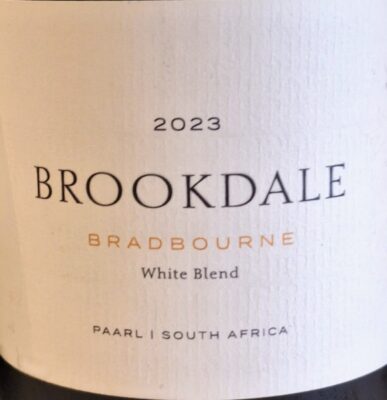 Brookdale Bradbourne White Blend 2024
Price: R440
45% Grenache Blanc, 23% Roussanne, 16% Piquepoul Blanc, 16% Marsanne. Fermented and matured for 12 months in old 225- and 500-litre barrels. Overtly perfumed with notes of flowers, fynbos, lime and lemon. Lighter bodied than its counterpart above but hardly slight – good fruit definition and fresh acidity, the finish pithy. Has a pleasing intricacy about it. Alc: 13.5%.
CE’s rating: 94/100.
Old Vine Chenin Blanc 2023
Price: R400
Grapes from a vineyard planted in 1985. Matured for 11 months in 500-litre barrels, 10% before a further eleven months in 2,000-litre foudres. Waxy, earthy notes precede citrus, peach, pineapple and vanilla on the nose. The palate is forceful with concentrated fruit, well integrated acidity and a savour finish. Thick textured yet not short of drive, it’s a wine of substance that rewards attention, even if it doesn’t make for the easiest drinking. Alc: 13%.
CE’s rating: 92/100.
Twenty Field Blend 2024
Price: R440
From 20 varieties interplanted as bushvines. Matured for 12 months in a concrete egg and 500-litre barrels, 15% new. An expressive nose of red, black and blue berries, plums, spice, floral perfume and a touch of herbs. The palate is rich, full of ripe, luscious fruit, smooth in texture, with soft acidity and a hint of warmth on the finish. Bold and arresting in a way reminiscent of Portuguese wines, this asks a fair bit of the drinker. Alc; 14.5%.
CE’s rating: 91/100.
Check out our South African wine ratings database.
 Time’s almost up. Entries close this Wednesday at midnight for two of our influential wine reports sponsored by Prescient Fund Services – click below to enter:
Pinotage
Signature Red Blends (“Non-Bordeaux”)
Reasons to enter:
Entries are now closed. Deliveries to: 44 Liesbeek Rd, Rosebank, Cape Town.
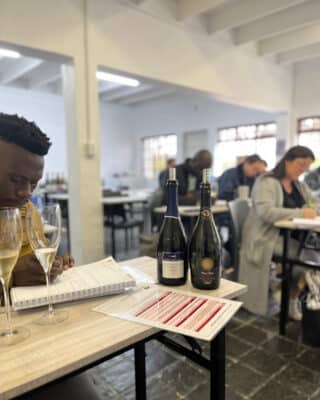
You would have to search long and hard to find any use of the word “sommelier” in the context of the Cape wine industry twenty-five years ago. People who sold and served wine in restaurants were wine waiters. They wielded corkscrews with greater and lesser aptitude; most tried to fill your glass to the brim to comply with the manager’s instruction to push you towards ordering a second bottle (and also because it meant they weren’t required to be attentive).
All this has changed: the industry has recognised the importance of the on-consumption trade and the key role it plays in driving sampling and sales. As long as some (but not all) producers were buying their way onto wine-lists there was no need to invest in the serving staff. Now many chain outlets and prestige establishments in Johannesburg and Cape Town make all producers pay for their listings. Curiously this levels the playing field, putting them in the same position as restaurants which make the breadth of their offering the venue’s USP. As a result, the sales role of wine service staff is very much back in focus.
Proprietors recognised this and upgraded the job title. Suddenly wine waiters were sommeliers. The industry jumped at the opportunity. It also meant that there was commercial reason for contributing towards the cost of “waiter training” – some of the costs of which could be off-set against the great South African holdall term “transformation.” In very little time distributors invested in organisations like the Sommeliers’ Association and its competitors. They helped to pay for basic wine knowledge – such as the introductory WSET and Cape Wine Academy courses. Some invited those employed in the more prestigious and influential positions to visit their cellars. Their generosity forced their competitors to step up or step away. It was hard to blame the beneficiaries for thinking that they were vital cogs, gatekeepers for whom the ill-disguised “incentives” were part of the perks of the job. Incidentally, “influencers” and wine writers (the few that are left) labour under the same impression – viz. since they are being feted by producers, they must be important.
Now we have plenty of people who call themselves sommeliers, who have a modicum of training, who are certainly more adept at wine service than the wine stewards of yore, but who are not, at least in international terms, sommeliers. The knowledge and competence required of those seeking to acquire the title Master Sommelier (MS) is at least the equal of what it takes to be a certificated Master of Wine (MW). South Africans who have advanced some distance up the MS ladder don’t remain in the country. There are better paid gigs overseas.
Instead, we have a group of people employed in wine service with an elevated sense of their own importance. Recently a couple of wine farms invited the so-called sommeliers of Cape Town to functions on their properties. A significant percentage (between 25% and 40%) did not pitch: they had accepted the invitation, they never advised that their plans had changed, they simply did not show up. Those inclined to defend them point out that their employers may have intervened at the last minute. This might indeed be the case – but then nothing better proves that they do not really enjoy the rights and status of real sommeliers. Even then, a phone call – even at the last minute – is better than an unexplained absence.
The Cape wine industry vitally needs skilled on-consumption salespeople – which is why it has invested so heavily in them. But those responsible for training them could start with a course on basic courtesy if they want their protegées to behave like the grown-ups they imagine themselves to be. And those sommeliers who do know and understand the importance of a little modesty, as well as the social niceties which form part of the food-and-culture, might consider offering collegial advice.
But perhaps those whose invitations have been treated with scant respect might also consider mentioning this to the proprietors of the smart establishments which employ sommeliers. That way they would make it easier for their invitees to explain to their managers – when they are told at the last minute that they cannot honour their commitment – that they have an obligation to go: restaurants don’t like no-show customers – they should be ready to ensure that their employees don’t impose the same discourtesy on others.
This is not simply a storm in a wine glass – something which affects only a few people in the trade and has no relevance to consumers. If the malady persists, the wine farms will finally get the message and abandon the effort. The next generation of would-be somms won’t enjoy the same access. Wine service, which has made so much progress in the past decade or two, will slip. Without properly trained wine service staff, only the brands with the biggest budgets to secure wine listings will prevail.
Our niche producers whose wines have contributed so much to the industry’s current reputation as the most exciting and innovative in the world will knock in vain at the doors of the restaurants which receive the tourists who have played a key role in communicating the message of Cape quality abroad. Without this opportunity to showcase their wines, they will be forced to shut up shop. Fifty years from now people will look back and wonder why the flame which once burnt so brightly first began to flicker, and finally died.

There are topics and debates in wine discussion that seem to periodically re-emerge. Not a bad thing when they’re important – though many of us are a touch bored by them – as there are always newcomers to our world. Blind versus sighted tastings is one of them, and it had a little outing on this website recently. Another is conflict of interest, which raised its head in a remarkably forthright piece by Michael Fridjhon directed at some views expressed by Christian Eedes and including a sideswipe at a “material disclosure usually missing in all the plugs which promote Ex Animo wines on the Winemag website”: the fact that Christian’s wife works for Ex Animo. Ouch.
Christian took it all mildly enough, resisting the temptation to attempt retaliation, while asserting the independence of his judgements, but comments didn’t go much further into the basic question. When the topic does come up for broader discussion, however, there’s very seldom mention of an inherent issue that, in fact, is a significant and occasionally troublesome one for me personally. I’ll return to that later.
The basic reason why wine critics and commentators so often confront the question of conflicts of interest is, I’m afraid, simply because only a tiny number of them can make a living from that business (unless they have full employment at, say, a wine magazine) without getting involved in some sort of dealings with wine producers. (Some – like me – avoid that by having an entirely unrelated supplementary source of income.) And once you have any sort of financial dealings with the producers of the wine you’re writing about, it’s extremely difficult to avoid potential conflicts of interest.
Let me say immediately that I’m not accusing anyone of conscious – or perhaps even unconscious – corruption of their values or tasks. Perhaps I am naïve, but so be it. The problem remains, however, in all sorts of ways, some of them less obvious than having a family member benefiting inevitably from your enthusiastic scores. Critics who lucratively sell bottle-stickers advertising their ratings (such as Tim Atkin), for example, or who want to encourage producers to expensively submit their wines again next year or participate in a competition or show, face a subtle but obvious pressure to inflate their scores. Actually I’m a touch less naïve about that….
That’s clearly less of a problem for competitions where the wines are tasted blind. And for critics who do their own tastings blind – like Michael Fridjhon for his website. But Michael does also taste sighted in various venues (launches, etc), and does write general articles. There must be a similar sort of pressure there, to avoid writing even vaguely negatively about the wines of producers who, he would hope, might submit wines to the competition he owns (Trophy Wine Show) or participate in his wine show (WineX) – or even employ him as a consultant for something or other. And, incidentally, he does fairly frequently mention those business enterprises – or “plug” them, to use his word – in articles he writes.
How much of a problem there is in this sort of thing, I don’t know. I suspect things get hazier and more problematic in the big, blooming, buzzing world of social media than in more traditional venues for wine journalism. “Influencers” of varying degrees of venality? It’s perhaps seen too easily as just another way of earning a living, and who cares about integrity?
But there is also the problem I alluded to earlier as affecting me. In fact, it affects all those critics, judges and journalists who live and work close to wine-producers and specialise in their wines – as applies to most of us in South Africa, especially those based in the Western Cape.
I’ve been around South African wine for a while. I’ve looked a lot of winemakers in the eye and chatted to them. Some of them many times and we’re on good enough terms; I often have their phone-numbers and can give them a call when I want to know something about their wines, or when I want a soundbite on something or other relevant. A smaller number I’m ”friendly” with to some degree. And just a tiny number have become genuine friends over the years, a friendship that would survive one or other of us leaving the wine industry. I’m not in an unusual position over this.
The consequent problem for a critic assessing their wines is pretty obvious. Although, it must also be pointed out that a critic can benefit greatly from close relationships with winemakers. I used to get quite a bit of flack from a few grumpy readers who disliked what they thought was my favouritism for the Swartland. It was admittedly a special focus of mine, and one that I’d chosen, and I think the non-exclusive focus was acceptable and even useful. The friendly relationships I’d developed in the area, including one or two serious friendships and some lesser ones, was, I confidently believe, a genuine help in my gaining understanding – from the inside, as it were – of a crucially important development in Cape wine.
That’s the counter-side of the problem of living amongst and getting to know the people who produce the wines one is assessing. The question of how one honestly assesses the wines of someone you were sharing a family braai with the day before is another. One can evade the issue by silence. Or just try to respond to it positively.
In all these situations of conflicting interest, I do think integrity is possible, if one really tries. The first crucial step is to be self-aware in the context of the problem; and then to cope with it, both openly and honestly – strenuously, if need be. One must also realise that merely ticking the box of rectitude, by making a token footnote acknowledging a possible conflict of interest, is certainly not enough.
Mzo Mvemve and Bruwer Raats, the duo behind the MR label, have until now produced just one wine, that being De Compostella, a Bordeaux-style red blend, first released in 2004. That changes with the release of a companion white called Vesperi from the 2023 vintage. Described by Raats as “Bordeaux-style but different”, it sees Chenin Blanc join the more traditional Sauvignon Blanc and Semillon. Tasting notes and ratings follow:
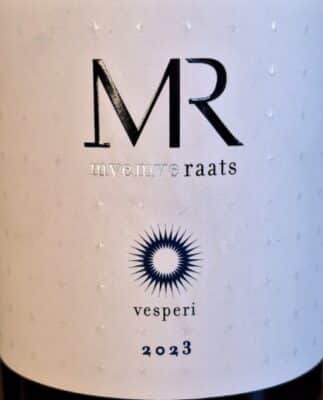 MR Vesperi 2023
Price: R1,200
34% Chenin Blanc, 22% Sauvignon Blanc, 33% Semillon. Sauvignon fermented on the skins for seven days, Semillon for some three days before maturation in older barrels for nine months, the Chenin in concrete. The nose is slow to open, but reveals layers of peach, nectarine, orange, fynbos, subtle spice, and a touch of waxiness. The palate is broad, with moderate, lightly tangy acidity and a savoury, gently grippy finish. Seamlessly assembled, with the component varieties well integrated. Generous in texture without feeling heavy. Alc: 13%.
CE’s rating: 96/100.
MR de Compostella 2022
Price: R2,150
44% Cabernet Sauvignon, 23% Cabernet Franc, 20% Malbec, 9% Merlot, 4% Petit Verdot. The nose shows cranberry, raspberry, and a touch of cassis, alongside violets and a subtle leafy note while the palate is medium-bodied, intricate, and resolutely dry. It’s accessible now but also well structured, with the vibrancy and balance to suggest significant aging potential. Pure rather than plush, restrained but not at the expense of pleasure. It may surprise some, but I’d argue this shades the more forceful 2021. Alc: 14%.
CE’s rating: 96/100.
Check out our South African wine ratings database.
Chris Alheit, of Alheit Vineyards that first bottled in 2011 and is now unquestionably one of South Africa’s most admired producers, describes the 2024 vintage as producing “very good, even excellent wines, but not much of it.” Crop loads were low while canopies remained strong – a combination he likens to “a V8 engine pulling a small trailer up a pass.” Tasting notes and ratings for the new releases as follows:
Cartology 2024
Price: R430
W.O. Western Cape. 92% Chenin Blanc, 8% Semillon. Delicate aromatics of hay, pear, white peach, lime, dried herbs and a touch of gravel-road dust. The palate starts off seemingly light but reveals more depth and nuance with time in the glass. Taut and linear, the wine is defined by racy acidity and a pithy, dry finish. Refined and quietly complex, with impressive detail and length. Alc: 13.37%.
CE’s rating: 94/100.
Hereafter Here 2024
Price: R300
Mostly a young vineyard wine, Chenin Blanc from Swartland, Piekenierskloof, Bottelary, Polkadraai Hills plus some from older parcels in Paardeberg and Tygerberg. A forthcoming nose of pear, peach and citrus, along with less conspicuous notes of fynbos, honeysuckle and a hint of flinty reduction. The palate shows impressive fruit concentration, supported by soft yet sufficient acidity, tapering to a gently savoury finish. A wine that marries satisfying weight with poise – the most convincing vintage to date. Alc: 13. 23%.
CE’s rating: 95/100.
 Fire by Night 2024
Price: R560
Grapes from two Paardeberg Chenin Blanc vineyards planted between 1972 and 1985 on granite. Gorgeous aromatics of hay, fynbos, potpourri, peach and lime. The palate is harmonious, showing striking purity, vivid acidity and an ultra-dry finish. Intensely flavoured yet featherlight, this is a wine of exceptional precision – perilously close to perfect. Alc: 12.74%.
CE’s rating: 98/100.
Nautical Dawn 2024
Price: R560
Grapes from a Chenin Blanc vineyard on the southern Stellenbosch farm Rustenhof planted in 1978 on granite. Flinty reduction before pear, peach, lime, guava, fynbos and a little earthiness. The palate is ethereal with great tension and energy – excellent clarity of fruit, zesty acidity, and a finish that’s long and pithy. Alc: 13.15%.
CE’s rating: 96/100.
Huilkrans 2024
Price: R790
From Skurfberg Chenin Blanc vineyards planted between 1974 and 1989 on red sand over clay. Super-complex aromatics – nectarine, soft citrus, flowers, herbs, plus traces of white pepper and spice. The palate is dense yet vibrant, fresh acidity lending drive, the finish long with a winning bitterness about it. Expressive and intricate, cascading with flavour. Alc: 13.28%.
CE’s rating: 97/100.
Magnetic North 2024
Price: R790
From two Skurfberg Chenin Blanc blocks, one planted in 1981 and the other in 1984. The nose is restrained for now, offering subtle hints of hay, yellow apple, citrus, mushroom, earth and spice. The palate, however, is powerful – showing notable depth and breadth, punchy acidity, and an intensely savoury finish. A wine that speaks more through texture than overt aroma or flavour. Alc: 13.65%.
CE’s rating: 96/100.
Monument 2024
Price: R720
From a Franschhoek Sémillon vineyard planted in 1936. Hay, honey, peach, nectarine, a touch of nuttiness and spice on the nose. The palate is broad and textured, with moderate acidity and a gently savoury finish. Somewhat oxidative in style – rich and round, perhaps edging towards listless. Certainly not without depth and complexity. Alc: 13.2%.
CE’s rating: 93/100.
Hemelrand Vine Garden 2024
Price: R380
W.O. Hemel-en-Aarde Ridge. 32% Roussanne, 28% Chardonnay, 25% Chenin Blanc, 11% Verdelho, 4% Muscat. A melange of peach, apricot, orange, pineapple, melon, herbs verging on outright mint, and floral notes on the nose. Big fruit, big acidity, the finish savoury and long. There’s real drive here – unapologetically ripe yet urgent. A wild, characterful wine with plenty going on. Alc: 13.37%
CE’s rating: 94/100.
Check out our South African wine ratings database.
The ageability of wine is a topic that surfaces regularly among global wine writers and commentators. Perhaps the most contentious aspect is whether a wine must be ageworthy to be considered truly fine. As younger generations of drinkers gradually move away from traditional styles—such as Bordeaux, which often require a decade or more of bottle maturation to become approachable—the spotlight has once again turned to the thorny question of fine wine and its relationship with ageability.
Current trends appear to clearly show that younger consumers are far less inclined to buy wine En-primeur or pre-bottled while still lying in cask, preferring instead to purchase wines that are both physical available and ready for immediate consumption or in the short to medium term. The concept of both buying wine to cellar, at home or in professional storage, is becoming an increasingly foreign concept to the iPhone generation, with the lack of suitable storage space and / or conditions in most forms of starter accommodation clearly an inhibitor.
With fine wine provenance and ideal storage conditions becoming critical to a wines secondary market value, the rise and rise of professional wine storage businesses has gone hand in hand with the past two to three decades of the fine wine boom times that have been witnessed up until around 2020 and the advent of the Covid-19 pandemic. It is of course not only fine wine that has become increasingly expensive, so too has the business of professional wine storage, so yet another factor that has discouraged a younger generation from building fine wine collections.
While the merits of collecting wine can be debated endlessly, there is nevertheless a sizable cohort of Gen X and Millennial drinkers who are looking to drink less but also drink better, and this behaviour increasingly includes buying wines that are already optimally mature and ready to have their corks pulled. In the specific context of South African wine, it has been a long-held belief that the 10-year-old maturity mark is the golden moment to drink many of South Africa’s finest red wines, and increasingly, many of South Africa’s top white wines as well.
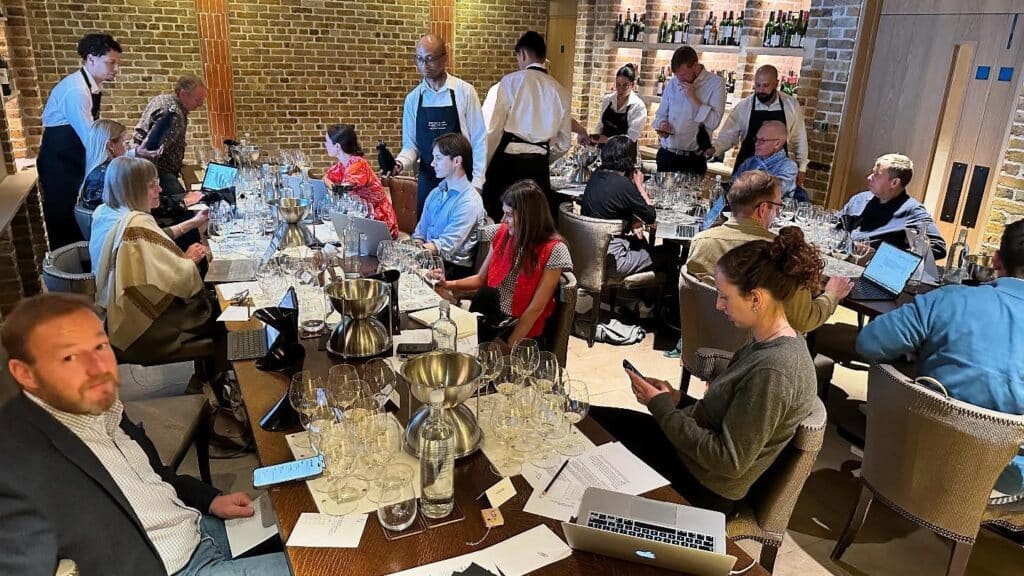
With the hallmarks of youthful primary fruit fading but not yet vanished, and the accompanying tertiary complexity and mellowing elegance of bottle age making many of these 10-year-old wines an absolute pleasure to drink, there is certainly a very sound argument to support the decade milestone. So, it was possibly only a matter of time before someone in the London wine trade set about putting together a 10-year retrospective, and this is indeed what transpired recently at the inaugural “South Africa’s New Wave Tasting – Ten Years On.”
For those consumers in South Africa unfamiliar with the “New Wave Tastings” that were held bi-annually for several years in London, the first event itself took place in 2015, representing a coming together of several leading South African wine importers in the UK market space including the likes of SWIG Wines, FMV, Indigo, New Generation Wines, and Dreyfus Ashby, who represent benchmark fine wine producers such as Sadie Family Wines, Reyneke Wines, Savage, Boekenhoutskloof, Rall, Newton Johnson, Keermont, Mullineux Wines, and many more.
The New Wave Tasting, an event for both the wine trade and for end consumers, rode the powerful wave that was the original young gun movement, profiling new producers and new releases of wines the UK trade had in many instances, never seen or tasted before.
In addition, 2015 was an ideal starting point, on account of its reputation, quality, and breadth. It was a vintage that earned widespread acclaim from the outset, an overall dry and relatively early harvest, taken on a long-term average (though since superseded by the deeper drought vintages of 2016, 2017 and 2018). A cool, wet winter in 2014-2015 ensured full vine dormancy, replenished dams and water reserves in the soil, and an even budbreak in spring. Broadly warm, windy conditions through summer (with few customary heatwaves) meant advanced ripening in generally excellent sanitary health.
Dryland vineyards tended to produce lighter bunches with smaller berries and lower than average yields were reported in the Swartland, Paarl, Stellenbosch and Hemel-en-Aarde. Full to larger crops were achieved in Worcester, Robertson, Breedekloof and Olifantsriver. At the time, producers and critics alike were excited about “the best Cape vintage since 2009” for both red and white wines.
Plenty then to justify a 10-year-old retrospective tasting. Co-ordinated and driven forward by South African wine champion Victoria Mason MW, the ex-buyer for Waitrose, Bordeaux Index, and currently working at the Wine Society, and Mark Dearing, the South African buyer for Justerinis & Brooks, there were many key players involved to make this fascinating tasting the incredible success that it was, including generous hosts Berry Brothers and Rudd, and with undoubtedly countless archive cellar doors opened by the influence of key importers like Damon Quinlan of Swig and Richard Kelley MW of Dreyfus Ashby. But enough back patting! What where the tasting results and who were the stars I hear you ask!?
The tasting format consisted of a sit-down tasting, organised into twelve blind flights (36 whites and 42 reds). There were seven red flights before lunch and five white flights after. Tasters were divided into two groups of nine tasters to make discussions more manageable after each flight.
Tasting Group A – Mark Dearing moderating am / Victoria Mason MW moderating pm, Daisy Gatt, Richard Kelley MW, Neal Martin, Robert Mathias MW, Jancis Robinson MW, Greg Sherwood MW, Christina Rasmussen, Emily Jago.
Tasting Group B – Victoria Mason MW moderating am / Mark Dearing moderating pm, Tim Atkin MW, Catriona Felstead MW, Matthew Horsley, Damon Quinlan, Julie Sheppard, Valerie Lewis, Robbie Toothill, Fergus Stewart.
Mark and Victoria collected notes during the discussion and collected the individual taster’s scores on a 100pt-scale. This blind tasting was the first large-scale opportunity to assess the oft cited capacity of the best South African wines to age – focusing primarily on the original New Wave producers who took part in the London 2015 event.
The results – best wines overall:
Chardonnay
Crystallum Clay Shales 2015 – 93.13
Chenin Blanc Stellenbosch & Other
De Morgenzon Reserve – 93.73
Chenin Blanc Swartland
David & Nadia 2015 – 93.93
Cape White Blends
Beaumont New Baby 2015 – 92.6
Sauvignon/Semillon and Blends
Thorne & Daughters Paper Kite 2015 – 93.2
Pinot Noir
1.= Crystallum Cuvée Cinema 2015 – 93.08
1.= Newton Johnson CWG Sea Dragon 2015 – 93.08
Mediterranean Varieties (Single Varietal)
Momento Grenache Noir 2015 – 91.75
Mediterranean Red Blends
Sadie Family Columella 2015 – 92.5
Syrah Cape South Coast
Kershaw Deconstructed Lake District Cartref SH22 2015 – 92.54
Syrah Stellenbosch
Reyneke Reserve Red 2015 – 92.79
Syrah Swartland
Porseleinberg 2015 – 94.71
Bordeaux Red Blends and Single Varietal
Boekenhoutskloof The Journeyman 2015 – 93.64
For ratings of all white wines tasted, download the following: SA’s NW Ten Years On Tasting – WHITES
For ratings of all red wines tasted, download the following: SA’s NW Ten Years On Tasting – REDS
Many global producers are aware of the reluctance of a new generation of drinkers to cellar and age wines, so, the industry is inevitably seeing changing styles of wines that are readily drinkable earlier and younger, modern Bordeaux reds being a perfect case in point.
Emerging trends may sway producers’ wine styles and global warming may lead to riper, more accessible earlier drinking wines, but South Africa’s best wines are still world leaders when it comes to fine wines that are accessible and enjoyable in their youth while retaining an almost magical ability to age gracefully for decades.
There’s little doubt that the average standard of the Cape’s reds has improved in the last decade, at all levels – at the grander levels especially, when they’re not lightish, they’re that crucial bit fresher, less often overripe or over-oaked. I’d guess that better viticulture is also producing better grapes. Perhaps fine white wines haven’t improved as much as that, except in terms of the sheer volume and wider range available (especially through greater use of older, now better managed vineyards) – but there was less room to grow, and it seems to me that the glory of South African wine is more found, as it long has been, among the whites than the reds.
These old thoughts came back to me in recent weeks with a handful of tastings I’ve had the pleasure of partaking in. I mentioned last week the splendid new white blend, Vesperi, from Mvemve-Raats, which ranks high. Of course, the MV red, De Compostella, is very far from being thereby cast too deeply in the shade, and it is probably simply a matter of my personal stylistic taste that I, given the choice of just one of them, would choose Vesperi. I do seem more easily impressed by local whites than reds, probably partly because too many of the reds still have a sweetness to them that doesn’t answer my deepest attachments, while so many whites have an elegant combination of fruit-full light richness and stony austerity that I find winning.
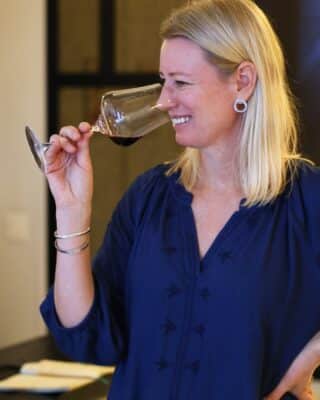
Jocelyn Hogan of Hogan Wines.
Which isn’t to deny the claims of many reds. Take Hogan, for example (to which the best response is: yes please). All of Jocelyn Hogan Wilson’s wines are very approachable in youth because of their comparative lightness and fresh balance; they all have undeniable charm. With the latest release (mostly 2024s), I was especially won by the Galvanised Chardonnay and the Chenin Blanc. I see that Christian Eedes rated the chenin particularly highly in his early-May tasting, and it is indeed a lovely wine: pure-fruited, light-feeling yet penetrating in flavour, supple and charming. But I chose to rather have a glass of the chardonnay with the delicious, interesting Japanese lunch menu at Tjing-Tjing House in Cape Town. Again it was a thrilling combination of gently fragrant prettiness and light freshness with a firm, confident energy and precision that appealed to me. I suspect it might feel just a touch too modestly restrained beside some of the grander cape chards, but it is excellent drinking now and for a good few years to come.
Incidentally, it must be noted that Jocelyn’s wines, which seemed expensive a decade ago, are now much more mainstream at the mid-high level (about R405 for the Chenin, R325 for the Chardonnay). As for the reds, to mention them more briefly: the Mirror for the Sun Cabernet Franc is very pleasing, quite gently structured though firm, with a pure, fairly fruity intensity. I admired the Divergent 2023 blend more, with its greater complexity built around black cherry and a succulent tannin-acid structure. It does have some sweet fruity, lightly perfumed charm from cinsaut and carignan, but the cab delivers a weight that I appreciated. I might have liked a little less carignan in the blend, but Jocelyn admires the grape more than I. I just don’t get it, really, when it’s prominent, and find the varietal Carignan bottling offers little to compensate for its cheerful, rather rustic and juicy-sweet simplicity.
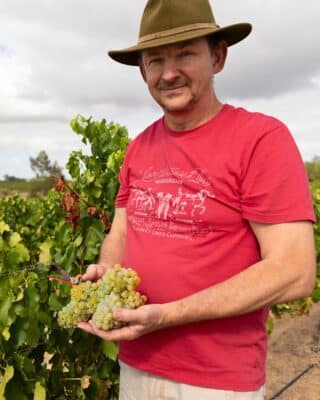
Chris Williams of The Foundry and Geographica.
Interestingly, cab franc is the unifying grape in this brief, selective report on three producers. The subtle, serious but rather joyous, elegant but firmly tannic Geograhica Thoreau was my favourite red amongst Chris Williams’s new releases of the well-established The Foundry wines and the new, single-vineyard, sometimes one-off, more expensive, Geographica label. On the whole (going back to my stated theme) I did prefer his whites. Both the Geographica Aletheia Chardonnay 2023 (from a high, remote vineyard in Piekenierskloof) and Bonsai Chenin from Helderberg have a forceful, textured delicacy of rather different characters: more brightly austere in the former, richly intense in the chenin. Altogether admirable.
The Geographicas are pricey at R500, but the Foundry 2022 whites (around half that) can be reckoned as good value. The Grenache is all from Voor Paardeberg (where the label has its home now), mineral and grippy, pithy and phenolic, but with lovely, floral-aromatic fruit. More complex and exotic in character, the Roussanne, matured in a mix of barrel and clay pot, is the one I admired and enjoyed most, particularly enjoying its dry stoniness.
A third cab franc came from Gabriëlskloof. I sampled some of Peter-Allan Finlayson’s wines from Gabriëlskloof (just the single-vineyard wines) and Crystallum at another delicious lunch, this time at the Codfather in Camps Bay – whose reputation for seafood and sushi is almost unmatched in Cape Town, but whose excellent, serious winelist I wasn’t aware of before, including many older vintages (some Crystallums, for example, dating back to the 2013 Bona Fide). The Cab Franc 2022 – fresh and lively, but with depth and real interest – I thought definitely outshone the estate’s 2022 syrahs and, perhaps strangely, with less of a herbal character than those. Also greatly impressive was the only Gabriëlskloof white on offer, Amphora Sauvignon Blanc 2024 from Skurfberg and Bot River grapes, one of the handful of Cape sauvignons that makes an excellent, complex white wine that escapes the too-frequent obviousness of the variety.
As for other reds on show, Peter-Allan’s Crystallum pinots are justly famous, and the 2024s are very satisfactory indeed, with Cuvée Cinéma again in the quality lead, showing just what a fine vineyard this is. Pinot lovers with deep pockets certainly won’t go wrong here, but I do hope they put the wines away for at the very least half a decade, as they are still rather raw now.
I suspect the Crystallum 2024 chardonnays will age even more impressively, despite being almost irresistible in youth. Unfortunately the Ferrum, from iron-rich Overberg soils, wasn’t there, due to the distributor’s mix-up, but The Agnes, a blend from a range of vineyards (including from the own-site in what has the go-ahead to be a new ward: Shaw’s Mountain), is most appealing, with a nice chalky, phenolic edge, a little richness balancing the crisp acidity. Even finer is Clay Shales, from a high-lying Hemel-en-Aarde Ridge vineyard. Gently intense pure-fruit aromas with a hint of reduction; concentrated but not overbearing in the least; silky and lilting; tight enough now to promise a gain in volume as well as complexity. A great wine, amongst the Cape’s priciest at R800, and a reminder that chardonnay is certainly a category that has swelled in quality and number in the past decade.
Subscribers receive daily reviews and in-depth reports before release to the public. Cancel any time.
