
Malu Lambert: Cap Classique surges at home but can it win abroad?
By Christian Eedes, 11 December 2025
-
Share:





2
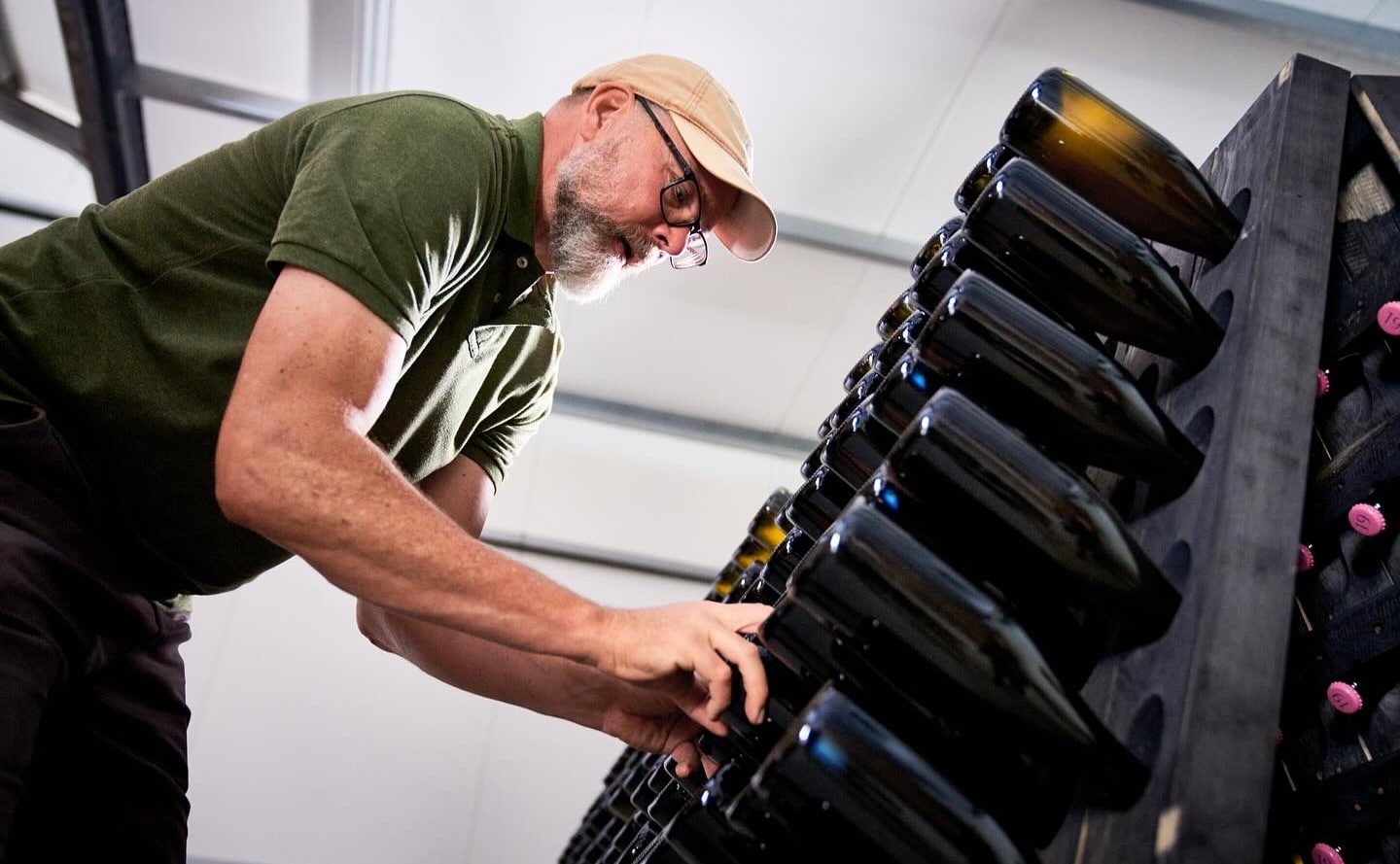
Turning 21 is a coming-of-age. It feels fitting, then, that Silverthorn is marking 21 years since its maiden vintage: The Green Man Blanc de Blanc 2004. The boutique Cap Classique house has unquestionably come into its own. The milestone is being celebrated with a vertical tasting at The Foodbarn. Karen and John Loubser are presenting the four-flight showcase. The oldest vintages on offer, The Green Man 2007, and Jewel Box 2009.
Silverthorn’s success owes much to the fact that John never quit his day job. A late bloomer in winemaking, he only enrolled at Elsenburg at 25; this after diamond diving in Namibia, military service, and backpacking through Europe. Soon after he graduated, Karen’s father fell ill, and in 1999 the couple took over the family farm in Robertson, then running at a loss. While the early years were shaky, John quietly built a foundation in Cap Classique, first at Môreson, then with Pieter Ferreira at Graham Beck’s Robertson cellar. In 2001 he became cellar master at Steenberg, where he launched the estate’s Cap Classique range after making 2,000 bottles to mark the millennium. He stayed for 17 years, using the cellar to bottle Silverthorn’s early wines, after The Green Man, came the Genie rosé in 2007 and the prestige cuvée Jewel Box in 2009.
By 2019 the couple had moved to their newly built Cap Classique cellar in Robertson. Their first in-situ vintage was in 2020. Silverthorn now produces approximately 40,000 bottles a year. (Latest releases reviewed here.)
“I see bubbly more as wine than fizz. Sense of place comes first,” says John. “We can achieve great acidities from the farm’s shale and limestone soils.”
The style of the Jewel Box has evolved. “The industry is divided,” says John over a row of golden glasses. “The linear, tight styles versus richer, aldehydic styles. The older version of the Jewel Box was richer; now we’ve gone leaner, moving to a tighter, more chardonnay-driven style.
They’re open to experimentation. In 2019, inspired by their nearly 40-year-old colombar block, the Loubser’s released River Dragon NV. “Colombar makes great base wine,” John emphasises. “It has high acidity, the right pH, and the brandy-rebate protocol is virtually identical to Cap Classique.”
He’s also curious about Voltis, a new Champagne hybrid variety legalised in 2022. It’s disease-resistant, needs no spraying, and is seen as climate-resilient. Only 10% is allowed in blends, but early trials are looking promising. Drappier has planted it.
Exports remain small, with 75% of sales local. Karen’s German roots have helped the brand gain traction in Germany and Switzerland, with steady demand in Belgium, the Netherlands and a growing foothold in Denmark. The wines are well established in Namibia and Kenya. The UK, Asia and the US are all still works in progress.
The global push and its limits
The category is young. The first Cap Classique was made by Simonsig in 1971, yet it is now the fastest-growing segment in South African wine. According to the Cap Classique Producers Association (CCPA), production is doubling every 4.5 years and has reached roughly 11.5 million bottles. Nectar (demi-sec given a glow-up) is the style gaining the most traction and is ‘showing great promise in African markets’.
The CCPA has 100 producers who account for about 85% of that volume.
At the lunch, Caroline van Schalkwyk, CCPA marketing manager, noted that Cap Classique has a real opportunity internationally thanks to its exceptional quality-to-price ratio—but ironically, the challenge is budget. The Association lacks the funds for large-scale marketing, so it works closely with producers to stretch every rand. “Big branding also depends on global availability,” she adds. Major players such as Graham Beck, Boschendal and Villiera have helped open markets, but broader representation remains essential.
Exports remain volatile, and headline numbers can be misleading. The recent dip in the UK, for instance, didn’t reflect collapsing demand but rather a single, low-priced shipment from one producer that dragged down the average export value for the entire category.
Caroline warns that undercutting poses a real risk to the premium positioning Cap Classique has worked hard to build. It is meant to be seen as an artisan, handcrafted, quality product and that requires appropriate pricing. If too many producers chase volume at bargain levels, the whole category risks being perceived as cheap rather than premium.
Domestic sales currently account for 73% of all purchases, with the remaining 27 going abroad. Graham Beck continues to lead the export charge, with an astonishing 72% of its production sold overseas.
“If you look at all the international mega-brands, they had government or industry support,” remarks Association chairman Pieter Ferreira. After 32 years as Graham Beck’s cellarmaster, Ferreira has transitioned into the role of Chief Operating Officer. Pierre de Klerk, who joined the company in 2010, took over as cellarmaster in 2022.
“Cap Classique, like all South African wine, has to fight its way into global markets on its own,” adds Pierre. “We rely on a small member levy and a pay-to-play model for events to get the word, and the bubbles, out there.”
The UK is the most exciting market, which now takes nearly 1.2 million bottles. Growth is also coming from Germany, Asia, Africa and the US. China and Taiwan are increasingly on the radar. Sweden is another market to watch as the Systembolaget opens new avenues for Cap Classique.
Pierre believes the category has a unique global position, able to own the price space between entry-level Prosecco or Cava and the higher tiers of Champagne and English sparkling. “We certainly over-deliver on quality.” The real challenge, he says, is simply “getting liquid over more lips.”
They’re willing to back their convictions. At an Ellerman House launch of two new products, the Cuvée Clive X 2015 (ten years on the lees) and Chardonnay ‘14 277’ 2020; named for clone 277 from block 14 planted on limestone-rich soils. They presented the wines in a blind tasting. They must have felt vindicated when the crowd was polled and the Clive X beat out Bollinger and Dom Pérignon.
Research and development is dogma to them. Their annual base-wine tasting, for example, is helping push the quality conversation forward. Legislation has already shifted from nine to 12 months on lees; but most premium brands age for much longer. There is now discussion around a formal ‘Prestige Cuvée category’, likely requiring at least 30 months on the lees and will exclude non-noble varieties.
A cultural turn: Krone’s ascent
Krone is fast becoming the next major force in exports having grown by more than 300% in a year. The strategy says managing director Jacques de Klerk has been to focus on regions where there is a synergy between market potential and where the brand resonates.
This exponential growth has been driven by a decade-long brand overhaul led by marketing director Abigail Rands. “I wanted to shift not only in sales but in perception,” she says. “We have the joy of turning a bottle of Cap Classique into a cultural moment.”
A key part of this repositioning is the on-site WHATIFTHEWORLD gallery at Twee Jonge Gezellen, along with an artist residency now in its ninth year. This year Krone added its first chefs’ residency with Fergus Henderson, Margot Henderson and Rose Chalalai. In tandem with this Krone’s export strategy has centred on partnering with like-minded brands and people. “Innovation happens when different worlds collide,” says Abigail.
Launching in the UK she says they followed the same approach they used in South Africa thirteen years ago. After supporting a small London photography exhibition by ex-South African gallerist Michael Hoppen, Abigail was introduced to his daughter Daisy, who handles communications for Dover Street Market. “One thing led to another, and soon we were pouring at their events in London, Paris and Tokyo.”
“In wine, wherever culture moves, the potential is seismic,” Abigail says. “It’s no longer just about terroir and provenance. It’s about how a brand lives in the wider world.”
It’s clear there is no shortage of imagination, quality or drive in the category. What’s missing is sustained backing to create consistent shelf presence in global markets with a greater diversity of brands. Only then will Cap Classique stand where it belongs, alongside the great traditional method sparkling wines of the world.
- Malu Lambert is a freelance wine journalist and wine judge who has written for numerous local and international titles. She is a WSET Diploma alum and won the title of Louis Roederer Emerging Wine Writer of the Year 2019, among many other accolades. She sits on various tasting panels and has judged in competitions abroad. Follow her on X: @MaluLambert
-
Share:

Related articles
Opinion & Analysis
Malu Lambert: Palomino – the grape that refused to die
6 October 2026
“It’s hellishly special in the fact that it’s own-rooted,” says Leon Coetzee, not known to mince words. Coetzee is referring to the 1962 vineyard that produces their Klein Karoo Palomino,...
2
Opinion & Analysis
Malu Lambert: South Africa’s vineyards – ageing out or growing up?
25 June 2026
The occasion, Paul Sauer 2023 vintage release (read the review here). Hosted as always in the room adjacent to the barrel cellar. Winter light pours through an arched window, the...
Opinion & Analysis
Malu Lambert: Are SA’s best red blends hiding in plain sight?
27 May 2026
Two tastings recently underscored the vast potential of South Africa’s more creative red blends. Those that fall outside the familiar Bordeaux model and its trusty trio, sometimes quintet, of grapes....
Marek | 25 December 2025
Note that Silverthorn is in Bonnievale and not Robertson.
Christian Eedes | 27 December 2025
Hi Marek, You are correct that the farm is geographically much closer to Bonnievale but the wines are certified as W.O. Robertson.