
Editorial: The case for a rigorous, hybrid future in wine criticism
By Christian Eedes, 7 July 2026
-
Share:





25
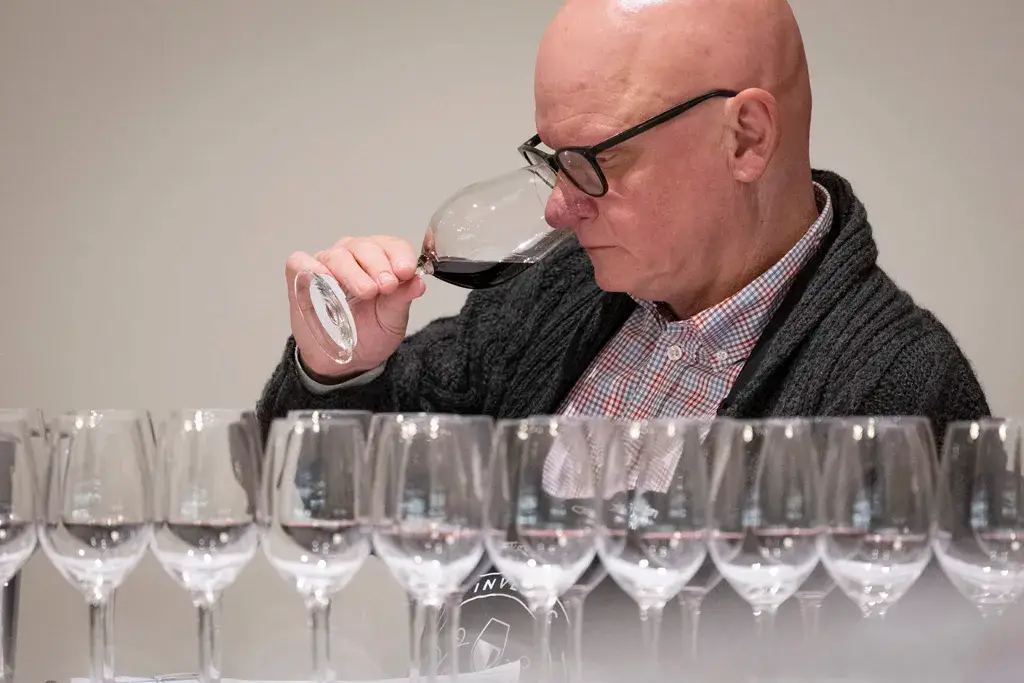
Over the last month or so, a necessary, if uncomfortable, debate has unfolded in our industry about the independence of wine criticism.
A recent break provided me time to reflect on the responsibilities of an editor. Looking at the industry from a distance, the path forward is clear: be transparent, be rigorous, and never forget who we’re actually working for. That’s you, the consumer.
With questions around funding and governance once again in the spotlight, it’s a good time to be clear about how we operate. For us, that practice rests on a hybrid approach to assessment:
- The Case for Blind Tasting: It remain a powerful tool for reducing bias. By removing the label, and hence reputation, we ensure that every wine, from an ambitious newcomer to a long-established household favourite, is evaluated solely on what’s in the glass, without any other influence. Blind tasting is not the only way to assess wine, nor is it the ultimate test of quality. But it is one of the most valuable services we can offer consumers: judging the wine without preconceived ideas.
- The Reality of Sighted Reviews: We are equally pragmatic. Not every wine can, or should, be judged in isolation from its context. Some wines are expressions of a particular philosophy, site, or vintage – elements that can only be properly understood when the story behind the bottle is part of the conversation. Sighted reviewing is not a lesser or greater form of assessment; it is simply answering a different question.
The Hybrid Advantage
We do not see these as competing philosophies. They are complementary tools, each with its own purpose. What matters is not choosing one over the other, but being clear about why each method is used.
Blind tasting asks: “How good is this wine when nobody knows who made it? Sighted tasting, meanwhile, asks: “What does this wine represent, and how well does it achieve its ambition?”. No producer, however respected, is entitled to favourable treatment. Reputation may earn attention, but only the wine earns praise.
We should want to live in a world where a wine like Chateau Libertas 2025, selling for R89, can earn a 93-point score if it genuinely delivers at that level. Does that make it equivalent to Columella? Of course not. Wine is full of nuance, context and ambition that a single number can never fully capture. But that is precisely the limitation – and the usefulness – of scores.
Our Commitment to Transparency
We believe that trust is earned not claimed. We want to reiterate how we work, how we taste and how the business is funded, so you can judge for yourself.
- Funding: We ensure our editorial voice is never for sale. Whether a wine is submitted for a free sighted review or entered into a paid blind category report, the standard of assessment is, as far as possible, the same.
Like all independent specialist media, we need a sustainable business model. Our revenue essentially comes from a combination of sponsorships, largely from companies outside the wine industry, producer entry fees for blind tasting reports (and any subsequent sticker sales), and subscriptions. We aim to assess all wines according to the same standards, regardless of whether a producer enters a paid report, or submits a bottle for sighted consideration. Transparency builds credibility. Credibility builds trust. And trust is what allows independent criticism to remain relevant, and, hopefully, commercially sustainable. - Standards: We invite our readers to hold us to these standards. If a wine performs differently in our blind panels than in our day-to-day assessments, that variance is part of the conversation – not a failure of the system.
- Independence: We reject the idea that criticism must be either a “parlour trick” (blind) or a “marketing vehicle” (sighted). By being transparent about how and why we taste, we empower the consumer to make informed decisions.
The industry is evolving, and consumers increasingly want more than a score or a sticker – they want to understand how judgements are made. We believe in an industry where quality is proven, not just promised. We’ll keep doing what we’ve always done: tasting blind where it helps ensure that merit is not overshadowed by reputation, reviewing openly when context counts, and calling it as we see it.
-
Share:

Tim Parsons | 7 July 2026
This has become a swirl in a Riedel glass! The customer has been, somewhat, forgotten as most have no interest in the marking merits of provenance, motivation or circumstances of a wine they chose to buy. It’s things like a supermarket offer, their circumstances, wallet, a friend’s suggestion, a sommelier/retailer’s recommendation, a tasting they’ve attended or a familiar label.. that random!
You could say that the current “debate” is internal to the industry, it’s not selling wine or encouraging the drinking of wine. Surely, that would be a far more useful expending of energy? Isn’t that the problem, too much navel gazing without looking at the bigger picture; how to sell more wine, regardless of ratings and how they were arrived at?
Erwin Lingenfelder | 7 July 2026
I believe that all the role players are trustworthy and so are their intentions.
The biggest challenge to the Blind Tasting zealots is who actually enters their competitons! Don’t tell me that a First Growth Bordeaux with a reputation exceeding 170 years is going to bother entering a free-for-all competition featuring new upstarts.
Are you telling me that Paul Clüver’s Estate Pinot Noir, the Trohy Winner for Pinot Noir in 2026 vanquished their Seven Flags Pinot Noir?
Michael Fridjhon | 7 July 2026
The question of which producers are willing to enter blind tastings is an interesting one. For the better part of the 20th century Penfolds submitted all their wines to Australia’s Capital Shows – it was expected of them by the country’s wine consumers because the show system was an integral part of how the country engages (or used to engage) with wine.
But that doesn’t answer the question about First Growths – and here we happen to be on the 50th anniversary of a blind tasting event which did indeed turn upside down the presumed order of merit (established by French aristocratic hauteur and centuries of headstart) – The Judgement of Paris tasting.
There the “unknown” Napa wines whacked many of the leading French chateaux and appellations. The panel comprised the leading lights of the French industry (there were no American judges at all). Spurrier’s Judgement rerun 30 years later with exactly the same wines produced a similar result – effectively rubbishing the defence that the Napa wines had won in 1976 because they were accessible when young but wouldn’t last the course.
So it’s clear why well-marketed wines like Bordeaux First Growths don’t want to play in unsighted tastings and why people who are interested in what they are drinking (rather than the marketing message) should use blind tasting scores as a guideline.
However there is another reason why some people drink wine – and it’s the same reason (so I’m told) that women where La Perla underwear – namely because it makes them feel good in a kind of self-affirmatory kind of way. This shouldn’t be dismissed as an insignificant motivation. It’s probable that most of the consumers of Dom Perignon or Cristal could not identify their beverage of choice in a blind line-up – but that doesn’t matter. Buying their preferred brand makes them feel good and makes it possible for those who can tell the difference to seek out wines made with the extra care and attention to detail. Wine is not always about the common denominator.
Erwin Lingenfelder | 7 July 2026
Points taken .
Rob Nicholas | 7 July 2026
I regard these assessments as light relief fun, not gospel. And one does get guided to a wine you don’t know. Then buy a bottle and decide for yourself. That’s the wonderful Wine Journey.
However please don’t market any assessment as The Best In South Africa (or the world!) It may perhaps be the best of the (limited) wines assessed, nothing more.
Caroline | 8 July 2026
Hear-hear!
Marcelo Solá | 7 July 2026
Blind tastings are not a parlour trick, but an honest assessment devoid of bias. No credible scores result from sighted tastings.
James | 7 July 2026
I’m sure I’m not alone in saying a great story, a great label, a great tasting and a great setting with friends adds to the taste and experience of a wine. Like it or not, that’s what sells a wine. Of course it has to taste good too, but blind tasting won’t sell your wine.
Jack | 7 July 2026
Dankie Mnr Eedes vir u duidelike uiteensetting van jul proses. Groot waardering.
Paul Stead | 7 July 2026
Oh come on guys ,why do we take notice of the ‘experts’ (ex being redundant & a spurt being a drip under pressure). OK I am an ‘Engelsman’ who has just returned to SA. They review the best of the best and 90% of us can’t afford to buy them. So what’s the point?
I recently bought some rather expensive wines (by my standards) and I wasn’t that impressed. So I hit the local supermarket and bought 4 bottles not more than R90. Satisfaction all round. So, why aren’t the ‘experts’ reviewing wines in the R200 to R500 bracket that many more of us can afford? Smells a bit like a snobs club to me.
Christian Eedes | 8 July 2026
Hi Paul, In light of your comment, you’ll be pleased to hear that we’ve launched the Top Drop Awards, sponsored by Aspiring Couriers, to recognise outstanding wines retailing at R120 or less. The results will be announced on 4 September.
Caroline | 8 July 2026
That is a great initiative Christian.
Kwispedoor | 8 July 2026
Hi Christian
I always prefer a blind tasting to be properly blind. For instance, if you know you’re tasting a flight of sub-R120 wines blind, nobody is going to be handing out 97s. Of course not everything is always practical in all instances, but I’d say one should then include at least four wines that have previously been scored 95+, just to make things a little bit more fair and realistic. Hopefully, you’re planning something like this to keep everyone on their toes?
Kwispedoor | 13 July 2026
Hi Christian
You might not have seen my question here about a methodology to keep the Top Drop judging at least somewhat fair, but I’m really interested to know, please?
Christian Eedes | 13 July 2026
Hi Kwispedoor, Our aim is to identify the best wines with in a strictly defined price bracket, not to benchmark them against the country’s greatest wines that typically cost significantly. The panel will score against the 100-point scale as always, with quality judged relative to what the category can reasonably achieve. We feel that we already spend plenty of time tasting across the full spectrum of South African wine, so calibration isn’t something we regard as essential in this context.
Erwin Lingenfelder | 11 July 2026
Hi Christian, when can we expect the Top Drop list?
Christian Eedes | 12 July 2026
Hi Erwine, Results go live on 4 September.
Jenna Coetzee | 8 July 2026
Hi Paul – did you perhaps miss the previous 2026 prescient top 10 reports? All 10 of the pinotage top 10 were under R500 with 7 of them being under R200 a bottle, 6 of the 10 sweet and fortified were under R200, 3 of the chenins (all of them below R500 a bottle) and 4 of the shiraz top 10 were under R200 a bottle, with our own wine getting best value at R90 a bottle, and only 1 shiraz above R500. So perhaps the ‘snobs club’ isn’t as snobby as your opinion suggests…….. here is also a link to an article published by Tim James in June (reds under R175) – where myself and a few others have commented on some lovely VERY affordable wines just in case you missed this one too – https://winemag.co.za/wine/opinion/tim-james-a-handful-of-reds-under-r175-with-a-few-triumphs/
Paul Stead | 8 July 2026
Sorry guys, the ‘snobs club’ comment has done precisely what I wanted it to do. Yes I did miss the top ten report, we have only been back her for a month and a lot is happening in our lives at the moment, so the wine front is taking a bit of a back seat at the moment.
As an aside, we lived in France for a number of years, close to the Spanish border, so we enjoyed Rioja and tampranillo wines; any thoughts on SA equivalents?
Kwispedoor | 9 July 2026
Hi Paul
I’d suggest you try Baleia’s Tempranillo. They also have a nice blend with about a third to a half (vintage dependant) Temranillo grapes in it, called Vinho Rochas.
Erwin Lingenfelder | 11 July 2026
No apologies required Paul! I’m part of the 90% Club.
Mike Joubert | 8 July 2026
Refreshing and reassuring perspective Christiaan , thank you! I continue to hold (certain) wine critics in high regard. This group has earned my trust and continue to guide me in my wine tasting and purchase decisions.
Jenna Coetzee | 8 July 2026
@Christian – one of the best tastings I have ever attended was presented by a winemaker in which she had a group of wine buyers, somms and winemakers blind taste 4 flights of wines (randomized order) after doing a sighted a randomized tasting and then had us all compare our scores to see how biased we were towards certain labels. Surprisingly, most of us scored all of the wines within a variance of 2 points, if not the same. Perhaps a good exercise to do now and again – if not just for the… and giggles
Greg Sherwood | 8 July 2026
I almost wrote an opinion piece this week about scoring wines. At the end of the day, all consumers can ask for is that judges taste wines, sighted or blind, and apply a certain rigour and expertise to the process. (the whole who does or doesnt enter is a red herring!) You can only judge what is in front of you… so do your best, be fair, be honest and be rigourous. Don’t judge the producers who choose not to enter, they obviously have their own reasons. Just be mindful that when wines are rated and then the results declared, every judge has tried to do their best. Thats it. Forget the wines “that didn’t enter” etc!
Samantha O’Keefe | 10 July 2026
We all have friends we trust for recommendations of wine, restaurants, books, etc. Over time, we get to understand which friends’ tastes aligns with ours, which recommendations surprised and delighted us despite never hearing of that wine, restaurant or book.
I see the various critics in the same way. Over time, they build a trust with their readers. Each reader learns if that critic’s recommendation aligned with their taste. If not, they look to someone else for advise. Sighted tasting allows a critic to have full context of the wine- past, present and future- in order to put their name on the line with that recommendation. You, as the reader, can choose to take their opinion and endorsement or not. It’s not complicated and shouldn’t be controversial.