
Tim James: Single-vine wines and collateral damage
By Christian Eedes, 7 July 2026
-
Share:





1
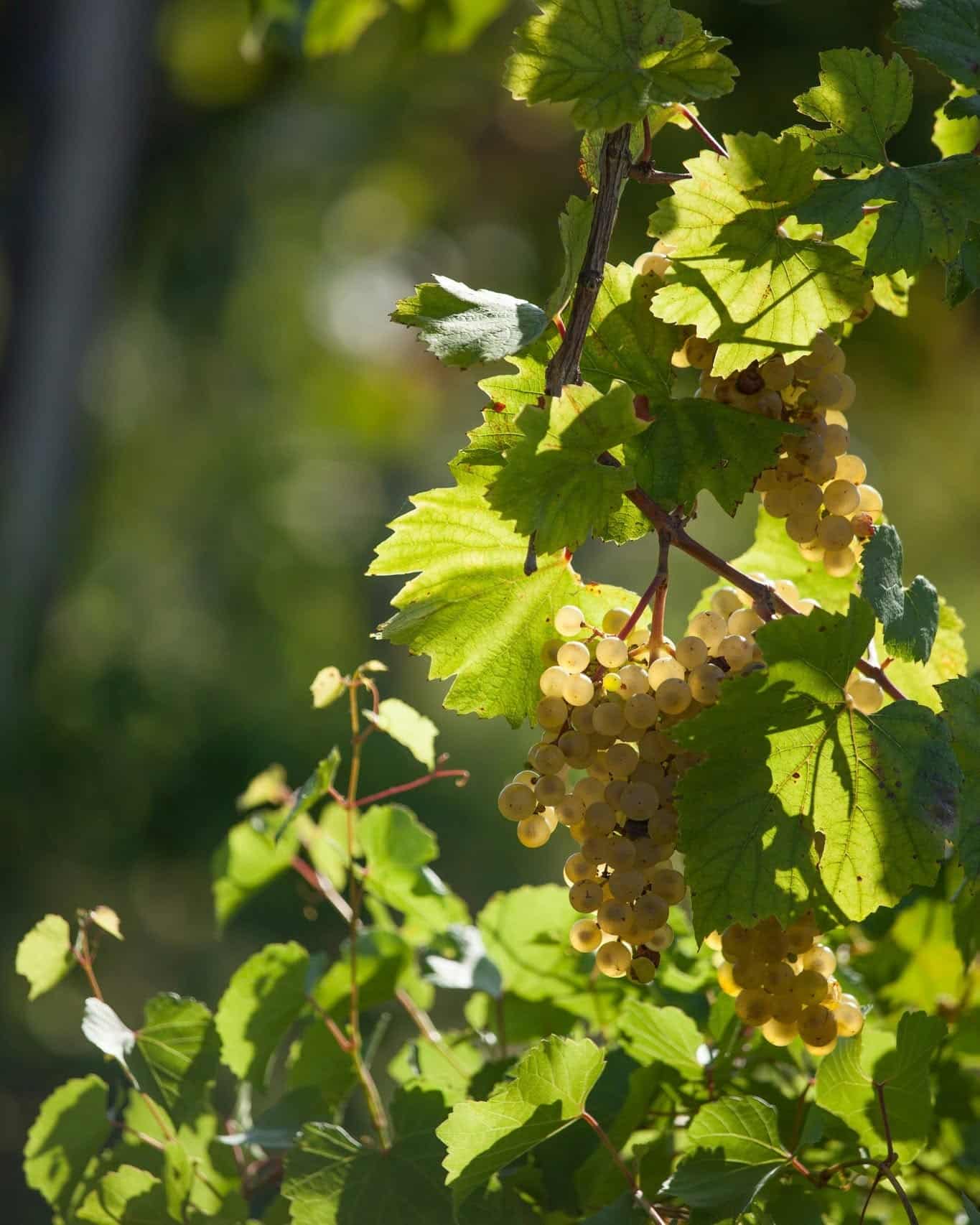
We can safely assume that few wine countries or regions have specific legislation about wines made from, um… single vines. In fact, I’d venture a guess that just one does. And that’s us, guys. It’s there in the latest updating of the Wine of Origin Scheme, following the altogether less bizarre category of single vineyard wines. Should this be widely admitted? A “single vine wine”, or “enkeldruifstokwyn”, amongst other details, “shall be produced solely from grapes that were harvested on a single unit that is registered for the production of single vine wine”. (First time I’ve noticed “unit” used in this way, incidentally.) Someone thought deeply about all this, and covered all the possibilities. If such a wine is to be fortified, for example, the fortifying spirit would have to also come from this “unit”. So this single grapevine, we can surmise, is conceived to potentially produce enough juice for both wine and spirit.
The legislation crept in last year without anybody in the wider, more sensible part of the wine industry apparently noticing at the time. No doubt the amendment to the scheme was earlier “published for comment”, but not in a way or a place that the average non-reader of government gazettes would notice. Occasionally I get an official alert about bits of wine law proposals, including such things as newly recognised varieties, or proposed new wards – but these do not come as frequently as they used to. I would certainly have noticed an alert about this.
It was only recently that the amendment to the scheme became more widely known about, when an unfortunate implication of it became apparent. Wine producers dutifully submitting their usual labels and back-labels were being told by the relevant authorities that they were not allowed to mention “vine” in the singular, because this would illegally imply that the wine was being made from a registered single vine.
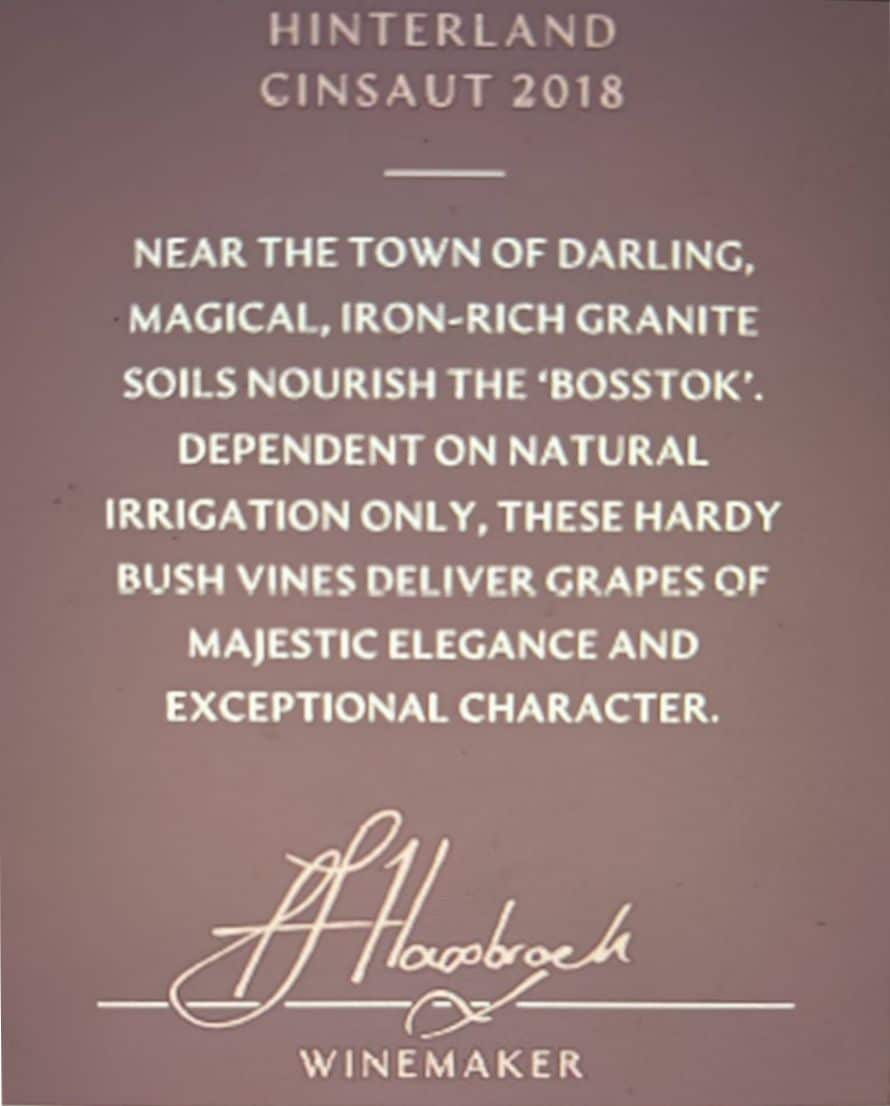 It might seem like a joke, but our wine bureaucracy is not known for its sense of humour, even at its most admirable. So – adducing one example among many – François Haasbroek was told that the admittedly rather fulsome backlabel for his Blackwater Wines Hinterland Cinsaut was rejected because it spoke of a “bosstok” (bushvine) origin. The subsequent sentence used the English translation in the plural, but so what? Avid readers of back labels might still conclude that François was duplicitously trying to pass off this bottling as coming from a single vine! Could any rational wine lover have conceived of that as a possibility – let alone would they know of this remarkable bit of wine law? The Wine Certification Authority, and Sawis, which dutifully carries out its bidding, seemed to think so.
And what of the Old Vine Project and all those famous old-vine wines that have brought so much attention to this country’s prestigious wines? Would they be proscribed, to avoid the misunderstanding that they might all be made from single vines?
Realistically, how many single vine vineyards, one wonders, are likely to be thus registered to benefit from the law’s protection? The idea must have been proposed to the authorities by someone responsible for making wine from such a vine, after all. I’m aware of only a few plausible possibilities. Maybe there are others – a gnarled old hanepoot curling around a remote Karoo farmhouse, perhaps. There’s apparently a grand old freestanding vine at the Nietvoorbij research station in Stellenbosch (about which I fear I know nothing). And there’s the vine “re-discovered” during the restoration of Heritage Square in central Cape Town a few decades back. A crouchen blanc (but perhaps a “gross chenin blanc”), planted around 1771. Jean-Vincent Ridon, I think it was, reportedly made four magnums and a dozen standard bottles of wine from it in 2008 and the wine was sold on auction. I have no idea of any subsequent bottlings. As for the 1870 vine at the Reinet House Museum in Graaff-Reinet, I’m not even quite sure it bears grapes.
The point of the legislation story is, of course, that a great deal of consternation and practical problems was being caused to a large number of producers, presumably for the sake of a yearly dozen or two bottles of wine that would inevitably be charming vinous curiosities rather than any sort of real commercial proposition.
Scathing reports on this were published by Michael Fridjhon, on Business Day behind a paywall here, (after his lengthy and fruitless efforts to have a rational conversation about the problem with the Wine Certification Authority), and Emile Joubert in Die Burger and on Winegoggle.co.za. Perhaps they had an effect. No doubt there were other objections lodged, by more or less important producers and owners. Mostly likely the Old Vine Project had something trenchant, but probably polite, to plead; and I’d guess that if the owner of Anthonij Rupert’s Die Ou Bosstok Cinsault, or his henchmen, had a quiet, possibly less polite, word in the right ear it would have helped hugely.
Anyway, there’s a happy ending to this element of the story. The Wine Certification Authority has backed down about the labelling strictures consequent upon the single-vine-wine legislation. The Old Vine Project has informed its members of this in an email I’ve seen, quoting the WCA to the effect that “’Old Vine’ and ‘Bush Vine’ are permitted as standalone terms, as has been the case in the past”. Producers that have had labels rejected, it seems, should resubmit.
Not that all of those who’ve had rejections have been informed of this (yet? Will they ever be?). Certainly François Haasbroek hasn’t been told about a “finalisation of the guidelines”.
It’s easy to sneer at the bureaucratic mindset that has been (once more) revealed, and also easy to laugh at this particular bit of legislation that will be supremely irrelevant to the near-totality of the wine industry and its customers. But I don’t think it quite right, in fact, to be implacably harsh.
Firstly, I am pretty sure that the originators of the legislation hadn’t realised what trouble its implications could have for labelling. Even if such lack of rigour were acceptable, it’s not an excuse, admittedly, for their not responding with sensible practical guidelines once the problem had become clear. But they have backed down eventually, presumably responding to industry pressure.
Also, with all its shortcomings, the bureaucracy has over the years made important contributions to assuring the integrity of South African wine and protecting the consumer. The producers chafe against the dour rule, but only the most devoted admirers of laissez-faire capitalism would not welcome much of the legislation, most notably the Wine of Origin system. The Wine Certification Authority, renamed from the Wine and Spirit Board in 2021, has made some dreadful decisions in the past and been slow in making necessary modernisation changes (witness the damaging long delay in facilitating single-vineyard wines, for example, and the symptomatic refusal to deal properly, even at the end, with the naming of crouchen blanc as riesling).
But it has learnt to move, to respond to initiatives from the progressive part of the industry, and I suspect this recent rather foolish move was in that tradition. Perhaps the single-vine-wine category will even gain a bit of cachet, or at least useful publicity for Cape wine, however unlikely that might seem. But the WCA has, over the last few decades, allowed itself to be pushed to bring in certification for widely-used categories for skin fermented and skin macerated whites, and for “alternative” wines of all colours. Leeu Passant persuaded them to allow certification of “Extended barrel aged white/gris”, even though their Radicales Libres is as yet the only example; one bottling of Sadie’s Sun wine remains the as yet only bottling to take advantage of that category, though it would be good if there were more.
I’d guess the Enkeldruifstokwyn was seen by the WCA as another such creative category, worth supporting. And why not, if there’s no collateral damage? But there was, because they didn’t think it through. Let’s hope support for innovation won’t be threatened by the humiliation of having to retreat in this absurd affair; but let’s also hope a bit of caution and, especially, proper public consultation will be a result.
- Tim James is one of South Africa’s leading wine commentators, contributing to various local and international wine publications. His book Wines of the New South Africa – Tradition and Revolution appeared in 2013.
-
Share:

Related articles
Opinion & Analysis
Tim James: Who really wins at wine auctions?
12 October 2026
The Strauss & Co wine auctions began in 2019, in good time to benefit, as is clear in retrospect, from the pandemic that was soon to hit us. The stated...
6
Opinion & Analysis
Tim James: Why do we drink? And why do I?
5 October 2026
We all drink alcohol, it’s surely fair to say (unless there are some teetotal voyeurs – liseurs? – readingthis; “we” being the readers, extended to “people generally”). But why? That’s...
Opinion & Analysis
Tim James: A visit to Callie Louw’s Sonkop
28 September 2026
Fans of Callie Louw – there are many, and I think “fan” is the right word – will be pleased to know that all is going well at his new...
Kwispedoor | 7 July 2026
“…our wine bureaucracy is not known for its sense of humour,..” 🤣🤣🤣👍🏻
Spat out my “Riesling” from the “Coastal Region” as I read this!