
Tim James: How much power does Stellenbosch Cab need?
By Tim James, 13 July 2026
-
Share:





5
If you offer yourself as a wine critic there’s firstly objectivity to at least consider. It’s something only achievable once you understand your own instinctual or acquired preferences; if you don’t, you can’t even try to take them into account. There’s also, arguably, a duty to your own aesthetic (a posher way, possibly more complex, of saying preferences). If you’re offering your own judgements – unlike, say, collaborating in a guide like Platter’s – it’s easier all round, as regular readers can take your aesthetic into account.
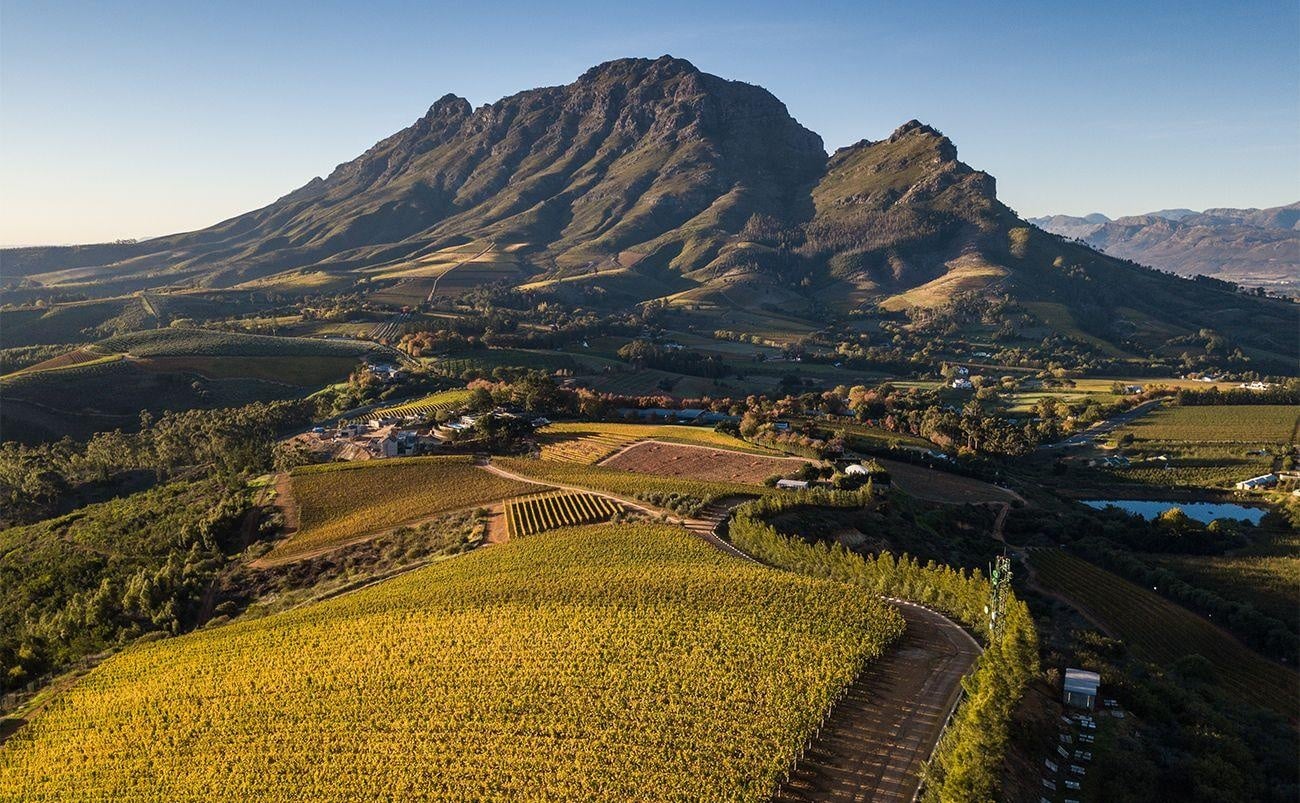
Here, I want to say something about Stellenbosch cabernet sauvignons and cab-blends, and am approaching it by engaging (respectfully, please note) with two eminent commentators on this website: Christian Eedes and Greg Sherwood. I’ll come back to Greg. First, it’s my observation that Christian generally reveals, as he is entitled to, distinct aesthetic positions on syrah (and cinsault, grenache) vis à vis cab (and family). That is, he seems to like syrahs to be on the light side and cabs to be richer, riper and more powerful.
The preferences behind the points
Hence Christian’s notes and scores on two 2023 cab-based blends made by Abrie Beeslaar: Beeslaar The Sacrament and Kanonkop Paul Sauer. He scores both 93 points. The Sacrament he calls “linear, upright and rather elegant” and neutrally notes the declared alcohol of 14.5%. The “beautifully composed” Paul Sauer, he says, is “a touch slight” with a declared alcohol level of 13%, to be compared with the 14.47% on “the famed 2015”. Christian had given the 2022 (alc 13.5%) a score of 95, but just 93 for both the 2021 and 2020 with rather similar comments to those for the latest: the 2021 being “a bit underdone” and the 2020 “quite slight”. He is, in fact, pretty consistent in being less of an admirer of lower-alcohol Paul Sauer than most critics. I would mention, though – just saying! – that he gave Craven The Firs Syrah 97 and 96 points in the last two vintages with much the same sort of alcohol level.
I also wrote about the Beeslaar own-wine, but contrastingly. I thought it impressive, but said that “Perhaps it’s the 14.5% alcohol and the 2.2 g/L residual sugar on the Sacrament that made me demur a little, as I do about most ambitious Stellenbosch cabs and Bordeaux blends (not including Abrie’s at Kanonkop); but that’s a personal taste and opinion.”
And I certainly wouldn’t have given equal scores for The Sacrament and Paul Sauer. The Sacrament seems to me just another good Stellenbosch cab-blend – big, ripe, sweet-finishing. Paul Sauer’s ”slightness” I experience as elegance and refinement. I found the wine a little shy to begin with, but it opened up in the glass to offer a lovely true-to-type fragrance, and a genuine albeit understated fruit intensity alongside freshness, a firm and balanced structure, and a good properly dry finish. A wine of finesse I thought, with a winning modesty – in the best sense of that word.
Two elements from the tasting (held at Kanonkop) where Christian and I tasted the wine are worth recalling. Firstly, the presenters were insistent about the particular character of the Paul Sauer vineyards, especially their ability to offer genuine ripeness at a lower alcohol level than the rest of the farm can achieve. They were, rightly I’d say, proud of this, and hoped it would be a recurring feature of the wine.
Secondly, wanting to offer an example of the beneficial ageability of Paul Sauer at this sort of alcohol level, they offered us the 1997. I remember this vintage as one that helped me learn something that still informs my understanding of what Cape cab-based reds can achieve. It was a cool one, that produced much “slighter” wines than the subsequent, hot 1998. The best 1997s were elegant and unshowy – especially those that always revelled in that style, like Cordoba Crescendo and Welgemeend Estate Reserve (I drank the latter not long ago and it was still marvellous). The 1998s were showy, fruitily ripe, powerful and overtly delicious in their youth, and I think it true to say that most winelovers particularly welcomed the wines after the lighter 1997s. But a decade later, many of them were already tiring, in my experience, while the 1997s sailed on serenely. The Paul Sauer 1997, tasted a few months ago, at an alcohol level even lower than that of the “slight” 2023, is drinking superbly. I see no reason why the 2023 should not live as long and as gracefully.
In the comment Greg Sherwood posted on Christian’s report on Paul Sauer, he resolutely defended the wine and praised its lowish alcohol level. I thought he was too condescending in his suggestion that Christian was prejudging the wine because of a “difficult” vintage. Christian is as capable as Greg of not being so naïve and doesn’t need ticking off like that; furthermore, as I suggested, his comments are consistent with his previous stand on Paul Sauer and other cabs and cab blends. In fact, it’s a question around Greg’s own positions on Stellenbosch cabs and cab blends that interests me, in the light of those factors of objectivity and personal preference.
Greg said in his comment about the Paul Sauer that “This is my dream ABV level”. Now, I think you could read a lot of Greg’s writings about Cape cab and cab blends without realising that! I can’t swear to it, but I don’t think I’ve ever seen him even suggest any problem with the 14.5-15% alcohols that tend to prevail. Does he ever even mention alcohol levels and associated matters? Take his recent article about a load of 2024 cabs he tasted “en primeur”. He was typically rah-rah about it all, hugely enthusiastic about the category. (Of course one must remember that Greg has a conflict of interest to deal with – he is deeply involved in their retail prospects in the UK.) Alcohol levels are not mentioned as such, though he says that “Cabernet Sauvignon, of course, demands ample ‘hang time’ to achieve full phenolic ripeness”. Of course. Depends what you mean by ample, perhaps.
Talking of ripeness I was able to find details about only one of his (mostly as yet unreleased) top six wines, the Bellevue Reserve 2024 (“Wow! 95-97”). True, its alcohol is scarcely over 14%, but it has a residual sugar of 3.8 g/L. And it’s the residual sugar levels of many Stellenbosch cabs in alliance with alcohol levels over 14% that give the sweetness making so many of them unattractive to me. But it’s another unclassical aspect that Greg avoids mentioning in his ardour. Yet he personally seems to prefer lighter, more classic wines. Is it down to his idea of objectivity that he never indicates this preference in his Winemag notes on wines, let alone has it reflected in his scoring? Or what?
The case for lower-alc Cabernet
The above was intended as a mere intro, but the tail has wagged the dog, and now I must divert my intentions into brevity. It’s not easy finding other serious Stellenbosch cabs and cab-blends under 14% alcohol. Happily, I can at least adduce the Cabernet Sauvignon (as well as the blend) from Leeu Passant (incidentally, rated 94 by Christian), among my few favourite local versions. More radically, there is Waterford Cab. The current release seems to be 2019, at R450 (does anyone release their cab later these days, I wonder?), and it declares, remarkably, an alcohol level of a mere 12.5%. I would love to declare it an unmixed triumph as an extreme justification for my belief that Stellenbosch must pick its cabs earlier, but not quite. There’s much that I liked – its sombre darkness, the well-resolved tannins that time in the bottle had given, but there is a herbal quality whose markedness I am slightly uneasy about (though I am not one to object to some of this character), and a degree of leanness. Actually I think I’d have preferred it younger if it was showing more fruit then – but perhaps it was just too tough to take to market.
I didn’t search hard for sub-14% alc examples, but noticed on the shelf the Noble Hill 2022, from just outside Stellenbosch, on the Paarl side of the mighty Simonsberg. The Noble Hill reds are always lovely and classically light (I wrote about them enthusiastically back in 2020, here). The Cab is light, easy-going, fresh and charming at a declared 13% alcohol, but with not much you could call depth, though good value at just over R200; I’m sure the Estate reserve would be much more interesting and I must find out.
It’s probable that wanting many more of the established big names in Stellenbosch cabs and Bordeuax-style blend to dip below 14% alcohol is asking too much. I’m totally convinced, however, that many of them could beneficially get a lot closer than they do. But perhaps I’m the odd-one-out in wishing for that.
- Tim James is one of South Africa’s leading wine commentators, contributing to various local and international wine publications. His book Wines of the New South Africa – Tradition and Revolution appeared in 2013.
-
Share:

Related articles
Opinion & Analysis
Tim James: Who really wins at wine auctions?
12 October 2026
The Strauss & Co wine auctions began in 2019, in good time to benefit, as is clear in retrospect, from the pandemic that was soon to hit us. The stated...
6
Opinion & Analysis
Tim James: Why do we drink? And why do I?
5 October 2026
We all drink alcohol, it’s surely fair to say (unless there are some teetotal voyeurs – liseurs? – readingthis; “we” being the readers, extended to “people generally”). But why? That’s...
Opinion & Analysis
Tim James: A visit to Callie Louw’s Sonkop
28 September 2026
Fans of Callie Louw – there are many, and I think “fan” is the right word – will be pleased to know that all is going well at his new...
Christian Eedes | 13 July 2026
Tim raises a number of important points about style, ripeness and the role of alcohol in Stellenbosch Cabernet Sauvignon. I agree with the broader premise that critics bring their own aesthetic positions to wine, and that understanding those positions is part of understanding the criticism itself.
Where I would add some nuance is around the interpretation of ripeness and the factors that shape Cabernet Sauvignon in the Cape.
Firstly, “phenolic ripeness” is not an absolute concept. The discussion around classicism can sometimes imply that there is a clearly defined point at which Cabernet Sauvignon reaches optimum maturity, beyond which freshness declines and alcohol rises. In practice, ripeness is a spectrum, and the ideal point depends on site, vintage, vineyard health, and the intended style. Lower alcohol can contribute to a particular expression of Cabernet, but it is not, by itself, a guarantee of balance or elegance. The key question is whether fruit, acidity, alcohol and tannin come together harmoniously.
Secondly, comparisons with wines from 30 years ago should be treated with some caution. They are fascinating and often instructive, but the context has changed dramatically. Vineyard material, viticultural knowledge, climate, cellar practices and consumer expectations have all evolved. A great 1997 Cabernet-based wine tells us something important about that wine and its era, but it does not necessarily provide a blueprint for how modern Cabernet should be made.
Perhaps most importantly, any discussion of ripeness in South Africa needs to acknowledge the impact of leafroll virus. It remains a significant challenge in many Cabernet Sauvignon vineyards, fundamentally affecting physiological ripening and hence colour, aromatic expression, flavour development and tannin structure in the end-wine. A virus-affected vine does not simply produce a lower-alcohol version of a healthy one.
The debate around Stellenbosch Cabernet is therefore not simply one of elegance versus power. It is about the interplay between site expression, vineyard condition and stylistic intent. Alcohol is just one variable; what ultimately matters is how convincingly the wine comes together as a whole.
Greg Sherwood | 13 July 2026
Tim, I’m flattered to have my writing so keenly dissected once again. You and Michael seem to make a habit of it. A couple points in rebuttal… your honour…
Regarding my comment to Christian, which I think equates to “play the ball not the man”… or judge the wine, not the vintage… was a reference to some comments from CE suggesting the 2023 was a very difficult vintage that many producers struggled with, installing an instant subconscious negativity to many of the later picked 2023 vintage reds. I think the 2023 KK Paul Sauer is very good, possibly better than even expected. But then again, Bruwer Raats has made one of his most serious MR de Compostella belnds in 2023 as well. Winemakers at this level know a think or two we should take note of! While they have wines to sell obviously, but I have never found Bruwer to exagerate. If CE felt ticked off, so be it, but I think he’s a big enough boy to look after himself without you also feeling agrieved.
As someone who likes to drink fine wines regularly, I needless to say normally prefer lower ABV wines if they have all the components in check and are well made. I find it a great travesty when a Cab or Bordeaux Blend is 14.5 or 15% when I know the wine would have been just as sexy, if not more so, at 13-13.5%. Personal preference? Maybe. But also a recognition of the building blocks of a fine wine with elegance, freshness, cooler alcohol feel and probably a lower pH. Admittedly, these are not sip and spit wines, they are more subtle, and require more concentrated examination. But as I said to CE, I have not tasted a “green” Paul Sauer for a very long time, so I don’t personally experience KK “struggling to ripen their grapes” due to virus. They may well have virused vines, but their end product is suberb IMHO.
Stating that my preference is for lower ABV wines (12.8-13.5% typically) does not mean I cannot recognise and reward well made wines in riper, sweeter fruited styles. Bellevue is a great example. The new ownership has inspired a great winemaking resurgence and renaissance, still under Wilhelm Kritzinger, and I full appreciate the balance and harmony of the wines, regardless of ABV. They always show well blind, a little bit like the wines of Cederberg, and therefore by default, do very well in international and local blind competitions. (Bellevue Cab Franc at 14 or 14.5% was the Michelangelo Awards Red wine of the year two years running!)
Lastly, on the “(Of course one must remember that Greg has a conflict of interest to deal with – he is deeply involved in their retail prospects in the UK.)”… this is infact incorrect and misleading. I do consult adhoc to a number of merchants in the UK, some of whom retail SA wines, but I am not actively or deeply involved in retailing the wines. This is more a historical image hangover from 22 years as a fine wine buyer for a merchant, admittedly pushing a lot of SA wines, which I have not been for over four years. I hope that lends some clarity. So no “conflict of interest” writing about 2024 South African Cabernet Sauvignons for example or Paul Sauer 2023 for that matter.
Kwispedoor | 13 July 2026
“I’m totally convinced, however, that many of them could beneficially get a lot closer than they do. But perhaps I’m the odd-one-out in wishing for that.” Nooooo, I totally agree with you Tim. And I know of many others who do, too.
It’s not 5 degrees warmer nowadays than a few decades ago. It’s roughly 1-1.3 degrees for minimum temperatures and 2-2.5 degrees for maximum temperatures. Yet, by and large, even in warm vintages the alcohol levels were still lower than those of today generally are in cooler vintages. Considering we also have better viticultural and winemaking tools & knowledge nowadays, surely it points to it being more winemaking decisions at play here than anything else. Whether it’s in response to what is taught at university, an overpowering fear of pyrazines or perceived customer expectations, is another matter. We do taste the odd classical expression of these Bordeaux varieties from time to time, so it’s far from impossible to make (especially from good sites) – they’re just in the vast minority.
Andrew Johnson | 14 July 2026
What has made South African wine so great over the last 15 to 20 years is that virtually all South African producers have lived my the unofficial motto, “we are stronger together.”
You almost never hear a negative word from one producer about another, and this has helped catapult the wines to where they are now.
Wouldn’t it be wonderful if all the wine critics could do the same and not take pot shots at each other. Whatever the good and professional intentions are, it all seems very petty and very sad. I would also like to suggest that is not what interests consumers.
There is so much to write about, why not celebrate all that is great in the South African scene and leave these types of comments for personal WhatsApp groups. That’s where they belong. We all enjoy a little gossip but let’s keep it private.
Richard Andrews | 23 July 2026
My own personal feelings around the alcohol percentage of wine is that if the wine is in balance, then you are generally not aware of the alcohol. I very recently drank a stunningly good American Saxum Bone Rock 2017 Syrah dominant blend from Paso Robles, that was 15.9% alcohol. But you were just unaware of the alcohol percentage, because the wine was so good & so much in balance.
I noticed the same drinking a Barossa Valley shiraz from Greenock Estate, everything was in such balance that one was completely unaware of the high alcohol percentage, until you looked at the back label. I honestly think that winemakers should allow a wine to develop in balance and whatever the alcohol percentage it arrives at should be irrelevant for consideration. Trying to artificially lower that alcohol percentage generally just affects the flavour and ruins the wine. These winemakers have produced stunningly good wines using whatever yeasts they deemed the best, and in doing so arrived at a higher level of alcohol than many would like, but the results stand for themselves, outstanding wines.
So gerrymander the wines to produce artificially lower alcohol percentages at your peril in my opinion.