Reviews and ratings - only R55 per month.Subscribe
Vondeling Rurale 2018
The Rurale 2018, the “pét-nat” from Voor-Paardeberg property Vondeling, has just been released and shows more sophistication than its predecessors. Consisting of 80% Chardonnay and 20% Pinotage, spontaneous fermentation was begun in tank before the fermenting wine was bottled and capped with a small amount of sugar remaining to create a bubble, this being the so-called Méthode Ancestralé.
Maturation lasted three years before disgorgement, topping done with the 2013 vintage of the top-end white blend known as Babiana. The nose shows a touch of flinty reduction before peach, red apple and some biscuit-like complexity while the palate is relatively rich and full with a creamy mousse. Price: R295 a bottle.
Attention: Reviews like this take time and effort to create. We need your support to make our work possible. To make a financial contribution, click here. Invoice available upon request – contact info@winemag.co.za
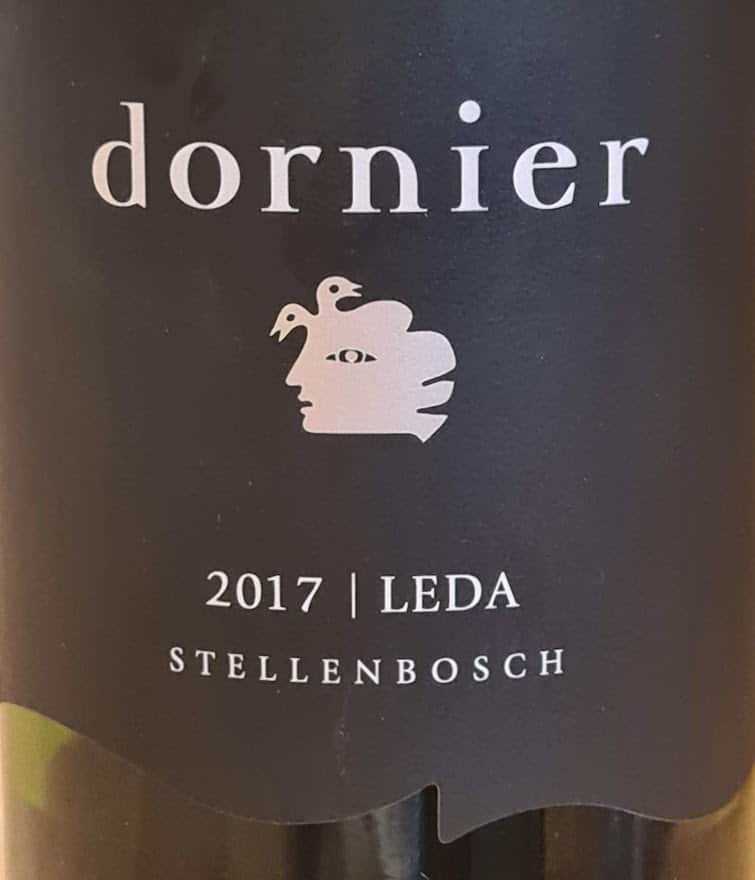
Using Shiraz to “spice up” a wine otherwise consisting of varieties associated with Bordeaux is a well established model, Rust en Vrede Estate being the most important reference in this regard. Fellow Stellenbosch cellar Dornier is now in on the act with Leda 2017, consisting of 50% Malbec, 25% Cabernet Franc and 25% Shiraz, 50% of the Malbec matured in new American oak and the balance of the wine in older French oak for a total of 18 months.
The nose shows floral perfume, red berries, some herbal character and hints of vanilla and spice while the palate is succulent and full with bright acidity and smooth tannins. It’s immediately approachable without being facile. Made exclusively for Dornier club members, it costs R285 a bottle.
Attention: Reviews like this take time and effort to create. We need your support to make our work possible. To make a financial contribution, click here. Invoice available upon request – contact info@winemag.co.za
For some time now, Breedekloof has been attempting to establish its credentials as a source of high-quality Chenin Blanc as much as Stellenbosch, Swartland or any other region and at an event held towards the end of October termed “Vintage Voyage” showing wines from 2015 to current release, the various wineries of the region from Olifantsberg to Opstal demonstrated that they are capable of making very good wines from the variety.
A particularly pleasant surprise was the Stofberg Border Stone 2017, fermented in concrete and matured in oak for four months. It has classic aromatics of bee’s wax, wet wool and a slight nuttiness to go with citrus, peach and a hint of spice while the palate is plenty flavourful but not too weighty. With nicely tangy acidity and a particularly savoury finish, this is drinking very well right now – still available at R175 a bottle from the cellar.
Attention: Reviews like this take time and effort to create. We need your support to make our work possible. To make a financial contribution, click here. Invoice available upon request – contact info@winemag.co.za
Is pricing for top-end SA wine heading the same way as Burgundy?
My father always used to say that the biggest difference between those people who preferred to live up on the highveld in the thin air of Pretoria and Johannesburg versus those who loved living down in the Cape was all down to how you embraced the seasons. Up-country living was all about monotone hot or cold lifestyles whereas living in the Cape was focused on all four nuanced seasons of Summer, Autumn, Winter and Spring encompassing all the different clothes you wore, the different seasonal foods you ate and of course, all the different wines you drank to match every season. Provided you could accept your expensive leather brogues going mouldy in the cupboard in a cold, damp, Cape winter you were sure to get on just fine.
Seasonality, as they say, is very good for not only your soul but also your mental health. Well, the Gautengers reading this might be cringing at this point but I’m sure everyone who lives happily in the Cape, whether they were born there or are now adopted sons or daughters, will agree with me wholeheartedly. There is just something special about the transitioning of the seasons, the changing of moods, the changing of ones’ own biorhythms and the deeper introspection that each season evokes in individuals. It is of course the beauty of this seasonality that is so entrenched in the Cape and that I believe is responsible for sucking in so many European nationals and making them feel so at home.
While many of us South Africans living in London stare down the barrel of another stark, cold winter here in Europe, the challenge of course is to simply accept the seasonality and incorporate it positively into our daily patterns of life. In the wine trade that means transitioning in the Autumn and Winter months and starting to eat plenty of hearty game dishes, whether you are a shooter or not, and of course drinking plentiful amounts of fine red Burgundy. And of course on cue this week, we saw the first of many incredible En-primeur 2020 Burgundy tastings to come with the profiling of the wonderful wines of Domaine Faiveley. Simply incredible quality, very finite production and unbelievable global demand all adding to the massive pressure on new-release pricing.
Chatting to several other senior old-school Masters of Wine at the tasting like Mark Bingley MW and Charles Taylor MW, it was certainly interesting to see their pronounced resignation at the fact that the upcoming En-primeur campaign would be even more expensive yet again and the supply of wines even smaller than 2019. These two factors just seem to occur recurrently like day follows night and the market accepts the fact. In reality, I suppose merchants don’t really have a choice because demand is simply outstripping supply not only in the premium upper echelons of fine wine but also in the simple day to day “drinking Burgundy” categories. But what about in South Africa? One of my eternal fascinations is of course the one of pricing of primarily our top premium icon wines.
It is, of course, no secret that the South African home market is labouring under some very difficult economic circumstances post-pandemic, yet it hasn’t particularly seemed to affect the uptake of all the 2020 fine wine allocations released to the market recently. Add to this the very successful season of the Strauss & Co Fine Wine Auctions and a phenomenally successful Cape Wine Makers Guild Auction, and it doesn’t take much to see that premium South African red and white wines are still an enviable asset class at the moment in local and international circles. Yet interestingly, prices in the home market have been superficially suppressed by the pandemic while demand for the top producers has continued to outstrip supply. With this latent potential hanging over the local market, there possibly seems trouble coming down the line.
The local market has of course long since cast off the mantel of being cheaper than international markets, especially where our top 20 or 30 wineries are concerned. Indeed, the days of being able to buy 10, 20, or 30 cases cellar-door on holiday from Europe, and ship them to back the UK or EU, to land and be delivered to your front door at a lower cost than buying them on release in your own international market from the local importer are long, long gone. But the mathematics of this equation does beg some difficult questions. With many or most producers in South Africa now looking determined to focus on quality over quantity, and raise the average bottle price, overall pricing in the local market which has generally been subject to international parity pegging, will surely need to rise in the same way our local SA petrol price rises when the international oil price also increases.
Most of the above is simply de facto. But what remains more of a conundrum is where the breaking point lies. At what price point will local consumers, except for the uber-wealthy, simply stop taking up allocations of all the top red and white wines? At what price point will the local South African on-trade price become simply too exorbitant for locals to indulge in the finer wines from their home market? These are indeed taxing questions which will need answers so long as the insatiable thirst of international markets hangs over the allocation process of these top wines. The uncomfortable truth is that the international appreciation and consequential demand for our premium producers is nearing a point where it surpasses the ability of the local fine wine enthusiast to afford buying and drinking the best wines at home. But of course, like the local French home market, South Africa will certainly not have been the first producing nation to experience this unique fine wine conundrum.
Just like my old man could just not get to grips with the dark, damp, cold Cape winters and always yearned for the lighter, brighter, dryer lifestyle of the highveld while he lived in the Cape in the 1970s, I fear that well-healed local consumers like him will also start to shirk at the thought of having to pay possibly R1,000+ (£50) for a decent bottle of big brand Cape Bordeaux blend or Stellenbosch Cabernet Sauvignon. The pressure will then be on the producers to reinvent their offering to keep the crucially important local market happy and well oiled. In the meantime, with regards to local market allocations, the mantra of “use it or lose it” will continue to prevail.
Greg Sherwood was born in Pretoria, South Africa, and as the son of a career diplomat, spent his first 21 years travelling the globe with his parents. With a Business Management and Marketing degree from Webster University, St. Louis, Missouri, USA, Sherwood began his working career as a commodity trader. In 2000, he decided to make more of a long-held interest in wine taking a position at Handford Wines in South Kensington, London and is today Senior Wine Buyer. He became a Master of Wine in 2007.
Help us out. If you’d like to show a little love for independent media, we’d greatly appreciate it. To make a financial contribution, click here. Invoice available upon request – contact info@winemag.co.za
Introducing our new talk show called “Spittoon Saloon“. In episode 5, host James Bisset interviews John Seccombe, owner and winemaker of Thorne & Daughters. He appears to have adopted extravagant wine descriptions more than most, but curiously though for someone so concerned with artifice, he also reveals a love of A-ha, Sedgwicks Old Brown and Triple King Steer Burgers from Ceres, proving just what colorful characters populate the South African wine scene.
The Stellenbosch Wine Routes celebrates its 50th anniversary this year but unfortunately celebrations have been curtailed because of the lingering pandemic. Lest the occasion go entirely unmarked, a tasting of four flights of six wines from across the five decades was held recently, the first a rather disparate assortment, the second consisting of Pinotage, the third of Cabernet Sauvignon and the fourth of red blends.
Taken as a whole, the tasting arguably revealed more about the technical advances that the industry has made in the last 50 years rather than making anything to do with terroir terribly clear.
Wines from the 1980s (Middelvlei Pinotage 1985, Simonsig Cabernet Sauvignon 1984 and Overgaauw Tria Cordo 1982) seemed to suffer somewhat from injudicious tartaric acid additions appearing a bit more angular than you might ideally want.
Saxenburg Shiraz Select 2000, meanwhile, was just about hanging on being full bodied and still quite grippy but the current crop of wines from this variety coming out of the Polkadraai Hills as made by the likes of Boschkloof, Reyneke and Van Loggerenberg seem so much less overwrought in comparison.
It’s not as if the march of progess is linear and inevitable, however. The Rust en Vrede Estate 1995, with an alcohol of just 12.6%, was showing beautifully. The 2009 of the same wine, available for sampling after formal proceedings, was a different proposition at 15.36%.
Lanzerac Pinotage 1969 and Chateau Libertas 1979 were great treats, but you have to wonder if we’ll ever see their like again, the conditions under which they were made having changed so significantly.
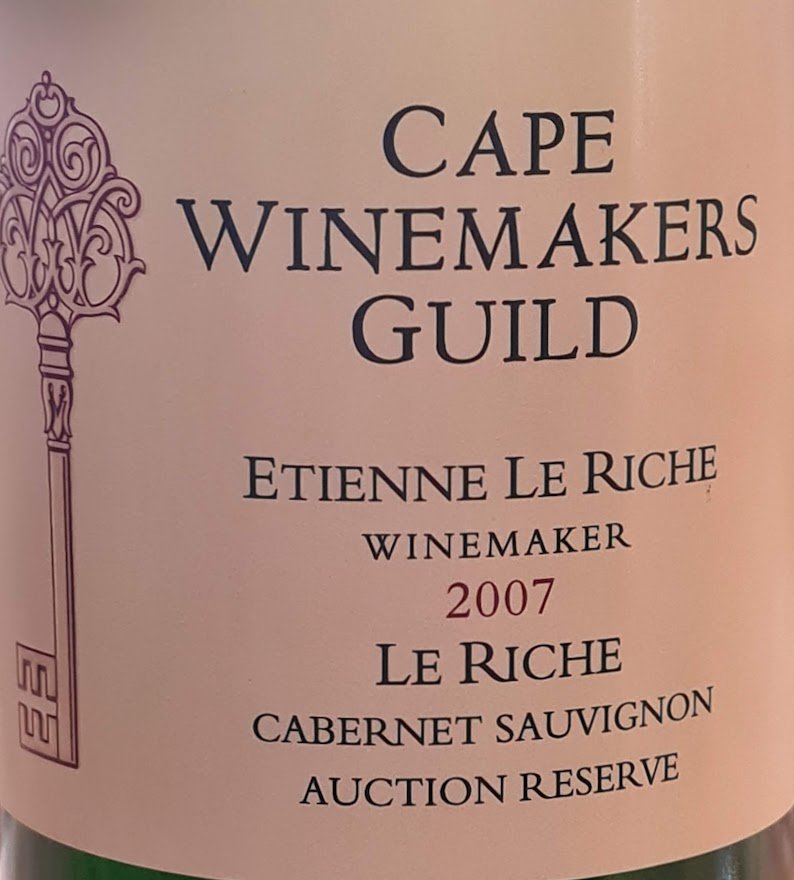
Given that Stellenbosch is attempting to take ownership of Cabernet Sauvignon by means of the Cabernet Collective, then the Le Riche CWG Auction Reserve 2007 (matured for 24 months in French oak, 100% new; alcohol of 14.61%) only furthered the cause. Dark berries, some leafiness, oyster shell and pencil shavings on the nose while the palate is concentrated but not unduly weighty with reat fruit definition and fresh acidity before a savoury finish. Some found it too sumptuous, but I thought it was powerful, precise and direct – pretty much how world-class Cab is supposed to look – and I rated it 97/100.
It’s certain that at the more ambitious, conscious level of wine appreciation, South Africans are now happier to accept that many white wines don’t have to be extremely young to give pleasure – quite the contrary, in at least some cases. It’s been a good while since even sauvignon blanc on a retailer’s shelf had to be discounted or returned to the producer as soon as the vintage wasn’t that of the current year. And the auctions that have become so significant at the top level in the last year or two, show that there’s an eager acceptance that at least some white wines are worth a premium when they have years of careful storage adding to their complexity – with sales of mature whites (leaving aside the dessert wines) going beyond the superstars (Sadie and Alheit) to, for example, a number of chardonnays (Chamonix, Cluver, Restless River, Hamilton Russel and others), chenin (Mullineux, Ken Forrester FMC) and white blends (Delaire Graff, Vergelegen).
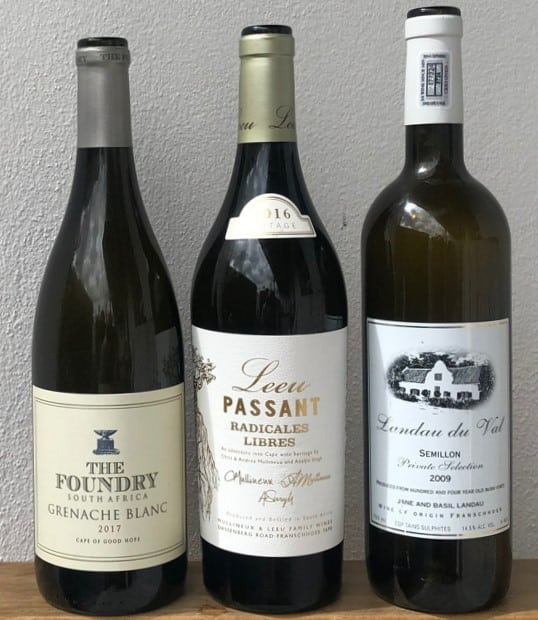
This last week I’ve drunk two whites that evidence the advantages of ageing. The Foundry Grenache Blanc 2017 was the younger – though I don’t think I missed out by drinking it at a bit less than half a decade old, even though it will undoubtedly go further. Just a totally delightful fine wine, with flavour balanced by elegance of structure, unshowy but poised and confident. My generalisation would be that five or so years is an age at which you’re not going to go terribly wrong, in either direction, in drinking the best Cape whites.
Grenache blanc is lovely from its flowery youth onwards, but semillon is less charming when young, I find, which perhaps accounts for its being a “difficult sell”. But, gosh, it really comes into its own with time in the bottle. I have had, for example, the Boekenhoutskloof at up to 15 years of age and it always shows itself as one of the finest Cape white wines. Landau du Val, from one of the oldest local (Franschhoek) semillon vineyards, is comparatively up-and-down across vintages for various reasons, but also excellent in many years. Including the golden-glowing 2009: delicately forthcoming and quietly lovely, with a subtle, nuanced complexity – the opposite of showy, and remarkably light-feeling despite a declared alcohol of 14.5%. I drank it with great pleasure over three days, during which it didn’t fade – proving its excellence and vitality (though I don’t think it would be worth keeping the wine in bottle much longer).
Ageing of a radically different kind goes into my third wine, which comes from the masterly hands of Andrea Mullineux – and from chardonnay five years in old oak barrels: Leeu Passant Radicales Libres 2016. This is the first regular bottling of this wine, which has been considered something of an experiment up till now and sold at two CWG Auctions (oh, I wish that more winemakers would use the auction for this sort of thing, rather than each year punting a tweaked version of a standard wine). The first vintage under this name was 2012, which was essentially a long-aged version of the chenin-based Mullineux white, but since then it has been made from a single cool vineyard of chardonnay from the Tradouw Highlands, just outside Barrydale in the Klein Karoo. Chardonnay, say the Mullineux, “is a variety we feel really well suited to this style of winemaking, as it has a strong affinity for oxygen”. The Spanish name, incidentally, is a translation of “free radical”, which is a chemistry term, and something to do with unpaired atoms seeking partners (or whatever…); the punning allusion to wild(ish) experimentation is no accident.
Now the experiment is clearly deemed to have been sustainably successful and with the five barrels of 2016 it joins the Leeu Passant line-up. It’s being offered only directly from the producer, in a three-pack of three vintages: 2014, 2015 and 2016 – the two earlier vintages being essentially identical to those offered at the CWG auctions in 2019 and 2020. They received average auction prices of R1163 (for the 2014) and R1825 (the 2015) – which makes the price for the three wines together seem pretty reasonable at R2295. It will be available from later this week (mid November), with Club members having a two-day exclusive chance to pluck the cherries before they become generally available.
The wine was not ignored while in barrel for five years. That’s not the sort of thing the meticulous Andrea Mullineux does. It was racked each year and the barrels regularly topped up, so that while a degree of concentration took place through evaporation (the alcohol rising to 14.5% and the free extract increasing), the oxidative character of the wine is not at all strongly marked – as it would be in the now-rare Rioja tradition of keeping white wine in oak for many years (sometimes longer than five). Radicales Libres is also marvellously bone dry, which means that its weight, power and concentration do not exclude elegance.
It’s a fascinating wine, though perhaps not one for beginners. Chardonnay is seldom charmingly aromatic and “fruity”, and this certainly isn’t, though the varietal character is far from extinguished. The intensity of flavour is more centred on savoury notes, with salt-preserved lemon being the dominant one to me, with slivers of almond. An excellent, beautifully proportioned and shaped wine, with long-lingering flavour intensity and a real seriousness to it (get something else for light-hearted sipping).
When I asked him, Chris Mullineux told me that the two older vintages included in the three-pack on offer have evolved very little since bottling. Wines made in this way (and I know it from old Riojas too, both red and white), when the grapes and winemaking are good, seem able to cruise effortlessly for ages. So if you’re lucky enough to get some of this – no hurry to drink up. I reckon you could safely lay it down for the 21st birthday of someone born in one of those vintage years.
Tim James is one of South Africa’s leading wine commentators, contributing to various local and international wine publications. He is a taster (and associate editor) for Platter’s. His book Wines of South Africa – Tradition and Revolution appeared in 2013
Help us out. If you’d like to show a little love for independent media, we’d greatly appreciate it. To make a financial contribution, click here. Invoice available upon request – contact info@winemag.co.za
Whatever else you might say about the Black Label Pinotage, the pinnacle wine from Stellenbosch property Kanonkop, “elegant” is not normally a word that applies but the newly released 2019 vintage is not far off.
The nose shows abundant floral perfume before red cherry, banana loaf and attractive oak spice (maturation lasts 18 months in 225-litre barrels, 100% new). The palate is medium-bodied with lovely form – pure fruit, nicely integrated acidity and fine tannins. There’s that pleasing sweetness typical of the variety but in general there’s nothing too overt or forced about this release. Price: R2 000 a bottle.
Attention: Reviews like this take time and effort to create. We need your support to make our work possible. To make a financial contribution, click here. Invoice available upon request – contact info@winemag.co.za
Bernhard Bredell of Scions of Sinai describes the 2021 vintage as cooler than 2020 leading to slower sugar accumulation and the resulting wines do seem to have an extra refinement about them.
Scions of Sinai Señor Tallos 2021 Price: R230
50% Stellenbosch Chenin Blanc and 50% Voor-Paardeberg Grenache Blanc, skin macerated for a period just shy of one month. Ageing under flor also incorporated as part of the winemaking process. Striking aromatics of citrus, apple, stone fruit, potpourri, dried herbs and almond. The palate is light (alcohol is 11.1%) but super-flavourful – pure fruit, zippy acidity and some tannic grip to the finish.
CE’s: rating: 92/100.
Scions of Sinai Atlantikas 2021 Price: R175
What Bredell describes as a “farmer’s rosé”- more substantial than your average pink wine but not quite a light red. Grapes from the lesser parts of the 1976 Lower Helderberg vineyard that also supplies his more premium Féniks Pinotage bottling plus another 1996 vineyard that Bredell is keen to preserve. Around 25% whole-bunch fermentation, before eight months maturation in tank. Intense floral perfume, cherry and plum on the nose while the palate is juicy and bright with soft tannins. Cheerful and charming.
CE’s rating: 90/100.
Scions of Sinai Nomadis 2021 Price: R230
87% Cinsault and 13% Pinotage, both vineyards on the Lower Helderberg. Winemaking involved round 50% and therefore slightly less whole-bunch fermentation than 2020. A slight note of reduction before cherry and pomegranate plus hints of flowers and herbs. The palate is again light but wonderfully focused – good fruit definition, bright acidity and fine tannins, the finish nicely dry.
Attention: Reviews like this take time and effort to create. We need your support to make our work possible. To make a financial contribution, click here. Invoice available upon request – contact info@winemag.co.za
While scratching around the Bottelary Hills looking for some old vine Chenin Blanc in the lead-up to the 2019 harvest, David Trafford came upon a rare block of bush-vine Chardonnay planted in the early 1990s – though De Trafford had never previously released a white wine other than from Chenin Blanc, this proved irresistible.
Having procured slightly less than two tons of grapes, spontaneous fermentation and maturation lasting 12 months occurred in two 400-litre barrels, one new and the other third-fill.
Though the intention was to prevent softening malolactic fermentation, this was not achieved. Nevertheless, the wine remains very direct. The nose shows lemon plus hints of almond, oatmeal and vanilla while the palate shows pure, clean, concentrated fruit to go with punchy acidity, the finish nicely savoury. It’s well balanced and still very youthful at this stage. Price: R280 a bottle.
Help us out. If you’d like to show a little love for independent media, we’d greatly appreciate it. To make a financial contribution, click here. Invoice available upon request – contact info@winemag.co.za

 The Rurale 2018, the “pét-nat” from Voor-Paardeberg property Vondeling, has just been released and shows more sophistication than its predecessors. Consisting of 80% Chardonnay and 20% Pinotage, spontaneous fermentation was begun in tank before the fermenting wine was bottled and capped with a small amount of sugar remaining to create a bubble, this being the so-called Méthode Ancestralé.
 Using Shiraz to “spice up” a wine otherwise consisting of varieties associated with Bordeaux is a well established model, Rust en Vrede Estate being the most important reference in this regard. Fellow Stellenbosch cellar Dornier is now in on the act with Leda 2017, consisting of 50% Malbec, 25% Cabernet Franc and 25% Shiraz, 50% of the Malbec matured in new American oak and the balance of the wine in older French oak for a total of 18 months.
 For some time now, Breedekloof has been attempting to establish its credentials as a source of high-quality Chenin Blanc as much as Stellenbosch, Swartland or any other region and at an event held towards the end of October termed “Vintage Voyage” showing wines from 2015 to current release, the various wineries of the region from Olifantsberg to Opstal demonstrated that they are capable of making very good wines from the variety.
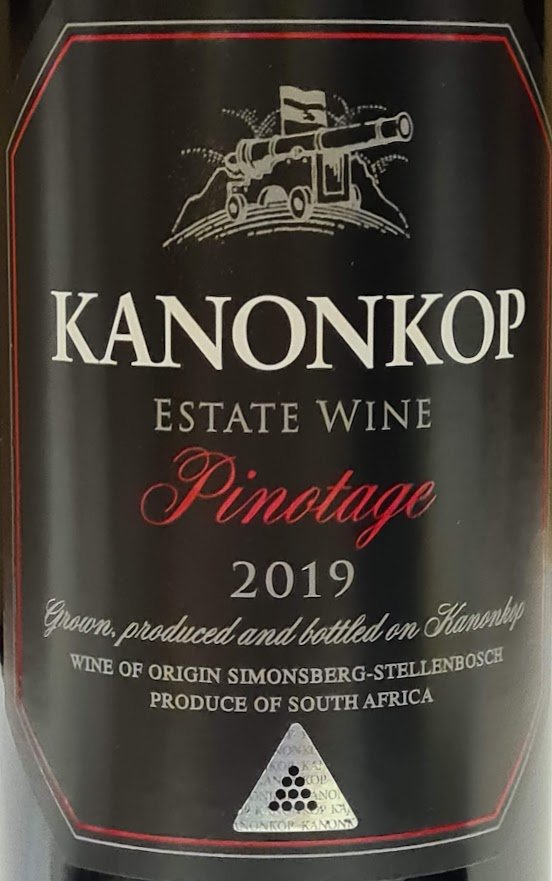 Whatever else you might say about the Black Label Pinotage, the pinnacle wine from Stellenbosch property Kanonkop, “elegant” is not normally a word that applies but the newly released 2019 vintage is not far off.
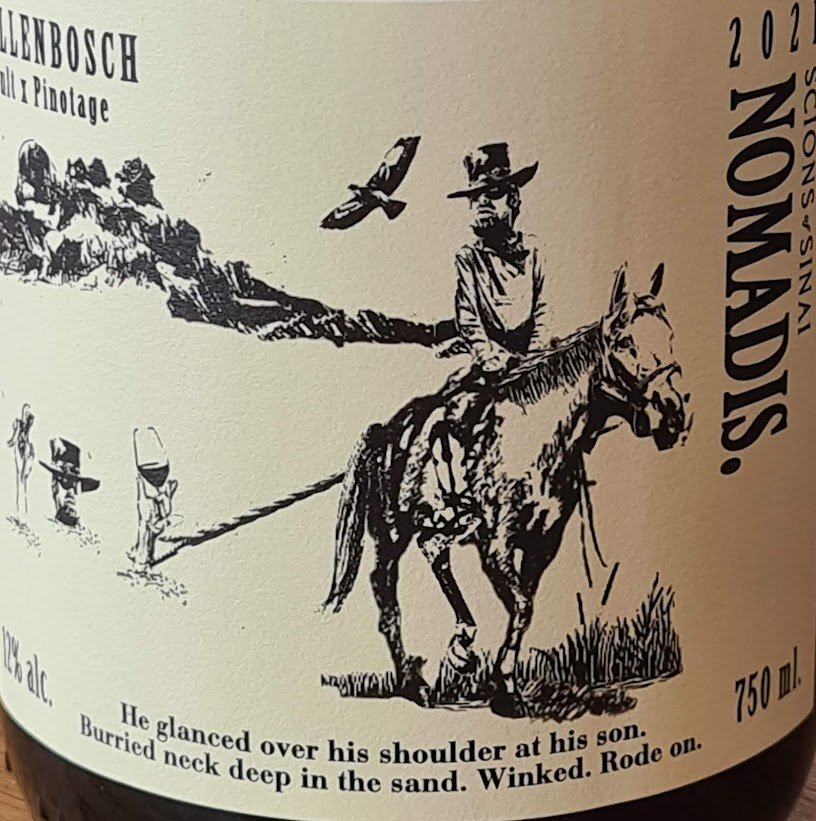 Scions of Sinai Nomadis 2021
 While scratching around the Bottelary Hills looking for some old vine Chenin Blanc in the lead-up to the 2019 harvest, David Trafford came upon a rare block of bush-vine Chardonnay planted in the early 1990s – though De Trafford had never previously released a white wine other than from Chenin Blanc, this proved irresistible.