
FermTech briefing: 2027 vintage – don’t predict, prepare
By Clayton Reabow, 3 November 2026
-
Share:


Every wine vintage brings its own opportunities and challenges. Yet perhaps the greatest risk for winemakers is assuming we know what those challenges will be before the growing season has fully unfolded.
As South Africa approaches the 2027 harvest, there are a few climatic conditions worth taking a closer look at. Winter rainfall, accumulated chill, early budburst and regional water availability give us a better understanding of where our vineyards stand as we head into the growing season.
This does not mean we can predict the vintage. What it does mean is that we can identify some of the risks early and start preparing for them.
At FermTech Solutions, our approach is straightforward: understand what we know, consider what might develop, and prepare for what we can control.
Understanding the conditions entering 2027
The period preceding the 2027 growing season has presented a combination of encouraging developments and potential vulnerabilities.
Beneficial rainfall during April and May 2026 supported vineyard recovery and reserve replenishment ahead of winter dormancy. This was followed by relatively warm and dry winter conditions across several wine-producing regions.
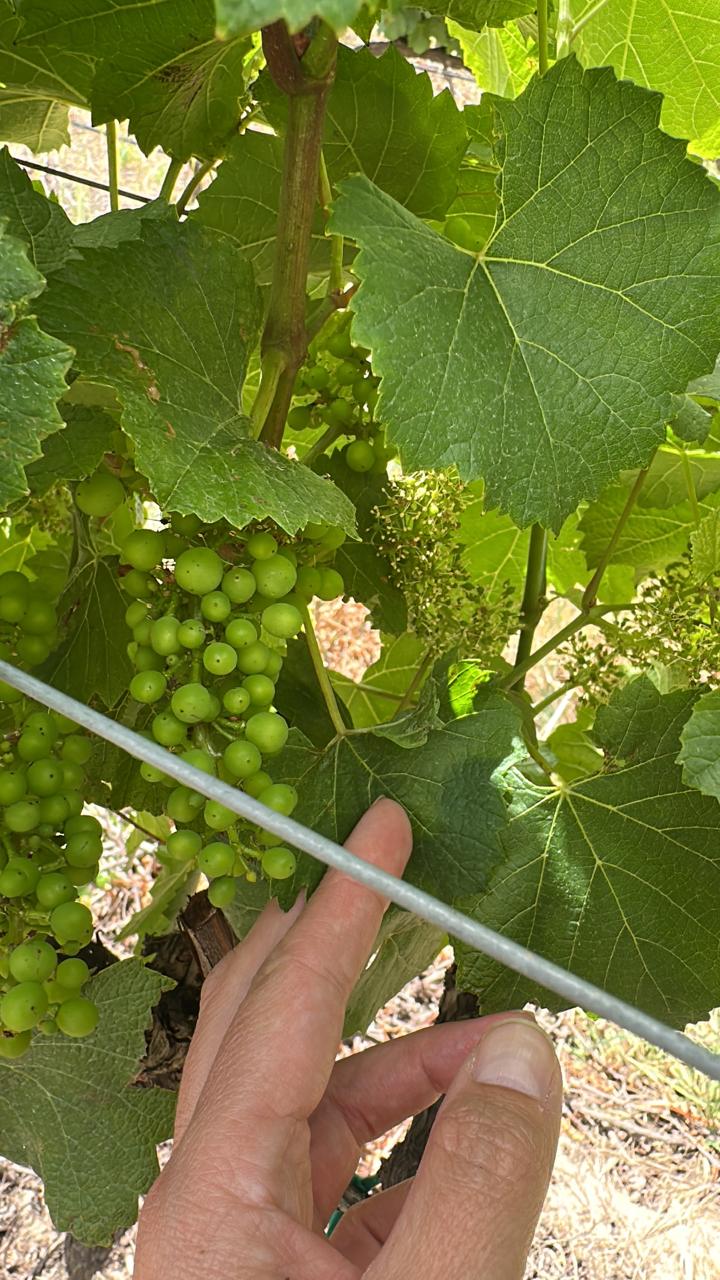
Despite warmer temperatures, available assessments indicated that most regions accumulated sufficient winter chill to support budburst. However, warmer August conditions contributed to budburst occurring approximately two to three weeks earlier than usual in certain areas.
September rainfall and favourable storage levels in several major irrigation dams provided further reassurance regarding regional water availability.
Similarly, adequate regional chill accumulation does not guarantee uniform budburst across every cultivar or vineyard block, which is clear in some Chardonnay vineyards in the Franschhoek Valley.
Early budburst: opportunity or vulnerability?
Earlier budburst is one of the more significant observations entering the 2027 season.
One potential consequence is a growing disconnect between sugar accumulation and phenolic maturity.
Under elevated temperatures or increasing water stress, grapes may accumulate sugar before achieving the desired flavour and tannin development. Winemakers could therefore face difficult harvesting decisions: pick at the preferred sugar concentration with less-developed phenolics, or delay harvesting while risking higher alcohol, declining acidity and possible fruit deterioration.
Changes in berry size and skin-to-pulp ratio may also influence extraction behaviour, colour concentration and tannin balance.
These outcomes remain possibilities rather than predictions, but they warrant consideration when preparing for the coming harvest.
Preparing for different vintage scenarios
Rather than forecasting a particular outcome, FermTech has identified three plausible scenarios.
A favourable vintage would feature adequate water availability, moderate temperatures, healthy fruit and progressive ripening. Under these conditions, cellar decisions can concentrate on precision, varietal expression and stylistic objectives.
A heat- and water-constrained vintage could produce elevated sugar concentrations, altered acidity, variable phenolic maturity and changes in yeast-assimilable nitrogen. Such conditions would place greater emphasis on fermentation planning and nutritional management.
A variable or disruptive vintage could involve late-season rainfall, disease pressure, severe heat events or wildfire smoke exposure. These conditions may introduce uneven maturity, microbial pressure, oxidation susceptibility and compromised fruit quality.
Importantly, these scenarios are not mutually exclusive. Different regions, cultivars and individual vineyards may experience contrasting conditions during the same season.
The objective is therefore not to prepare for one anticipated outcome, but to develop the technical flexibility to respond appropriately.
Understanding must composition
One of the most important principles in winemaking is that the vintage influences grape composition, but measured grape composition should determine the fermentation protocol.
Sugar concentration, pH, total acidity, malic acid, yeast-assimilable nitrogen (YAN), glucose-to-fructose ratio, turbidity and fruit health provide the analytical foundation for effective fermentation management.
As a winemaker, I have always believed that prevention is better than cure. If we understand the composition of our must from the outset, we have an opportunity to address potential problems early, before they carry through into the finished wine.
Elevated sugar concentrations increase potential alcohol and can place additional physiological demands on yeast. Inadequate or imbalanced nitrogen availability may further compromise fermentation performance, increasing the likelihood of sluggish or incomplete fermentations.
Yeast selection and nutrition therefore become important tools for managing vintage-related fermentation risk. This is especially true in dryland vineyards, whereby insufficient Winter rainfall and soil moisture can disrupt nutrient mobility, and therefore reduced nitrogen assimilation to the grapes.
FermTech’s VitiFerm BIO organic yeast portfolio provides strain-selection options suited to different fermentation objectives. FermControl BIO offers an organic nutrition approach incorporating amino-acid-based nitrogen, micronutrients and vitamins to support yeast metabolism.
The intention is not routine supplementation, but targeted nutritional management based on the actual requirements of the must.
Managing compromised fruit and oxidation
Vintage conditions can also influence the oxidative susceptibility of grapes, juice and wine.
Fruit condition, phenolic composition, press fractions and oxygen exposure all affect oxidation chemistry and its potential consequences for aroma, colour and palate structure.
Compromised fruit introduces additional challenges, particularly where rot, disease pressure or smoke exposure affects grape quality.
ClearUP BIO provides a treatment option for certain undesirable compounds associated with compromised fruit, including specific rot-related and smoke-taint applications, where appropriate analysis and validated protocols support its use.
Reprise BIO offers an additional approach to antioxidant protection and phenolic harmonisation, particularly where preservation of fruit expression and freshness is a priority.
These interventions should be selected according to the identified problem rather than applied indiscriminately.
Microbial management in higher-risk wines
Elevated grape and wine pH deserves particular attention because it reduces the antimicrobial effectiveness of sulphur dioxide and increases susceptibility to unwanted microbial activity.
Malolactic fermentation (MLF) is therefore more than a process of converting malic acid into lactic acid. It is also an important microbial management decision.
Certain indigenous Pediococcus and Lactobacillus strains can conduct MLF but may possess undesirable metabolic pathways associated with volatile acidity, biogenic amines or other spoilage characteristics.
Selecting an appropriate MaloBacti culture encourages controlled MLF and reduces reliance on unpredictable indigenous bacterial populations.
Strain selection can also influence wine style. MaloBacti CN1 provides a citrate-negative option where avoiding citrate-derived diacetyl formation is desirable. Comparative trials with MaloBacti HF2 have demonstrated lower β-glucosidase activity and improved anthocyanin retention relative to the bacterial strains tested, suggesting potential benefits for red wine colour preservation.
Preserving phenolic architecture
Vintage conditions can influence tannin development, anthocyanin concentration, extraction behaviour and the eventual balance between fruit expression, colour and palate structure.
These considerations become particularly relevant when grapes enter the cellar with uneven phenolic maturity or altered skin-to-pulp ratios.
The ViniTannin portfolio, including SR, Supreme and Multi Extra, provides options for targeted colour and phenolic management.
The objective is not simply to increase tannin concentration, but to identify specific structural vulnerabilities and select interventions that support colour stability, phenolic integration and the intended wine style.
Ultimately, effective phenolic management should preserve the identity of the vineyard rather than impose a uniform character on the wine.
Preparedness rather than prediction
The 2027 vintage will be shaped by climatic conditions that have yet to unfold.
What winemakers can control is their preparedness.
By monitoring vineyard development, understanding grape composition and anticipating potential fermentation, oxidative, microbial and phenolic challenges, we can make more informed decisions as the season progresses.
At FermTech Solutions, our role is to translate these insights into practical cellar strategies, supported by appropriate technical products, analytical interpretation and application-specific protocols.
The opportunity for 2027 is not to predict the vintage correctly, but to be sufficiently prepared to respond intelligently, whatever the vintage delivers.
- Clayton Reabow owns FermTech Solutions, the South African distributor of 2B FermControl – a range of organic fermentation products for minimal-intervention winemaking. With more than 22 years’ experience in the local wine industry, Reabow combines winemaking expertise with a practical understanding of supply chains and production. His goal is to help producers maintain quality while staying efficient and competitive in a changing market.
-
Share:

Related articles
Opinion & Analysis
Jamie Goode: Does how a wine is made matter more than how it tastes?
3 November 2026
Imagine you run a factory. Say you are making cars. There are two approaches to ensuring that your cars reach the market in a functional way, and with the sort...

1
Reviews
Graham Beck new releases
3 November 2026
Want to read this? Christian Eedes’ latest wine reviews are initially reserved for subscribers. Get full access now. SUBSCRIBE NOW Already subscribed? Login
Opinion & Analysis
Tim James: Obscure and mostly moribund grape crosses in Cape vineyards
2 November 2026
I was pleased to see Malu Lambert report, in her piece on palomino, that Adi Badenhorst is “propagating” colomino, a local cross of palomino and colombar. It seems to have...
Comments
0 comment(s)
Please read our Comments Policy here.