
No labels, no problem: SA Syrah shines in blind tasting
By Christian Eedes, 6 November 2025
-
Share:





9
As is widely documented, a tension exists between winemakers, who view their wines as personal creations, and judges, whose constructive criticism is meant to drive improvement. Increasingly, a cohort of winemakers favors sighted tastings, keen to control the narrative around their wines. This tendency is especially pronounced in the local Syrah category, raising the perennial question: how would these wines perform blind, with labels concealed and reputations set aside?
Wine Cellar recently staged a tasting billed as “The Syrah Showdown – SA vs the World”. The title was arguably grander than the format – three flights of four wines, each flight pairing three South African Syrahs with a Rhône counterpart – but the exercise was useful nonetheless.
The pouring order was as follows:
Flight One
1. Van Loggerenberg Graft 2024
2. Savage Red 2023
3. Reyneke 2023
4. Clape Cornas 2022
Flight Two
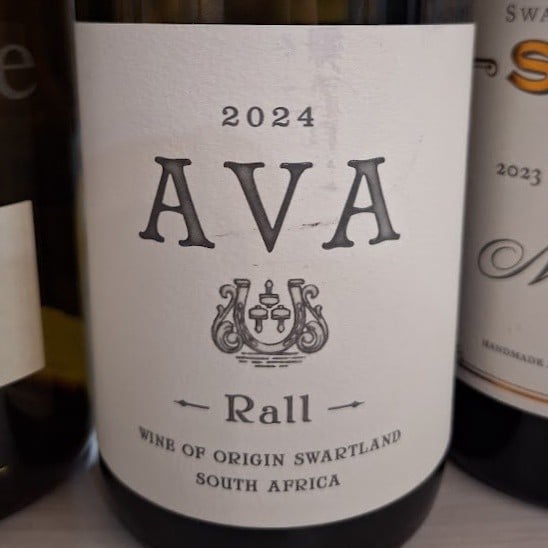
1. Rall Ava 2024
2. Mullineux Schist 2023
3. Porseleinberg 2023
4. Levet Côte-Rôtie La Péroline 2021
Flight Three
1. Damascene Ceres Plateau 2022
2. Hartenberg Gravel Hill 2021
3. Jamet Côte-Rôtie 2021
4. Boschkloof Epilogue 2021
Here’s how I rated the wines:
98
Rall Ava 2024
97
Boschkloof Epilogue 2021
Van Loggerenberg Graft 2024
96
Damascene Ceres Plateau 2022
Levet Côte-Rôtie La Péroline 2021
Reyneke 2023
95
Porseleinberg 2023
94
Hartenberg Gravel Hill 2021
Jamet Côte-Rôtie 2021
Mullineux Schist 2023
Savage Red 2023
92
Clape Cornas 2022
The Rall Ava 2024 was impeccable. Red and black berries, fennel, fynbos, wilted rose, and pepper on the nose, with remarkable palate structure – excellent fruit density, vibrant acidity, firm tannins, and a long, dry finish. Youthful, succulent, composed.
That said, Van Loggerenberg Graft and Boschkloof Epilogue weren’t very far behind, the former showing the clarity and drive that the variety shows when planted on gravel, the latter looking quite beautiful at the moment, poised and energetic.
Among the Rhône wines, I appreciated Levet’s finesse, closely aligning with my mental picture of Côte-Rôtie. Clape, unfortunately, showed a degree of bacterial spoilage.
Post-tasting, my blind scores were broadly consistent with sighted evaluations. South Africa is undeniably producing world-class Syrah – and still at a discount relative to the price of its international peers, with the Rhône selections retailing from R2,000 a bottle upwards.
-
Share:
Related articles
Reviews
Capensis Silene Cabernet Sauvignon 2023
7 January 2026
Want access to this content? Reviews and Reports are initially reserved for subscribers. Get immediate access to exclusive insights and data. SUBSCRIBE NOW Already subscribed? Login
Opinion & Analysis
Editorial: Thinking about SA wine’s next decade
5 January 2026
Happy New Year. In 2036, ten years from now, I will turn 65. By then, I hope to be stepping aside rather than stepping down, less bound by day-to-day obligations,...
3
News
Top wines of December 2025
5 January 2026
Want access to this content? Reviews and Reports are initially reserved for subscribers. Get immediate access to exclusive insights and data. SUBSCRIBE NOW Already subscribed? Login
Kwispedoor | 7 November 2025
It’s interesting that you had a 2024 Porseleinberg. I attended this same tasting up here in Gauteng yesterday and we had the 2023 (all the other vintages and wines were identical to yours). Fortunately, our particular bottle of Clape didn’t have any bacterial issues, so it scored well. As did all the others. I scored two wines only slightly lower (one might have had the slightest issue with its stability, but I can’t be sure), while the rest were all in a very narrow (and high, for different reasons) bracket. It has to be said that, in modern times, it has become increasingly difficult to identify a Rhône from amongst out top Syrahs, especially considering the variety of winemaking styles employed. What a fantastic and enlightening tasting of really top wines!
Tom | 7 November 2025
The Porseleinberg 2023 featured in the Cape tasting also. Just a typo.
The Cape has really embraced the “Rhone” style (finesse, florals and gentle spice) with great effect the last 15 years or so. It really is a knockout category and the AVA at around R 720pb is spectacular.
Kudos to Wine Cellar for including the Boschkloof Epilogue 2021 here (not for sale). I had it as the Jamet.
I did pick up some brett in the Clape blind, which is quite typical and gave the identity of the wine away. On a repour of leftovers after the tasting the wine was a degree warmer, had fanned out and it was well in the background. Black cherry and plum fruit taking center stage, so for me it was not a concern.
Greg Sherwood | 7 November 2025
These Syrah blind tasting comparisons with New World vs Old World are great fun and very enlightening… but as you vaguely identify, French classical examples do often take quite a while to breath and open up… requiring the engine to run to a fair old time before it gets warmed up and starts purring. Some of the top Rhones often need 3,4 or 5 hours in a decanter to blow off bottle stink, blow off any winery funk and allow the fruit and site terroir to really shine through. European drinkers know this and make allowances. Popped and poured too quickly definitely risks bretty, earthy, sweaty, savoury, funky aromatics and flavours to be a little more prominent. With more air, these normally to dissipate.
Gareth | 7 November 2025
Hi Greg, I was also at the Cape Town tasting which was a super evening.
The wines were double decanted at 14:00 with the tasting starting at 18:00. So I think it gave the wines a fair crack at showing their best.
I haven’t treated these wines in that manner before, and it threw up some interesting results for me.
– The Graft was out of this world
– Porseleinberg displayed a fruit purity I haven’t experienced before (perhaps the bottles usually disappear too quickly).
– I also picked Boschkloof as the Jamet. So much more compact and mineral than on release when the florals and fruit poured out the glass. No sure if that’s time in bottle or decanting and exposure to air.
– Savage I also found a little restrained, which I’m sure is from the air exposure. I popped and poured a ‘girl next door’ last week with the first glass being super expressive and it crept further and further back into it’s shell the longer the bottle was open.
Kwispedoor | 7 November 2025
Our bottle of Clape was deep and dark, from appearance through to taste. Brooding, with very dry tannins. For me, the closest thing to brett was a very savoury palate, but I really didn’t pick up any of the usual aromatic or flavour markers for the most common forms of brett. Perhaps I just missed it, but I’m pretty sensitive to brett in red wines. (And I don’t like it, though I’m more forgiving if I find a bit of it in an older wine. It usually gets worse with time, so I’m not a fan of it in young wines at all).
I’m surprised to see both Greg and Tom alluding to brett diminishing with aeration. I’ve found this to be true of other kinds of bottle funk like bottle stink, but not brett. I’d be interested to see some science on that, but for me personally, both TCA and brett usually get worse with aeration. When low levels of these are at stake, I’d often second-guess myself. Just leaving the open bottle for a couple of hours and going back to it usually then confirms the presence or not of these.
Christian Eedes | 7 November 2025
Porseleinberg vintage now corrected – apologies for the earlier slip-up!
bossie (Kobus) du Toit Bosman | 9 November 2025
It is commendable to see the amount of effort and love for wine culture evident in this initiative, Syrah now in focus.
ZA is particularly suited to this varietal, and allows splendidly for the various styles the esteemed winemakers exhibit.
What an absolute joie to share in the views and take spiritual flight to all the cellars represented here locally…
• Touché to Rahl making select mark, well done!
Thank you kindly again
🪖🌊
Marcelo Solá | 9 November 2025
Hello. Why would you give 92 points to a wine with bacterial spoilage (Clape)?
Christian Eedes | 10 November 2025
Hi Marcelo, Fair question. It was a matter of degree — the flaw was subtle at first and only became more apparent with time in the glass. Initially, the wine still showed enough character and complexity to justify a good score, though the instability did detract from its overall quality. Tolerance levels also play a role — for some in the audience, it was actually a favourite.