
Editorial: Thinking about SA wine’s next decade
By Christian Eedes, 5 January 2026
-
Share:





11
Happy New Year. In 2036, ten years from now, I will turn 65. By then, I hope to be stepping aside rather than stepping down, less bound by day-to-day obligations, with greater freedom and flexibility, yet still engaged where it counts: thinking, writing, questioning and contributing when it adds value. That prospective distance prompts a useful thought experiment: what, right now, is within the industry’s power to change and what isn’t?
I don’t believe South African wine is headed for dramatic collapse, but neither is it set for triumph. Rather, we are at a hinge moment. The direction of travel is not yet fixed, but the constraints are brutally clear.
The gains that can still be made
First, the cost-of-production crisis has to be confronted. The idea that “efficient farming” can compensate for structurally low grape prices needs to be abandoned. Greater supply discipline is required, not an instant solution to small margins, but as a necessary step to reduce volatility and break the industry’s destructive boom-and-bust cycle.
Second, South Africa needs to double down on its comparative advantage: site expression at moderate alcohol levels. In an era of climate stress and global palate fatigue, the industry should be leaning into freshness and dryness rather than power. Respect for provenance and restrained winemaking aren’t new ideas, but they need to be articulated more clearly and more consistently. This isn’t just a stylistic choice; it aligns with global consumption trends towards lower alcohol and drinkability, and that shift is only going to accelerate.
Third, the premium narrative needs to mature (and, somehow, volumes at the top end need to grow). The language around “premiumisation” must become more thoughtful and sincere. Less chest-thumping, more specificity. Producers need to be clear about who their wines are for, where they sit globally, and why they deserve their price. The industry has to stop pretending that £8 retail wines can build a national reputation. Intellectual honesty matters.
What won’t change on its own
So where is the industry falling short, or at least failing to act decisively enough?
The biggest failure is timidity. Everyone knows that South Africa has too much wine chasing too little value. Yet meaningful vineyard reduction remains politically and emotionally taboo. We cling to the hope that exports will grow us out of trouble. In reality, the delay means the ongoing contraction that besets the industry is more painful than it needs to be. Timely, coordinated supply reduction could preserve both capital and dignity.
Second, marketing remains fragmented and underpowered. For all the excellence at producer level, South Africa still struggles to speak with a unified voice in key markets. The messaging oscillates between “luxury boutique” and “best value wine in the world”, two positions that largely cancel each other out. The absence of sustained, well-funded market-building in the US and Asia remains one of the great missed opportunities.
Third, the domestic market continues to be neglected. The South African consumer is still too often treated as secondary, seen as price-sensitive, unreliable, not worth cultivating deeply. That is short-sighted. Wine steadily loses cultural ground to spirits, RTDs and functional beverages. Serious effort needs to go into rebuilding wine’s relevance at home, or a generation of potential drinkers will drift away.
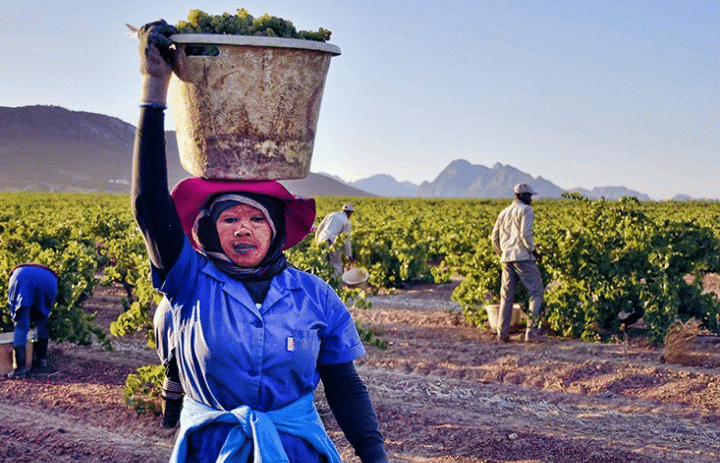
Finally, labour reform continues to lag behind the rhetoric. There is plenty of talk about transformation, equity and ethical trade. Progress exists, but it is uneven and often cosmetic. Real skills transfer, management inclusion and worker equity schemes have yet to gain meaningful traction. The sooner these are properly embraced, the stronger the industry’s human capital will be going into the next decade.
As editor, allow me a special word about wine media which sits at the junction of culture, commerce and credibility, and it’s here that leverage is significant but underused. To the extent that wine media exists at all, it still tends to favour self-congratulatory hype. The era of uncritical patriotism is, unfortunately, not yet over. Some critics are prepared to say that prices are misaligned, that certain “premium” wines don’t justify their positioning, and that the system is failing growers — but there aren’t enough of them. As a result, the industry’s internal conversation can sometimes feel naive. Critique is not disloyalty, and that needs to be normalised.
The shortcomings of wine media aren’t hard to explain. Most outlets remain structurally dependent on the industry they cover, relying heavily on producer funding through advertising, competition fees, tastings and access. That dependence places a ceiling on dissent. Uncomfortable truths about oversupply, brand incoherence or mediocrity at certain price points are often hinted at rather than pursued. Independence exists, but largely at the margins. And an industry without independent media inevitably becomes self-referential.
The broader picture is clear, however. The industry has largely stopped lying to itself about the way forward, but it still doesn’t act boldly enough on what it knows to be true. The diagnosis exists. The prescriptions are mostly known. What’s missing is the collective courage to endure short-term pain in service of long-term health.
The lesson is that wine economics is never just about vineyards and markets. It’s about governance, narrative discipline, and the ability to align production, pricing and purpose. When those drift apart, no terroir, however sacred, can save us.
-
Share:

Mike Ratcliffe | 5 January 2026
very profound Christian, a lot of excellent points – you obviously put a lot of thought into this – I hope that everyone (including our esteemed industry leaders) reads this and gives it due consideration.
South African wine is on a cusp – our brand identity has never been stronger – potential is everywhere. But, a lack of government marketing support, a lack of marketing funding and lack of marketing vision can all be resolved. Financial stability is the horse, and it must come before the cart.
Remington Norman | 6 January 2026
Excellent piece Christian.
Happy New Year to you, Mike and all your fellow top notch winemakers.
Anonymous | 7 January 2026
An excellent, informative article.
There is, however, a glaring omission when it comes to explaining the lack of local sales and consumption of our generally high-quality South African brands.
Succinctly put, producers, farmers and bottlers do not invest in marketing their brands locally. Financial investment is viewed as an expense rather than as brand building. They will spend vast sums of money going abroad to sell and market their products, yet seem to believe that success at home should simply happen without any equivalent financial outlay.
One sees this time and again: estate after estate, brand after brand, millions poured into chasing the export market, and zero rands spent on establishing a meaningful local presence.
Finally, when these producers do enter the local market, there is often an expectation that the consumer has been waiting for their particular brand. The producer believes the wine is great and may even have accolades to prove it, but there is little recognition that the end user, whether a new wine drinker or a long-time tipple, has never heard of the brand. Nor, often, have the wholesaler or retailer.
An investment, too often overlooked through a poor understandings of marketing’s role, in introducing the brand to both trade and consumer would go far further locally than yet another costly push abroad.
Emile Louw Joubert | 9 January 2026
I would like to correct this infantile opinion, but do not address anything Anonymous, nore his or her sister and brother, whom I hope are not equally stupid and misinformed.
Greg Sherwood | 9 January 2026
I’d echo the sentiment that producers’ marketing budgets would be far better spent developing the home market further rather than trying to crack the elusive USA market. There is now big over supply in Californiam wine and American’s are very happy to drink cheap Napa Cabernet over South African “commie wine” (yes, the ANC have turned SA into a pariah nation in the USA with their constant vocal alignment with Russia, China and Iran… and now Venezuela / Maduro!) and this messaging has gone mainstream sadly. Together with US tarrifs that are not going away anytime soon, better to market our wines better and more effectively at home. The mirage that is the USA market evaporates as soon as producers stop visiting and spending alot of time and money there. There is no longterm brand building reward for hard work.
Peter Andrews | 12 January 2026
Greg — I fundamentally disagree, based on direct experience. I’m the founder of Culture Wine Co., a California-based importer, wholesaler, and national e-commerce retailer focused exclusively on South African wine.
I self-distribute in California, ship DTC to 44 states, and now work with three U.S. distributor partners — with continued expansion underway. Despite industry-wide headwinds and challenging (idiotic) U.S. policy, the business grew 70% last year.
That growth isn’t driven by producer visits alone; it’s the result of disciplined market strategy, consistent representation, and long-term relationship building. When those fundamentals are in place, the U.S. is not a mirage — it is a real, scalable, long-term market.
The gap historically hasn’t been demand, nor geopolitics at the consumer level, but execution. When South African wine is positioned and supported properly, American buyers respond.
Ps – I am a huge fan of your work and hope we can debate this in person sometime soon
Greg Sherwood | 12 January 2026
Peter, You make some very good points. Execution, strategy and ongoing (US based) support to develop product categories (like SA wine) has sadly been lacking in the past. But as you point out, if the right strategies are abopted and a bit of hard work is put in, there can be growth and success. But sadly, in the past, all too often South African wines have disappeared into inch think importer / distributor lists and never really got the marketing support the wines deserved. But as you say, that would qualify as poor marketing. As someone who travels to the USA regularly, SA wine simply did not see the growth and success expected, DESPITE a lot of foot work from visiting producers (at great expense). So perhaps the blame historically must lie with the importer / distributor of choice? I am glad to hear your business is growing successfully. Our best wines are worthy of this kind of success in the US market.
Aaron Meeker | 13 January 2026
Greg,
Have to agree with Peter here. The US is the largest wine market in the world and more importantly the biggest upside for South Africa, seeing as categorically it has underperformed in recent history. The domestic (SA) market should be strong for the top 3-5% of producers (volume and quality), but it is still a very, very small market compared to key European, Japan, and of course the US.
A viable sales strategy is important and yes, having the producers spend time here is valuable and IMO the most effective way to get the brand going. That said, it is very expensive for lengthy trips traversing the US. Being more focused is the best strategy and looking at the US as a market-by-market plan rather than the entirety of the country. I know many producers that have spent time in the UK 2x+ a year for a decade and their brand is strong there. Do the same thing in 5-8 markets in the US and the rewards will be felt.
The recent tariff news has certainly hampered a lot of positive growth, but hopefully there is some reprieve here shortly.
Stanley Edwards | 11 January 2026
Great points but there are of courses challenges. Essentially it would be very easy to put together a solid marketing campaign aimed at the domestic market but even if it was possible for the wine industry to agree on a generic wine sector marketing campaign, who would fund it?
It needs some out of the box thinking and a commitment from the industry to try something different.
One source of funding could possibly be that for just one year, all entry fees paid to enter wine competitions goes to a marketing fund? It’s already budgeted so it’s just a re-allocation.
Entry fees paid into just one of the wine local wine competitions in 2025 was R1,8 million. This would be a great start.
Andrew J | 12 January 2026
The lack of domestic market focus was a primary conversation at Wine Talk in 2025: South African wine can’t talk “the next decade” while under-investing in its biggest local market, Gauteng. Producers will spend more energy trying to secure niche export markets than selling to Gauteng, and then wonder why relevance is slipping at home. Gauteng has a large untapped wine market filled with eager and curious consumers who lack preconceived wine opinions.
Wine Talk also challenged the role of wine critics vs influencers in Gauteng. We can’t agree with Christian more: South Africa needs more independent wine media and real critique if the industry is serious about change. Join the conversation at Wine Talk 2026 on 1 June to explore solutions.
MS YEGAS NAIDOO | 4 February 2026
With current exchange rate levels against hard currencies the domestic distribution correction, suggested, might be a natural result that we will evidence. However, I certainly hope it will be a balanced long term commitment that will be strategically managed.