
Dr Justus Apffelstaedt: Wine and sulfur headaches – debunking the myth
By Justus Apffelstaedt, 20 November 2025
-
Share:





5
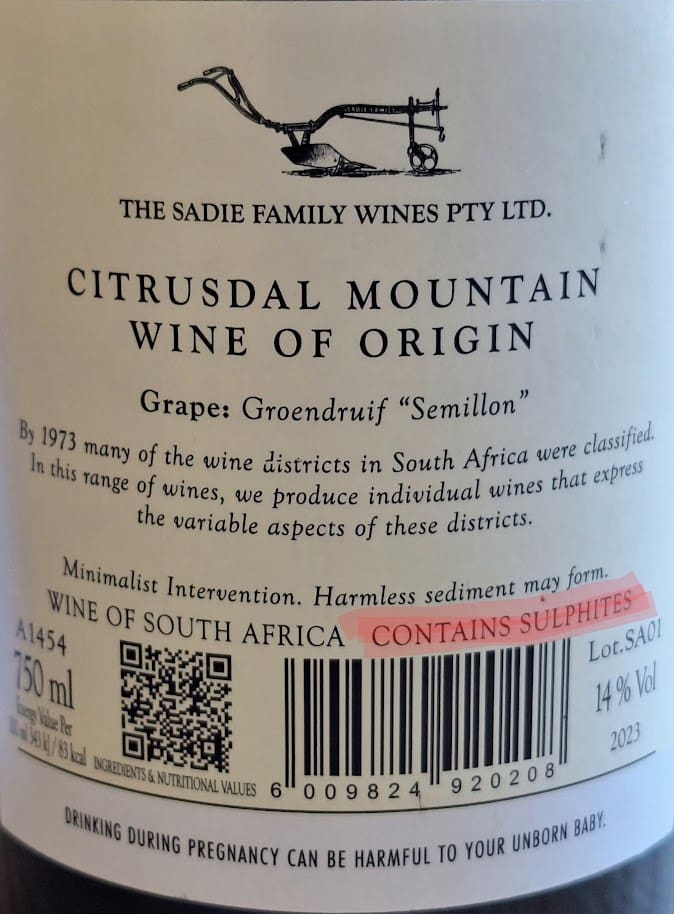
On a recent international trip, I found myself seated next to a lady who insisted that white wine due to its sulfur content gives her severe headaches. I must admit, I’m highly skeptical of such claims in today’s post-factual world, where alternative ‘facts’ often rival, or even surpass, scientific ones.
In former times, sulfur got a bad rap due to its association with volcanoes, which often discharge foul-smelling sulfurous gasses and were believed to be direct entries to hell. The association with the smell of rotten eggs, caused by hydrogen sulfide (H₂S) gas and all manner of decay, did not help either.
In the food industry, sulfur – most commonly in the form of sulfur dioxide (SO₂, a sulfite rather than a sulfide) – is widely used as an antioxidant and preservative, effective against a broad range of spoilage bacteria and fungi. As an antioxidant, it prevents browning, for example in apples, and is generally recognized as safe. Sulfur dioxide enters the human body through food and is also inhaled in small amounts from the atmosphere.
Not only that, it is also generated in the human body as part of the metabolism of amino acids and serves as a messenger for physiological functions such as heart muscle recovery and anti-inflammatory effects. This already makes claims that it has negative health effects rather tenuous.
What SO₂ in wine really does – and doesn’t do
SO₂ is added to wine as a preservative and antioxidant at various stages of the winemaking process and in a well-run winery is measured at multiple points during the process. In the finished wine, South African law allows a maximum of between 150 mg/l in white and 300 mg/l in red wine of total SO₂ depending on the style of wine; the maximum for free SO₂ is 60 mg/l for all types of wine. These limits are considerably lower than the limits set by the International Organization of Vine and Wine (OIV). From my reading of multiple tech sheets, there is usually much less free SO₂ in South African wines.
What is the difference between free and total SO₂? Free SO₂ is available to do the job of preservation; in time it is used up by binding to other molecules and becoming “bound” SO₂. In an experiment in Bosnia-Herzegovina, experienced tasters could pick up SO₂ only in concentrations above 73 mg/l. This means that, in general, free SO₂ cannot be smelled or tasted in wine.
It is also the free SO₂ that is most likely to cause health trouble, but only when inhaled and not ingested. In the gut, there are potent mechanisms to take care of SO₂ and it is soon detoxified, entered into general metabolism, or excreted via the kidneys.
In the lungs, it may cause in sensitive individuals bronchospasm – meaning cramp-like contractions of airways leading to acute shortness of breath, wheezing, and chest tightness, especially in asthmatic individuals. This is a protective reaction of the lungs rather than an allergic reaction, as SO₂ is an irritant to the airways. Long-term exposure to high concentrations of SO₂ in inhaled air causes structural lung damage; the changes become irreversible and can lead to premature death.
Sensitivity to SO₂ is uncommon, occurring in less than 1% of the population and less than 10% of asthma sufferers. The most common source of SO₂ causing such symptoms is not wine, but rather smog from coal-burning power plants. It is for this reason that governments have limited the amounts of SO₂ that power plants are allowed to emit.
Case closed – with a glass in hand
Returning to the lady mentioned in the introduction: It is very rare that drinking wine leads to any sensitivity reaction due to its SO₂ content. This happens only in individuals extremely sensitive to it, and before any attributable headaches are caused, shortness of breath will long have been acute.
So I asked the lady whether she tolerates red wine, which she does. Generally, red wine contains roughly twice the amount of free SO₂ compared to white wine. Also, dried fruit – especially raisins – contains a lot of SO₂ (about 20 times the amount compared to red wine per kilogram of weight). When asked, she said she regularly puts raisins in her breakfast cereal.
For the rest of the journey, we had a stimulating conversation about a lot of other topics and enjoyed a couple of glasses – white wine for me and red wine for her.
With this, I rest my case: While Lucifer may make his presence known by the smell of sulfur hanging in the air, in wine it is not evil, but preserves our favourite drink. Cheers to that!
- Dr. Justus Apffelstaedt is a specialist in breast and thyroid health, leading Apffelstaedt & Associates in Cape Town and Windhoek. A surgeon with a specific interest in surgical oncology and researcher, he was Associate Professor of Surgery at Stellenbosch University (1994–2017) and Head of Surgical Oncology, managing 1,000-plus cancer cases annually. He has more than 50 publications, shaped South Africa’s breast cancer screening policy, and co-founded Breast Surgery International. A sought-after speaker, he has given over 100 international lectures. He also holds an MBA and a Diploma in Wine. Through Apffelstaedt & Associates, he continues to advance specialized, patient-centered care in Southern Africa.
-
Share:
Related articles
Opinion & Analysis
Dr Justus Apffelstaedt: On cooking with wine – the scientific basis
16 October 2025
“I always cook with wine and sometimes I also put it into the food.” This quote is attributed to WC Fields who could be termed the father of American comedy....
1
Opinion & Analysis
Dr Justus Apffelstaedt: The surprising science linking wine and bone health
18 September 2025
Bone and wine are not often mentioned in one sentence, save for some recipes for delicious slow cooking. But as I sit on the Mediterranean coast after cycling here from...
Opinion & Analysis
Dr Justus Apffelstaedt: Marriage and metabolism – why wine doesn’t divide equally
21 August 2025
Many readers of this column will be familiar with following scene unfolding at the dinner table: A particularly delectable bottle of wine has been opened and negotiations have to be...

M | 20 November 2025
All very factual Justus, however I feel you are leaving out a heap of anecdotal evidence and nuance. Sensitivity to sulphur, just as with anything, exists on a spectrum, from zero effect, to severe allergy. Most wine lovers and those in the wine industry, will be on the “zero effect” end of the spectrum, otherwise they would have ditched the elixir long ago.
I happen to be one of those suckers that punished myself for years before I figured out Sulphur disagrees with me. Particularly, but not limited to young, cheaper white wines where the Free Sulphur is higher, I find that my nose immediately closes up, restricting my sense of smell and my enjoyment of the wine. If I finish a glass, I quickly become tired and a dull ache starts in my head. Every time, without fail. I have also met plenty of people who agree with my experience exactly.
If I stick to well made wines, by winemakers who work on molecular sulphur levels, I don’t have a problem, and when i stick to sulphur free wines, I tend to wake up fresh as a daisy.
I am sure that plenty of winemakers can attest to accidentally inhaling the fumes of a 25L can of sulphur and, after the massive respiratory impact, develop a crushing headache within 5-10 minutes.
justsaying
Justus Apffelstaedt | 21 November 2025
Dear Justsaying, thank you for your interest and comment. My commiserations with your condition. A column in Winemag is restricted in length and therefore alone cannot go into “a heap of anecdotal evidence and nuance”, but is directed in a conversational style at the vast majority of readers. It is important that we are dealing here with a sensitivity that luckily afflicts only about 1% of the population to a minor or – in your case – major degree. You describe very well the symptoms of an extreme sensitivity (the intense irritation of the upper airway) and its resultant further discomforts. This, however, will not be life-threatening and easily reversible with stopping the exposure. While a sensitivity is a protective mechanism against an irritant an allergy is a totally different reaction: Here an allergen triggers a pathologic immune response involving multiple levels of the immune system. Most allergies such as hay fever are more of a nuisance issue but anaphylaxis, the most severe form of allergic reaction, can lead to the death of the individual within minutes without active medical intervention to break the cascade of the immune response actively. Even minimal exposure to an allergen will trigger the reaction. In contrast, the sufferer of a sensitivity can simply remove the irritant and things will return to normal; low concentrations of the irritant are tolerable. I am happy that you have found a range of wines to enjoy without problems and wish you a Merry Chirstmas and a Happy New Year.
Best regards
Justus Apffelstaedt
Carien Coetzee | 29 November 2025
I think you may find this read interesting as well – https://sauvignonblanc.com/wine-allergies-and-intolerances/
Malcolm Venter | 22 November 2025
A well written article. It is important that we don’t dismiss people’s experiences though. As M says above, some people do experience headaches from certain wines. The point Justus makes very well is that it probably isn’t sulphur.
Sophie Parker-Thomson MW Wrote her MW research paper on this subject in 2020 (I’ll try and link below) and she sights biogenic-amines as being the major cause of headaches in red wine. I find that an antihistamine usually solves it for me.
In white wine, particularly cheaper ones, I suspect, but have no scientific evidence, that it might be higher levels of acetaldehyde in these wines.
I always get an almost instant headache when doing fault analysis with acetaldehyde spikes in beer.
I would love to hear from a chemist or winemaker if there is any truth to this or if (very possibly) I am barking up the wrong apple tree.
Best wishes
Malcolm
https://www.mastersofwine.org/research-papers
Carien Coetzee | 29 November 2025
I’d just like to offer a few small clarifications that may be helpful.
The sensory perception of SO₂ is strongly influenced by the wine’s pH, as pH governs the proportion of molecular SO₂—the only form that is directly aromatic and antimicrobial. It’s therefore not only the free SO₂ value that matters, but also how the wine’s pH shifts the equilibrium toward or away from the sensory-active molecular form.
In addition, regarding legal limits, in South Africa the maximum total SO₂ permitted is 150 mg/L for dry white wines and 160 mg/L for dry red wines, with certain other wine classes allowed to contain higher concentrations.