
Editorial: Fine wine and its place in South African life
By Christian Eedes, 7 April 2026
-
Share:





6
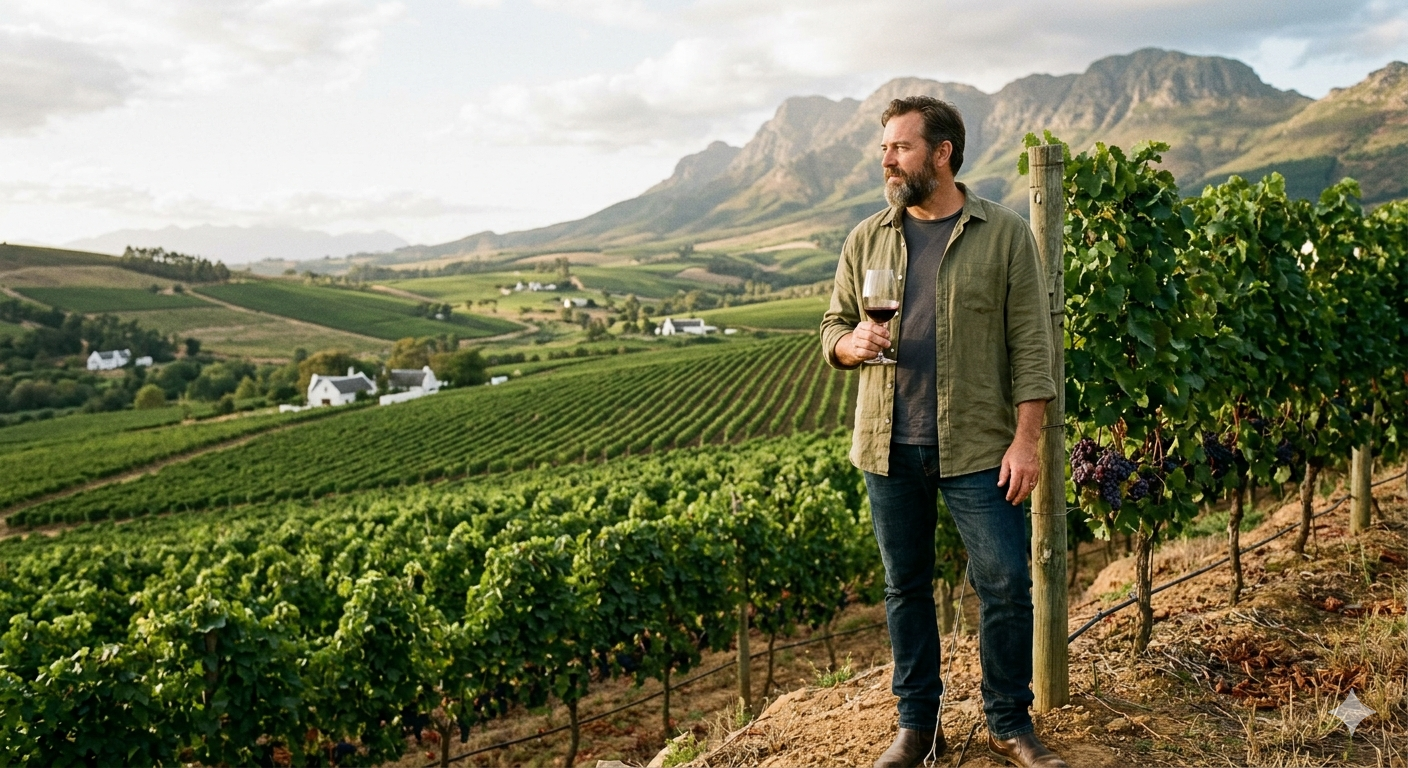
When the results of our reader survey landed at the beginning of March, I have to confess I expected more of a stir. Surely, I thought, these numbers that revealed our readers at the apex of South Africa’s fine wine culture, would provoke debate, reflection, even dissent from some quarters. Yet the response was surprisingly muted.
What emerged was a picture of a small but potent community – predominantly male, highly educated, affluent, with nearly half over 55 and most earning R60k-plus per month. Psychographically, they are engaged, habitual wine consumers: A third drink daily, almost half several times a week, many buying multiple cases monthly. They lead rather than follow, championing Chenin Blanc contrary to the dynamic at play in the mass market, and participating actively in wine tastings and clubs.
I had imagined more discussion about diversity, equity, and inclusion in our readership. Yet, after some reflection, I realised that the profile we see may be inevitable. A more interesting question, I began to think, is ontological: why is a super-wealthy 45-year-old so invested in fine wine? What kind of “being” is expressed through this activity?
At an ontological level, it’s rarely about the liquid. Wine is a medium through which someone becomes a certain kind of person in the world. And there are a few layers to this…
Wine and becoming
By 45, the thrill of owning things often fades. Wealth makes it possible to buy almost anything, but acquisition loses its charm. Fine wine rewards subtlety over brute expense; it creates hierarchies based on taste, memory, and judgment. Credibility come from discernment, not net worth. In this shift, the wealthy individual moves from owner to arbiter, a pattern mirrored in art collecting.
Few luxury goods are so defined by time. Engaging with wine is a quiet meditation on patience, mortality, and legacy. This bottle will peak and decline; the act of cellaring teaches patience; sharing or leaving wine behind gestures toward legacy. Drinking becomes a gentle confrontation with finitude. Eventually, even the most devoted collectors realize there comes a point when adding more to the cellar just isn’t worth it.
Life for the wealthy can be overwhelmingly managed: money, access, outcomes, all seemingly predictable. Wine resists control. Bottles vary, vintages surprise, greatness remains partly subjective. Here, unpredictability is safe, even pleasurable, a sanctioned realm in which not knowing is its own reward. Controlled uncertainty, if you will, the opposite of priority boarding at the airport.
Of course, there’s an element of social signalling, but with plausible deniability. Status is in play, yes, but wine signals cultural capital as much as financial. It comes with its own insider language, shared references, and discreet one-upmanship, all easily framed as “just enjoyment,” which keeps the signalling subtle rather than crass. Ask, “Are you travelling this year?” and you’re really asking, “Which of the world’s great wine regions will you be visiting to eat and drink?” By midlife, consumption often seeks story: the vineyard, the vintage, the quirks of the year – each glass carries its own little tale.
The pursuit of wealth can be obsessive – the mythical 18-hour day – while its possession can dull experience. Too much access, too little friction, and the senses grow blunt. Fine wine demands attention: you slow down, notice, compare. It restores texture to perception, and with it, a deeper engagement with the world.
There’s a slightly cynical take, of course: wine as a fixation, almost religious, a way to compete without admitting you’re competing, a hedge against boredom. Winemakers become rockstar figures, cult cuvées turn into must-drink elixirs, prized above all else.
And yet there’s a more generous take: fine wine can sharpen your senses, deepen memory, and create shared experiences. It’s a luxury that lasts because it rewards attention, not just owning bottles. In short, fine wine lets a wealthy midlife drinker shift from collecting things to valuing time, taste, uncertainty, and meaning.
Of course, that kind of freedom only works if you have enough money to cover the basics. In a world where wealth separates those chasing experiences from those chasing survival, wine naturally becomes a playground for the rich – you need resources to play the long game, develop discernment, and appreciate the stories behind each bottle. The Winemag reader survey isn’t just about numbers. It’s about what wine allows our readers to become: not just drinkers, but patient, thoughtful, quietly ambitious participants in a culture they can more or less shape, while most South Africans can only watch from the sidelines.
-
Share:

Julian Wannell | 7 April 2026
Thank you for a fascinating article, which rings true in many ways.
But I would add that some buying habits are, at least partially, inherited. There are many people for whom buying, owning, cellaring, maturing and drinking fine wine goes back more than one generation in their family.
There are also plenty who reserve a disproportionate amount of their available budgets for the purchase of wines that fascinate them, in the way that many collectors bend the rules on what they should spend on an addictive collecting habit, vis à vis what would seem ‘sensible’.
Neither of the above two categories necessarily include the “wealthy”. But equally, acquiring fine wine bestows a veneer of cultured sophistication on someone who may lack precisely that, having spent his/her entire adult life in pursuit of money and business success.
I’m sure there are people who buy art in a similar way to the manner in which they buy wine: read the critics; cultivate the gallery owners (= Wine Cellar and the like); admire the images (labels) – and pounce first, before others snap up all the stock!
One of the alluring things about the wine scene is just how many contrasting types of people develop a love for it and a thirst to experience the best of it.
Ryan Coetzee | 9 April 2026
Beautifully written, Christian. There’s another thing: chasing the ineffable quality of the perfect bottle. The bottle that is a mysterious paradox: dense but weightless; structured but accessible; above all, balanced, so that it seems to levitate. What is this if not an intimation of immortality, and who more attached to fleeting moments of forever than middle-aged men?
Now if you don’t mind, I have a midlife crisis to return to, and a bottle to open.
Michael Fridjhon | 9 April 2026
Hi Christian
It’s possible that the response to your survey was muted for the simple reason that what it proved was the parochial nature of the WineMag audience: more than 50% is Western Cape, a province whose wine consumption is less than half of Gauteng’s. 38% of respondents were in the industry, so it’s a little like an in-house magazine put out by the HR department.
Compare this to the research undertaken by the University of the Northwest at WineX in Sandton last year: not online but in person, and with a similar number of respondents. Average age was 38. 50/50 male female. Unsurprisingly 92% were from Gauteng. 88% held at least an undergraduate degree. Red wine is preferred to white. Over 50% of the individuals earned more than R40k per month – so household income aligns to your survey’s. 51% are new or first generation wine consumers – so this is the market of the future.
In my view this is newsworthy. In a world in which wine consumption is declining and markets are shrinking, this is not just encouraging, it’s actually exciting to discover that a gender agnostic, new generation is buying into wine. There’s nothing remarkable in discovering that 80% of your readers are male with an average age of around 50: the silence may be the muted response of knowing the home team is heading for relegation.
Christian Eedes | 9 April 2026
Hi Michael, As has often been noted on Winemag, there’s a noticeable cultural gap between the Cape’s wine industry and its acolytes, and Gauteng’s consumers. The challenge, and the opportunity, lies in finding meaningful ways to bridge it. Some will argue for pounding the pavement, others for more podcasts and Insta reels but the reality is surely more complex than that.
Sheldon Morais | 11 April 2026
We’ve seen similar findings and first-hand evidence in Gauteng to those mentioned by Michael.
But these type of data indicators are not new. I would hazard a guess that even 5-10 years ago similar indicators were emerging. What is disappointing is that actor across the wine value-chain aren’t willing to truly engage with the Gauteng market and, more broadly, new and old black wine drinkers.
Even if we just look at the Cape, the consumer profiles remains largely unchanged. How are the wine drinking communities in Kayamandi, Khayelitsha, Cloetesville engaged?
It is precisely the gate-keeping and the reinforcement of the “insider language” which will see wine falling short of its potential for growth.
We recently supplied wine to a lifestyle-music event in the heart of Soweto. The attendees were a mix of young professionals, established executives and all in between. Some live in Soweto, others further afield in Johannesburg’s northern suburbs. They had a choice of beer, spirits, Aperol Spritz, wine & MCC. The consumers who stopped at the wine stands ranged from novices to wine appreciators. The Chenin Blanc was the top seller, while two Grenache/Syrah blends landed well too. Clearly, it’s not only the well-heeled who can lead in taste. Many of the wines we had on offer on the day were from a former two-time WineMag winery of the year. So this was some of best fine wine our country has to offer.
The conversation has to move beyond pounding pavements vs podcasts. Those are merely tactics. And sadly, that thinking shows a limited understanding of the Gauteng market and the first-generation wine consumers we speak of.
Finally, I find many of the conversations don’t include a diverse array of voices or even nuanced understanding of the consumers we speak of. At times the conversations border on navel gazing. As a former journalist and editorial leader have found myself in many similar conversations about it the future of journalism. And what I know is that while we talk amongst ourselves about what we think the market needs, the market is moving along at a fair clip, finding its own way. By the time we look up, it would have moved on, leaving us reminiscing about the good old days while wringing our hands over declining sales and share of attention.
Jeremy Sampson | 15 April 2026
Do I have to go back 10 or perhaps15 years to remember the wonderful wine tasting evenings in Sandton/ Johannesburg at places like the Hyatt and Sandton Sun often attended by well over a hundred people. The geographic area arguably the epicentre of wealthy wine buyers in South Africa. And where can I read regular articles about wine, present company accepted. It irritates me to see all the events in Cape Town, even Pretoria. In the past I produced around thirty articles for the Institute of Director’s quarterly magazine, organised wine tasting evenings supported by Ken Forrester, the KWV etc attracting 80 or so members. Then a new Ceo came in and banned anything to do with alcohol, all without a whimper from the members.
We could have fun, a blind tasting competition, a flight of five, bottles from under R100 to over R1000. Something for everyone. I’m sure there would be interest if marketed professionally.
So Christian, Miguel how about reviving the tasting evenings and getting the wine community back together, a monthly winter program? Brands need to showcase themselves. I will be there!
Wine should enjoy share of throat, share of wallet and share of mind but its being allowed to be pushed aside. To some brands are about Awareness, Interest, Desire, Adoption (AIDA) yet to many wine has been allowed to become an orphan.