
Editorial: The great wine glass con
By Christian Eedes, 29 September 2026
-
Share:





25
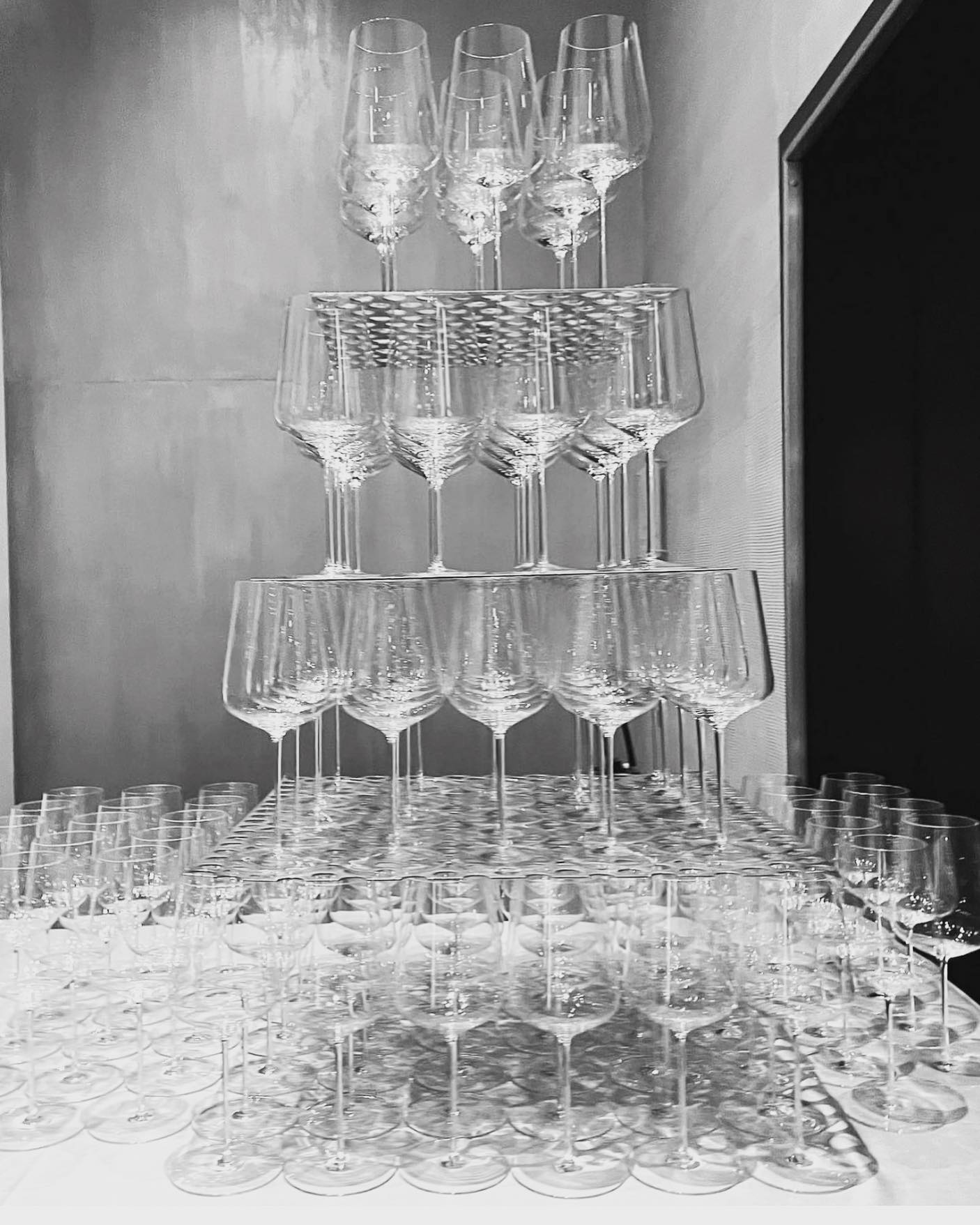
One of the great con jobs of wine is the expensive wine glass. We have spent decades being told that the glass is not merely a vessel but an instrument, that its shape directs aromas, concentrates flavours, softens tannins and somehow elevates the whole drinking experience to something rapturous.
To be fair, good glassware does make wine taste better. The problem is that it does not make it that much better.
Consider the South African prices. A pair of Riedel Veloce Cabernet/Merlot glasses available from merchant Reciprocal is R1,345. A two-piece Gabriel-Glas Gold Gift Set from Brice & Burnett is R1,750. A pair of Zalto Balance glasses from Great Domaines will set you back R2,190. At these prices, the wine is no longer necessarily the expensive bit.
The economics of fragility
There is something wonderfully peculiar about the economics. Wine is a consumable: you drink it and buy more. The glass, by contrast, is supposed to be durable. Yet the premium end of the market has engineered these objects to the absolute precipice of structural integrity – making a durable household asset into a slow-burn consumable not because it wears out, but because it is terrifyingly fragile.
This is where the extended cost of ownership enters the picture. First, you buy the glasses. Then you spend the rest of your life worrying about them. You buy the hardware once, but you pay a lifetime subscription fee in pure, unadulterated anxiety. Or, as is unfortunately the case in Chez Eedes, you just keep having to buy new hardware…
The seriousness game
Then, there is the second great trick: ceremony. A wine glass does not merely hold wine. At a certain price point it starts telling others how seriously you take wine. There is a correct bowl, a correct stem, a correct way to hold it, a correct angle at which to examine the colour and, presumably, an incorrect way of drinking something that is ultimately the fermented juice of grapes.
The danger is that the glass becomes part of wine’s unfortunate tendency to turn pleasure into performance. Wine is already burdened with enough ceremony. We have appellations, vintages, viticulture, oenology, typicity and the person at the table who says “there’s a mineral note” before anyone has actually taken a sip. Do we really need a glass that makes wine appreciation feel like a screening process?
The irony is that a good glass is genuinely useful. A generous bowl gives volatile compounds somewhere to go. A narrower rim allows the liquid to hit your tongue just right. Thin glass feels nicer against the lips. Shape affects how wine arrives on the palate. These are not imaginary benefits. But there is a difference between better and transformative.
A R200 glass can be good. A R500 glass can be very good. A R1,000 glass can be lovely. The leap from “lovely” to “this has fundamentally changed my understanding of Pinot Noir” is where I become suspicious.
And what, culturally, are these prices actually connected to? In South Africa, R1,345 is a meaningful amount of money. R2,190 is more than many people would spend on a bottle of wine, let alone the apparatus through which they intend to drink it. The price therefore does not simply represent glassmaking skill. It represents aspiration, design, scarcity, brand mythology and the idea that serious wine requires serious equipment.
Wine has a curious habit of taking a perfectly reasonable proposition – a better glass can improve the experience – and extending it until the proposition becomes you need this particular glass to experience wine properly.
Use good glasses. By all means. If you enjoy the feel of them, the look of them, the ritual of them, spend the money. Pleasure is not required to pass a cost-benefit analysis. But let us stop pretending that a R1,095 glass delivers five times the pleasure of a R219 glass simply because it costs five times as much.
-
Share:


Thapelo Mangope | 29 September 2026
Agreed!
I never understood the minutiae and pomposity that gets bandied about whenever these expensive glasses are sold.
They are good to look at but they are way too fragile to warrant their exorbitant pricing!
Gareth I | 29 September 2026
I have some Riedel Vinum syrah glasses and they are brilliant. They have a very generous sized bowl, are made of thin crystal that feels great on the lips and they are surprisingly sturdy. They go through my dishwasher regularly and I’ve never had a problem with them.
I use them for almost all red wine, wouldn’t want to be without them! I paid EUR25 each, which I think it’s too bad.
…although I prefer a glass with a slightly smaller bowl and sharper taper for lighter reds like nebbiolo, pinot, etc
Josua | 29 September 2026
Once you reach the top tier of wine glasses, I agree the benefits are marginal. A Gabriel Gold versus a Zalto Universal isn’t going to move the dial substantially either way.
But the difference between those and an average hotel glass is night and day. The weight, thin rim, and shape materially impact the experience for me, even if it’s mostly placebo.
David Charles | 29 September 2026
Totally right. I bought a pair of Zaltos, one broke within a week, and now the other one is only used with trepidation on rare and solitary occasions. It’s a bit better than the regular Gabriel-Glas, but the Gabriel-Glas wins on almost every night because it’s still an excellent experience without the fragility. And you can buy enough for the whole dinner party
Derek Sumption | 29 September 2026
All I can say, is if you’ve ever had to drink good wine out of a crappy glass, you’ll know the enjoyment of a decent glass.
A few years ago we did a barging trip through France and prior to boarding our barge, we stocked up on some decent French wine.
When we docked on the first night, we cracked open a bottle and went looking for the wine glasses. They turned out to be those tiny little thimbles that you could throw against the wall and they wouldn’t break. The glass was thicker than a coke bottle.
Needless to say, the next day, the very first stop we came to, we dashed into town and bought some decent glasses and used them for the rest of the trip.
I agree that the hand blown, hand made, imported from Czech, R 2 000 a glass are way over the top, but there are many decent glasses for a lot less than that.
keith | 29 September 2026
I love my Zalto’s and think they are well worth the money. It’s true they are very fragile and certainly should never be put in a dishwasher , but I much prefer the drinking experience when using rather than cheaper , inevitably heavier options .
Melvyn Minnaar | 29 September 2026
Price and placebo seem to be a good match. (Or is parvenu a better fit?) Well done C.
Erwin Lingenfelder | 29 September 2026
And then the saviour arrived. Gabriel from Austria. If you feel compelled buy the hanblown ctystal. I have used the glass model exclusively for 10 years. Where they really smashed their compatriots is by designing the Universal wine glass. In practice that means champagne/ MCC, Riesling, Chenin, Pinot Noir, Shiraz and any variety. And it works! And they last forever. And you put them in your dishwasher! Also check out their decanter, it is a modern work of art. Spoiler alert: Wine Cellar now renamed B&B are the importers. I trust you are reading me Aiden and Simon!
Kwispedoor | 29 September 2026
Can’t agree more. We all know the glass makes a huge difference. Going from a clumsy thick-rimmed Irish coffee glass (which is wat doubles for a wine glass in many entertainment establishments in SA) to a larger, more elegant, properly tapered vessel made from thin crystal makes the world of difference. But don’t try and convince me about a Chardonnay glass, for instance. Would that be the correct glass for a tight young unwooded Chablis or for a 14.5% alcohol heavily wooded 10-year-old MLF Wellington bruiser?
Anyone who’s ever been to a “glass tasting” will agree that the glass makes a difference to how the wines taste. But to ultimately assign the perfect glass to any particular wine is extremely tricky, even if we do not allow for personal preference. However, many people truly enjoy the theatre of wine. They would often also eschew screw-cap wine, habitually decant wines, etc. Drinking from very exclusive stemware would most likely greatly enrich their drinking experience too. There’s no problem with that, although one would probably have to concede that a bit of pretense comes into play after a certain point…
Another problem is that you can’t do these glass tastings blind. You will always feel the glass in a variety of different ways, even if you can’t see it. So you are left with your own preconceived ideas and, invariably, loads of prompting and influencing by the presenter. It’s a pity that you can’t really do these glass tastings blind, because it would have been interesting and fun to do.
It’s a real treat to drink from top end stemware, but past a certain price point the enjoyment is affected by some breakage apprehension. I like a variety of universal glasses that are perfectly functional, but affordable. Our house favourite is the machine made Gabriel. It’s almost always its stem that eventually breaks, but I have a way to repair that by using a cork. That concedes elegance, but gains character – and the glass then usually lasts a long time after that!
Stewart Prentice | 30 September 2026
The cork repair has served me well and extended the life of a few of fancy glasses I have bought and broken over the years. I broke the stem of one once just by using my thumb and finger and a little more pressure than needed. Has anyone ever noticed how different brands make very different sounds as they shatter on the tiles?
Johan Wegner | 29 September 2026
I agree with Derek. Most people might say that proper wine glasses aren’t that important – but just wait until you arrive at your weekend or holiday destination and discover there are no decent wine glasses! Suddenly, it becomes a very serious situation. 😂
I always travel with my box of six Gabriel-Glas glasses!
David Swingler | 29 September 2026
In truth, in my ‘wasted’ youth, I drank some of the finest wine in the world out of a wine thief. Their magnificence filled the cellar – and my heart – there was no need for a [constraining] glass 🙂
John Weaver | 29 September 2026
For sure, this article will generate many replies! My Somerset West Club had a tasting presented by Riedel. I took along my bog-standard International tasters and put them side by side with the Riedels. My experience with the various 8 wines that we tasted out of the matching Riedels there was no difference between the Riedels and the International glasses. The one and only exception was for Riesling, for which the Riedel had the edge.
So, I stick to tasting out of International tasting glasses. For the dinner table, we have more attractive glasses, and for these I am not nervous at all about them breaking, as they do not cost 2 great bottles of wine.
Erwin Lingenfelder | 29 September 2026
And then the saviour arrives from Austria! No, not Riedel but Gabriel who have created the Universal wine glass! Anything from bubblys to still, from white t red, from sweet to astringengent!
If you insist on buying the hanblown crystal, it is magnificent. I have been using the glass versions at an excellent pay point. It works, and what’s more it thrives in your dishwasher.
Not convinced? contact Brice & Burnett, who uede to trade as Great Domains seeing that the import these beauties Are you reading me Aidan and Simon?
When you place your order be sure to get their
decanter too. Brilliant!
James | 29 September 2026
Is there a preferred setting to use on the dishwasher?
Stanley Edwards | 29 September 2026
The only people that will tell you that expensive wine glasses are important and make a difference to the taste of the wine are those who have bought them and need some justification.
Philip Mostert | 29 September 2026
I have done a tasting with friends that drink wine when brandy is not around. Riedel have a tasting box with different glasses. The tasting was blind and the normal wine drinkers all prefered the wine in the glass made for the cultivar. They did not know what the cultivars was nor which glass is which. Interesting.
I prefer thin rim glasses and if I am justifining myself. So be it. As long we enjoy the good wines. Sante
Jamie Johnson | 29 September 2026
Much like wine it seems very much horses for courses. For tastings, entertaining and cellar defenders I’m very happy with Gabriel Glas Standart but for more serious bottles I do personally prefer the tactile experience of hand blown glasses like Zalto or Gabriel Glas Gold. Yes, they are an investment but I’ve had them for years and touch wood never smashed a stem hand washing them. I’ve also got Spiegelau Definitions and despite the similarities with Zalto I can still tell the difference. Whether they are worth the extra money will come down to personal preference and how clumsy you are.
Nicholas | 1 October 2026
As per one comment: blind taste done using my Riedel cultivar specific with an average Cab Sav compared to same in a decent but cheap regular glass.
It was like 2 different wines. Even got my wife to confirm as I thought it was the placebo effect.
Yes, agree as to the fear of breaking it BUT the enjoyment is worth every drop of sweat! Lol!
When doing a tasting nowadays I always wonder how this wine would taste in my Riedel and as someone else commented, how much better other wines would’ve/could’ve been….
Alan Glass | 3 October 2026
I could have written your comment having also experienced the Reidel cultivar experiment.
When visiting a tasting room or eating out in a ‘standard’ restaurant I too find myself wondering how a wine would/should taste if it were served in the correct cultivar glass, which annoyingly tends to undermine the wine enjoyment. At least I am I fine at home with my Reidels.
Pierre-Yves Guerin | 1 October 2026
Having been in the glass business, all these brands are made under one roof in a single company in the Czech Republic. When you visit the place you will see all the brands there but you can’t take photos.
Niel | 2 October 2026
Christian, your closing remark says it all …….”let us stop pretending that a R1,095 glass delivers five times the pleasure of a R219 glass simply because it costs five times as much…”.
Julian Wannell | 2 October 2026
I agree with almost every comment here, which is unusual (for me…).
If you can afford it and it makes you happy, spend the money and get the best glasses. The same applies to wine – but for most people, after a certain price point, the law of diminishing returns applies.
I agree especially with CE about the anxiety of breaking hugely expensive crystal glasses, not to mention the pain of having to clean and dry them, let alone replace them frequently.
I’m still on Riedels, which I bought in bulk many years ago. The machine-made Gabriel Glas sounds like a good option now.
But this closing comment from Stewart (above) takes the biscuit and sums it up for me:
“….Has anyone ever noticed how different brands make very different sounds as they shatter on the tiles?”.
I had to laugh reading that.
Donald Griffiths | 4 October 2026
There are several big cons in the wine industry – this is definitely one of them.
Victor | 4 October 2026
After a blind tasting organized by Riedel back in the 2000s, I never went back.
Of course, the Chauvet glass does the job, but what a difference a Riedel Veloce or Zalto makes (the latter breaks too often for my taste). Gabriel Glas is a brilliant option for a fraction of the price.
My personal preference goes to Riedel Veloce Pinot Noir + Syrah + Riesling at home and GG on the road