
Editorial: Wine needs new consumers. Now what?
By Christian Eedes, 1 September 2026
-
Share:





2
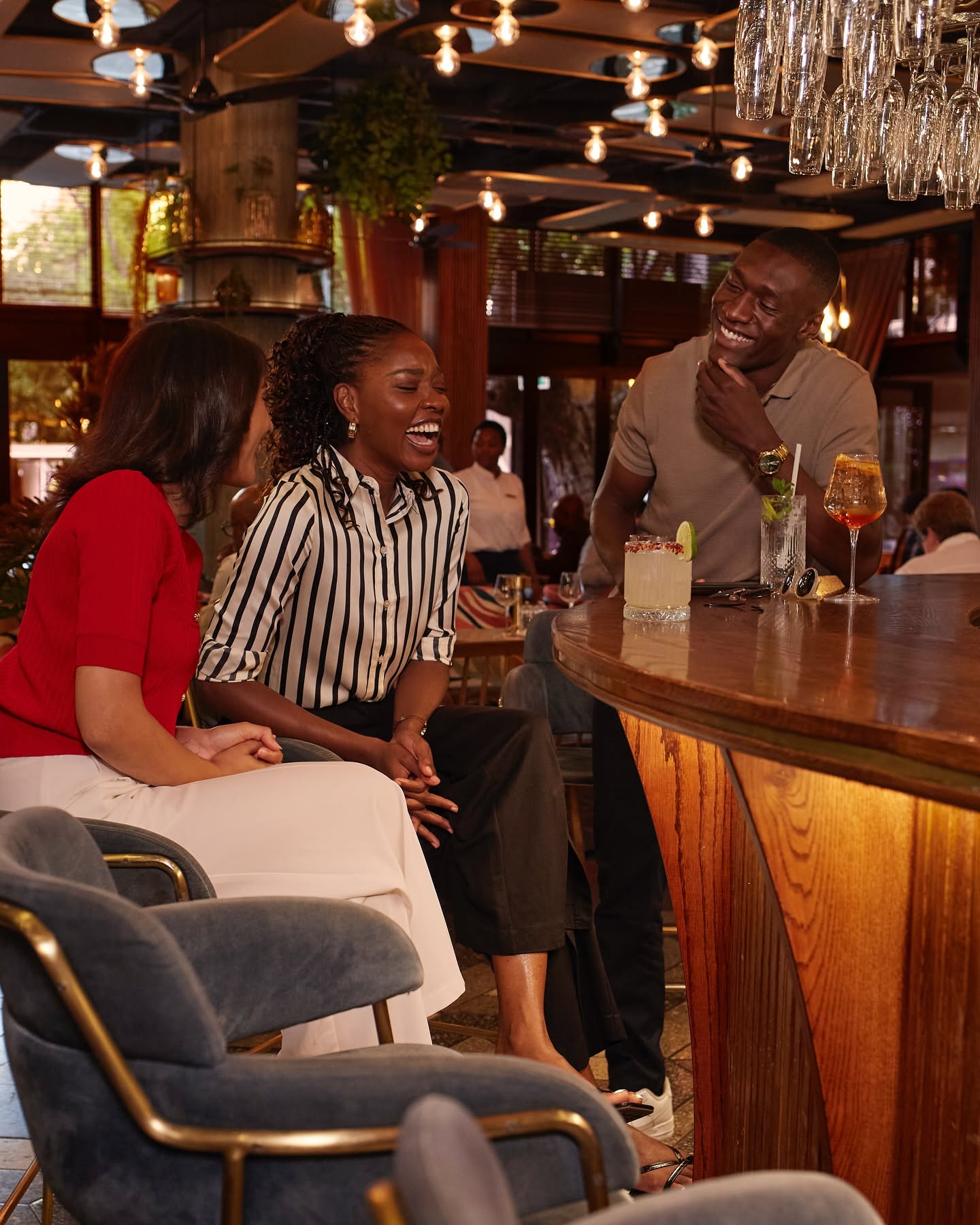
Over the weekend, a group of perhaps a dozen adults gathered around a braai. Two-thirds were English-speaking, one-third Afrikaans-speaking – an unusual enough combination to prompt a conversation about language. Why, someone asked, was I not fluent in Afrikaans despite having studied at Stellenbosch University? My response was that, at least, I had Afrikaans friends. What struck me afterwards was that I couldn’t say the same about having black friends.
The global wine industry faces a challenge that is now impossible to look past: consumers are drinking less.
There is less agreement about why. Demographic change, health concerns, economic pressure and competition from other alcoholic and non-alcoholic beverages are all offered as explanations. The causes matter, but perhaps less than the consequence. Wine has a demand problem, and the old growth models are no longer available to solve it.
That ought to prompt a more radical question than how we tell wine’s story: What if the industry needs to change the way wine is experienced, discovered and discussed?
It dawned on me that a key part of the problem is not poor communication of a compelling consumer promise, but a lack of relevance at a more fundamental level. I wrote about this earlier this year, arguing that wine’s problem isn’t a shortage of stories but a shortage of reasons for people to care. That remains my view. The harder question is what needs to change.
Technology: opportunity or trivialisation?
The danger is that technology makes wine more accessible while making it more trivial. Wine has enthusiastically embraced digital marketing while remaining remarkably attached to analogue ways of helping people choose what to drink.
A consumer still encounters a shelf containing dozens of bottles, differentiated by labels, regions, varieties, vintages and producer names. The information required to make a confident choice can be considerable.
Technology can make this easier. AI, for example, could become a useful wine intermediary – not a robot sommelier making grandiose pronouncements, but a tool that translates expertise into the questions ordinary drinkers actually ask.
Is this dry? Full-bodied? Fresh and linear or soft and smooth-textured? What should I eat with it? Is there something similar but cheaper? If I liked this bottle, what else might I enjoy? Is this a wine to drink tonight or keep for five years?
These are not intellectually inferior questions. They are the questions that get wine into people’s glasses.
The opportunity, then, is not to use technology to produce more wine content. There is already plenty of that. It is to reduce the effort required to participate in wine. We don’t need an infinite number of tasting notes generated by machines – God forbid, humans are already adequate at that. We need better ways of connecting a particular person with a particular wine.
But there is a caution. Personalisation can easily become another form of narrowing, giving us more of what we already like while reducing the chance of encountering something unexpected. At the same time, digital wine culture has its own cliques, and the people within them can end up deciding what is fashionable, desirable or worth talking about. Technology may therefore democratise access to wine while creating new forms of gatekeeping around taste.
Its more interesting role would be to do the opposite: broaden discovery, expose people to wines and ideas beyond the circles they already inhabit, and make it easier for new voices to influence what wine becomes.
Who gets to define wine?
I am 55, white, male and based in Cape Town. I have spent more than two decades working professionally in wine. I know a great deal about the subject and have accumulated plenty of assumptions about what matters in wine, how it should be discussed and what constitutes expertise.
But the episode around the braai left me wondering how well equipped I am to understand what might make wine relevant to people whose lives and experiences have historically had so little meaningful contact with it. If my own social world can remain so racially circumscribed after 55 years in South Africa, perhaps the wine industry should be less surprised that its attempts to connect with black consumers so often feel superficial.
My experience has value. But it does not make me the ideal interlocutor with every future wine consumer. This is particularly pertinent when we talk about South Africa’s emerging Black middle class. The answer isn’t simply to market wine more effectively to Black consumers. Nor is it to recruit a handful of Black personalities as ambassadors while leaving the underlying culture untouched.
If new consumers are to become part of wine’s future, they need a genuine role in shaping it. That means more Black winemakers, yes, but also more Black retailers, sommeliers, marketers, educators, writers and entrepreneurs with the power to influence the category. It means allowing different social occasions, tastes and cultural references to shape how wine is presented and consumed.
And it means those of us who have traditionally occupied positions of authority accepting that relevance may involve giving up some control over the conversation. That isn’t a threat to expertise. It is a test of whether expertise can adapt.
The wine industry sometimes treats the new consumer as though they are waiting to be persuaded to appreciate what we already appreciate. That is the wrong starting point.
The more productive question is: what might wine become when people who have historically been outside its cultural centre start influencing it?
The answer should not be “wine dumbed down”. Nor should it be “wine as we know it, but with younger faces”. Nor should it be wine reinvented so completely that it loses any connection with its history.
The industry should retain the things that make wine worth caring about – place, craft, history, agriculture, diversity and pleasure – while becoming much less prescriptive about how consumers encounter them.
That may mean different formats, occasions, price points, voices and ways of talking about taste. It may mean wine appearing in spaces where it has not traditionally appeared, alongside food, music and culture without demanding that everyone first learn its vocabulary. One of the reasons I detest “minerality” as a descriptor is that it illustrates the problem perfectly: what insiders regard as useful shorthand can sound like nonsense to everyone else.
And it may mean accepting that some of the things enthusiasts consider important simply aren’t important to everyone else. That is not necessarily decline. It may be democratisation.
As we know all too well, vineyards are being pulled out and production is contracting. The difficult work now is not managing abundance but rebuilding demand. We cannot assume that the next generation will inherit wine culture simply because previous generations did. They have more choices, different media habits and different relationships with authority. They also have no obligation to preserve our hierarchies.
So what would I suggest? Use technology to make wine easier to discover and understand, without reducing it to disposable content. Communicate in ways that begin with consumers’ lives rather than wine’s internal vocabulary. Create more opportunities for participation rather than simply more opportunities to consume marketing. And, above all, broaden who gets to shape the category.
For someone like me, there is a final responsibility: to remain useful without assuming that I must remain central. That may be the hardest adjustment of all.
-
Share:

Related articles
Opinion & Analysis
Clash of the titans: Bordeaux 2016 vs South Africa 2017
16 October 2026
A wine can look very good in isolation. Put it alongside its counterparts from the rest of the world, and the context changes. In a tasting billed as “Clash of...
3
Reviews
Kruger Family Wines new releases
15 October 2026
Want to read this? Christian Eedes’ latest wine reviews are initially reserved for subscribers. Get full access now. SUBSCRIBE NOW Already subscribed? Login
News
12 top restaurants set for Taste of Cape Town
14 October 2026
Taste of Cape Town takes place at Green Point Cricket Club on 28 and 29 November, with 12 restaurants including La Colombe, FYN, Vuur, Upper Union, EDGE Africa and Basson...
jim Kelly | 3 September 2026
Tremendous article – well done. You provide ‘food for thought’ across the globe! From my own experience, even my local supermarkets are dumbing down (further), and we know where that’s going to end up! Now it’s up to the industry to react, if indeed they want to.
Anna | 6 September 2026
Totally agree — it would be very useful to many consumers for the bottles themselves to indicate if a red is “fresh and linear” or “bold and deep” or “soft and fruity” Failing that an App that uses a series of clearly defined descriptors with some other useful information for both those new to wine drinking – and those who may love it, have their own preferences, but do not know which new wines to try, so they stick to the few they know.