
Greg Sherwood MW: As Bordeaux unravels, Burgundy confronts hard truths of its own
By Greg Sherwood, 10 December 2025
-
Share:





7
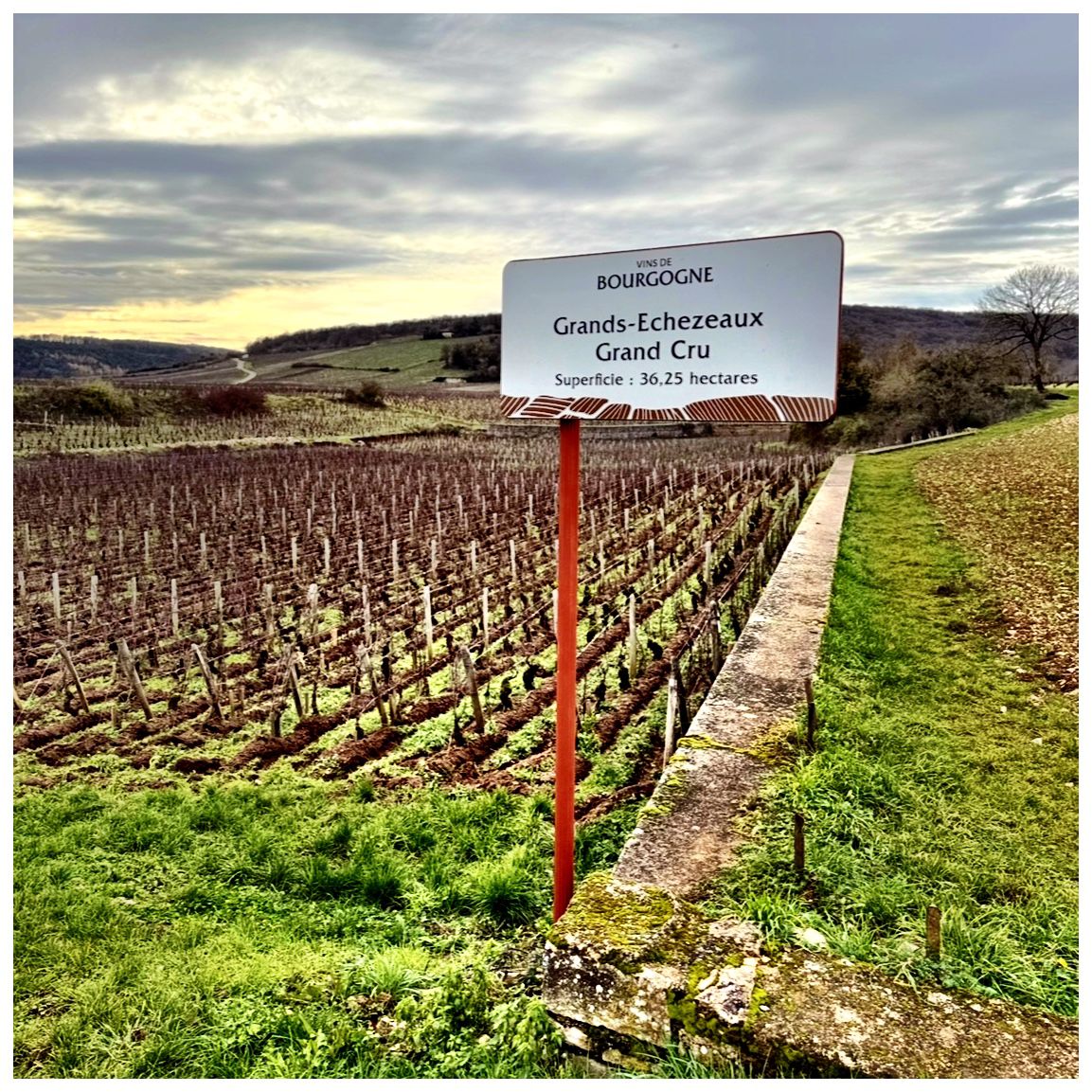
“For centuries Burgundy has produced some of the finest wines in the world, wines steeped in tradition and praised wherever wine is drunk.” It was with these words that Anthony Hanson MW opened his seminal book Burgundy published in 1982. Indeed, there can be few more awe-inspiring wine regions in the world than Burgundy’s Côte d’Or, its north-to-south patchwork of red and white vineyards beginning around the city of Dijon and running almost in a straight line past Nuits-Saint-Georges, all the way down to the historic city of Beaune and further still towards Chalon-sur-Saône.
Having just returned from another inspiring trip to the mecca of Pinot Noir and Chardonnay, I am now fully immersed in the post-visit reflection phase, trying to assimilate all the new stories, tastings and personalities along with their corresponding successes and inevitable wine trade grievances. For Burgundy is not only a physically complicated minefield of vineyards, Crus and classifications, it is also a classical region undergoing immense change as the tectonic plates formed over 900+ years of Cote d’Or history collide with the economic realities of the 21st century wine market.
While much has been written about the economic wine crisis in Bordeaux recently, far less commentary has been forthcoming on the existential problems facing the great region of Burgundy, if for no other reason than because of its deeply ingrained culture of privacy, secrecy and a general preference for keeping their problems neatly concealed from public scrutiny.
But Burgundy’s financial pains are more as a result of the region’s phenomenal success over the past 20 years, whereas Bordeaux’s crisis, in many ways, has been self-inflicted. As a starting point, one only needs to document the post war mass planting of the Medoc to see that once many of these vineyards started coming ‘on-stream’ in the late1960s and early 1970s, the corresponding downward curve of consumption in France and across much of Europe had already started in earnest – a trend that continues until today.
What we are seeing across Bordeaux is merely the inevitable end point of over-planting and over-production in a world consuming significantly less wine than is being produced. The push and pull of supply and demand economics are rarely proved wrong and the faux-Chinese wine boom around 2010 merely served to delay the inevitable crash for Bordeaux.
Of course, the Bordelais did themselves no favours either, compounding the problem by pricing themselves out of the market and, in the process, alienating an entire generation of potential consumers. Over-ambitious, ever-escalating release prices drifted far from real market demand and became increasingly detached from what mainstream drinkers could reasonably afford.
In Burgundy, we would often jest with small growers that the Bordelais had, in many ways, slipped into the misguided, self-created illusion that their mass production bore more resemblance to Burgundy’s tiny artisanal domaines than it ever truly did. Hence the persistent warnings over the past decade from many Burgundians about the creeping “Bordeauxfication” of their own region. For while they have watched the slow-motion train crash unfolding in Bordeaux, they too have been tempted into some of the very same pitfalls of an overheating fine-wine market.
The reality is that genuine ‘drinking’ demand for any highly priced wine product may actually only be, hypothetically, one pallet. But because of the fine wine boom and the rise of the ‘investor customer’, this demand has artificially grown to perhaps two or three pallets over the past few years, pushing up supply-side pricing significantly for all consumers. The new actuality now shows that the investor bubble has finally burst as interest rates have risen, with banks offering a far better return on your money than tying it down in a fairly illiquid and costly asset such as fine wine.
With the investors departing the market, demand for many highly priced premium wines has fallen back down to the original demand level of the real drinker / collector… of perhaps one notional pallet. To exacerbate the situation further, many of the original consumers within the ‘one pallet’ group have themselves exited the category due to rising prices, shrinking this pool of drinking consumers yet further. So, with supply and pricing completely out of kilter with demand, the fine wine market finds itself in a particularly sticky predicament.
For the Burgundians, demand has pretty much always outstripped supply, making the return to reality more of a gentle downward drift rather than a complete crash like we see occurring in Bordeaux’s market crisis. Also, speaking to the top Burgundian growers, they seem all to aware of the challenges facing them in the market and the inevitable pricing readjustments they might be expected to make in the coming vintages. However, one particularly nasty complication is the matter of land pricing.
With many of Bordeaux’s expansive top Cru Classé vineyards owned by incredibly wealthy individuals or corporate insurance companies, a downgrading of property asset values is the least of their headache. Finding a home for the surfeit of overpriced stock clogging up expensive warehouses is a much more pressing challenge. However, in Burgundy, so much of the day-to-day renting, leasing or indeed selling of valuable vineyard land is wrapped up in the complex conundrum of two decades of spiralling land prices and the inevitable tax implications that lie in store for future generations choosing to work the land.
More critically, high land prices make lowering or adjusting the cost of wines produced a considerably more difficult proposition, as unlike Bordeaux, in Burgundy, the cost of the vineyard land does indeed have a direct correlation on the cost of the resulting wine sold. To add yet another layer of complexity to pricing, we clearly see that climate change in Burgundy has resulted in ongoing lower yields collected per hectare compared to average years in the past decades. So, yet again, producers find themselves stuck between a rock and a hard place.
For Burgundy, the market excitement for another new vintage, albeit an incredibly small one in 2024, is clearly visible to see among merchants with the Hospice de Beaune 2025 Auction, which often serves as a harbinger of future pricing and demand trends, witnessing a highly successful event raising a total of €18.75 million, a significant jump of over €4.3 million from the previous year, making it the third-best result ever and demonstrating strong ongoing market demand for Burgundy wines, especially for record-breaking individual lots like Pommard and Bâtard-Montrachet barrels.
Where and how the ‘poor’ Bordelaise will extricate themselves from a very severe market downturn seems to be the question occupying many negociant and merchants’ minds at the moment with no one seemingly having any tangible answers. In the meantime, UK merchants will gleefully distract themselves from wider market problems by focusing on the upcoming January and February Burgundy 2024 En-primeur campaign that has always been more about buying early primarily to secure finite stocks and not merely to secure the best prices.
- Greg Sherwood was born in Pretoria, South Africa, and as the son of a career diplomat, spent his first 21 years traveling the globe with his parents. With a Business Management and Marketing degree from Webster University, St. Louis, Missouri, USA, Sherwood began his working career as a commodity trader. In 2000, he decided to make more of a long-held interest in wine taking a position at Handford Wines in South Kensington, London, working his way up to the position of Senior Wine Buyer over 22 years. Sherwood currently consults to a number of top fine wine merchants in London while always keeping one eye firmly on the South African wine industry. He qualified as the 303rd Master of Wine in 2007.
-
Share:
Related articles
Opinion & Analysis
Greg Sherwood MW: Dry January, No/Lo growth and wine’s awkward moment
14 January 2026
It’s that time of year again, when my social media feed is clogged up with proud South African parents posting endless pictures of their young ones heading off to primary...
4
Opinion & Analysis
Greg Sherwood MW: IWSC Top 50 – SA up, France down
19 November 2025
As we approach the end of another eventful year in wine, the written contributions from both Winemag’s columnists and editor seem to get ever more philosophical and reflective. Christian Eedes’...
Opinion & Analysis
Greg Sherwood MW: Sadie’s ‘T Voetpad and the power of old vines
6 November 2025
The Western Cape winelands have been blessed with a rich tapestry of viticultural diversity, sometimes by design, sometimes by default and sheer luck. Take the 5,159 hectares of old vines, defined...
GillesP | 10 December 2025
Excellent read Greg. I do think that the transmission of Burgundy Estates is a real issue given the heavy estate tax prevailing in France (however there is some kind of law that is trying to help with that particular situation) . Subsequent to that is the fact that very wealthy individuals or companies have invested in the Burgundy top names and 2 to 3 years later, their selling price has doubled to tripled. Clos de Tart, Clos des Lambrays are typical examples.
Then you didn’t mention the secondary market which are the real actors inflating the prices .
GillesP | 10 December 2025
Forgot to add that with the significant growth of wealthy millionaires or billionaires around the world, I am not too concerned about the future of top Burgundy producers to sell their prodution because of offer vs demand and for many of these people, some Burgundy names are trophies in the Cellar holding. We don’t even need to go too far from here in South Africa where I know that a certain famous DJ is a great amateurs of top wines and DRC ones in particular.
Greg Sherwood | 10 December 2025
Quite funny you mention the secondary market. I admittedly get to taste and drink some very expensive Burgundies but I always tell people that most are not THAAAT expensive if they buy them on releases. Despite the slow market, this is still difficult for many top Burgundy wines. I do get a lot of eye rolling and finger wagging when people look up prices on the secondary market… but I always remind them that the producers are not the beneficiary of these prices. Also, crazy secondary market prices only serves to make producers increase their release prices to dampen speculation. It’s all a bit of a mess but equally, it is market forces of supply and demand at play.
Claude Kolm | 11 December 2025
An excellent summary of the situation, as I know it. On my visits in Burgundy last month, I got the feeling that many producers are getting nervous about the current level of prices. The good news for Burgundy is that there is so much good wine in areas that were once overlooked now being made — due to global warming and improved viti- and vinicultural practices.
Greg Sherwood | 12 December 2025
Indeed, on my recent trip we drank some delicious wines from Maranges, Fixin, Marsannay, Givry, Mercury, Rully and Hauts Cotes de Beaune and Nuits… all appellations that were very much under performing even 8-10 years ago and were almost impossible to sell. They have all been the beneficiary of climate change and of course more investment from higher prices across the board in Burgundy.
Peter Feuilherade | 13 December 2025
Great article Greg. I visited the region for the first time in June this year and found Santenay a really beautiful place with some excellent wines at bearable prices. As a South African buyer the price pressure is significant but one buys as best as one can afford.
Greg Sherwood | 16 December 2025
Lucky man! You only ever get ONE first time! It should be memorable.