
Greg Sherwood MW: Is the fine wine market starting to bounce back?
By Greg Sherwood, 18 February 2026
-
Share:





1
After this year’s highly successful Wine Paris wine trade fair, the wine world seems to have rediscovered a notional amount of new momentum and positivity. How long this sentiment will last is yet to be tested, but it certainly makes a change from the endless tales of doom and gloom in the wider wine industry. Undoubtedly, much of this negativity is almost certainly overstated and exaggerated, but there does seem to be a feeling of managed decline in many segments of the wine trade.
Wine Paris 2026, held from 9 to 11 February at Paris Expo Porte de Versailles, solidified its position yet further as the premier global drinks industry event, this year featuring over 6,500 exhibitors from 63 countries and 63,541 attendees. The 7th edition specifically expanded to include three distinct pillars: Wine Paris, the independent Be Spirits, and the new Be No (non-alcoholic), focusing on innovation, sustainability, and market adaptation.
If you take nothing else away from the headline figures, it is important to note that the 2026 edition saw a 20% increase in exhibitors and a significant rise in international attendees from 169 countries, including a growing contingent of South African wineries, signalling that Dusseldorf’s Prowein wine fair dominance has probably come to an end. Once unrivalled as a global wine trade fair, Prowein’s own managed decline now paradoxically mirrors much of the wider decline seen in the international wine industry.
So, what is really going on in the wider wine industry? Merely asking that question already sets off multiple alarm bells for the “market segmentation police” who ring their hands at the thought of commentators lumping mass market wines and fine wines into the same pot to distil some kind of relevant and meaningful conclusions.
But while mainstream wine sales remain under pressure, demand for highly allocated and ultra-premium bottles continues to hold firm with data suggesting that the top end of the market is proving far more resilient, even as consumers trade down elsewhere. In 2026, we are continuing to see the fine wine market polarizing, with ultra-premium bottles (£185+ / $250+ / R4,000+) and ‘ready-to-drink’ aged wines selling well, while mid-tier investment wines continue to see price corrections. Demand is clearly highest for prestigious, rare labels and fresher, lighter styles.
So, let’s take a closer look at what is selling well. According to a recent Drinks Business report, Ultra-Premium & Rare bottles priced over £185 / US$250 / R4,000 are defying the general market downturn, driven by strong demand in the US market for top-tier Napa Cabernet Sauvignons, and rare, collectable Bordeaux, Burgundy and Rhône producers across European markets.
Another clear parallel trend is the strong performance of Ready-to-Drink (RTD) Aged Fine Wines where demand is high for older, more mature vintages that can be enjoyed immediately, with consumers often relying on the producers themselves to handle the cellar aging and attributed costs.
Moving away from primary producer sourced wines, we can see that auction houses globally are also booming, exploiting the increased demand for mature, ready-to-drink fine wines. In just the past weeks, Sotheby’s reported a very strong performance for its Wine & Spirits business in 2025, reaching a total of $127.5 million / £94 million, marking a nearly 12% increase over the previous year and clocking up the third highest total wine sales figures in their history.
This all feeds neatly into the ongoing trend of a “flight to quality,” where buyers prefer the safety of top-tier assets over speculative, lesser-known, or mid-level wines. The “fine wine” definition is increasingly focusing on immediate drinkability, with a shift away from needing decades of cellaring at considerable extra expense.
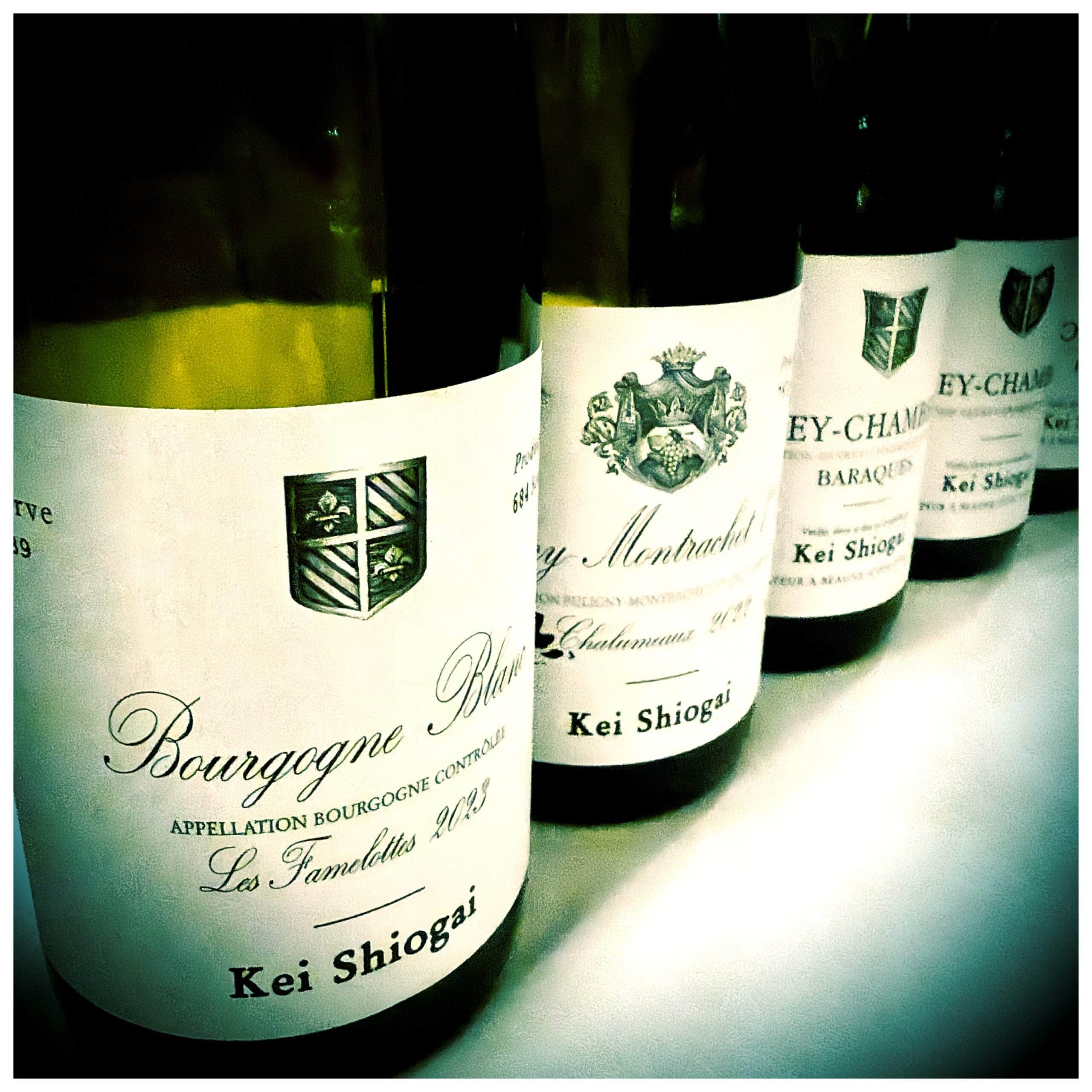
Indeed, just this past week I was fortunate enough to attend several London tastings and dinners with iconic Japanese Burgundy producer Kei Shiogai, who had not visited the UK market since he was 19, as a young student studying in Japan. Now based in Beaune, France, producing his own cult wine labels since the 2020 vintage, his wines are certainly not cheap, but the demand among both private collectors and premium on-trade restaurant sommeliers has been simply astonishing, defying many of his somewhat jealous critics in both the UK and French markets.
Kei Shiogai and his pristine wine style of purity, precision, focus and weightless elegance personify the wider shift in the fine wine market towards lighter, less cumbersome wines that are easier to drink, fresher in structure, and generally share a closer affinity to food pairing and fine dining.
As another Japanese producer, Koji Nakada, based in Gevrey-Chambertin explained in January on my last tasting visit, the world is changing fast and the fine wine consumer is evolving, especially in Asia, with a move away from heavier, riper, more robust styles of Bordeaux and Burgundy, toward lighter, fresher, more elegant and sophisticated expressions of fine wine that can be enjoyed in their youth already but that can also be aged comfortably.
Other accompanying trends in the more successful segments of the market include White and Sparkling Wines where sales are also shifting toward fresher, lower-ABV options, with significant growth in Rosé and, in some cases, premium white wine categories. As always, top-tier Bordeaux and Burgundy, along with highly rated, well-known producers in the Rhône (like Chateau Rayas and Jean Lous Chave) and premium Italian wines particularly from Piedmont, remain popular at premium price points.
Of course, the fine wine market is also seeing certain categories in decline, presenting their producers with greater challenges. Specifically, Mid-Tier Investment Assets or wines in the $100–$200 / £75-£150 price range that were bought during the 2021–2022 fine wine peak are seeing reduced demand, with some brands experiencing price drops of over 30%.
Additionally, Lower-Priced “Fine” Wines from some producers report a marked slowdown in lower-priced, entry-level fine wine categories as consumers continue to consolidate their spending on top-tier options. Also, Uncertain Vintages from wineries with lower critical scores or those needing perhaps another decade to mature are definitely slower movers in a market looking for immediate quality.
Are these high-priced top-performers a sign of better times to come for the entire fine wine industry? Or are they just more proof that success in the wine business is increasingly reliant on a very small proportion of the drinking populace, one with almost unlimited disposable income, but also a very particular palate that precludes the success of the vast majority of the wine industry? For the time being, there seem to be more questions than answers!
- Greg Sherwood was born in Pretoria, South Africa, and as the son of a career diplomat, spent his first 21 years traveling the globe with his parents. With a Business Management and Marketing degree from Webster University, St. Louis, Missouri, USA, Sherwood began his working career as a commodity trader. In 2000, he decided to make more of a long-held interest in wine taking a position at Handford Wines in South Kensington, London, working his way up to the position of Senior Wine Buyer over 22 years. Sherwood currently consults to a number of top fine wine merchants in London while always keeping one eye firmly on the South African wine industry. He qualified as the 303rd Master of Wine in 2007.
Winemag doesn’t charge for most of what it publishes. Subscriptions exist to protect the one thing that can’t be sponsored: independent judgement. Join today.
-
Share:

Related articles
Opinion & Analysis
Greg Sherwood MW: Dry January, No/Lo growth and wine’s awkward moment
14 January 2026
It’s that time of year again, when my social media feed is clogged up with proud South African parents posting endless pictures of their young ones heading off to primary...
4
Opinion & Analysis
Greg Sherwood MW: As Bordeaux unravels, Burgundy confronts hard truths of its own
10 December 2025
“For centuries Burgundy has produced some of the finest wines in the world, wines steeped in tradition and praised wherever wine is drunk.” It was with these words that Anthony...
7
Opinion & Analysis
Greg Sherwood MW: IWSC Top 50 – SA up, France down
19 November 2025
As we approach the end of another eventful year in wine, the written contributions from both Winemag’s columnists and editor seem to get ever more philosophical and reflective. Christian Eedes’...
GillesP | 18 February 2026
Hello Greg. I would be very interested to hear your take on the South African wine representation, the look of their stands, their space allocated in the whole exhibition, all that out in perspective with other wine producing countries? Thanks.