
Malu Lambert: The Foundry – 25 Years of Rhône in the Cape
By Malu Lambert, 27 August 2026
-
Share:





1
There is no better way to explore Rhône varieties in South Africa than through The Foundry’s wines, which set a benchmark for a distinctly Cape interpretation.
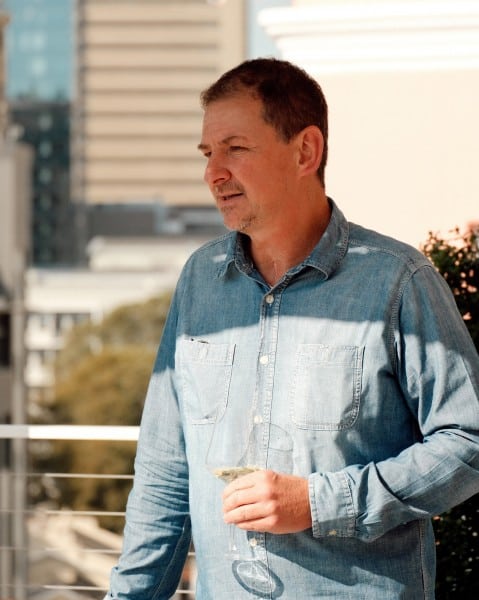
Chris Williams of The Foundry.
“The Foundry is 25-years-old this year,” says Chris Williams addressing trade and media on the rooftop of the Melting Pot restaurant. The day is vibrantly hot, the surrounding technicolor buildings of De Waterkant seem to pulse in its brightness. It’s the new vintage-release and the label’s cold viognier is the perfect counterpoint to the weather.
The Foundry “was born very much out of the impact that the Rhône made on me as a young winemaker travelling in 1994”. Established in an old shed at Joostenberg while Williams was at Meerlust, he left in 2020 to focus on the brand full-time.
“It looks like it was a plan,” he says of the five Rhône-style wines we are about to taste. “It wasn’t. The first vintage [2001] was a mishmash of varieties, but the syrah really stood out.” In 2004, he started co-fermenting syrah with viognier. “I liked the gloss, but not the sweetness and overt florals.” Instead, viognier became The Foundry’s second wine and its first white.
“The range evolved organically.” Part of this is the Cape’s suitability. “There are a lot of similarities with the Rhône,” he says, citing granite soils, a Mediterranean climate, windy summers and cold, wet winters. Crucially, says Williams, “they retain their flavour and acidity.”
White masquerading as red
The Viognier 2024 comes from a vineyard six kilometres from False Bay. At 13 per cent alcohol, it is linear, floral and restrained, with less opulence than typical examples. It’s the only wine made entirely in oak: “Terracotta took away too much of the variety’s perfume.”
We move on to the Grenache Blanc 2022 (Williams says it benefits from bottle age). He points out that few places in the world produce a single varietal. “It’s a very Cape style of wine.” By contrast, some examples he’s tasted in southern France and Spain are “actually quite dull”, where the grape is often used for volume and alcohol.
The grapes come primarily from his own Voor-Paardeberg vineyard with the rest from neighbouring grower Willie Mostert. Williams south-facing block ripens about a week later than Mostert’s sunnier, east-facing vineyard. Each vineyard is split into three cuvées: barrel, stainless steel and terracotta. “What makes it so interesting, both red and white, is the mouthfeel,” he posits. “You get this textural pithiness on the mid-palate after the fruit explosion on entry.”
That component is what draws him to the whites. “They’re thick-skinned because they’ve evolved to deal with the harsh climate of the southern Rhône.” The Foundry whites all have varying degrees of grip balanced by fruit and fresh acidity.
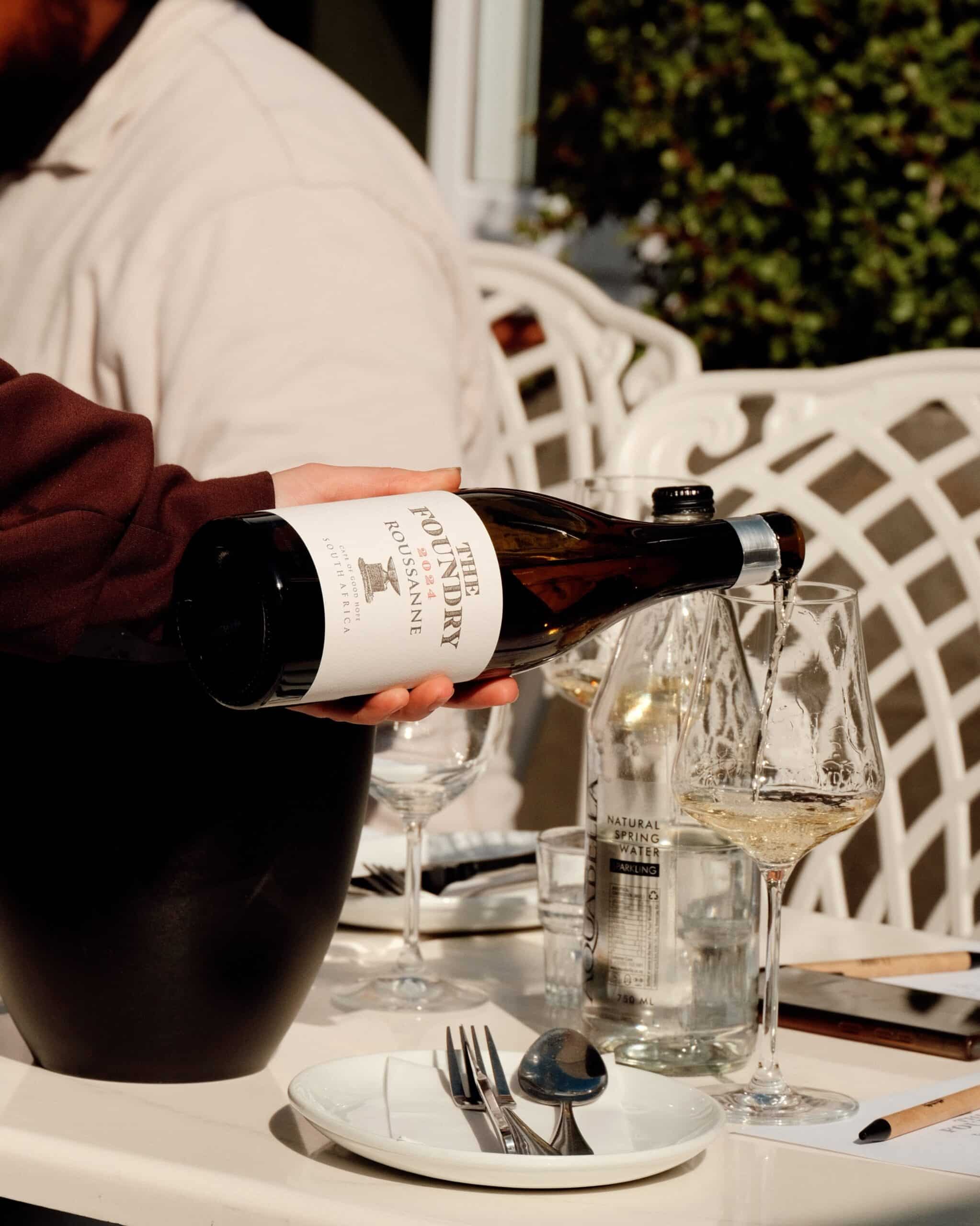 With the Roussanne 2024 now in glass, he points out its gold colour, due to its phenolic character. “I’m careful to balance the natural tannin with roussanne’s generous fruit.” Its skin-to-juice ratio yields just 500 litres per tonne from his Voor-Paardeberg vineyard. “Squish a grape and basically a blob of pulp with four seeds comes out.”
The 2024 is perfumed with incense, turmeric, and Chinese five-spice, offset by savouriness and lemony acidity. Fermented equally in terracotta and barrel, it needs oxygen “to really unlock these exotic flavours”.
“I’ve referred to it, usually after a bottle or two, as red wine in drag.” Roussanne, he adds, has incredible ageing potential, noting that his first vintage was 2010 and “that wine is only now fully mature”. One of his favourite wines, he says, is Château de Beaucastel’s Roussanne Vieilles Vignes, which “is just indestructible”.
Fresh and focused reds
“The inclusion of whole bunch is dependent on the stems,” says Williams, answering a question about the Grenache Noir 2022. “Too green, the wine becomes overtly grassy. Too brown you get a lignified character.”
Heady with roses, the grenache “comes across seductively on the nose, but the palate reminds you that it’s a wine of substance, with this core of tannin.” The key, he says, is picking before overripeness; grenache’s tendency to overcrop and ripen unevenly makes yield and canopy management crucial.
“I don’t like a lot of alcohol; it takes away from the typicity. Freshness and brightness are what I look for.”
The final wine is the Syrah 2022, from Williams’s own Voor-Paardeberg vineyard, planted in 2000. “I like to think of this wine as straddling a tightrope: plenty of freshness, no excess ripeness, quite lithe and muscular. That’s the style the vineyard lends itself to.”
Viognier may not have worked as a blending partner, but Williams has found success with roussanne, which makes up six per cent of the wine. “I discovered too late in life that in Hermitage a lot of growers harvest a bit of roussanne with their syrah.” Unlike viognier, it brings no overt sweetness or perfume, instead it tempers the syrah’s rusticity, glossing its tannins and adding brightness.
While Williams’s unintentional 25-year experiment makes a compelling case for Rhône varieties in the Cape, a conversation with viticulturist Etienne Terblanche after the tasting adds some perspective.
Grenache says Terblanche is the clearest success story. Against the backdrop of an overall decline in vineyard area, grenache noir has grown from around 50 ha in the early 2000s to some 570–580 ha today, while grenache blanc has increased from roughly 20 ha to 170 ha.
Varieties such as marsanne and roussanne grew from a low base but have largely stabilised over the past decade, while viognier, once planted to around 900–1,000 ha, has since roughly halved.
Mourvèdre is also waning. Terblanche believes commercial viability is part of the equation: varieties such as grenache have enough identity to stand alone, while lesser-known grapes primarily associated with blends can be difficult to communicate and sell. Nor he says are these varieties necessarily a simple answer to climate change. While adapted to warm, dry conditions and useful for increasing varietal diversity, many Rhône whites are naturally more about texture than crisp acidity.
The vineyards need to mature too, young plantings of big-berried varieties such as grenache, carignan and cinsault can take time to come into their own.
What do the next 25 years hold for these grapes? While we wait, to borrow from Williams’s favourite writer, Henry David Thoreau: “Live in each season as it passes; breathe the air, drink the drink, taste the fruit…”.
- Malu Lambert is a freelance wine journalist and wine judge who has written for numerous local and international titles. She is a WSET Diploma alum and won the title of Louis Roederer Emerging Wine Writer of the Year 2019, among many other accolades. She sits on various tasting panels and has judged in competitions abroad. Follow her on X: @MaluLambert
-
Share:

Keith Prothero | 27 August 2026
Love the Foundry wines. The 2015 Grenache Blanc was the wine that really stood out for me and it’s been my “house” white ever since, both in SA and the U.K. . All the range are consistently excellent value for money .