
Michael Fridjhon: Why simplifying wine is killing it
By Michael Fridjhon, 21 January 2026
-
Share:





3
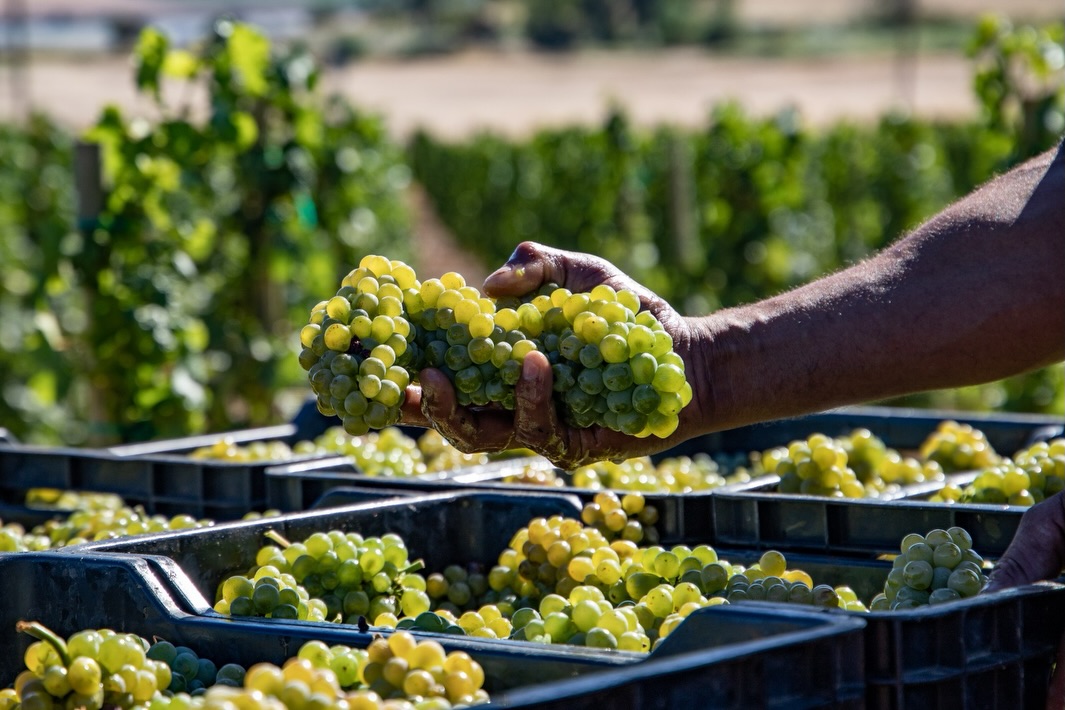
Anxiety and pessimism about declining alcohol consumption together with a declining interest in wine across all classes and categories has left the wine producers everywhere in disarray. This isn’t something new though the evidence is now become inescapable – and since the inexorability of the trend became clear (once the post-Covid euphoria had passed), it has been a constant refrain in trade publications. So unless you want to read about Elton John’s zero alcohol fizz, you will have to flagellate yourself with the increasingly grim stats.
From its peak a little over fifteen years ago the total market for wine worldwide has shed about 20% of its volumes, and continues to fall. Since Covid this has been particularly evident in the West. With the Chinese market also in free-fall, there are no big newcomers entering the consumption stakes in a way which would mitigate or disguise what is really happening.
The comfort of blaming demographics
This is not a subject which has escaped the commentariat. We have all, at various times, offered our own explanations, many supported with hard data. Some of these are well known and recognised accordingly: the number of consumers in first world countries is shrinking, partly because the population is shrinking. Rates of reproduction are declining so unless newcomers drink more per capita than their parents, total volumes must drop.
Then, so we are told, marijuana is cannibalising sales, so are health drinks. Alcohol has had a bad press for too long so it’s out of fashion. New consumers don’t have the money: many are still living with their parents into their 30s because employment options are fewer and houses/apartments cost more. Those with qualifications are battling to pay off their student debt. We’ve all read these – and a host of other explanations – all cogent, all applicable to a degree, all suggesting that mostly the problem is structural and very little can be done about it. You can’t suddenly conjure up new consumers imbued with increased discretionary spending power.
A consequence of buying into these analyses in their entirety is that the industry is relieved of its responsibility for its own crisis. If everything is about demographics and economics, then everything lies beyond the control of producers and marketers. But what if this bed has been – at least partly – of our own making? What if we have been tone deaf for too long; what if we have mis-read the trends, what if we have tarnished, perhaps even destroyed, the message and image of the product we purport to love because we have misconceived what it is that we are actually selling?
When wine forgot what it was selling
Let’s start with the use of the word “beverage.” Heineken bought Distell and changed the name of its business (to incorporate beer as well as ciders and wine) to Heineken Beverages. This is merely an example of how the industry does not see wine in the same way as our parents and grandparents – and all our ancestors back at least to the days of the Old Testament. By calling wine a “beverage” we are inviting it to compete with beer and hard seltzers.
Once we slipped into that elementary trap, the next step to perdition arrived so suddenly we didn’t even realise that we had stumbled into a chasm. We are told that wine “needs to be simplified.” It’s rules and rituals are too arcane to attract the numbers buying into beers and cider. Make it instantly accessible (no one has place to age wine these days anyway). Eliminate guidelines which suggest “needs additional ageing” or even “keep for a bit.”
Even the nomenclature needs too much explanation, so the arguments go. People get confused between cabernet sauvignon and sauvignon blanc. So do away with varieties, with vintages, with origin. Exactly the elements which give wine its USP have become millstones. Marketers tell us that consumers arrive at the wine shelves of a supermarket and they are so lost that in the end they abandon their quest, and buy something else instead. There was even a speaker at a VinPro day a few years ago who suggested that the industry needed to offer a half a dozen styles and choices, with a few major brands carrying the full panoply of choice. Brand A Dry Red or Sweet red or Dry White or Sweet White. Ditto Brand B and C and possibly Brand D. Nothing else. The success of beer as a category was simply the result of strong brands and limited choice, so we were told.
If we carry on this way we will be buying tickets in the front of the plane as it enters its death spiral. We need to go back to what defines wine as wine, not as another industrial beverage. We need to embrace the language, the code, the vernacular. As Henry Jeffreys has pointed out, if you want to be part of the community of football fans you need to know the basics – the names of the teams, the rules of the game. These exist not as gate-keepers but because they are essential. If you dumb things down, it’s not a club anyone in their right mind would want to join.
We need to make more of the rituals, of what Aubert de Villaine at the Domaine de la Romanée-Conti called “the spirituality.” The whisky markets of the world were rejuvenated with the arrival in wider distribution of a broad range of malt whiskies. They added nuance, complexity, an aspirational quality. Nespresso did the same for coffee. George Clooney was never going to be the face of Nescafé.
We need to go back what what defines wine as wine, and sell it for what it is: not the Nescafé of fermented grape beverages, but a craft product which delivers in every bottle the unique expression of the nexus of nature and human intervention.
- Michael Fridjhon has over thirty-five years’ experience in the liquor industry. He is the founder of Winewizard.co.za and holds various positions including Visiting Professor of Wine Business at the University of Cape Town; founder and director of WineX – the largest consumer wine show in the Southern Hemisphere and chairman of The Trophy Wine Show.
-
Share:
Related articles
Opinion & Analysis
Michael Fridjhon: Has SA wine forgotten the lessons of the SAA Shield?
12 November 2025
This month sees the 30th anniversary of the SAA Shield, the wine test match sponsored by an altogether more outward looking and innovative version of our national carrier than anything...
2
Opinion & Analysis
Michael Fridjhon: Pinotage turns 100 – time to grow up about it
15 October 2025
You would have to be less than half-literate and perversely uninterested not to note that 2025 is the Centenary Year of Pinotage. Even if pinotage is not your cultivar of...
14
Opinion & Analysis
Michael Fridjhon: Pinot Noir – SA’s cult grape that defies both logic and economics
17 September 2025
Any grape grower will tell you that not all cultivars are equal: when it comes to saleability some guarantee you a higher price, pretty much independently of supply and demand,...
Simon | 21 January 2026
Thank you. This is something I’ve been getting irrationally annoyed about.
Our algorithms, and thus our consumer economy, is increasingly geared at mastering minutiae. People love lists and learning new facts and acquiring an in-group vocabulary. And an online avant garde of enthusiasts often influences the broader consumer culture. Gyms are packed with men and women of all ages talking about muscle protein synthesis and effective reps. Tiktok and instagram are ongoing seminars in colour theory and organic chemistry (see any random BeautyTok clip) or how Victorian-era etiquette informs the kinds of trousers men wear or whatever.
Of course, these platforms can tend to the superficial (note how we are all now armchair experts in virology, nutrition and political science), which raises its own set of challenges. And, as with so many newly hyper-commodified trends, there is always the risk of turning something fun into a competitive Americanised sport.
People do want wine to be more accessible, but that means challenging old boys clubs and not expecting people already to have mastered the vocabulary before they are allowed to be taken seriously. Price is another obvious barrier.
“A consequence of buying into these analyses in their entirety is that the industry is relieved of its responsibility for its own crisis. If everything is about demographics and economics, then everything lies beyond the control of producers and marketers.” Precisely. Part of this is the lazy generational categories we have for some reason adopted as eternal truths.
In the wake of the GFC, we were told that ‘millennials’ were doing this or that, rather than looking at the market (the product of broader economic conditions and businesses’ role in driving consumer demand, among other factors).
I often read about so-called Gen Zs drinking less because they are into healthy pursuits. I’m not sure if our wine commentariat has ever met a Gen Z, but the ones I know live on a diet of BuzzBalls, vaping, TikTok and cocaine. Some of them also do half marathons and Hyrox and are into sauna culture.
It is well-documented that the broader alcohol industry makes a disproportionate amount of revenue from people who drink excessively (see e.g. https://pubmed.ncbi.nlm.nih.gov/30136436/). Do we really think that profits have been hit by ‘mindfulness’? (If only!)
Wine has never been hipper. At least one cool wine bar is de rigueur in any trendy neighbourhood. At the same time, going out for a meal or casual drink feels increasingly unaffordable for many ordinary consumers. This is a comment about vibes rather than an assessment of the data, but as the piece correctly implies, so much of this discourse is vibes based.
None of which is to make light of the real and serious challenges faced by independent wine producers and other businesses.
James | 21 January 2026
I was just chatting to friends about the prevalence of wine bars in Cape Town and I know of at least 5 new wine specific bars that have popped up in the last 1-1.5 years.
This is at odds with every 3rd article out there lamenting the decline of sales and consumption. I have no doubt the data is correct, so either we will see most of these bars closing in the not so distant future, or those of us who are still drinking wine are doing a helluva job 😂
Greg Sherwood | 21 January 2026
A couple clear observations from Michael’s article and the readers’ comments…
Not enough weight is conceded to the problem of affordability. Too much wine is clearly being produced worldwide for not enough consumers. So the reaction of producers is to focus on premiumisation, stories, quality and the usp’s real people and real family wineries can deliver. Many top producers have seen a slight slowing of sales but are far less affected than mass market brands that threw their lot in with the “simplification devil” and are now seeing that NO, wine is not an FMCG product like beer that consumers necessarily want or need. Even at the bottom end of the wine market, it’s a discretionary luxury purchase.
Complexity of message sells wine, detailed genuine stories that are captivating, sell wine, and of course, quality wines that over deliver – sell wine. But affordability is still crucial. As they say, the consumer needs to see value… whether at R5000 per bottle of R50 per bottle. It’s all relative. But the slippery slope of affordability has led to a market situation that means it might already be too late for some bulk producers to survive.
Getting the affordability and quality quotient right at a profit margin that makes a wine sustainable for a producer is the key to success. Most of these products will be in the medium to top end categories, within the premium market segment. While this is slightly contradictory in essence when considering the wider cost of living crisis – cost saving by consumers will lead to people leaving the wine category far quicker at the bottom / entry level than at the top end.
As someone living and breathing the fine wine trade in the UK everyday, I can clearly see people are buying less inconsequential wine and focusing on premium quality producers with a genuine reputation, story and collectability AND perceived value. Will sales slow in this segment too? Of course, because the wine speculator has expired and has exited the market. But the genuine collector / drinkers are still buying – soaking up the complex messaging, stories, culture and spirituality of the wine market.
2024 was very tough in the wine trade, 2025 was even tougher… and I predict 2026 will be even more difficult for producers that continue doing things, selling and marketing wine, like they have always done while expecting a different outcome in a rapidly changing wine environment. The market will continue to shrink, there will be casualties, the messaging will need to change, but people will still congregate around delicious bottles of wine paired with good food and friends. It has been such for 3000+ years and I don’t see this changing.