
Tim James: Re-reading SA’s wine revolution through terroir
By Tim James, 14 April 2026
-
Share:





4
A few weeks back, I warmly welcomed Paul Nugent’s 2024 book, Race, Taste and the Grape: South African Wine from a Global Perspective, as a valuable contribution to our understanding of this country’s wine history in, essentially, the 20th century. He does take his researches into the first two decades of this century, looking at the aftermath of the democratic transition and of the abandonment of KWV controls. When, however, he’s not dealing with the well-documented past, his contribution is perhaps less convincing; he flounders a little in coming to a complete understanding of what has been happening to Cape wine this century. And there are many small details whose complete or partial inaccuracy could have been avoided by checking, or having someone fully conversant with what’s been happening here overview the text. Eben Sadie, for example, did not “spen[d] around a decade in Priorat (Catalunya) before returning to the Cape” – he spent more of that time here than there.
I had earlier been prompted by the book to revisit the “chardonnay scandal”, and said I planned on being further prompted in the future. So here I want to revisit a few linked aspects of the country’s post-1994 wine landscape – ones that Nugent explores insufficiently or gets not quite right. They concern the question of terroir, which Nugent does, in a late chapter, refer to. He says, in the jargon of the academy, that “One of the most striking discursive transformations in the wine world since the turn of the millennium has been the popularization of a discourse of terroir – and South Africa is certainly no exception.” Indeed. He means that terroir is regarded as important.
Nugent sees, correctly, that the question of climate, especially temperature, is particularly significant in the different landscapes of the Western Cape, and he could have added aspect as playing a major role amongst the hills and mountains that make it all so beautiful. He tends to prioritise the ideas of those who downplay the role of soil in wine differentiation. I suspect that he mugged up the subject a bit too superficially, in fact. While talking a bit fuzzily of terroir on a larger scale, he almost entirely misses the significance, or even the fact, of the developing concentration of fine wine producers on vineyard expression – surely the ultimate reference in “a discourse of terroir”. There’s not even an entry for vineyards (nor for viticulture) in the book’s index; the long list of interviewees doesn’t include professional viticulturists – tellingly and unfortunately no Rosa Kruger, who wouldn’t have allowed the importance of vineyards, not just old ones, in both the nature and the marketing of Cape fine wine to escape an interviewer.
Terroir, vineyards and the limits of interpretation
A vital year in this is 2003. Nugent, in a subsection about “Collective action problems”, says that in that year the Cape Estate Wine Producers Association “successfully prevailed” upon the Wine and Spirits Board to tighten up regulations governing estates. In fact, what happened is that while there were tighter rules for wines labelled as “estate wines”, the legislated, privileged place for estates in the Wine of Origin System was totally removed, something which CEWPA wouldn’t have liked one bit, and which Nugent doesn’t mention.
Since 1973, the estate had been the smallest unit of the WO system and heavily protected as such. But now there were no longer estates, only, rather ungloriously, “units for the production of estate wine”. And frankly, few wine lovers care or understand about these any more than they did about estates. What they do very much care about is single vineyards, any mention of which had previously been expressly forbidden in deference to estates. And provision for vineyards was now, at long last, enshrined in legislation: a crucial encouragement and a tribute to terroir.
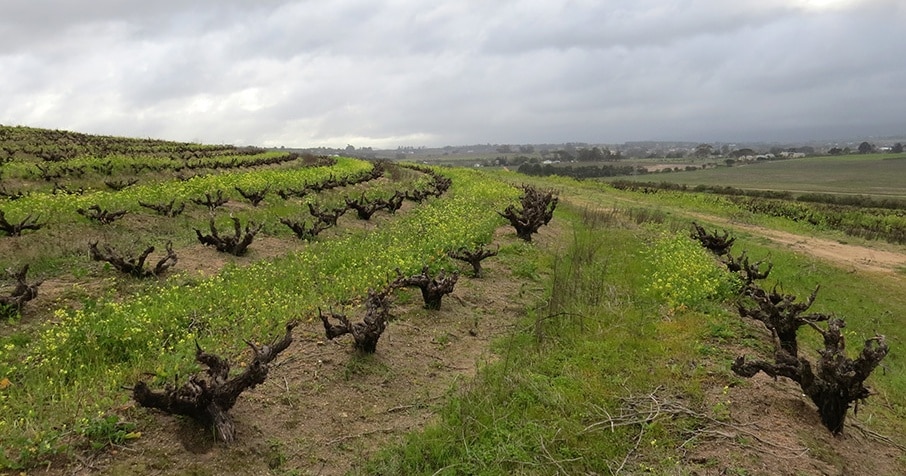
Nugent doesn’t note any of this. He does mention in this chapter, when talking of the Swartland Independent Producers, that, “in contrast with Stellenbosch”, most SIP members “owned relatively few vines”, and that they sought out “gnarled old bush vines”, and “needed to cement close relationships with grape farmers who had once supplied the cooperatives or the SFW”. It would have been worth pointing out here that they were also, many of them, not intending to blend the fruit of those vines, but were seeking out specific vineyards, not just vines, precisely for reasons of terroir expression.
The impulse towayds old vines and vineyards was taken forward hugely by Sadie’s maiden Ouwingerdreeks selection in 2009. This firmly entrenched vineyard expression as a central motif of the Cape’s fine wine revolution. When the Mullineux introduced their ambitious Single Terroir range, the soil aspect was underlined – and once more amply justified, despite any scientific doubts about the natural mechanisms involved. They, and most others, certainly did not “f[i]nd it convenient to mould themselves to the external borders of the district”, as Nugent suggests, but explored smaller details of terroir within those borders.
An element of the search for long-term contracts or understandings or shared developments with farmers of special vineyards is not often noted (and isn’t by Nugent), though it is fundamental to the shape of new-producer portfolios in the Cape wine revolution. National agricultural legislation forbids “non-viable” holdings – that is, ones that are too small to provide a livelihood. There was no question of Swartland winemakers being able to buy a single vineyard, let alone a few rows within one. Most had to remain non-landowners, at least until their fortunes improved greatly, or other circumstances intervened. But it did encourage looking far and wide for vineyards to supply them, and this has promoted wonderful diversity. Would we have wanted Donovan Rall to limit himself to one farm?
This simple, often resented and chafed against, bit of legislation helps explain why the “estate” idea, probably better suited to Stellenbosch and largely based on the Bordeaux model (and certainly not excluding the concept of terroir), was unlikely in the first place to have allowed the great flowering of invention and discovery that characterise the best Cape wines this century – even if a Burgundian devotion to vineyard expression means that some estates have also been liberated by it.
It might have made for a better book if Paul Nugent hadn’t ventured beyond his expertise and understanding as he wrapped it up, for his is such an overall excellent achievement in Race, Taste and the Grape. He has greatly helped us understand the past; the present – not so much.
- Tim James is one of South Africa’s leading wine commentators, contributing to various local and international wine publications. His book Wines of the New South Africa – Tradition and Revolution appeared in 2013.
-
Share:

Related articles
Opinion & Analysis
Tim James: Drill, Baby, Drill – wine’s unlikely alliance with Big Oil
17 August 2026
The wonderful Kogelberg Biosphere, home to 1 880 species of fynbos (and with a number of grape varieties as guests), asks on its website: “The Kogelberg and a changing climate:...
9
Opinion & Analysis
Tim James: The story of semillon (white and red) in the Cape
11 August 2026
What is probably the world’s newest grape variety (for a while at least) has its past firmly rooted in three centuries or more of Cape winemaking. As reported last week,...
16
Opinion & Analysis
Tim James: Eben Sadie and making wine in the vineyard
3 August 2026
Great wine is made in the vineyard, they say – essentially claiming little more than that you need good grapes for good wine, and the better your grapes the better...
Izak Smit | 15 April 2026
I do appreciate this view Tim and while I agree that things have changed a lot over the years, what remained constant is terroir, which had been the emphasis of a book that I have co-authored with Elmari Swart, ‘South African Wines ‘Terroir and Travel’. However, a lot have changed subsequently specifically in ‘vineyard’ applications, as you rightly referred too and which I consider a kind of ‘joined’ ownership (in the absence of a better word for now). In fact, I regard it as a ”millennium revolution’ that have come to play here, which uplifts and has already opened up and will continue to do, all kinds of future possibilities. In our book, ‘wine pockets’ were referred too, which I think fits in nicely with the shift in approach we see today. Thanks
Jason Millar | 18 April 2026
The rise of terroir parallels Burgundy’s success in the market just as the popularisation of the estate model paralleled Bordeaux’s before it.
Terroir, like the chateau, is largely a communication and marketing strategy dressed up as a philosophy.
That isn’t to ignore the fact that vineyards differ, but to acknowledge that, crucially, this differentiation is commercially driven to create higher price point. It is not primarily aesthetic or academic distinction.
There is nothing technically wrong with that either, especially in the Cape, just that wine professionals and writers should not be misty-eyed about it. Moving to single vineyard terroir models is almost always a premiumisation strategy first and foremost.
Tim James | 18 April 2026
Jason, you seem to confuse the exploitation or invocation of a fact with the fact itself. Undoubtedly, “premiumisation” these days does make use of terroir claims, but that does not affect terroir itself, which goes serenely on for as long as agriculture does. When pre-capitalist farmers on the Rhine and the Côte d’Or minutely delineated land, it was in response to what the land offered, not to the market. It’s also worth noting that the “premiumisation strategies” via terroir can only exist because there are a lot of people you’d call “misty-eyed” about terroir, including many wine producers. I’m very happy for you to be cynical about marketing, but see no reason to be so about terroir.
Jason Millar | 18 April 2026
Tim, I’m not conflating the fact with its exploitation, I’m questioning whether the distinction is as clean as you suggest.
Regarding the middle ages, as I pointed out in a recent Decanter column, for most of its life ‘terroir’ was used as a derogatory term. The gout de terroir was the taste of dirt – not in a good way.
Your Cistercian example cuts both ways. These were not disinterested naturalists mapping soil for posterity. They were among the most economically sophisticated institutions in medieval Europe, managing production at scale for patrons, trade, and institutional prestige. The minute delineation of Burgundy’s climats reflects the Church’s economic interests as much as the land’s character – ownership, jurisdiction, and the need to account for differential yields and quality across a complex portfolio. That this preceded industrial capitalism doesn’t make it non-commercial; it makes it pre-industrial commercial. The Rhine parcellisation tells a similar story, as about feudal tenure as by soil typology.
If anything, looking at the Cistercian and Rhine examples supports my argument about commercial and institutional prestige more than yours about fundamental aesthetic value.
None of which means terroir, broadly speaking, isn’t real. I said vineyards differ, and I meant it. My point is that the classification system built on top of that physical variation – the naming, the hierarchies, the designation of individual parcels as distinct and superior products – is the part that requires sceptical examination, not reactionary defence as usually happens in wine. That system didn’t emerge from disinterested observation of the land. It emerged, and continues to evolve, in response to a commercial market’s appetite for differentiation and provenance.
You’re right that premiumisation via terroir depends on genuine belief, including among producers. But that’s not a refutation — it’s a description of how commercially effective and ideologically dominant the framework has become. Sincerity doesn’t change the structure of the argument.