
Tim James: Cape wine’s two cultures of taste
By Tim James, 18 May 2026
-
Share:





2

Two recent tastings reminded me of divergences at the broadly-upper end of Cape wine going beyond the wines themselves into wider cultural effects. As I write, I’m wondering if I exaggerate. Let me briefly describe the two experiences and some ramifications.
The New-Wave aesthetic
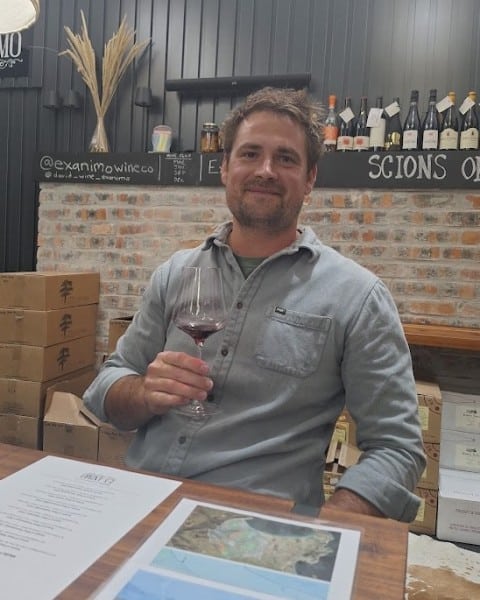
The first was a new-releases tasting of Scions of Sinai at the offices of its distributor, the ever-energetic Ex Animo. Bernhard Bredell and his pure, fresh, meticulously made wines – the results of, primarily, great viticultural efforts directed at expressing the terroirs he works with – have received much acclaim, especially, but not only, from those welcoming a “natural” and a lighter style. They do very well, I believe, in wine bars (probably internationally, but I don’t know), and are pretty well within the category that Eben Sadie calls “hipster wines”. In brief,
They are also a central part of what seems to me characterisable as the Ex Animo–Brice & Burnett (Wine Cellar)–Winemag axis. I suppose that axis would include me, but up to a point. I have mixed feelings about Scions of Sinai, for example, especially when they tend to the very light, lean and angular, as they often do. I find Bernhard’s wines brilliant, but it’s the hard brilliance of a diamond. I’d like some more generosity.
Take the Atlantikas Pinotage, for example. Very perfumed (a bit much for my taste), and with plenty of fruity flavour, and properly dry like all Bernhard’s wines, it is also, to me, acidic and lean and I don’t enjoy it. A great many do; tastes differ, which is fine and good. I do like the Feniks Pinotage 2024, by contrast; it has more weight and extract, a firmer tannic structure and overall greater vinosity (and not as extravagantly perfumed!). Heldervallei Cinsault 2025 is somewhere between those two, less lean and acidic than Atlantikas, with a decent bit of tannin, but still rather too weightless for my taste.
And a happy surprise to me was Krummelklip Cabernet Sauvignon 2025, a lesson to most Stellenbosch makers of cab and cab blends (and to the admirers of those wines) that it’s eminently possible to pick Stellenbosch cab at a stage that gives (in this case just) under 14% alcohol and lose nothing in terms of pure, varietal flavour – and also be totally dry-finishing, another great rarity in Stellenbosch reds. This wine is rather delicious and harmonious now, but it’s also lightly extracted and modest in both its oaking and its tannin structure, and I can’t really see much point in keeping it to develop. Again, lots of nervy finesse on offer, less warmth.
The white wines (Granitas Cape White Blend, Gramadoelas Grenache Blanc, Granietsteen Chenin) tend to the lean and acidic and hold little charm for me, though Granietsteen has a touch of richness that improves the balance (read editor Christian Eedes’s more positive notes here).
The Old Guard strikes back
And so to report that second experience, moving from the bright, youthful new-waveness of Sons of Scion to the old-established, oak-shaded stability of Simonsig. This venerable family estate is not part of that chic Ex Animo–Brice & Burnett–Winemag axis: Brice & Burnett stock only the Kaapse Vonkel, and the number of Simonsig tastings reported on Winemag is tiny.
I confess that it is a good few years since I tasted any of the wines either. But, as part of a project I am assisting with, I went to the estate to talk to Johan Malan, part-owner and former long-time winemaker, about his father, Frans Malan. Frans was an extremely important contributor to the new dynamics of Cape Wine in the 1970s and 80s – including being famously the maker of the first commercial champagne-method bubbly here; a pioneer of cold fermentation and of treating chenin seriously; an important influence behind the estate movement and the establishment of the Wine of Origin system; an inaugurator of the Stellenbosch Wine Route – and the planter of the Cape’s oldest verdelho vineyard.
Talking with Johan, I sipped at a few wines from the top end of the large Simonsig range, and he gave me a few more to try at home. The pleasingly packaged Grapesmith range was introduced not many years back (including a little non-estate fruit) – I’d guess to add some more modern, fashionable notes to the established list of mostly varietally named wines. And it does just that; there are three of them, naturally fermented, light and fresh, no new oak influence on show, at R335 each. Not cheap, but decent value, I’d say.
Die Kluisenaar 2023 blends marsanne and roussanne in a fresh package of vibrant finesse – any hipster would approve of the alcohol level of just under 12%, but a little sugar gives a welcome touch of charm and richness. Even finer is Mediterraneo 2021, which is drinking beautifully now. It adds grenache blance to the marsanne and roussanne, plus some of that pioneering verdelho (planted 1996) and a dab of bourboulenc. Older oak and amphora maturation, 12.5% alcohol – and this one is bone-dry. It’s complex, balanced and quietly delicious and drinkable. White blends are a notoriously hard sell, but how this vintage can still be available is amazing – and a touch worrying, perhaps – but it’s well worth grabbing.
The red in the range is Maritimo 2021, and it was probably my favourite: a wholly successful and harmonius blend of mourvèdre, grenache, marselan and syrah. Careful, imaginative and intricate winemaking involved here, including some-whole-bunch fruit, some carbonic maceration, mostly older barrels but the final blend had three months in a concrete egg. 12.5% alcohol (I believe the next vintage is a little riper, but that should still be light enough). Textured, with plenty of juicy red fruit, but not at all simplistic.
Again, a red from 2021 on offer in 2026 is unusual – and a boon for consumers if it’s as good as this. I wonder why these wines are not selling. Is Simonsig’s overall image too staid and old-fashioned? Is the Ex Animo–Brice & Burnett–Winemag axis tending to ignore older producers on the whole? (I think that apart from Joostenburg there’s no winery from last century on the Ex Animo list.) Simonsig clearly ventured something with its Grapesmith range, but I suspect it’s not working as intended. It might be our fault for not noticing – or perhaps Simonsig could do a bit more marketing.
Let me finish with another of Simonsig’s wines, a splendid outlier (made by Johan Malan out of sheer delight in wine’s variousness, I imagine) that also should have long since sold out. Fancy a madeira, my dear? If you can’t get hold of one in South Africa, or it would be too pricey if you could, there’s a great introduction to the category in Simonsig’s lookalike: Rainwater Extra Reserve Verdelho 2005. Yes, 2005; from raisined grapes, fortified after some fermentation (like port), but aged for 17 years in oak barrels “using the traditional sun-and-cellar method”, as they say, “where daily sun exposure drove oxidative development”. It’s not an easy wine to get right. And I can’t imagine how they got it past the certifying authorities.
Rainwater is a name used in Madeira mostly for lightish versions of their magnificent speciality, seldom from the noble verdelho grape which is kept for grander things, virtually never from a single vintage, as far as I know. The alcohol of this one is 22%, sugar is 93 g/l but there’s a firm acidity to balance and the finish is remarkably dry. Don’t complain that it’s oxidised – call it maderisation and realise that that is the whole glorious point. Gorgeous stuff it is and, as I say, if you want a madeira look-alike (this is perhaps just a bit rough, but it’s good enough for this madeira-lover), give it a try – but be warned that you might not like it if you’re used to squeaky clean, fresh wines. This is the only one released so far, but I believe there are a few more in barrel, and I’m glad.
It’s worth popping into Simonsig for this great bargain alone – but do pick up a few of the others too.
- Tim James is one of South Africa’s leading wine commentators, contributing to various local and international wine publications. His book Wines of the New South Africa – Tradition and Revolution appeared in 2013.
-
Share:

Related articles
Opinion & Analysis
Tim James: Are fancy tasting menus killing great wine?
4 May 2026
Wine and food matching has never much interested me beyond the broadest principles. I have vaguely decided, for one example, that for me cheeses tend to go rather better with...
1
Opinion & Analysis
Tim James: Sherry meets pseudo-sherry in the kitchen
27 April 2026
If I were an impoverished drunk with a sweet tooth (at least a few sweet teeth remaining, I trust), instead of a bourgeois heavy drinker with a sweet tooth, I...
1
Opinion & Analysis
Tim James: Cape white wines continue to offer top value – just don’t overchill
20 April 2026
I admit to something of a disconnect as I sit here writing about a handful of white wines I’ve drunk recently while the window that I spend too much time...
Louis | 18 May 2026
It’s frustrating when heritage wine estates bury their best work. Too many old-established wineries hide their premium, low-production gems and only market their entry-level commercial lines. The result? They completely miss out on engaging the new generation of curious, enthusiastic wine collectors and high-value wine drinkers.
Marketing strategies for wineries need to leave room for the “halo effect.” Take Emirates Airlines as an example: they constantly promote their First and Business Class experiences. Most people fly Economy, but that luxury positioning elevates the perception of the entire airline. Heritage estates need to start putting their premium flagships forward and make it available to high-end customers.
David Clarke | 18 May 2026
Hi Tim, great read, as usual.
To answer: Is the Ex Animo–Brice & Burnett–Winemag axis tending to ignore older producers on the whole?
Mostly due to older producers having representation in place when we started. We have approached some very established names in the past, but they seem not in need of entirely new representation. One or two of them expressed needing a plan for new labels already created and released. Which seemed at the time as a slight lack of foresight.
Accessibility to the consumer buying wines directly from the producer is ever increasing. This means less revenue options for anyone who makes their money identifying and communicating about specific great/good value/etc wines.
Personally I have been aware of the Grapesmith label for a few years; the wines are interesting and delicious. But Ex Animo has no professional interest in them as a standalone brand. I interviewed Johan Malan some years back for my podcast. https://open.spotify.com/episode/2nSvoYnIjbHgljepn6VwPR?si=5rJLkeEvTcWV5DfxL2ZCPA
Such a great guy with a lot of knowledge.