
Tim James: Sherry meets pseudo-sherry in the kitchen
By Tim James, 27 April 2026
-
Share:





1
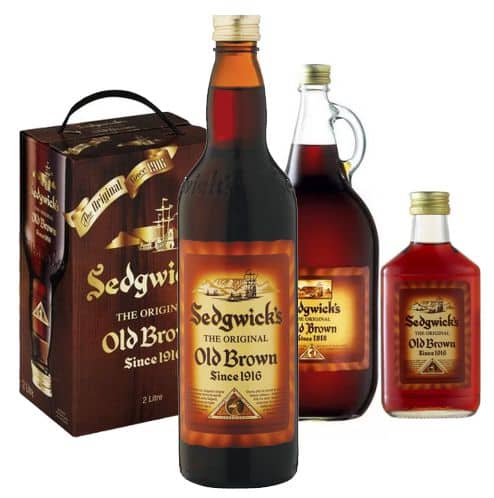
If I were an impoverished drunk with a sweet tooth (at least a few sweet teeth remaining, I trust), instead of a bourgeois heavy drinker with a sweet tooth, I can think of few sources of oblivion and comfort to turn to as effective as Sedgwicks Old Brown. R60-odd for a bottle of the stuff – I got it on special for a mere R49 at Pick n Pay just the other day. An unparalleled bargain, albeit not universally wanted?
It’s many years – a good few decades at least – since I last sought out Obies, and this time it wasn’t questing after unmediated oblivion. I had to take a dessert to a dinner party and for some reason thought of trifle, which I’d not made for ages – precisely those decades since my last purchase of Sedgwick’s Old Brown. It might even have been during those innocent years before Distell had been disallowed by a humourless European Union to put the magic word “sherry” (admittedly with not the remotest legitimacy) on the bottle.
Trifle, for which there probably as many recipes as there have been mothers of British heritage, to my mind is unthinkable without sherry – or rather, this particular pseudo-sherry. (In my trifle there are also finger-biscuits (not sponge-cake), apricot jam, thinly sliced bananas, custard, and lots of cream; definitely no jelly to firm up the slushy mess. With walnuts and glacé cherries as decoration. I was horrified last week to discover that a little pack of glacé cherries now cost more than the bottle of Obies; and when I later sneaked one solo, I thought it tasted pretty revolting, rather than a treat – but they worked beautifully as glossy red decoration. And the trifle was delicious, thanks.)
I hadn’t actually been sure if I would find Old Brown after all this time. But it clearly hasn’t been all this time for a great many people. I’d love to know how much of the stuff is produced by Heineken these days, but it’s clearly a lot, as I discovered when I googled. It’s available everywhere, in 750 ml bottles (the original shape), one-litre and 375 ml flat bottles, and two-litre flagons and boxes, all frequently advertised with “Sherry” still in the description. Advertisers include overseas ones: those outlets for sentimental expatriates searching pathetically for the likes of Mrs Ball’s chutney, biltong, Springbok rugby jerseys – and Obies.
Locally there are clearly more of the googling class searching for Obies than I expected, and finding it even at Woolworths. There must be a lot of well-heeled suburbanites making trifle, I suppose. And sweet-toothed drinkers at various degrees of approach to impoverished drunkenness. Perhaps it makes a nice change from Four Cousins Sweet Red. The alcohol level is usefully higher, at least, and it’s remarkably cheap.
“The Original” and “Since 1916” says the label – apparently, designedly, only lightly tweaked since then. I would bet the wine now tastes a great deal better than it did. It’s unlikely to have ever been made with significant reference to the principles of sherry, of course, though I noticed a few references in some of the advertising bumpf to the style of sherry most associated with some degree of sweetness (“made in the Spanish oloroso manner” says Checkers over-optimistically). Sedgwicks Old Brown is basically, as far as one can tell, a form of jerepigo: fortified grape juice, perhaps fortified wine. Who knows what additives find their way into the vast tanks. It’s still made, I think, at the Goudini Road Distillery, near Goudini, founded in 1900 by a pair of Sedgwicks. The Sedgwick’s company was eventually gathered into the generous embrace of Stellenbosch Farmers Winery in 1970.
It’s unlikely that Obies is going to be a regular addition to my wine purchases. Though I wouldn’t swear that I’ll never take a swig (some cold, sad and rainy evening) from the bottle on a kitchen shelf, next to the bottle of vodka kept for certain tomato pasta sauces. However, although my next trifle won’t be for a while, I do have one other cooking plan for it.
I was recently pointed, by Marc Kent of Boekenhoutskloof, in the direction of Delia Smith’s wonderful recipe for Chicken with Sherry Vinegar and Tarragon Sauce. This calls not only for sherry vinegar but also a good dose of “medium-dry Amontillado sherry”. The vinegar I did have in the cupboard (though it’s proving very difficult to find more). The sherry Delia called for was obviously cheap British supermarket-type stuff. Amontillado (oxidatively aged fino, basically, and bone dry) is no longer allowed to be labelled as such if it’s sweetened. I love amontillado and am rather proud to say I had in my stocks two kinds – a grand 30-year old one from Gonzalez-Byass and a decent, more ordinary one from Lustau (Los Arcos).
I decided to get a bottle of Adi Badenhorst’s pleasant Saldanha Fino and mix that with some Lustau and a bit of sugar (and drink the Fino with the cooked dish). It worked well, but I think bringing Old Brown into the mix will not only solve the sweetness element but also supplement the dark, nutty, complex richness of the sauce.
- Tim James is one of South Africa’s leading wine commentators, contributing to various local and international wine publications. His book Wines of the New South Africa – Tradition and Revolution appeared in 2013.
-
Share:

Related articles
Opinion & Analysis
Tim James: Who really wins at wine auctions?
12 October 2026
The Strauss & Co wine auctions began in 2019, in good time to benefit, as is clear in retrospect, from the pandemic that was soon to hit us. The stated...
6
Opinion & Analysis
Tim James: Why do we drink? And why do I?
5 October 2026
We all drink alcohol, it’s surely fair to say (unless there are some teetotal voyeurs – liseurs? – readingthis; “we” being the readers, extended to “people generally”). But why? That’s...
Opinion & Analysis
Tim James: A visit to Callie Louw’s Sonkop
28 September 2026
Fans of Callie Louw – there are many, and I think “fan” is the right word – will be pleased to know that all is going well at his new...

Matthew Jason G. Knight | 28 April 2026
Pop a couple of fresh chillies into what’s remaining in the bottle – makes for a great final addition to Chinese style stir fries [and also very good as “shots” at your next party! 🌶️🥳].