
Greg Sherwood MW: Franschhoek’s wine story is better than it thinks
By Greg Sherwood, 12 August 2026
-
Share:





4
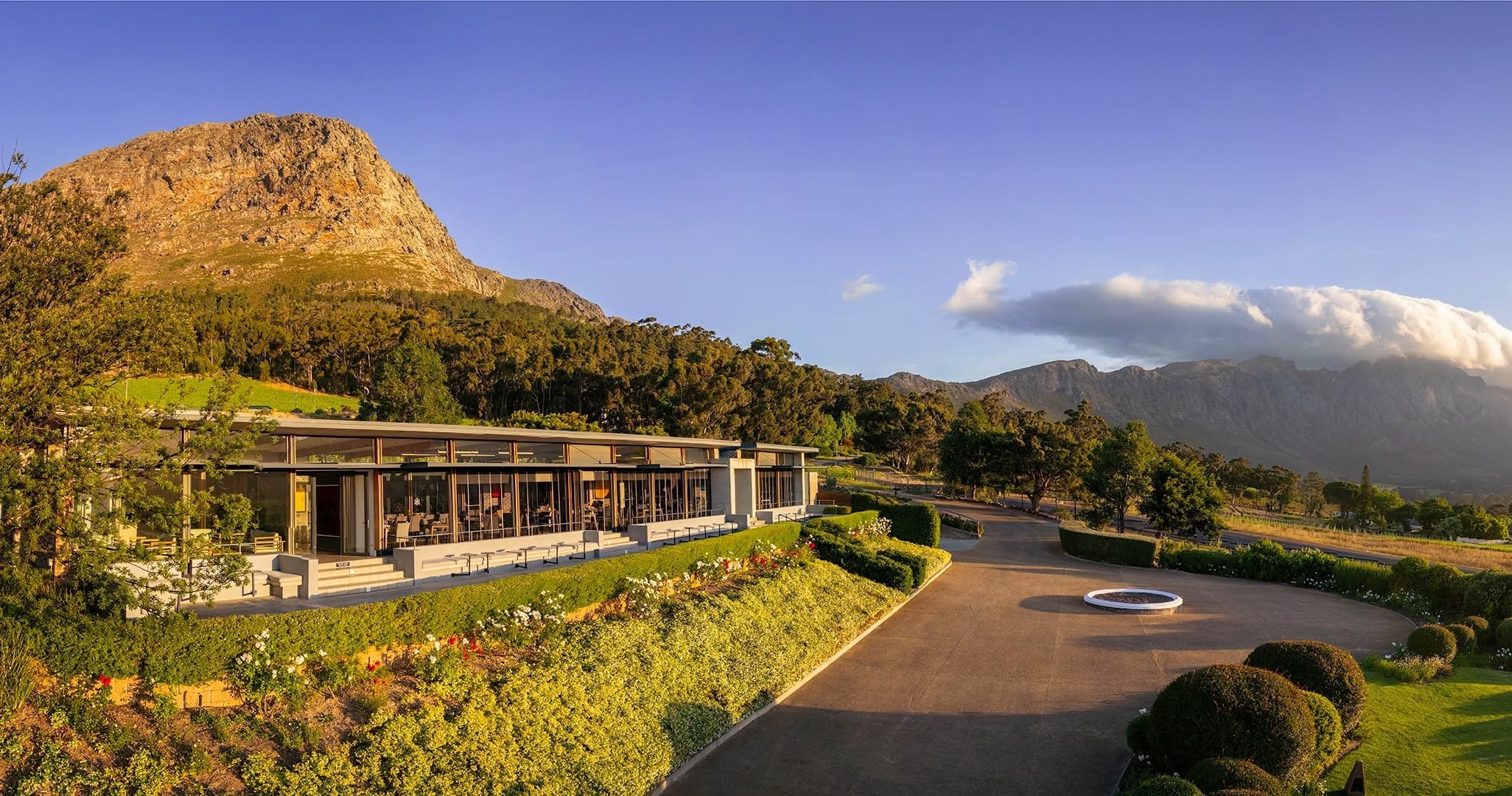
It’s a common problem for journalists, critics and commentators based in Europe when visiting the Cape winelands – Stellenbosch and the near surrounding winelands, seem to always command a magnetic draw, a vinous tractor beam a la Star Wars, that pulls you in and does not release you until you only have one or two days left of your broader visit schedule.
The ‘casualties’ are normally the more far-flung wine regions that are slightly tricky for a quick day trip or tasting when staying in Cape Town (or even Stellenbosch), especially when there is an indulgent liquid-heavy producer lunch or dinner thrown into the mix. I’m talking the Swartland, Elgin, Franschhoek and especially the Hemel-en-Aarde Valley.
Fortunately, on my recent trip to the Cape to judge for the Michelangelo Wine & Spirit Awards, I decided to make a conscious effort to schedule some meaningful wine time for several days after judging in both Franschhoek and the Hemel-en-Aarde / Walker Bay regions. As I know all too well from regularly tasting small new project wines from young Elsenburg graduates or from the next generation of ‘young gun’ producers, exciting things are always taking place right under your nose… but often don’t get the credit and attention they deserve.
Working in co-ordination with the Franschhoek Vignerons’ membership, and in particular Gerard Holden of Holden Manz winery fame, I was able to put together an incredibly in-depth, deep-dive line-up of wine tastings, vineyard walks and winery visits over a three-day visit in Franschhoek.
Franschhoek is of course better known as the “French Corner” of the Cape winelands, and as such, has built up an internationally respected reputation for boutique wine quality to accompany its world-famous culinary tourism and boutique hotel and spa scene. Yet the region’s wineries have faced uneven success when it comes to growing sales volumes of their wines not only in the UK, historically South Africa’s largest export market, but also further afield in the EU and USA.
Undoubtedly, the Franschhoek Valley and its vignerons are not exactly short on brand strengths and general unique selling points when it comes to promoting their wider reputation. They already possess a brand equity built on quality and heritage, with their unique Huguenot founding story and French lineage intertwined with a well-established food-and-wine tourism identity helping to set them apart from other nearby regions such as Paarl, Wellington, and indeed Stellenbosch.
This distinct narrative advantage over other generic “South African wines” has given the Valley a valuable differentiated positioning in the UK market where South Africa is already a familiar, trusted Wine of Origin for international consumers. Crucially for the Franschhoek Valley, South African wine exports have been shifting from bulk to value added, an export strategy that has been prioritised by multiple wine industry trade bodies for some years now, where market diversification and strategic positioning have become all important.
As global wine consumption continues to soften, the data reveals that volumes shipped to the UK declined by 7% in the most recent reporting period, while export value rose by 4%, underscoring the growing competitiveness of South African wine in retail and on-trade channels.
For Franschhoek’s largely premium, packaged-wine producers, this “value over volume” trend plays directly to their strengths as they are not competing on bulk pricing but on quality, story and provenance, which the market is rewarding even as overall demand contracts.
Somewhat paradoxically, as an outsider, in the past I have still continued to sense a certain insecurity, or perhaps ‘chip on the shoulder’ from many Franschhoek wineries when it comes to comparing their wines’ quality and reputation to the wider market. The zenith of this insecurity probably peaked a few years ago when a number of Franschhoek producers expressed an interest in being reclassified under a Wine of Origin Paarl umbrella.
As someone who has bought, sold and drunk the best wines of Franschhoek for many decades, I can only attribute this frail insecurity indirectly to the Valley’s overriding global reputation as primarily the home of many ‘money is no object’ lifestyle winery estates where boutique spas, restaurants, and hotel luxury trumped the importance of vine health and wine quality.
But let me reassure both consumers and producers – after three deep dive days tasting and travelling around the Valley, I’m happy to report that this is a completely outdated perception that perhaps held some sway 20 or 30 years ago but should now be put firmly to bed in the face of a tsunamic of premium wine offerings made, in many cases, by a new generation of young, ambitious winemakers.
Franschhoek’s wine problem isn’t quality
Some industry commentators still refer to the Franschhoek Valley’s pressing weakness as its lake of scale. Franschhoek is a small Ward, and production is largely boutique within the context of the Western Cape wine industry. Most estates lack the production volumes to supply UK multiple grocers at the price points and consistency those retailers demand, with 71% of producers considered small-scale, crushing between 1 and 500 tons of grapes annually.
This natural limit on Franschhoek producers’ ability to fulfill large retail contracts without blending across regions, has potentially led in recent years to a slight dilution of ‘Brand Franschhoek’ and its global identity.
But looking at the ongoing general demographic movement and evolution in the wider international wine market with lower consumption trends but at higher premium price points, small estates in Franschhoek, many of whom rely exclusively on specialty importers and agents for their UK sales and distribution, might just find themselves and their niche wine brands in the right place at the right time.
Another overlooked benefit of decades of luxury tourism to the Valley is how this now plays directly into the fast growing Direct-to-Consumer (DTC) sales trend, with these channels now emerging as quite lucrative alternative revenue streams for wineries at higher-than-normal margins.
Despite volume pressures, the UK remains the anchor market in which South Africa cannot afford to lose momentum, and the opportunity is there to deepen value rather than chase volume. With UK wine imports from South Africa bigger than Germany, the Netherlands and the USA combined, taken together with UK tourist numbers to the Cape topping US visitor numbers once again (after a post-COVID jump), the importance, scale and value of existing relationships should not be underestimated.
To my mind, there is still plenty of room for Franschhoek’s producers to leverage more aggressively through premiumisation, positioning single-estate, terroir-driven wines above the generic South African category, in specialist independents, fine-dining lists, and DTC subscription models. As always, wine tourism – while not a be-all and end-all opportunity in itself – remains an underused lever for converting cellar-door visitors into meaningful UK customers.
Just this week, Robert Joseph, the renowned UK wine industry journalist, commentator, and at times, ‘hard truths wine sleuth’, wrote an article on LinkedIn titled “Turning Visitors Into Customers” revealing some interesting numbers coming out of Bordeaux with regards to tourism after his conversations with a prominent tour guide who runs visits primarily to top Chateaux.
Quoting some truly fabulous (and hilarious) German words to illustrate his point, like ‘Schatzblindheit’ (treasure blindness); ‘Chancenblindheit’ (opportunity blindness); as well as ‘Hilfeannahmeverweigerung’ (refusal to help), these terms seemed perfectly appropriate descriptors of a phenomenon in Bordeaux, where Chateaux received well informed guests and poured them €25 to €75 samples of wine without so much as collecting one single visitors’ name, email or social media handle. Not once.
As Robert concludes… “Allowing wine drinkers to visit your winery, without at the very least trying to obtain some means of remaining in contact with them, makes absolutely no sense in 2026.”
While the Franschhoek Valley wineries, unlike Bordeaux who have both volume and quality, are unlikely to win a UK or EU volume war, and almost certainly shouldn’t try, their realistic path to continued success will be value-led, premiumising the Franschhoek Valley name, expanding direct-to-consumer and hospitality channels, and better exploiting the very well establish fine dining and culinary USP of the Franschhoek Valley, tying the boutique wines of the Valley more closely into a premium virtuous food and wine circle.
The data and market demographic shifts suggest the market is already rewarding this approach, with value growing as volumes shrink, and Franschhoek’s quality-tourism identity is well placed to help drive the popularity of the Valley’s quality wines long into the future.
Footnote: On my recent trip, I want to thank all the Vignerons who generously gave me their time to taste and chat about the current state of play in the beautiful Franschhoek Valley: Anthonij Rupert Wines, Babylonstoren, Chamonix, Great Heart, Haute Cabrière, Holden Manz, La Bri, La Motte, Le Lude, Lynx, Old Road Wine Co., Paserene, Rickety Bridge, Stony Brook, Terre Paisible, and Wildeberg.
- Greg Sherwood was born in Pretoria, South Africa, and as the son of a career diplomat, spent his first 21 years traveling the globe with his parents. With a Business Management and Marketing degree from Webster University, St. Louis, Missouri, USA, Sherwood began his working career as a commodity trader. In 2000, he decided to make more of a long-held interest in wine taking a position at Handford Wines in South Kensington, London, working his way up to the position of Senior Wine Buyer over 22 years. Sherwood currently consults to a number of top fine wine merchants in London while always keeping one eye firmly on the South African wine industry. He qualified as the 303rd Master of Wine in 2007.
-
Share:

Related articles
Opinion & Analysis
Greg Sherwood MW: Can being an unknown wine region be an advantage?
21 October 2026
If I mentioned the French wine region Duché d'Uzès (pronounce dooshay dooz) to any number of seasoned wine trade professionals globally, I am willing to wager a sizable sum that...
Opinion & Analysis
Greg Sherwood MW: The evidence for 2021’s greatness keeps mounting
7 October 2026
In my previous Winemag column, I profiled a wonderful selection of 2021 Cabernet Sauvignons presented in London recently by the Cabernet Collective. Bordeaux-style blends are not normally included in these...
2
Opinion & Analysis
Greg Sherwood MW: 2021 – the Cape’s next great Cab vintage
25 September 2026
If you have been following numerous wine commentators and wine social media accounts of late, you would have found it pretty difficult to miss all the debates comparing the 2015...
Tim James | 12 August 2026
Greg, I notice you don’t mention a few leading Franschhoek producers, like Boekenhoutskloof and Leeu Passant. I have, in fact, heard talk that those “generous” producers you tasted and chatted with were the ones who agreed to pay you substantially, via Franschhoek Vignerons, to accept their generosity, while the ones you didn’t mention declined to pay. Is this just unkind gossip, or should we regard this pro-Franschhoek article as, basically, advertorial? If that’s the case, Winemag should flag it as such, for the sake of its integrity, but I do hope it’s not.
Gerard Holden | 12 August 2026
Dear Tim
We haven’t met.
I respond in my personal capacity and not as a member of Franschhoek Vignerons or Holden Manz Wine Estate.
I organised Greg’s visit to Franschhoek after his time judging for Michaelangelo.
15 members of Franschhoek Vignerons participated in an extremely constructive group tasting followed by one on one tastings with Greg.
Participating members provided accommodation and hospitality (mainly food) and covered the costs of transport.
We would be delighted to host you on a similar basis to come and taste some of Franschhoek’s finest.
Christian can give you my contact.
Kind regards
Gerard Holden
Elizabeth | 12 August 2026
Thanks Tim , u should also scold that he wrote a whole article without the Sadie name in it , how dare he do that.
Tim James | 12 August 2026
No, I think we should all be allowed our more amiable eccentricities. (Hiding behind a half-name seems to me a less amiable one, BTW.)