
Greg Sherwood MW: Could dry white save Bordeaux?
By Greg Sherwood, 20 May 2026
-
Share:





2
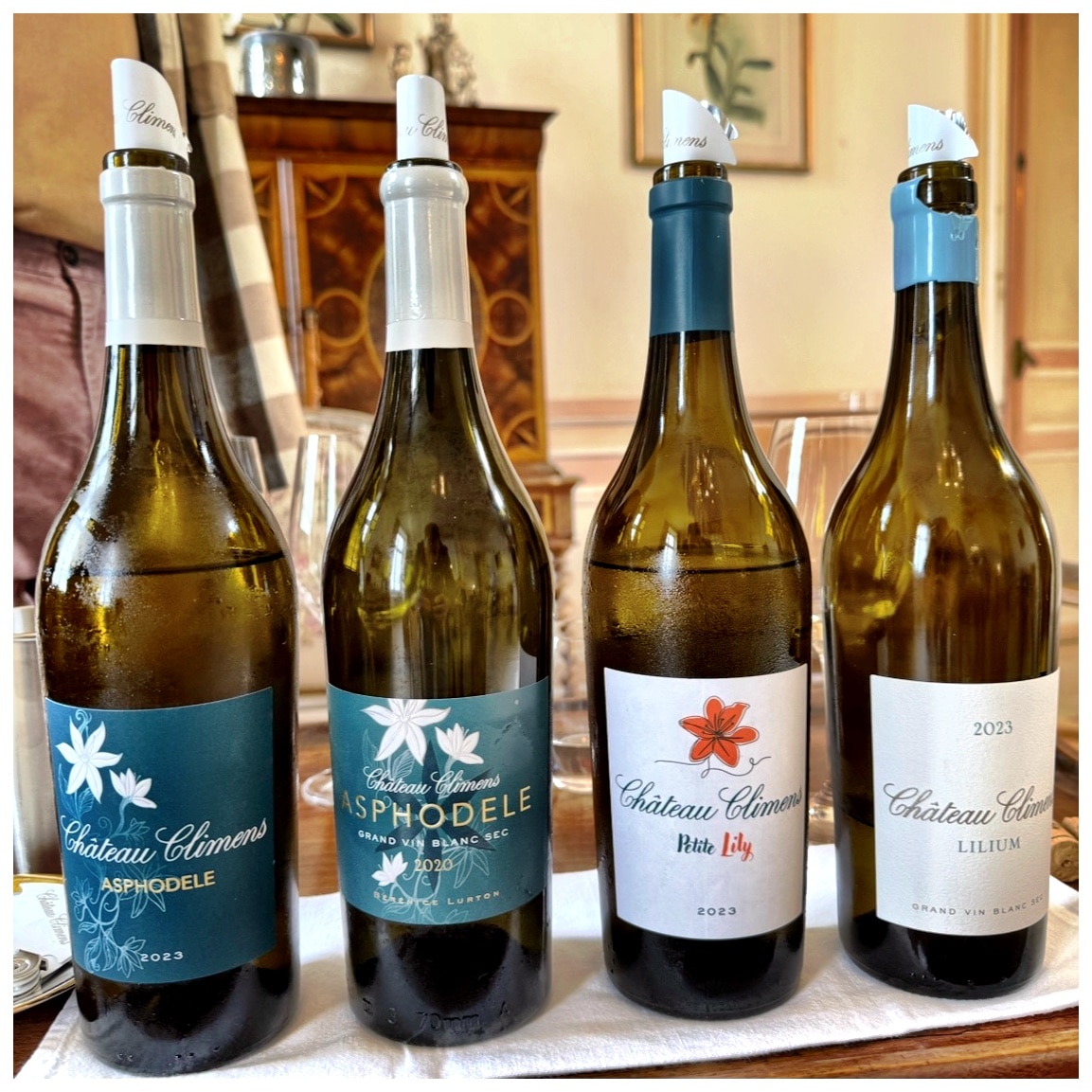
For centuries, the word “Bordeaux” has conjured a distinct visual of deep inky rivers of Cabernet Sauvignon, Merlot and Cabernet Franc, historic chateaux flanked by manicured vineyards on gravelly soils, and a rigid but prestigious classification system dating back to 1855. Bordeaux built its global empire on red wine. Yet today, the region faces a structural crisis of historic proportions. Stripped of its immunity to shifting consumer habits, economic pressures, and climate change, the world’s most famous wine region is pulling up its vines to survive.
Amidst this grim backdrop, an unexpected protagonist has emerged from the shadows of the region’s grand red chateaux – Bordeaux Blanc sec (dry white Bordeaux). Once an overlooked byproduct or a footnote to the region’s luscious sweet Sauternes, dry white Bordeaux is undergoing a quality and marketing renaissance unlike anything seen before. As global consumers pivot toward lighter, fresher and more versatile wines, the rising popularity of Bordeaux Blanc sec is no longer just a pleasant trend, it is increasingly viewed as a vital lifeline for a beleaguered industry.
To understand why dry white wine has become so critical, one must first acknowledge the depth of Bordeaux’s current existential crisis. Having just returned from a weeklong tasting trip in Bordeaux, it became very clear that the region is suffering from a severe case of structural overproduction. While elite, top-tier estates (the First Growths, Classified Cru Classé, and top Cru Bourgeois) continue to command exorbitant prices from global collectors, the vast majority of Bordeaux’s generic appellations (AOC Bordeaux and Bordeaux Supérieur) are drowning in a sea of unsold red wine.
So many factors, forewarned for years, have converged simultaneously to create the perfect storm, none more critical than the declining domestic consumption. In France, everyday wine consumption has plummeted. Younger generations are drinking significantly less alcohol, and when they do reach for a bottle, they routinely choose beer, cocktails, or lighter styles of wine over heavy, high-alcohol reds.
Geopolitical and economic shifts have also played their role. The lucrative Chinese market, which spent over a decade buying up Bordeaux’s red wines at a frantic pace, has cooled dramatically due to changing economic conditions and more overt anti-extravagance policies.
The result is one of the biggest “pull-up” schemes in Europe as the crisis reaches such a fever pitch that the French government and the Bordeaux Wine Bureau (CIVB) have launched a massive vine-uprooting (arrachage) program, funding the destruction of nearly 10,000 hectares of vineyards to rebalance supply and demand. In the Cape, these costs would all be shouldered by the growers and wine estates themselves.
Furthermore, climate change has started to push red Bordeaux grapes to their limits. Repeated warmer growing seasons have caused alcohol percentages in Merlot to skyrocket, sometimes pushing past 15%, compromising the classic elegance, acidity, and balance that once defined the region for generations.
While red wine languishes, the global palate has shifted decisively toward white, rosé, and sparkling wines. Consumers are demanding higher-acid, food-friendly, and refreshing profiles, traits that directly clash with heavy, oak-laden reds, but which perfectly align with Bordeaux Blanc sec.
Historically, Bordeaux produced more white wine than red. In the mid-20th century, crisp, everyday whites made primarily from Sauvignon Blanc, Sémillon, and Muscadelle filled the region’s barrels. However, poor quality control and a rush toward high yields in the 1960s and 1970s resulted in thin, sulphur-heavy wines that ruined the style’s reputation, prompting widespread pulling of white vines in favour of red.
Today’s Bordeaux Blanc sec is a completely different beast. Driven by pioneering winemakers who have adopted modern temperature-controlled fermentation methods, organic farming, and conscientious oak management, contemporary dry whites are now attractively vibrant, complex, and intensely aromatic.
The magic of dry white Bordeaux lies of course in the blend. Unlike the monocultural Sauvignon Blancs of New Zealand or Sancerre, Bordeaux Blanc sec relies on a masterful synergy of indigenous grapes, with Sauvignon Blanc providing the backbone, driving the wine’s vibrancy with high acidity, injecting lively aromas of citrus, green apple, lemongrass, and flinty minerality.
The importance of Semillon too cannot be overstated, adding weight, texture, and longevity to the blends, tempering the sharp edges of Sauvignon Blanc and introducing a more luscious, waxy, fleshy mouthfeel accompanied by complex notes of beeswax, white peach, and honey.
Though less common nowadays, Muscadelle is still used in small percentages (normally around 1% to 5%) to add a delicate, floral intricacy and musky aromatic lift – a similar trick often used by Boekenhoutskloof with their famous Semillon dry white.
This blending philosophy allows Bordeaux to produce whites that offer the immediate, zesty gratification of cool-climate Sauvignon Blanc, balanced by the structural depth and aging potential provided by Sémillon.
On my visit, I saw firsthand how the global ascendancy of Bordeaux Blanc sec is breathing new life into the region’s economic and viticultural strategies. It offers a multifaceted solution to the crisis, acting as a saviour in several distinct ways.
For the struggling chateaux of the Entre-deux-Mers and generic Bordeaux appellations, pivoting to white wine production has offered a swift path to financial stabilization. White wines obviously require less aging time before hitting the market compared to structured reds, which in Bordeaux often sit in oak and cellars for 18 to 24 months. This accelerates cash flow for cash-strapped estates. Furthermore, because global demand for high-quality dry white wine is outstripping supply in many markets, producers can command healthier profit margins on white blends than on generic reds that often face a race to the bottom.
While rising global temperatures threaten to make Merlot overly jammy and alcoholic, the warmth can actually benefit certain white varieties if managed correctly. Like in South Africa, Semillon thrives in warm conditions, developing rich, oily textures without losing its underlying structure. Also, forward-thinking vignerons are leveraging the natural acidity of Sauvignon Blanc, and in some cases Sauvignon Gris, harvested earlier in the season to maintain freshness, ensuring that Bordeaux can continue to deliver balanced, food-friendly wines even as the climate shifts.
Bordeaux has long suffered from an image problem among Millennial and Gen Z drinkers, who often view it as the stuffy, expensive wine of their parents’ generation. Bordeaux Blanc sec helps shatter this stereotype. It positions the region within the contemporary “bistronomy” culture – casual, high-quality dining where consumers look for versatile wines to pair with everything from oysters and sushi to spicy global cuisine. By championing dry whites, Bordeaux has managed to reintroduce itself to a younger demographic as an accessible, modern, and exciting wine region.
The revolution is not confined to the lower-tier appellations as in the past. The global thirst for premium dry whites has prompted some of the region’s most prestigious red and sweet wine estates to invest heavily in Blanc sec. Historically, the Graves and Pessac-Léognan appellations were the exclusive strongholds for elite dry white Bordeaux. Today, iconic Right and Left Bank estates in Médoc, Saint-Emilion, and Pomerol are planting white grapes or expanding their limited white productions.
Because current AOC regulations do not allow chateaux in the Médoc or Saint-Emilion to label dry whites under their prestigious commune names, these luxury wines are still classified under the modest AOC Bordeaux Blanc. Yet, demand is so fierce that collectors are willingly to pay hundreds of pounds for bottles like Pavillon Blanc du Chateau Margaux, Domaine de Chevalier Blanc or Cos d’Estournel Blanc. This trickle-down prestige elevates the entire category, validating Bordeaux Blanc sec as a serious contender on the world stage alongside white Burgundy.
With En-primeur system failing, the Bordeaux wine industry now stands at a historical crossroads, forced to dismantle parts of its red wine empire to survive in a changing world. Yet, the crisis has also paved the way for potentially an extraordinary comeback. Bordeaux Blanc sec is no longer the region’s best-kept secret; it is a dynamic, globally sought-after style that bridges the gap between traditional French elegance and the desires of modern consumers.
By embracing its white winemaking heritage with updated techniques and a newfound vigour, Bordeaux is proving that it is not a rigid relic of the past, but an adaptable, resilient wine ecosystem. While it may take years to fully rebalance the region’s vineyards, with much more industry pain still to come, the rising tide of Bordeaux Blanc sec is undeniably steering the fine wine world’s historic capital away from economic ruin and toward a fresher, more sustainable future.
- Greg Sherwood was born in Pretoria, South Africa, and as the son of a career diplomat, spent his first 21 years traveling the globe with his parents. With a Business Management and Marketing degree from Webster University, St. Louis, Missouri, USA, Sherwood began his working career as a commodity trader. In 2000, he decided to make more of a long-held interest in wine taking a position at Handford Wines in South Kensington, London, working his way up to the position of Senior Wine Buyer over 22 years. Sherwood currently consults to a number of top fine wine merchants in London while always keeping one eye firmly on the South African wine industry. He qualified as the 303rd Master of Wine in 2007.
-
Share:

Related articles
Opinion & Analysis
Greg Sherwood MW: Can being an unknown wine region be an advantage?
21 October 2026
If I mentioned the French wine region Duché d'Uzès (pronounce dooshay dooz) to any number of seasoned wine trade professionals globally, I am willing to wager a sizable sum that...
Opinion & Analysis
Greg Sherwood MW: The evidence for 2021’s greatness keeps mounting
7 October 2026
In my previous Winemag column, I profiled a wonderful selection of 2021 Cabernet Sauvignons presented in London recently by the Cabernet Collective. Bordeaux-style blends are not normally included in these...
2
Opinion & Analysis
Greg Sherwood MW: 2021 – the Cape’s next great Cab vintage
25 September 2026
If you have been following numerous wine commentators and wine social media accounts of late, you would have found it pretty difficult to miss all the debates comparing the 2015...
keith | 20 May 2026
I respect your opinion Greg but I would be amazed if Bordeaux Blanc does indeed become very popular. It certainly has always had a small place in my cellar but is never, for me, going to replace SA Chenin , Loire Chenin , plus Chenin based white blends,and numerous countries Chardonnay.
Be interesting to see whether you are correct
Regards
Keith
Greg Sherwood MW | 20 May 2026
Keith, you’ll be surprised. Climens is killing it with 4 dry wines! Some are big production and all sell out! 💪🏻💪🏻