
Greg Sherwood MW: Does the wine market need recalibrating?
By Greg Sherwood, 7 May 2026
-
Share:





6
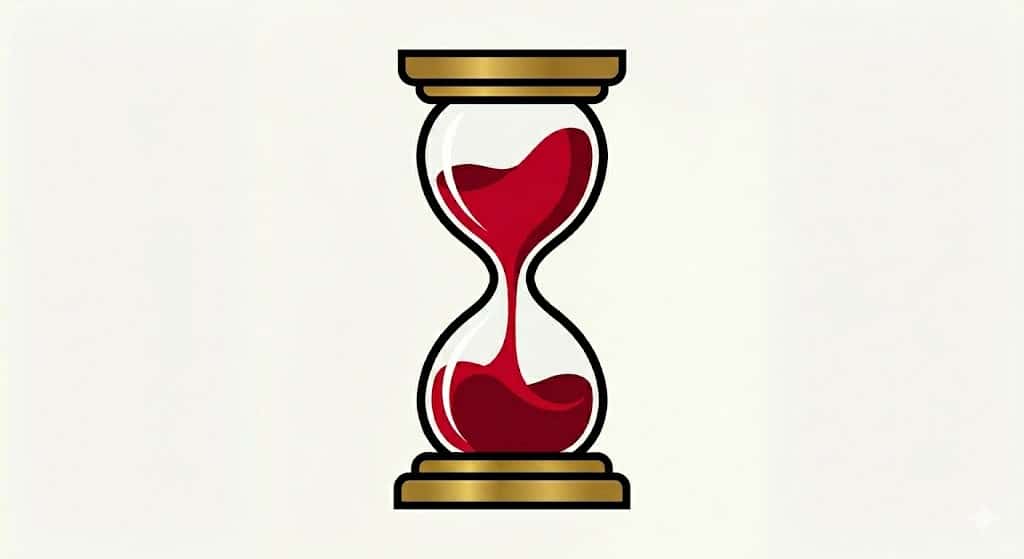
The fine wine market currently resembles a fractured landscape. A lopsided hourglass where the neck is tightening and the sand refuses to flow. On one side, you have the “trophy” tier, where prices for first growth Bordeaux and cult Burgundies have transcended liquid pleasure to become mere alternative investment assets. On the other side, you can see the “supermarket” floor sagging under the weight of over production and razor thin margins.
Some say that to save the soul of the industry, we need a radical recalibration. A world where the “cheap” becomes more expensive to reflect its true viticultural cost, and the “expensive” becomes cheaper to reclaim its identity as a beverage rather than an investment asset.
The myth of the “cheap” bottle
For too long, the consumer has been conditioned to believe that a bottle of wine can, and should, cost less than a fancy sandwich. But if we are honest, when you subtract the glass, the cork, the label, the shipping and the excise tax, what is left for the juice? Often just pennies.
When wine is sold at the bottom of the price bracket, something inevitably suffers. Usually, it is the land and the hands that tend it. To produce wine at a “budget” price point, producers are forced into high-yield industrial farming, heavy chemical intervention, and corrective winemaking further down the line in the cellar.
The true cost of quality
If we allowed the floor price of wine to rise, say moving the entry-point from R120 to R220, we wouldn’t just be paying for a label, we would be paying for environmental stewardship, the potential for regenerative viticulture, fair wages for workers, and the absence of a multitude of “industrial” shortcuts.
By making “cheap” wine more expensive, we encourage a “drink less, drink better” philosophy – a direction of travel the market seems to be moving in regardless. It forces the consumer to view wine as a craft product rather than a commodity, and it allows the small-scale grower in the Languedoc or the Swartland to farm regeneratively without the constant threat if bankruptcy. A balanced market requires a floor that supports life, not just volume.
The burden of luxury
At the opposite end of the spectrum, we face a different crisis – the alienation of the palate. We have now reached a point where the world’s greatest wines are no longer tasted by the people who love them the most. They are traded in bonded warehouses, their provenance verified by auditors rather than sommeliers.
When a bottle of Grand Cru Burgundy hits £2,000 or R45,000, it ceases to be a wine but becomes a “collectable” luxury. This hyper-inflation also has a trickle-down effect that distorts the entire market. It creates an aspirational vacuum where mid-tier producers raise their prices not because their quality has changed or improved, but because that want to signal “luxury” to the investor class.
If we were to see a correction, or a “cheapening” of the top tier, we would also see the return of the true connoisseur. Imagine a world where a bottle of Bordeaux second growth is an indulgence for a special Sunday lunch rather than a line item in a diversified alternative asset portfolio.
Reclaiming the middle ground
The ultimate merit of this price convergence would be the revitalisation of the middle ground. This is where the most exciting winemaking is happening, in the R500 to R1,200 bracket. With more upward pressure, we would see budget wines become more expensive but also move into a more quality-focused space. Correspondingly, downward pressure would inevitably lead to some of the “unicorns” losing their speculative lustre, forcing them to compete on merit and drinkability within a more realistic and affordable price range.
This convergence creates a competitive “Goldilocks zone” where quality is the primary driver of value. In the modern world of fine wine, the product becomes focused on the terroir, the vintage, and the story in the glass. A market where the bottom is lifted and the top is grounded, a market that celebrates the liquid over the ledger. Or is this all just too much social engineering and economic tampering?
The environment and the social mandate
Some say that to engage a new generation of younger drinkers, the wine industry should consider the carbon footprint of “cheap” wine. The logistics of moving low-value, high weight glass bottles around the globe is considered and ecological disaster by many. If the price of entry-level wine increased, it would likely necessitate a shift towards more sustainable packing for everyday drinking, reserving heavier glass for wines that truly require ageing in the cellar.
Furthermore, the social prestige or wine is currently built on a foundation of exclusion. By lowering the ceiling of the most expensive wines, many believe that we would re-democratize excellence, allowing the next generation of wine professionals and enthusiasts to actually calibrate their palates against the benchmarks of the world. A sommelier who has never tasted the “classics” because they are priced out of reach is a sommelier hampered in their craft.
Balancing the market is not about punishing the budget drinker or “robbing” the premium estate owner, it is more about restoring honesty back to fine wine. The merits seem clear enough… sustainability allowing higher prices at the bottom to allow for ethical farming, greater accessibility with lower prices at the top end allowing great wines to return to restaurant and households’ tables, and of course renewed integrity in a market driven by taste rather than speculation – a market “future-proofed” for the next generation of younger drinkers.
In the end, we need to return to the realisation that wine was always produced to be uncorked. It is a fleeting ephemeral pleasure. When we let the prices get too low at the bottom end, we kill the craft; when we let them get too high at the top end, we kill the joy. Perhaps we can access greater engagement from a new generation of drinkers by levelling up the wider industry a bit. Let the cheap be proud and let the expensive be more humble. That might just be a wine industry that looks more appealing to younger drinkers.
- Greg Sherwood was born in Pretoria, South Africa, and as the son of a career diplomat, spent his first 21 years traveling the globe with his parents. With a Business Management and Marketing degree from Webster University, St. Louis, Missouri, USA, Sherwood began his working career as a commodity trader. In 2000, he decided to make more of a long-held interest in wine taking a position at Handford Wines in South Kensington, London, working his way up to the position of Senior Wine Buyer over 22 years. Sherwood currently consults to a number of top fine wine merchants in London while always keeping one eye firmly on the South African wine industry. He qualified as the 303rd Master of Wine in 2007.
-
Share:

Related articles
Opinion & Analysis
Greg Sherwood MW: Can being an unknown wine region be an advantage?
21 October 2026
If I mentioned the French wine region Duché d'Uzès (pronounce dooshay dooz) to any number of seasoned wine trade professionals globally, I am willing to wager a sizable sum that...
Opinion & Analysis
Greg Sherwood MW: The evidence for 2021’s greatness keeps mounting
7 October 2026
In my previous Winemag column, I profiled a wonderful selection of 2021 Cabernet Sauvignons presented in London recently by the Cabernet Collective. Bordeaux-style blends are not normally included in these...
2
Opinion & Analysis
Greg Sherwood MW: 2021 – the Cape’s next great Cab vintage
25 September 2026
If you have been following numerous wine commentators and wine social media accounts of late, you would have found it pretty difficult to miss all the debates comparing the 2015...
keith | 9 May 2026
Agree with your conclusion and the point of your excellent post, but how does one do this ? How do you educate your average oenophile to pay more ? How do you persuade the supermarket that buys cheap wine to pay more ? Guess the main problem is that far too much wine is being produced around the world with the young drinking a lot less than we did !!
As I have mentioned before, I would no longer be an investor in any wine related business, let alone producers.
Andrew Gunn | 9 May 2026
There are many producers whose sole endeavour is to grow grapes and make wine, most do it for the love of it, not the financial return.
Elizabeth | 9 May 2026
keith loves to tell us about his wine investments , any chance he has
keith | 11 May 2026
Well Mullineux, Wine Owners, The Sampler wine merchant and Bid for Wine . Was the founder of Mullineux wine .
Is that enough ?
Cheers
Keith
Greg Sherwood MW | 9 May 2026
Keith, I think market forces will ultimately force change.
Andrew Gunn | 9 May 2026
Great article from Greg Sherwood, this could contribute to demystifying wine, encourage aspirational drinking and get people back to enjoying this wonderful product. Andrew Gunn