
Greg Sherwood MW: Why knowing less wins in the age of AI
By Greg Sherwood, 23 April 2026
-
Share:





4
The modern world is experiencing a profound erosion of the “expert gatekeeper,” a key topic Winemag columnist Michael Fridjhon touched on recently in his insightful article entitled “When the media dies, fine wine becomes just another lab-grown luxury”. For centuries, the pillars of professional and investment authority rested upon individuals, critics, jurists, and brokers, whose singular expertise granted them the power to curate, validate, and set the terms of value.
Today, two disparate worlds, fine wine collecting and the practice of law, find themselves at the same precipice. As the Bordeaux En primeur system struggles to retain a semblance of relevance in an age of data-driven market transparency, the legal profession is undergoing a parallel metamorphosis driven by artificial intelligence. Both fields are discovering that when the information asymmetry that once sustained the expert gatekeeper vanishes, the gatekeeper must either evolve into a high-level strategist or face obsolescence.
The Stagnation of the En primeur System
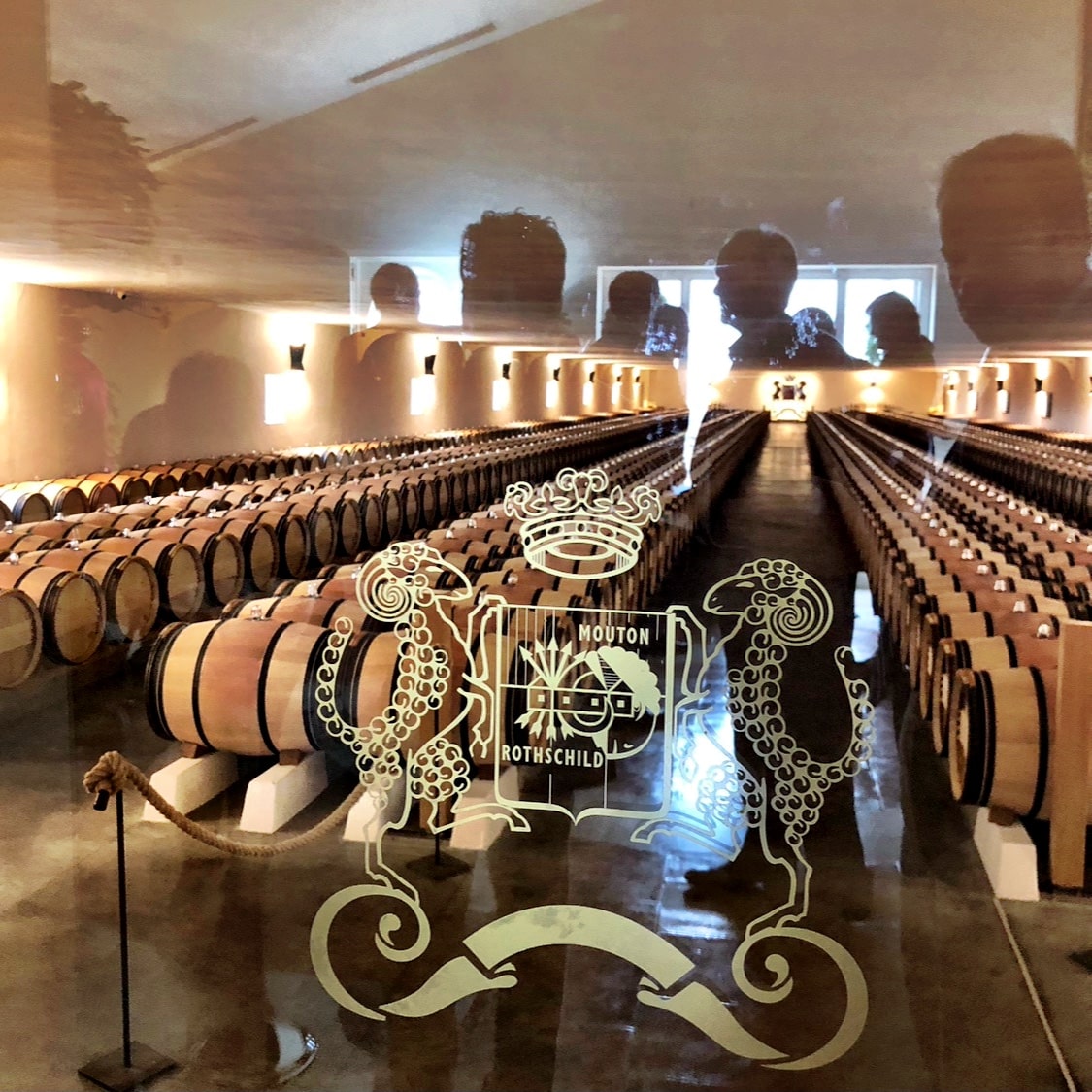
The En primeur system, once the undisputed engine of the Bordeaux wine trade, is a model built entirely on faith. It requires investors to purchase wine while it is still aging in the barrel, months or years before it is bottled. For decades, this system relied on the “critic as king.” If an influential critic awarded a high score to a primeur vintage, the price would climb, and the investment would be validated by the consensus of the elite few.
As of 2026, however, the cracks in this foundation are clearly visible – some would argue they’ve widened into a gaping chasm. The system has suffered from years of volatile pricing, where post-release market values have frequently dipped well below the initial En primeur offer prices. This has shattered the illusion that buying “early” is synonymous with buying “well.”
Collectors are increasingly realizing that the “expert consensus” is often a lagging indicator, easily manipulated by marketing and outdated hierarchies. The rise of sophisticated wine-tracking software and real-time market data has effectively democratized the information that was once the private preserve of the merchant class. In short, the En primeur model is not necessarily dying, but it is being forcibly stripped of its role as an infallible arbiter of value. Fine wine investors now look at indices and Liv-ex algorithmic data rather than the subjective notes of any single critic.
The Legal Parallel: From Repository to Strategist
While the wine world deals with the devaluation of the critic, the legal profession is confronting the automation of the “knowledge worker.” For decades, the value of a junior lawyer was tied to their ability to synthesize vast amounts of precedent, document review, and case law, tasks that were fundamentally highly repetitive and labour intensive. This was the “repository” model of law, where the lawyer’s billable hour was justified by the scarcity of the knowledge they held.
The integration of advanced AI models into legal workflows has fundamentally disrupted this equation. Just as algorithmic data has made the wine critic’s score less essential, generative AI and legal-tech suites have made the junior associate’s manual document review less essential. The 2026 reality is not that lawyers are being “replaced” by machines, but that the nature of their expertise is being divided.
The computational work, or the search for statutes, the indexing of contracts, the discovery process is being automated. Consequently, the value of a lawyer has shifted away from the mere “custodian of information” and toward the “application of strategy.” A lawyer who acts merely as an information conduit will inevitably be outmanoeuvred by an AI-powered firm that can handle the same volume of work in a fraction of the time. The parallel is striking: the legal expert, like the wine critic, is losing the privilege of being the sole source of “truth” in their field.
Transparency and the Death of the “Expert”
What unites these two phenomena is the transition from subjective authority to objective data transparency. In wine, the En primeur system is being tested by the availability of “truth” in the form of raw consumption and pricing data. Consumers no longer need to trust a gatekeeper to tell them if a vintage is worthy; they can track the performance of that specific château against global indices in real-time.
In law, the “black box” of billable hours and opaque legal research is also becoming transparent. Clients, whether they are corporations or individuals, can increasingly see the utility of AI-driven legal outputs. They are demanding efficiency, forcing firms to stop charging for the time it takes to “find” the law, and start charging for the value of the “legal strategy” they devise.
This is a painful transition for both industries. The “gatekeepers,” or the traditional wine merchants and the law firm partners who rely on the leverage of junior staff, view this shift as an existential threat. They are correct, in a sense. The old business models, which thrived on high barriers to entry and information scarcity, are fundamentally incompatible with a world where AI and data analytics make information ubiquitous.
The Future of Value
The demise of the En primeur system is not a cliff edge, but merely an industry structure reaching a natural maturation end point. It signifies a move toward a market that rewards actual quality and transparent data rather than speculative prestige. Similarly, the “replacement” of many lawyer jobs by AI is not a sign of the end of the legal profession, but a shift toward a more efficient, strategic, and high-stakes practice of law.
In both domains, the professionals who survive will be those who stop competing with the machine. A wine collector who relies solely on an algorithm will miss the nuance of the art and craft of fine wine, just as a lawyer who ignores the strategic advice of a highly experienced, seasoned human practitioner will fail to account for the grey areas of human emotion and conflict that AI cannot navigate. The “gatekeeper” of the future is not a person who holds the keys to information, but a partner who helps interpret the data, providing the human judgement that is essential in a world where the facts are always, and instantly, available.
I, for one, will never forget the words of my Standard 9 form teacher at Pretoria Boys High School, Mr Peter Digby. An accomplished academic, teacher, published author and historian, he paused at the end of a lesson one day and said: “Always remember, success in the future will not depend on knowing all the facts. True success will belong to those who instinctively know where to find, and how to access, the information they need to do a job well.”
That was in 1987—long before AI. How right he turned out to be.
- Greg Sherwood was born in Pretoria, South Africa, and as the son of a career diplomat, spent his first 21 years traveling the globe with his parents. With a Business Management and Marketing degree from Webster University, St. Louis, Missouri, USA, Sherwood began his working career as a commodity trader. In 2000, he decided to make more of a long-held interest in wine taking a position at Handford Wines in South Kensington, London, working his way up to the position of Senior Wine Buyer over 22 years. Sherwood currently consults to a number of top fine wine merchants in London while always keeping one eye firmly on the South African wine industry. He qualified as the 303rd Master of Wine in 2007.
-
Share:

Related articles
Opinion & Analysis
Greg Sherwood MW: The evidence for 2021’s greatness keeps mounting
7 October 2026
In my previous Winemag column, I profiled a wonderful selection of 2021 Cabernet Sauvignons presented in London recently by the Cabernet Collective. Bordeaux-style blends are not normally included in these...
2
Opinion & Analysis
Greg Sherwood MW: 2021 – the Cape’s next great Cab vintage
25 September 2026
If you have been following numerous wine commentators and wine social media accounts of late, you would have found it pretty difficult to miss all the debates comparing the 2015...
Opinion & Analysis
Greg Sherwood MW: Why young people are ditching fine wine
9 September 2026
The fine wine market has long consoled itself with a comforting explanation for its generational problem: prices are simply too high, and this keeps younger, less wealthy consumers on the...

Angela Lloyd | 23 April 2026
Very good & timeous article, Greg, with which I agree.
Greg Sherwood | 23 April 2026
Thanks Angela. Its a big topic I feel very strongly about. My only concern is that at the moment, we do have the experienced “humans”, be they wine critics, wine writers or senior lawyers, etc. who can apply the human touch strategy and logic. When many of the junior jobs are made obsolete thanks to AI, how will we train the next generation of “experienced humans” to do the vetting and strategy part when the current generation retires. There will have to be a path for acquiring real experience… but its just that the opportunities will be far fewer for professionals. Decades of knowledge won’t be passed down, so much of it will be lost of course.
Wessel Strydom | 24 April 2026
Thought provoking article Greg
Elsie Pells | 26 April 2026
Excellent and thought provoking article, Greg.