
Michael Fridjhon: The great wine shakeout
By Christian Eedes, 16 September 2026
-
Share:




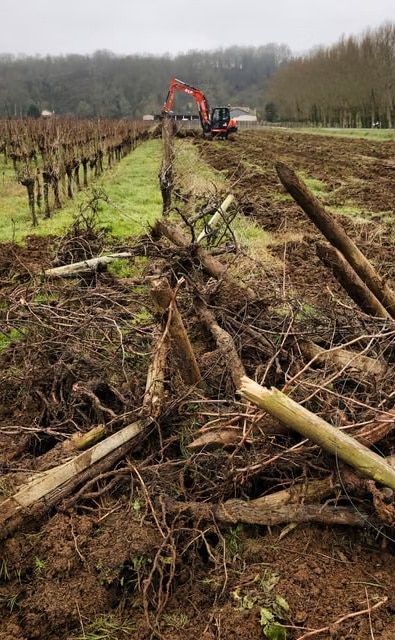
The world of wine is shrinking. Pretty much in every country – with very few exceptions – more vines are being removed than replaced. Less wine is being drunk, and by fewer and fewer regular wine drinkers. The number of people for whom wine is the beverage of choice declines every year, and the generations now reaching that time of their lives where wine is (or should be) affordable are either not consuming alcohol or treating wine as an occasional drink.
Which of the Darwinian survival attributes will best serve growers and producers caught up in this latest shakedown: the best, the best prepared, the best financed, or the most cynical? The “blind watchmaker” – to use Dawkins’s thoughtful term – does not select for what we might consider an optimum outcome. Adaptability delivers a better chance of avoiding extinction, but not the cutest dog in the park. The best funded wineries are more likely to survive a recession than those which produce interesting, challenging wines for which there is no ready market. But this does not mean that mom-and-pop operations are doomed to be the first to go: many pivot more easily, finding other revenue sources, containing costs more easily than a corporate.
Survival of the fittest
How might the world of wine look in five or ten years time if the current rates of attrition continue? At the moment markets worldwide are shrinking year-on-year at between 10%-20% (depending on category, country, stature). When things stabilise the universe of wine will be smaller. With excess plantings taken out of the system, we will have reached a new norm. Some of this has been in process for several decades. Production in France (Bordeaux and the south), for example, has been reducing for years as vine-pull schemes eliminate vineyards for whose fruit there has been less and less demand. In 1990 the total French vineyard was 938,000 hectares. In 2020 this had fallen to under 800,000 (despite increases in some of the more prestigious appellations). California has shed 15% since 2018. The Cape has seen a comparable reduction. So has Italy.
When vineyards are grubbed up, the choice of which must be removed first depends on where they are sited, what markets are affected and what plans growers are able to make to ensure financial survival. Sometimes seemingly useless high-yielding plantings remain because they are managed mechanically and there’s a demand for bulk wine. In that case, it’s the older, potentially more interesting vines that vanish – especially if the growers have no direct connection with the market. This was a pattern in the Cape until the establishment of the Old Vine Project: low yielding bush-vines came with higher farming costs and delivered less fruit per hectare. The same was true in Australia in the 1980s: with the decreasing demand for fortified wines and the declining interest in grenache as a variety, the big vine-pull of that decade saw thousands of hectares of century old vineyards vanish off the face of the earth.
Going forward no single formula will work. Some may choose to stay with high-yielding, low-farming-cost cultivars; others may elect to go the premiumisation route, selling hand-crafted wines to a select customer base. Much depends on their vision of what the world will look like once the dust has settled.
The vineyards that disappear
Consider Burgundy – where it’s easy to predict the new look of the landscape. The vines in prestige appellations (so on the slopes themselves) will last longest. The wines sell for high enough prices to justify the labour costs. In the most generic parts of the region – pinot or chardonnay planted on the alluvial flat lands of the valley of the Saône – the situation will be wholly different. There’s better cheaper chardonnay to be bought from the south of France. Unless there’s a boom in Cremant de Bourgogne (which requires inexpensive fruit from the wider Burgundy region) those vineyards will vanish. The same is true in Bordeaux where Cru Classé chateaux may battle, but they will be better off than estate owners in the Entre-deux-Mers.
In South Africa the situation will be influenced by proximity to the Mother City, and the willingness of the authorities to allow agricultural land to become residential. You just need to drive from Stellenbosch to Somerset West to see how what was once vineyard has become housing estate. But it may also be determined by how the domestic market evolves: will the newcomers to wine (those who discovered its joys in the past five years) stay with brand as their primary purchase impulse, or will they seek more hand-crafted offerings? And – which may be more important – how will our export efforts elsewhere on the African continent evolve? My guess is that the middle ground will give – so that producers who do not (or cannot) appeal to high-end consumers, but cannot reduce their cost base to compete at the entry level, will succumb in greater numbers than at the extremities.
What we do know is that the industry of the 2030s (here and abroad) will look like nothing we could have imagined at the time of the millennium. It will have to be fitter, but it’s not certain that it will better, or more interesting.
- Michael Fridjhon has over thirty-five years’ experience in the liquor industry. He is the founder of Winewizard.co.za and holds various positions including Visiting Professor of Wine Business at the University of Cape Town; founder and director of WineX – the largest consumer wine show in the Southern Hemisphere and chairman of The Trophy Wine Show.
-
Share:

Related articles
Opinion & Analysis
Michael Fridjhon: Wine scores haven’t failed – we’ve debased them
12 August 2026
Christian Eedes’s recent piece on judging, scoring and the role of the critic was a masterly summary of the issues being debated in the admittedly rarefied space where people ponder...

4
Opinion & Analysis
Michael Fridjhon: Fine wine fame is earned one visitor at a time
15 July 2026
Many South African wine producers, especially those who are relatively recent arrivals on the international stage, lament the years of isolation – not just the 1980s as an era, but...
4
Opinion & Analysis
Michael Fridjhon: The Tim Atkin Special Report and the question of independence
10 June 2026
The news, announced recently by Wines of South Africa (WOSA) to its members, that henceforth producers would have to pay to have their wines rated by Tim Atkin MW for...
Comments
0 comment(s)
Please read our Comments Policy here.