Reviews and ratings - only R55 per month.Subscribe
Saurwein new releases
Jessica Saurwein and husband Roland Peens will soon be planting vineyard to be farmed regeneratively on their recently acquired Stanford property but for now, Saurwein continues to make wine from bought-in grapes, her two examples of Pinot Noir from the 2021 vintage recently released. Tasting notes and ratings as follows:
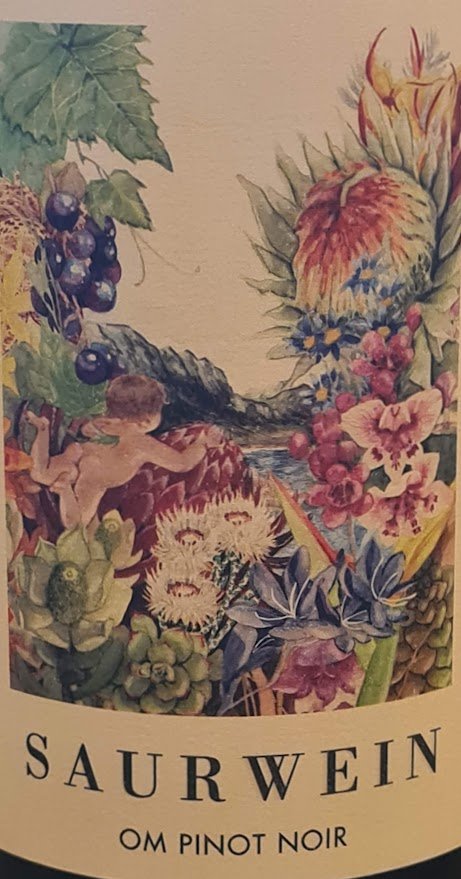
Om Pinot Noir 2021
Price: R460
W.O. Hemel-en-Aarde Ridge. 15% whole-bunch fermentation before being matured for 10 months in French oak, 25% new – winemaking the same for below. Alluring aromatics of red cherry and wild strawberry plus hints of fynbos, cured meat and white pepper. Good fruit expression, well integrated acidity and fine tannins – relatively low in alcohol (13.3%) but not entirely without weight or texture, the finish gently savoury. Understated and slow to reveal itself.
CE’s rating: 94/100.
Nom Pinot Noir 2021
Price: R460
W.O. Elandskloof. Red and black cherry, some flinty reduction and floral perfume on the nose while the palate possesses a great core of fruit, bright acidity and pleasantly firm tannins. More concentrated and forceful than Om but perhaps more obvious, too.
The Chenin Blanc Association (CBA) has a plan to improve the variety’s accessibility and hence grow its popularity with a simple new style indicator that will appear on wine bottles as an icon, either on the back label or as a sticker. The intention is to give Chenin shoppers a straightforward “what you see is what you get” signal.
The style indicator functions as a linear scale icon. It starts with “Fresh” at one end and “Rich” at the other, with “Fruity” positioned right in the middle. An arrow indicates where along the line the wine fits from a taste point of view. The location of the arrow serves as a quick and readily understandable predictor of what the consumer can expect stylistically.
The style indicator, that has been developed in collaboration with the South African Wine & Grape Research Institute at University of Stellenbosch has been approved by the South African Wine Industry and Systems (SAWIS), the body that collates and interprets wine industry information and administers the industry’s Wine of Origin system.
The new icon is being trialled starting with the 2022 vintage by several producers, both large-scale and boutique. Some are linking it to a QR code to provide consumers with the option of additional aroma and flavour information. The hope that ultimately all CBA members will eventually adopt it.
JC and Carolyn Martin of Creation Wines.
Creation in Hemel-en-Aarde Ridge has gained a reputation for being one of the top tourist destinations in the winelands offering elaborate food and wine pairings as well as regular art exhibitions but the dedication to core farming activities should not be overlooked.
The main property now has 40ha under vineyard while the team also tends a further 22ha just outside the ward. Swiss-born owner-winemaker JC Martin, meanwhile, sees leaf-roll virus as the ultimate hindrance to quality and has gone to great lengths to keep plantings virus free since first establishing vineyards in 2002 – Vititec inspects four or five times a year and Creation is in turn a source of clean clonal material to the industry.
Chardonnay and Pinot Noir are increasingly the core focus here, tasting notes for the top-end wines as follows:
Creation The Art of Chardonnay 2020
Price: R920
Grapes from a single block. Matured for 11 months in French oak, 40% new. Citrus plus vanilla and spice on the nose while the palate is rich and round with well-integrated acidity and a nicely dry finish. Many will admire it for its almost perfect consistency, but I do wonder if it is but perhaps destined always to be a little impenetrable.
CE’s rating: 93/100.
Creation The Art of Chardonnay 2021
Not yet released.
Vinification as a above. Pear, peach, citrus and some struck-match reduction on the nose. The palate is impressively precise with pure fruit, a lovely line of acidity and a pithy finish. Dense yet lively at the same time. Moves that much better than the 2020.
CE’s rating: 95/100.
Creation The Art of Pinot Noir 2020
Price: R920
From a 2002 vineyard planted to clone 115. 60% whole-bunch fermentation. Intense musk precedes red and black cherry plus a hint of tea on the nose while the palate has pure fruit and plenty of drive thanks to snappy acidity. The tannins are fine, the finish long and dry. Wonderfully vivid but already quite accessible.
CE’s rating: 93/100.
Creation The Art of Pinot Noir 2021
Not yet released.
80% whole-bunch fermentation. The nose is properly complex with red and black cherry, subtle reduction plus hints of spice, fynbos, musk and Ceylon tea. The palate is relatively lean and energetic – bright acidity and nicely grippy tannins combine to good effect. This has impressive structure, the finish long and savoury. Very striking.
New Assyrtiko plants among the granitic boulders of Tinos in the Greek Cyclades.
Profitability in the wine industry has always been a hot topic and surely none more so than when it comes to planting new vineyards. The old adage of “How do you make a small fortune from growing grapes? Start with a very large fortune…” seems to ring true all around the world, not only in South Africa. With the cost of raw materials as well as skilled labour spiralling ever skyward, it is understandable that the vineyard hectarage in most wine regions around the world is at best static, but more likely shrinking as old, unproductive vineyards are retired or others are simply grubbed up and replaced by fruit orchards or more profitable alternative crops. A stark reality indeed when you consider the longer-term future of the wine industry in say 20- or 30-years’ time.
It certainly becomes very difficult to see past all the doom and gloom when you consider that the cost of planting a hectare of new vineyards is never going to get any cheaper, only more expensive. If by the grace of gods and a generous bank manager, a winemaker or landowner is able to initiate the planting of new vineyards, the calculations that will need to go into evaluating the future profitability of those vineyards must surely seem very daunting when translated into potential cost of wine in bottle. Grape growing and winemaking is seemingly only heading towards a very premium and luxury-priced market space in the future.
It all reminds me of when I was younger and had finished studying my initial qualifications and I informed my parents that I was planning to leave home, move to Cape Town, get a job, rent a flat and get on with my life in the big world out there. My father sat me down and made a long list of unavoidable costs including healthcare insurance, food costs, transportation costs, etc. and then tallied up the amount, enquiring if my guestimated take home pay would cover this sizable figure? Well, guess what. I made the move to Cape Town anyway despite the sums not adding up. This to me is almost an extended metaphor for grape growing and winemaking. More often than not, the sums don’t initially seem to add up or make sense on paper, but people throw caution to the wind and proceed regardless.
“Daring positivity” – some of the new varieties being planted in SA on an experimental basis.
Much of this daring positivity lies in a winemaker’s belief that there is still an opportunity to make something very, very special and unique, that will, in the end, justify the costs and hard work. Of course, this positivity and belief can be seen all over the Cape winelands whether it’s new plantings by the Vilafonté winery in Paarl, new vineyards in the Swartland planted by Eben Sadie, Chenin Blanc and Cabernet Franc plantings in the Polkadraai Hills by Bruwer Raats, crazy white and red field blends by Brookdale in Paarl, or indeed, as I recently learnt, new extreme Syrah vineyards in the Karibib area of Stellenbosch by Duncan Savage. The connecting theme for all these new plantings being not only a devoted passion and vision, but also a belief in modern precision viticulture with the goal of making a next-level quality wine from carefully chosen grape varieties grown on a carefully selected and matched site.
We often joke in the wine trade about why French Burgundy is so individually brilliant and then someone will inevitably point out that the Burgundians have had 900 years of fine tuning to get it right and create individual wines of character and quality from their unique sites that are simply unmatched and impossible to imitate anywhere else in the world. While I am sure there is a hell of a lot more technology, temperature and heat mapping and so on going into planting unique new sites in South Africa than the Burgundians had at their disposal, the focus remains the attempt to create the perfect synergy between vine, climate, soil, aspect and site that will yield exceptional grapes that the winemaker can then fashion into something extra special. The premium price tag on the bottle is a given of course.
One more chance encounter this week in London with a Greek producer revolved exactly around the above questions of new plantings, profitability, long term visions and goals, and the possibility of finding a special site and planting some Assyrtiko vineyards within a stones throw from the sea. But this producer was not talking about planting more vines in Santorini, Paros or Tinos, they were exploring the viability of employing the latest precision viticulture to establish a new vineyard up the West Coast of the Western Cape that would be bathed in the coastal maritime influence of the cold Atlantic Ocean. Tasting the incredible wines of Sakkie Mouton with their unfathomable salinity, tension and minerality using grapes like Chenin Blanc, Colombard and Vermentino, simply begged the question of what might be possible in this region with a well-placed vineyard of Assyrtiko? Quality that could possibly exceed the volcanic excellence of this grape’s place of birth in Santorini? This surely is a dream that deserves to become reality. In the meantime, it will be all eyes on Gary Jordan’s Assyrtiko endeavours in Stellenbosch that are set to come on-stream in the very near future.
Greg Sherwood was born in Pretoria, South Africa, and as the son of a career diplomat, spent his first 21 years travelling the globe with his parents. With a Business Management and Marketing degree from Webster University, St. Louis, Missouri, USA, Sherwood began his working career as a commodity trader. In 2000, he decided to make more of a long-held interest in wine taking a position at Handford Wines in South Kensington, London and is today Senior Wine Buyer. He became a Master of Wine in 2007.
Hannes Storm’s three examples of Pinot Noir from the 2020 vintage are a revelation. He says that they have “enough of everything – both perfume and texture” and they are indeed voluptuous in the very best way. Tasting notes and ratings as follows:
Storm Vrede Pinot Noir 2020 Price: R630 Grapes from a vineyard on clay-rich shale in Hemel-en-Aarde Valley. 15% whole-bunch fermentation, maturation lasting 11 months in French oak, 25% new – winemaking the same for all three vineyards. Seductive aromatics of musk and rose before red cherry, tea and earth. The palate shows pure fruit, fresh acidity and fine-grained tannins. This has depth and weight without sacrificing balance.
CE’s rating: 97/100.
Storm Ignis Pinot Noir 2020 Price: R630 Grapes from a vineyard on stony granite in Upper Hemel-en-Aarde Valley. Wild strawberry, cranberry, rose, an attractive herbal note and white pepper on the nose while the palate shows excellent clarity of fruit, punchy acidity and crunchy tannins. Compact and direct.
CE’s rating: 96/100.
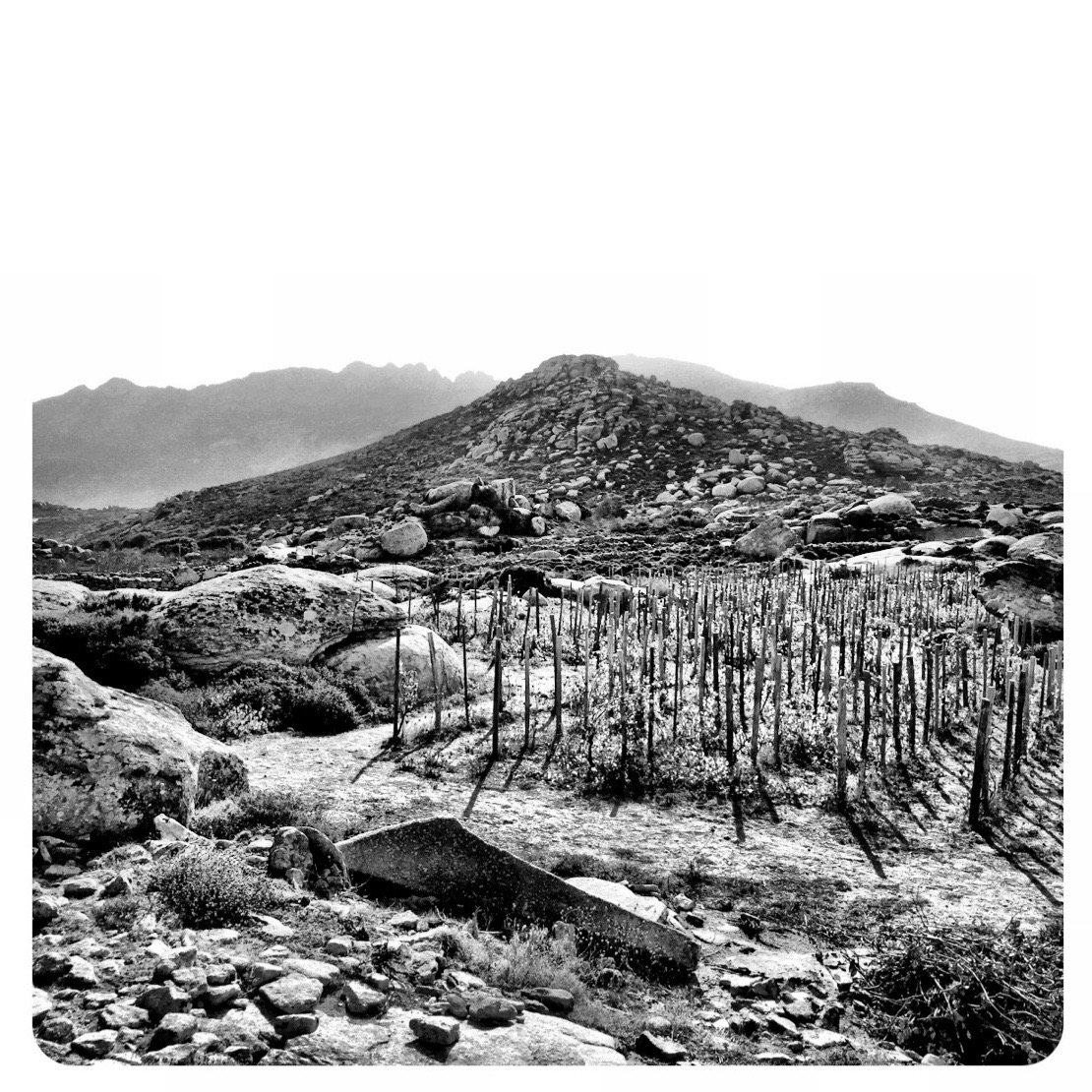
Storm Ridge Pinot Noir 2020 Price: R630 Grapes from a cool and hence later ripening vineyard on low-vigour shale in Hemel-en-Aarde Ridge. Wonderfully complex aromatics of cherry through black fruit pastille as well as cured meat, mushroom and spice. The palate has excellent fruit expression matched by a great line of acidity and tannins that are firm yet simultaneously supple. A truly multi-dimensional wine with layers and layers of flavour.
CE’s rating: 98/100.
Storm Vrede Chardonnay 2021 Price: R630 From Hemel-en-Aarde Valley grapes. Matured for eight months in barrel, 25% new – same for below. Classic aromatics of blossom, citrus, toasted almond and struck match while the palate has impressive depth of fruit without being weighty, bright acidity and a pithy finish.
CE’s rating: 95/100.
Storm Ridge Chardonnay 2021 Price: R630 From Hemel-en-Aarde Ridge grapes. More exotic aromatics with notes of pear, peach, citrus and even a little pineapple plus flinty reduction and some yeasty complexity. The palate is rich and round yet beautifully balanced thanks to tangy acidity. Most engaging.
Vergelegen (this website’s 2021 Winery of the Year) has announced the appointment of Luke O’Cuinneagain as its new winemaker. He will take up his appointment around September this year, following in the footsteps of André van Rensburg (1998-2022) and Martin Meinert (1989-1998).
O’Cuinneagain has been winemaker at Glenelly in Stellenbosch since 2008, and previously worked for Rustenburg for five years. He also gained international experience at Château de Fieuzal and Château Angelus in Bordeaux, Caves Robert Dietrich in Alsace, and Screaming Eagle in California. O’Cuinneagain holds a B.Sc. Agric (Viticulture and Oenology) Honours from University of Stellenbosch and completed a course in finance from UCT Graduate School of Business. A replacement for O’Cuinneagain at Glenelly has not yet been announced.
Jorrie du Plessis of Lammershoek.
The winemaker of Lammershoek, Jorrie du Plessis, and I went scrabbling in the storage space beneath the cellar, hoping to find a bottle that I’d only heard about. It was impossible to stand upright, and Jorrie pointed out to me that we were right beneath the massive weight of the old cement tanks. But, at last, in an unassuming cardboard box we found just one bottle of Lammershoek Varia Barrique 1999.
It’s a significant wine in the modern history of the Paardeberg – the granitic Swartland mountain near Malmesbury (named for the once-abundant zebra species hunted to extinction by the early settlers) that has been for nearly 25 years at the centre of the winemaking that revolutionised the Swartland, and was thus pretty crucial to the whole Cape wine revolution this century.
From about 1998, Spice Route’s young winemaker, Eben Sadie, was exploring the farms on the mountain, looking for good grapes for his new tanks. He was shortly to start making his own wine in an old shed on Lammershoek, and later to buy a small portion of the farm and then build a winery, plant vineyards, expand his holdings etc, etc. I’ll get to the latest Sadie happenings on the Paardeberg in another episode of this visit-report. Back first to Lammershoek, which was, at the end of the 20th century, soon going to be a source of grapes not only for Spice Route and Fairview but also for Sadie Family Wines – and thereafter a number of wineries eager to join in the rediscovery of the Swartland’s potential.
It was a crucial moment in the Paardeberg’s modern history when the Lammershoek estate was bought by Paul and Anna Kretzel, and a partner back home in Germany. The cellar hadn’t been used for ages, and in fact all the grapes grown on the Paardeberg went to co-ops for vinification until a few were diverted to the pioneering Spice Route cellar and the tender mercies of Sadie winemaking. The Kretzels, with a vision of what was possible here, were also determined to change things.
The cellar (it goes back to the mid 1800s) was expanded and renovated, and visiting Austrian winemaker Markus Huber made a number of wines from the 2000 vintage. (Sean Turnbull came in full-time thereafter, succeeded by Albert Ahrens in 2002.) Those 2000s and some 2001s were the first wines featured in Platter’s (2002 edition), and until recently I’d never heard of anything earlier.
But there, in that old cardboard box, was the bottle of Lammershoek Varia Barrique 1999 – the first commercial Paardeberg wine to have been made and bottled on the mountain in modern times. Wine of Origin Coastal Region, unfortunately, rather than Swartland, but still. It was, however, an impeccably authentic forerunner of what was to become established as the typical “Swartland blend”: 75% shiraz, 20% carignan, 5% pinotage, with a declared 14% alcohol.
Since then, Lammershoek has been quite unlucky – with some of the bad luck being, arguably, ownership mistakes. It’s not the time to re-tell the story of instability in winemaking and viticulture. I mentioned some of it in an article last year, which celebrated how things have in recent years been looking extremely promising again, with a newly consolidated ownership and a fine winemaking and viticultural team. Owners Andreas and Sonja Abold poured capital and passion into the project – not the least notable of their efforts was a major upliftment in the condition of the workers’ housing on the farm. There have been excellent wines once again emerging from the cellar.
Bad luck continues, sadly. The Abolds have been obliged for personal reasons to seek a buyer for Lammershoek. Hopefully this will shortly be successful, and the depleted staff complement can be rebuilt. At present, Jorrie du Plessis, who took the cellarmaster slot after having been winemaker, is in charge of just about everything on the farm, from vineyards to winemaking to marketing.
I tasted a few of the current wines with Jorrie. The whole range is interesting at least and first-class at best, with the Chenin Blanc Reserve and Blanc blend particularly fine. But Die Harde Blaar in the Mysteries range is particularly fascinating. It’s made from hárslevelű, the Hungarian grape that’s very rare in South Africa. It’s always made a fine wine at Lammershoek – whether as as a Straw Wine in the earliest years, as an ultra-light “natural” wine in the hands of Craig Hawkins, or as in this fresh, still-light but substantial version (a little skin contact adding some impression of weight).
Jorrie in fact added some hárslevelű to the chenin blanc that dominates his Mysteries Straw Wine, when he revived this tradition in 2020. It’s a gorgeous, intense wine, in 500 ml bottles, fresh, with just 180 g/l of sugar; a little sultana, more marmalade and citric freshness. Another comparative rarity is Die Ou Man, also in the Mysteries range, made from 1969-planted tinta barocca. They’re about to move on to the 2017 vintage, and that’s worth looking out for, as there’s more fruit depth, I felt, than in the 2016, to accompany the strength of tannin that is expected from the variety. It’s a touch formidable, but entirely delicious.
As for Varia Barrique 1999, we didn’t broach that unique bottle, of course. After Jorrie posed with it for me in the winter sunshine it went back, I imagine, to its dark cellar – though, I trust, now more respectfully placed than in that tatty cardboard box.
Tim James is one of South Africa’s leading wine commentators, contributing to various local and international wine publications. He is a taster (and associate editor) for Platter’s. His book Wines of South Africa – Tradition and Revolution appeared in 2013.
A key feature of the Swartland red blend that is Black Rock from Radford Dale is that the constituent varieties are co-fermented. During the drought vintages of 2016, 2017 and 2018, the wine was Cinsault driven but 2019 sees Syrah to the fore at 60% combined with 17% Cinsault, 10% Mourvèdre, 8% Carignan and 5% Grenache.
Aromatics are wild with pronounced notes of fynbos, meat and spice to go with red and black berries while the palate shows dense fruit, bright acidity and fine tannins, the finish super-savoury. Lots of rugged flavour. Price: R350 a bottle.
The red blend that is Roodeberg from KWV was, at one point, steeped in mystique as colleague Joanne Gibson relates here. How do older vintages hold up? At the tasting as part of preparations for the Distell Tabernacle Heritage Sale to be run by auction house Strauss & Co on Sunday, 10 July, the 1974 was one of the highlights.
Expressive aromatics of red and black berries, fynbos, flowers, some meatiness, spice and just a hint of malt. The palate is intense but not weighty, the fruit still quite dense although there’s no shortage of freshness, the tannins fine-grained and pleasantly mellow. Lots of detail.
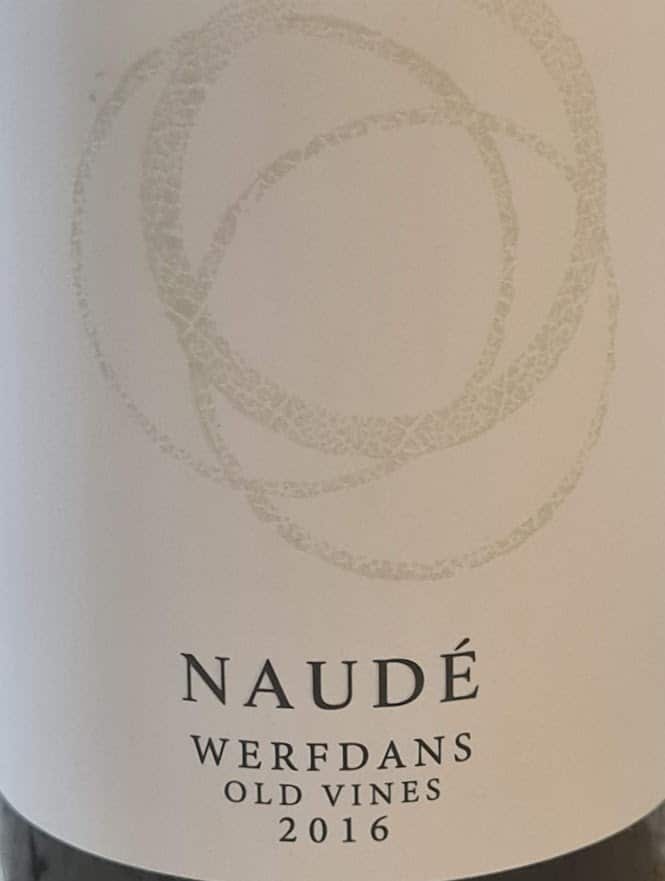
The Werfdans Old Vines Cinsault 2016 is astonishingly good – this variety often makes quite modest wines but winemaker Ian Naudé has managed an unusual amount of complexity in this rendition.
Grapes from a 1978 vineyard near Darling, winemaking involved a combination of whole bunch, destemmed grapes and stalks being put into a stainless-steel tank to ferment spontaneously be transfer to older oak for approximately 12 months of maturation.
The nose shows top notes of musk and rose before cranberry, strawberry, cured meat and spice while the palate has great fruit concentration, snappy acidity and tannins that while fine, still impart some grip. It’s a wine of weight, roundness and texture without being at all dull or listless. Price: R345 a bottle.

 Om Pinot Noir 2021
 The Chenin Blanc Association (CBA) has a plan to improve the variety’s accessibility and hence grow its popularity with a simple new style indicator that will appear on wine bottles as an icon, either on the back label or as a sticker. The intention is to give Chenin shoppers a straightforward “what you see is what you get” signal.

 Storm Ridge Pinot Noir 2020

 A key feature of the Swartland red blend that is Black Rock from Radford Dale is that the constituent varieties are co-fermented. During the drought vintages of 2016, 2017 and 2018, the wine was Cinsault driven but 2019 sees Syrah to the fore at 60% combined with 17% Cinsault, 10% Mourvèdre, 8% Carignan and 5% Grenache.
 The red blend that is Roodeberg from KWV was, at one point, steeped in mystique as colleague Joanne Gibson relates
  The Werfdans Old Vines Cinsault 2016 is astonishingly good – this variety often makes quite modest wines but winemaker Ian Naudé has managed an unusual amount of complexity in this rendition.