
Dr Justus Apffelstaedt: Wine and the gut
By Justus Apffelstaedt, 19 March 2026
-
Share:





1
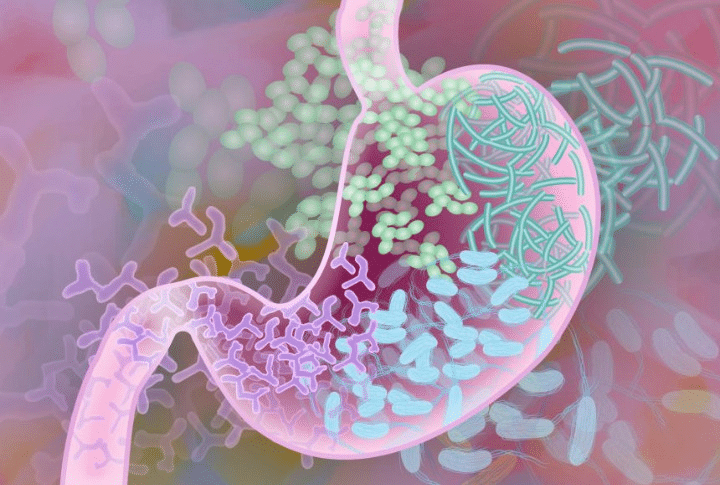
Lately, a significant shift has been gathering momentum in medicine. We are coming to understand that the human body is not a sterile environment, but a complex web of interrelated biological systems – much like plants, including vines.
In viticulture the term “rhizoshere” describes all the environment around fine roots and the interaction of vines with the soil in which they have been planted, including bacteria, archaea and fungi. For example, fungi break down rocks and supply vines with important minerals and receive in return carbohydrates for energy. Therefore, the concept of a “holobiont”, an organism with all things growing in it or on it has taken root (apologies for the pun). A vine therefore could be described as “vine holobiont”.
For us “human holobionts”, an intact internal microbiological environment is necessary for good health. Whereas the vine has got roots and their environment to feed it and supply it with essential nutrients, we have a gut for the same purpose. Our gut is colonised by a myriad of organisms who most of the time cohabit happily with us.
Anybody who ever had a bout of food poisoning will appreciate how important it is to keep the right bacteria, fungi and what else grows down there happy for our well-being.
But it is not limited to acute diseases; we now understand that the gut microbiology may influence as diverse aspects of health as mental well-being in the form of depression, inflammatory diseases like rheumatoid diseases, diabetes and even obesity.
Obviously, the question arises of how we keep the microorganisms in our gut happy. Interestingly, several studies have confirmed, that regular consumption of especially red wine promotes a very diverse gut microbiology. A diverse gut microbiology is good for you, especially if it contains a lot of health promoting bacteria with such exciting names as Prevotella, Eggerthella lenta, Blautia coccoides and Eubacterium rectale.
This is in contrast to a diet consisting mostly of processed and ultra-processed foods and without wine which promotes a uniform, unhealthy gut flora. The unhealthy gut flora then promotes obesity, inflammatory diseases and even cancer.
How does wine help maintain a healthy gut flora? The exact mechanisms have not yet been described, but: Changing a diet without wine to one containing moderate volumes of wine changed the bowel microbiology towards a beneficial profile in persons with metabolic syndrome, a nowadays common cluster of conditions with as hallmarks obesity, high blood pressure, high blood sugar, cholesterol and lipid profile abnormalities that predisposes sufferers to among others, heart attacks, strokes and full-blown diabetes.
As an aside, promotion of a healthy gut microbiology is also thought to be a consequence of following the mediterranean diet. Outside of promoting a healthy microbiology in the gut, wine also enhances the resistance of the surface cells of the gut to invasion by disease-causing microorganisms. This is an important effect in a world where infections with anti-biotic resistant bacteria are becoming increasingly common.
The importance of a healthy gut microbiology is further underlined by the advent of faecal transplants as treatment of, for example, inflammatory bowel diseases. A couple of years ago, these arrived in South Africa in a private hospital in the Northern Suburbs of Cape Town, so it is over here already. This may be a remedy for serious cases, but the indications are expanding. Trials are investigating these transplants for such diverse conditions as multiple sclerosis, autism and irritable bowel syndrome. I, for one, however, rather prefer to keep my gut bacteria happy in the first place by feeding them and – altruism has its advantages – obviously myself a glass of good red wine. Cheers to that!
On a personal note: This column brings to an end my tenure as health writer for Winemag. I thank Christian Eedes for giving me the opportunity to promote a more balanced view of wine from a health perspective. Above all, however, I thank you for reading my columns; I was surprised at the very positive reactions I encountered many a time when I met you in person and am deeply grateful for it. See you at a wine event!
- Dr. Justus Apffelstaedt is a specialist in breast and thyroid health, leading Apffelstaedt & Associates in Cape Town and Windhoek. A surgeon with a specific interest in surgical oncology and researcher, he was Associate Professor of Surgery at Stellenbosch University (1994–2017) and Head of Surgical Oncology, managing 1,000-plus cancer cases annually. He has more than 50 publications, shaped South Africa’s breast cancer screening policy, and co-founded Breast Surgery International. A sought-after speaker, he has given over 100 international lectures. He also holds an MBA and a Diploma in Wine. Through Apffelstaedt & Associates, he continues to advance specialized, patient-centered care in Southern Africa.
-
Share:

Related articles
Opinion & Analysis
Dr Justus Apffelstaedt: Wine and sex
13 February 2026
It is the month of “love” and what could be more appropriate than to remember Salt-N-Pepa, the first successful female rap act and their 1990 hit single “Let’s talk about...
Opinion & Analysis
Dr Justus Apffelstaedt: WHO alarmism, alcohol science and the lamppost problem
22 January 2026
In 2018, a much-quoted research paper on alcohol burden appeared in one of the most influential medical journals, The Lancet. It formed the basis of the WHO’s rather alarmist statement...
3
Opinion & Analysis
Dr Justus Apffelstaedt: Wine and sulfur headaches – debunking the myth
20 November 2025
On a recent international trip, I found myself seated next to a lady who insisted that white wine due to its sulfur content gives her severe headaches. I must admit,...

Kwispedoor | 19 March 2026
I, for one, am disappointed that you will not be writing these anymore, dr. Apffelstaedt. Hopefully, Winemag will ask you to still contribute as fresh and interesting info becomes available? Even if it’s not on a regular basis. Thank you for your excellent articles!