
Editorial: Confessions of a middle-aged gummy eater
By Christian Eedes, 5 May 2026
-
Share:





7
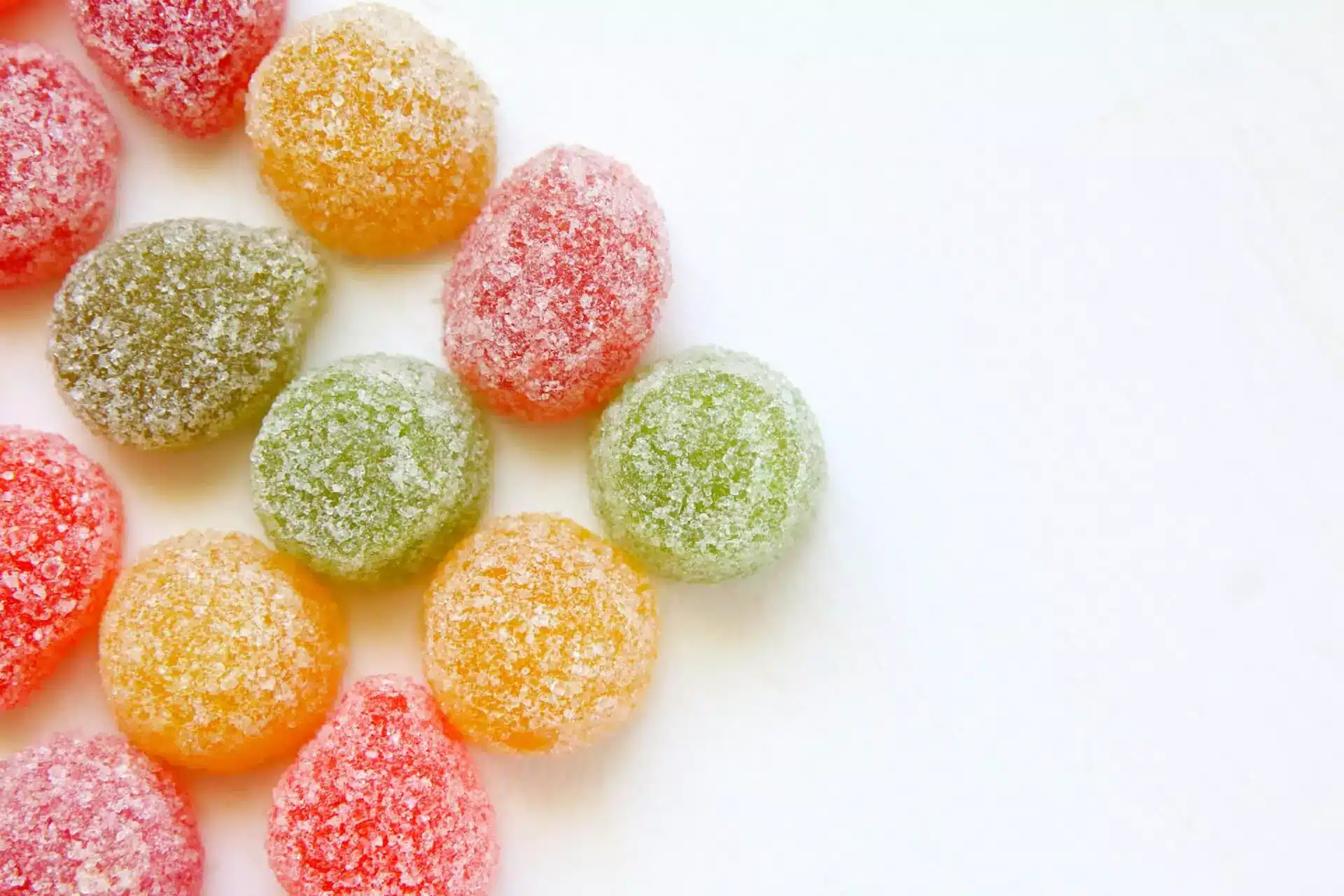
My relationship with the commodities of sin is longstanding, though perhaps less lurid than the phrase suggests. As a Stellenbosch University student in the early 1990s, beer and wine featured prominently (brandy and Coke always a bridge too far) and while reading Nietzsche in my Honours year of philosophy, a joint or three offered respite more than anything else.
From academicia to advertising. My first job, mid-1990s, was as a junior copywriter at the gloriously overnamed Ogilvy & Mather Rightford Searle-Tripp & Makin (now merely Ogilvy South Africa). The agency had the Carling Black Label account, and the office bar was open Monday to Friday. Controlled substances weren’t that controlled, either…
Right now, step-up wines, beyond entry-level without perhaps being quite yet very fine, in South Africa exists in an awkward space: too expensive for everyday, too everyday to be fully exclusive. The tension for those of us who love the stuff, who consider it both a default wind-down and a daily pleasure, is that it’s increasingly out of reach. A cost-of-living crisis is no longer a headline idea; it is the background hum of how people shop, eat and, increasingly, drink. And wine – never the cheapest form of alcohol in any normal market context – must justify itself more aggressively than ever before.
There is a temptation in the industry to reach for familiar refrains: “trade up,” “drink less but better,” “value still exists if you know where to look.” All of that is partly true. But it assumes a level of discretionary spending many consumers simply don’t have right now. A bottle of wine is no longer just competing with other bottles of wine; it is competing with the rest of the week’s budget.
And yet, people still want – perhaps need – that small, reliable something to take the edge off the day. Not extravagance, not even indulgence, just something that takes the sting out of the ordinary. The problem is that wine, at its current price points, is in danger of drifting out of that everyday territory and into something more occasional, more considered, and therefore more easily, or unavoidably, forgone.
At the lower end of the market – let’s say sub R200 retail – things get particularly tricky. There is plenty of wine available, of course, but the experience of navigating it has become increasingly fraught. The shelves are full, but signal-to-noise is poor. Label design, imported bulk wines, shifting brands, supermarket exclusives, discounting cycles – it can feel less like curation and more like guesswork. For a consumer who just wants something decent to drink with dinner, the cognitive load is high. This is where wine risks losing people not through price alone, but through fatigue.
Ideally, the sub R200 category should be the entry point into wine culture: the place where curiosity is encouraged, where quality surprises are possible, where a consumer can begin to form preferences. Does it still exist? If so, it’s less coherent than it once was. Inflation, input costs, and a generally more export-oriented industry have squeezed the middle. Producers either push up in price if they can or lean into volume at the expense of identity.
The result is an inevitable bifurcation: excellent wines at higher price points, and an increasingly noisy lower tier that demands more effort from the consumer than it ought to. And, frankly, why should consumers at this level of the market be expected to commit that amount of energy?
The point is that wine is not only competing with other drink – it is competing with other forms of relaxation and escapism. It would be naïve not to acknowledge the rise in accessibility and social normalisation of cannabis. Whatever one’s personal stance, it is undeniably an alternative intoxicant that is often cheaper per session, more predictable in effect, and far simpler to access. A bottle of wine carries not just cost, but decision-making: what style, what producer, what occasion, what food pairing.
Go to a cannabis shop, if you haven’t recently, and staff are delighted to welcome you, keen to share their knowledge, don’t try to upsell you unnecessarily, and basically you end up being a very happy punter inclined to make a repeat purchase.
This is not an argument that wine should try to compete on those terms. It cannot and should not. But it does mean wine has to be clearer about what it offers in return.
The obvious answer is quality. But “quality” is not a self-evident thing to most consumers – it has to be experienced, not asserted. And that experience is increasingly front-loaded into higher price tiers, where winemaking tends to be more precise, vineyard selection tighter, and stylistic intent clearer.
Which brings us back to affordability. It is still possible to find good wine under R200, but it requires more knowledge than it should. You need to know which producers are consistently reliable at scale, which supermarket ranges are genuinely curated rather than opportunistic, and which imports are worth the gamble. Without that knowledge, the category becomes a lottery. And lotteries are not great for repeat behaviour.
Wine has become more intellectually interesting at the top end, and more commercially confusing at the bottom end. That is not a sustainable shape if the industry is concerned about long-term consumption.
There is also a generational element. Many younger drinkers, already under financial pressure, are less invested in the traditional narratives of wine – vintage, ageing potential, provenance as status. They are more interested in immediacy, drinkability, and context. That aligns, in some ways, with the rise of lighter, fresher styles across both red and white wine. But it does not automatically translate into willingness to pay more for those wines.
So the industry finds itself in a contradictory position: celebrating accessibility in style while struggling with accessibility in price.
There is no easy resolution to this. Margins are real. Farming costs are real. The rand is what it is. But it raises a broader question of positioning. If wine wants to remain part of everyday life, it cannot rely solely on aspiration. It needs clarity at entry level – wines that are not only affordable, but intelligible.
The risk, then, is not outright substitution but gradual drift. When wine becomes both effortful and uncertain – too expensive to default to, too confusing to navigate reliably – people begin reaching for alternatives that are simpler, more predictable and better aligned with constrained budgets. Not a dramatic switch, but an erosion of habit.
Wine has always survived cycles of change by offering something more complex than its competitors. But complexity only works if it still feels worth the effort.
And that is the real test of the current moment: not whether wine can maintain its prestige, but whether it can remain relatable in a world where both money and attention are under pressure.
-
Share:

Jack | 5 May 2026
Ek lees altyd met groot belangstelling u redakteurartikels.
In u jongste artikel hierbo het ek met groot verbasing en skok u verwysing na die gebruik van dagga teenoor wyn gelees. Ek moes dit weer lees om seker te maak dat wat ek sien nie ‘n drogbeeld is nie.
Wyn is ‘n edel vog en om dit met ‘n dwelm te vergelyk is nie net vergesog nie maar onverantwoordelik. Dit is wetenskaplik bewys dat daggagebruik ‘n wesenlike gevaar inhou vir breinontwikkeling en funksionering.
U verwysing na prys is beslis ‘n faktor wat die industrie kennis van moet neem maar wyn sal ek koop solank ek nog hier op moederaarde rondwandel.
Dankie vir baie goeie artikels.
Groetnis.
Edi | 5 May 2026
I’m not sure if every “sting out of the ordinary” has an annual price increase every March, but it’d be interesting to find out.
Julian Wannell | 6 May 2026
Such a well written piece, thank you.
I think the premise of the article is true for some, not all.
Modern winemakers and marketers are (at least partly) responsible for making their products appealing, more accessible to a younger generation and delivering value. I believe that many do exactly that, but they are competing with ubiquitous health advisory which constantly attacks the practice of consuming any alcohol at all.
Luckily the Cape Winelands is saturated in wine culture, but outside of that part of the country, I would guess that recognisable brands with wide distribution assume greater importance.
As with many things, education is important and I wonder how many South Africans are – or even really care to be – educated about wine. South Africa has been ascendant in the top 10 global wine producers and is increasingly known for innovation, consistency and quality – but how much of this success is filtering down into the consciousness of the drinking public?
Maybe the powers that be (in the local wine industry) should appoint a wine czar to oversee the inculcation of wine in all its glory and mysterious allure, to ensure that successive generations learn to love it and explore it.
Christian Eedes | 6 May 2026
A footnote of sorts: I had lunch at Glenelly today, where the inimitable Christophe Dehosse reminded me that one of my first casual jobs was as a wine steward, back when he ran Au Jardin at the Vineyard Hotel in the early 1990s. It meant, on occasion, duck confit for staff meals before service and, more reliably, finishing whatever patrons left in their bottles afterwards.
Wine, after all, demands a kind of initiation – its values not merely learned, but absorbed.
Caroline Rillema | 8 May 2026
Another excellent article Christian.
I agree with Julian about wine education. I am part of an era during which everybody in the industry partook in the SFW and KWV Wine Courses and it was wonderful to learn everything from the roots up! I started a four-module “how to taste wine” course this month in my shop, and the twenty spaces filled up in days. That with customers who have been shopping here for years. I could see the genuine excitement which came with enlightenment in their faces. This can only lead to them loving (and buying) wine so much more from now on.
Roy Bridge | 8 May 2026
Some real home truths, Christian. You expressed the dilemma well Indeed, one of my great pleasures is finding wine well under R200 that are drinkable and complex. A great recent example was the excellent Le Bonheur 2021 blend. At just over R120 it blew the socks off many of the marques that inhabit the price stratosphere!
Sheldon Morais | 9 May 2026
I love reading the editorials on WineMag; it’s one of the few public spaces genuinely grappling with the evolution of wine, the wine market and consumer behaviour.
The existential wrestling the wine industry faces the world over is, to my mind, directly analogous to what the journalism world is navigating. I’ve witnessed that reckoning first-hand. In both cases, the instinctive reaction from many within the industry has been to double down on what they regard as sacred to the institution — whether that’s wine or journalism. Very few insiders truly design their solutions from the consumer’s perspective first.
I would argue that wine must compete on precisely the terms you describe from the cannabis shop, Christian: welcoming consumers, making them feel assisted if they need it, sending them away happy, and perhaps a little more knowledgeable.
Just last week, I came across a group of three young Black women at a popular Johannesburg bar. My impression was that they were open to trying something different, but their conversation opened with how pretentious wine culture felt. One even remarked that swirling one’s glass was part of that pretentiousness. I took a moment to explain (not lecture) why swirling matters when savouring wine, while acknowledging that the gesture can indeed look affected when overdone. They asked about glassware, holding glasses by the stem and more. Hopefully, they no longer felt intimidated by the world of wine.
For as long as we fail to welcome young, Black, and inland consumers into wine culture — warmly, at their level, and in languages they understand — wine consumption will continue to decline.
Wine is not the only industry battling economic and health headwinds, but it is one of the few where the response from within tends toward either hand-wringing or defensiveness.
Complexity and elitism are not the attributes that will attract the next generation of wine drinkers. In the same way they are not the attributes which will save journalism.