
Editorial: Inside the hidden politics of wine scores
By Christian Eedes, 28 October 2025
-
Share:





24
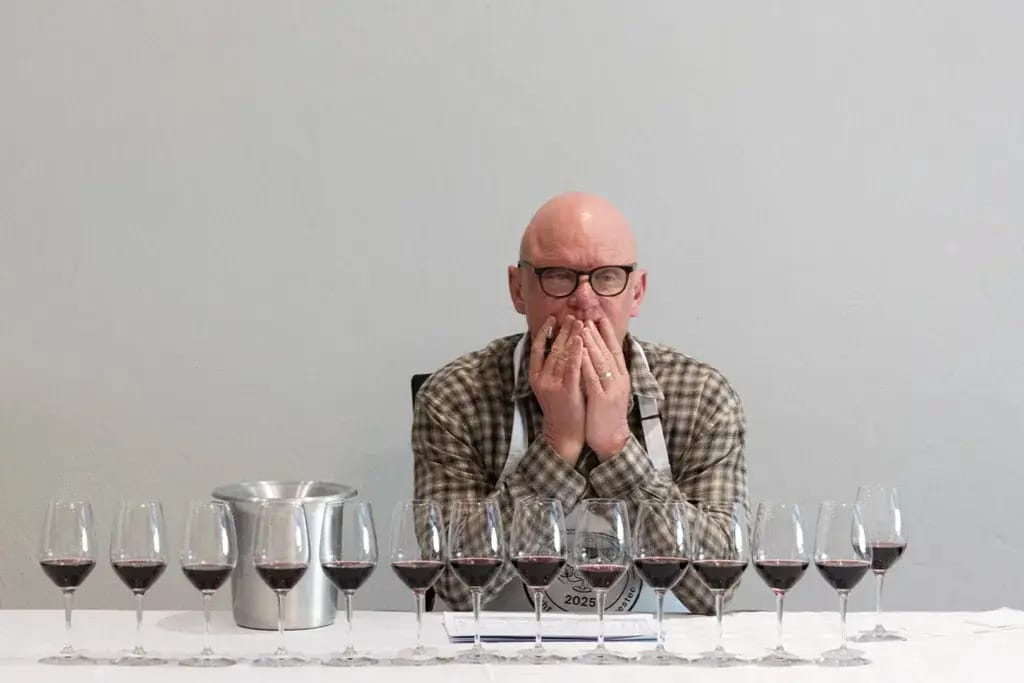
Wine criticism long ago became more than tasting notes and scores – it is a lens through which the industry, its makers, and its consumers understand quality. In South Africa, platforms like Winemag.co.za, alongside Platter’s, Tim Atkin, and voices such as Michael Fridjhon, do more than rate wine. They define expectations, set benchmarks, and, often unintentionally, influence how producers think about their craft. Every score, every descriptive note, carries authority; it tells the market, and even the winemaker, what counts as good or noteworthy. Yet with that authority comes subtle consequences: the critics do not merely report on wine – they create the framework by which excellence is measured.
This authority sets up a complex competition for influence. Each publication and critic stakes a claim on taste, style, and prestige. Platter’s, long regarded as the institutional reference, carries the weight of tradition; Tim Atkin brings international perspective; Michael Fridjhon provides insider insight and credibility through enduring presence; Winemag.co.za positions itself as a contemporary, accessible voice, blending critical authority with narrative depth.
The tension between them – sometimes cooperative, sometimes competitive – shapes perception and signals to producers what matters and where influence lies. A Cabernet Sauvignon or Chenin Blanc does not exist in isolation; its reputation is partly determined by how it navigates this ecosystem of evaluation. And yet, one could argue, the system itself is performative: producers, aware of these power dynamics, may engage strategically. KWV, a top achiever at the Veritas Awards, submits selectively, while many prominent producers now bypass blind tastings entirely. Influence, in other words, is both wielded and negotiated.
The effect of this dynamic is subtle but powerful. Wines praised by one voice can rise in prominence, while others, no less accomplished, may struggle for attention. In this sense, criticism risks ossifying taste. The drive toward consensus, technical precision, and recognisable typicity can inadvertently stifle innovation, favouring wines that conform rather than challenge. And yet, the best reviews illuminate nuance and encourage dialogue. They reward both precision and authenticity, highlighting wines that are technically accomplished, as well as expressive, and hopefully capable of enduring scrutiny. The finest coverage does not simply declare a winner; it contextualises, offering readers insight into how wines relate to terroir, vintage, and stylistic ambition.
At the same time, language itself is slippery. When a critic describes a wine as “pure” or “balanced,” the term only makes sense in contrast to wines deemed excessive, rustic, or overripe. Every accolade implicitly establishes its opposite. Words, scores, and rankings carry traces of what they exclude. In that sense, criticism is never neutral; it is always constructed, contingent, and layered with subtle hierarchies. Readers and producers alike should remain conscious of this. The discourse is not simply a mirror of the industry – it is a map, shaping expectations while leaving gaps where alternative styles and voices may flourish.
Take the most charitable view, and these voices – Winemag.co.za, Platter’s, Atkin, Fridjhon – function as both mirrors AND maps. They reflect South African wine’s current state while guiding readers through its terrain. Their influence shapes perception, production, and even ambition, yet it also creates space for debate, challenge, and innovation. For readers, the message is simple: approach wine with curiosity, not conformity. Let scores and reviews guide, but do not let them dictate. For winemakers, the lesson is equally clear: craft wine with integrity, vision, and authenticity. Recognition may follow, but the wine itself must first be compelling on its own terms.
In South Africa’s wine landscape, authority, competition, and creativity coexist uneasily but productively. The subtle power struggle between Winemag, Platter’s, Atkin, and Fridjhon underscores how influence shapes expectation and opportunity, while reminding us that taste is always negotiated, never absolute. And in the end, that is precisely what makes the world of wine endlessly fascinating: it is a dialogue between land, maker, critic, and reader, each contributing to the ongoing, unruly, and endlessly rewarding story of taste.
-
Share:
Related articles
Reviews
Grangehurst CWG Cabernet Sauvignon Reserve 2000
8 January 2026
Want access to this content? Reviews and Reports are initially reserved for subscribers. Get immediate access to exclusive insights and data. SUBSCRIBE NOW Already subscribed? Login
1
Reviews
Capensis Silene Cabernet Sauvignon 2023
7 January 2026
Want access to this content? Reviews and Reports are initially reserved for subscribers. Get immediate access to exclusive insights and data. SUBSCRIBE NOW Already subscribed? Login
Opinion & Analysis
Editorial: Thinking about SA wine’s next decade
5 January 2026
Happy New Year. In 2036, ten years from now, I will turn 65. By then, I hope to be stepping aside rather than stepping down, less bound by day-to-day obligations,...
Mike Froud of Top Wine SA | 28 October 2025
Interesting that you make no mention of critics Neal Martin and Greg Sherwood MW, nor any of the competitions you judge at besides those of Winemag, Christian?
Gregory | 28 October 2025
Mike Mountain of a Molehill SA
Vernon | 28 October 2025
What Winemag, Platter’s, Tim Atkin and Michael Fridjhon have in common is that they all produce dedicated SA reports and/or shows. Isn’t the photo at the top of the article from an event organised by Michael Fridjhon? And surely everyone knows of Winewizard without Christian having to spell that out … nothing wrong in not giving the competion a plug.
So, no, Mike, I don’t feel Christian’s choice of who & what he references is arbitrary, overly narrow or restrictive.
keith | 28 October 2025
Frankly, the only two international based wine critics who have any real credibility, are Neal Martin and Greg Sherwood .
James | 28 October 2025
Keith, im interested to know what your gripe is with Tim Atkin?
Michael Fridjhon | 29 October 2025
A timely article Christian and one which will hopefully provoke thoughtful and constructive debate.
Every critic has a standpoint, an aesthetic vision, and as long as it is honestly applied and evident/disclosed, it’s up to those who rely on the guidance to reach their own conclusions about utility.
My position is well known and clear: I only score wines blind. In other words I regard my responsibility to those who follow my scores as one of complete independence – from the producer, the origin, and the brand message. The same rule applies to the scores of the Trophy Wine Show: they are all blind, all unmediated by extraneous information. Insofar as the aesthetics which inform my judgements is concerned, these are also a matter of public record – and I take responsibility for them too, and for their dissemination since they are made explicit to the Trophy Wine Show judges, and to the students attending the wine judging academy. I prefer to reward wines which are refined, subtle, nuanced, detailed, persistent. But this does not automatically exclude the massive and showy, providing they are harmonious, balanced, integrated. I would like to believe that a wine as brilliantly constructed as say Penfolds Grange would get a gold alongside a Chave Hermitage. Producers who make wines like this should have no anxiety about submitting them to this kind of judging environment. By the same token producers of wines which are flimsy and a little insubstantial should not hope for a gold simply because they are also subtle.
Finally, a point about scores: critics and competitions which prioritise revenue above the long term interests of the industry (and their own credibility) have been driving score inflation for years. Twenty years ago 90 points from Robert Parker ensured a wine’s commercial success. Nowadays, and especially in South Africa, less than 95 doesn’t shift the dial. Producers naturally gravitate to the higher scoring environment. They do themselves and their brands a disservice – because what they are looking for is a sales tool rather than honest feedback. Score inflation is the wine industry’s equivalent of the South African matric system, and as any job-seeker with a bachelor degree pass will tell you, it has about the same value as a Mugabe-era Zim dollar.
Josua | 29 October 2025
The main issue I have with blind tasting, at events like the Trophy Wine Show, is that is strips the wine of it’s context. Sure, removing producer bias is good, but you are also removing invaluable information that informs the intention of the producer, as well as external factors like vintage. Where blind tastings shine is where you have sufficient controls in place to eliminate the need for that context, like all wines are from the same/similar vintages or similar producers.
Some producers often get shade thrown at them for not being willing to submit their wines for blind tasting, but let’s look at a realistic example: if you have 2 wines in front of you in a blind tasting, both made by competent winemakers. Wine 1 was made with the expectation that it will be consumed within the first year of purchase and wine 2 was made with the intention to be cellared for 5 years+.
Those two wines could show very differently on release and the taster would not know that context when it’s blind. So they might underscore wine 2 given how it shows today. Is that an accurate reflection of the wine? So, do producers like Sadie, Mullinuex, Porseleinberg etc not have a legitimate concern with that in mind?
Christian Eedes | 29 October 2025
Hi Josua, Winemag’s position is as follows: Of course context matters, and sighted tastings can illuminate a producer’s intent plus the role of site and vintage in ways blind tasting cannot. Both approaches have clear merits. Blind tasting, however, is ultimately about getting to the intrinsics of a wine – removing as much extraneous and potentially distracting information as possible so that judgement rests purely on what’s in the glass. It’s about fairness.
Some of the most respected producers therefore occupy a conflicted position. They have the influence to shape how quality is defined, yet hesitate to have their own wines judged blind. Context isn’t irrelevant but neither is it absolute. Blind assessment remains one of the few tools that keeps the process honest. When wines are judged without fear or favour, critics gain genuine authority and the results are that much more trustworthy.
When leading producers opt out, they distance themselves from a mechanism that helps underpin confidence in critical evaluation, while still expecting their own reputations to command respect. Both blind and sighted tasting have their place, but credibility depends on not letting the powerful decide which rules apply when. Will this ever change? Probably not but it’s still useful to have the conversation.
Josua | 29 October 2025
Hi Christian,
Absolutely fair, but I feel like large-scale blind tasting leave too much room for variability in results. The wines I’ve purchase based on winning the ‘Trophy’ award at the Trophy Wine Show have been all over the place. They made a big thing about the Nederburg Shiraz winning best in show and being only slightly north of R100. Then when I tasted it in a group it was a collective “really?”. A nice wine for a braai, but hardly a world beater that deserves a podium spot at a wine show. I’ve seen similar comments from others online, but those don’t make it to the press.
From the perspective of a prestigious producer, there is no upside. They face ridicule and bad press when they lose to a R120 bottle of wine, and zero upside if they do well as they are expected to win anyway. So, if their bottle doesn’t show well on the day or some other entry level bottle suddenly turns in to a top Hermitage, then they look like idiots.
Michael Fridjhon | 30 October 2025
Hi Josua. No one denies the importance of context, but a skilled blind taster should be able to assess the potential of most wines presented in a blind tasting environment. Certainly the ability of a wine to survive the ageing process should be evident. I agree that exactly how it will evolve depends on context: Lafite will follow a different trajectory compare with say Lanessan – but when critics (such as Jancis Robinson and Michel Bettane) wanted to taste the Bordeaux primeurs blind so that they weren’t influenced by brand they found the producers less than enthusiastic and after a year or two their blind tasting arrangements were stopped.
As for your Nederburg Shiraz experience. Are you sure the wine came from the winning batch (which was only 10% of the total production of that year)? And did you show it to your group sighted or blind? I presented it on several occasions (always blind) and without exception those who tasted were mightily impressed.
It’s worth noting that it passed through several hoops to finish where it did in the judging. It had to get a gold medal from the primary panel (tasting blind). Then it went to the full nine judges (all tasting blind) to be judged the best of the shiraz golds, and then to get the highest score of any of the red wines on the tasting bench to wine best red of show. It might be easier to win the lotto.
Josua | 30 October 2025
Hi Michael,
I have no idea if my bottle came from the winning batch, your article on Winemag about the wine made no mention of potential batch variation.
And while it was tasted sighted and with high expectations, everyone wanted it to be good. A world class Syrah at R120 is a wine lover’s dream, it just didn’t drink like one.
I am by no means dismissing blind tasting as I fully agree there are plenty of positives. I just question if all the tasters as so good that they can make those distinctions you mentioned when bulk tasting wines at that scale.
Ashley Westaway | 30 October 2025
You must have missed the comments following the article dated 19 June 2024 Josua…
Brendan Hart | 31 October 2025
I agree with Josua, I value blind tasting – but only focussed around a single varietal and in limited numbers. Blind tasting at scale makes little sense to me and seems to throw erroneous competition results, I can only presume from a combination of palate fatigue and/or flight composition bias. Yes sighted tastings are frought with confirmation bias for prestigious producers, but for me, get more of my trust – especially with judges whose tastes or judgements I identify with over time. But if experienced judges are going to blindly assess say 5-10 of the highest rated pinots, or shiraz’s, or the same for a particular price category – then I am all ears.
Wessel Strydom | 29 October 2025
You have made a very valid point
Kwispedoor | 29 October 2025
There are downsides to tasting within “context” too. For instance, if you’re tasting a flight of Syrah or Chenin Blanc in SA, most tasters’ minds are already in a higher scoring bracket than for a Sauvignon Blanc lineup. Most times, good tasters should be able to judge by tasting alone if a wine is made for maturation or early consumption. Great wines almost always have some ability to mature, so it would be strange if early drinkers trump the age worthy stuff in a blind tasting. I prefer completely blind tastings, although there are some merits to contextualising flights (and to sighted tastings, of course). Ideally, one should have more frequent blind tastings, but smaller ones, including our top wines. Along with all the sighted tastings, that would represent the best practical outcomes for punters. This particular variety of tastings will never happen, though.
Wessel Strydom | 30 October 2025
Kwispedoor, spot on!
GillesP | 29 October 2025
I think that Michael note is very on point so are the other comments made on his note.
As an addition to the debate, I just feel like too many wines are rated at 95 and above which in my perspective dilute the real stellar wines from many others.
On a different note regarding Penfolds Grange, which I only tried once admittedly, yes is a very good wine but many critics I have read say this is the biggest marketing exercise to have Grange selling at around $500 a bottle when one looks at the real intrinsics of how this wine is sourced and blended.
Robert Nicholad | 29 October 2025
Spot on MF. And blind it must be.
Then it is up to us to decide which wine judges we trust and want to follow.
I wonder which SA wine will be the first to score 101 points.
Jamie Johnson | 29 October 2025
2024 was a vintage that saw quite disparate scores from the critics I mostly follow – Tim Atkin, Christian Eedes and Neal Martin. Over time, if you keep track and have your own scoring system (as well as tasting notes) you can start to see who’s palate you align with most consistently to give more weight or influence to if you haven’t had a chance to taste the wine yourself.
Dave Ingram | 29 October 2025
What I would love to see is a blind tasting with each of the critics mentioned bringing their favourite 5-10 wines. Every one then rates them blind and we see if each critics score balances out to their published scores.. That would really be fun …
Kwispedoor | 29 October 2025
Then the wines will simply all score in a pretty high, but narrow, bracket. If one also adds wines that these critics have scored quite a bit lower (or lower than one would expect) into the mix, it should be even more interesting.
Brendan Hart | 31 October 2025
On the point of the Robert Parker system “scoring inflation”, wine is hilarious. Pretty much the whole industry packs into 85-95 (or 8.5 to 9.5 out of 10?) I have learnt to navigate this, but honestly, what are the building blocks of the base 85? I follow Serge Valentin, the most respected whisky judge from whiskyfun.com (and with the best tasting notes ever), and his scores have a much wider range. If he rates anything near 95 it is in the all-time category. A 90-pointer from Serge is a world class whisky. An 85 pointer could be thoroughly enjoyable and surprising, with some enthusiastic musings from him – but on a relative basis probably lacking somewhere, length or complexity. I may still buy the whisky at that score if the value is there, or for its positive aspects that will have been described, and that I may identify with. Point is, this seems more natural, and to accommodate a wider universe of whiskies for their positive attributes – or for what they might mean to you as a reader. I believe wine judges must cast more brutal opinion, be more polarising (some scores can be barely over 60) – and consumers must learn who they identify with. Its a little difficult to buck the system now though, isn’t it?
Brendan Hart | 31 October 2025
Further to this, I like experiential ratings, but surely with at least some system, categorising and building a composite score of a 100 with certain segmented structural elements related to variety and style (mouthfeel, acidity, tannic structure, aroma, flavour, length – leaving room for overall experiential rating), you would only achieve 80+ with a really good wine. As is the case with the BJCP system for rating beer. Judges are not lazy, I follow many with interest, but the prevailing scoring system seems to be.
Niel Muller | 14 December 2025
Hear, hear !!