
Greg Sherwood MW: Was 2020 Chenin Blanc overhyped?
By Greg Sherwood, 26 March 2026
-
Share:





29
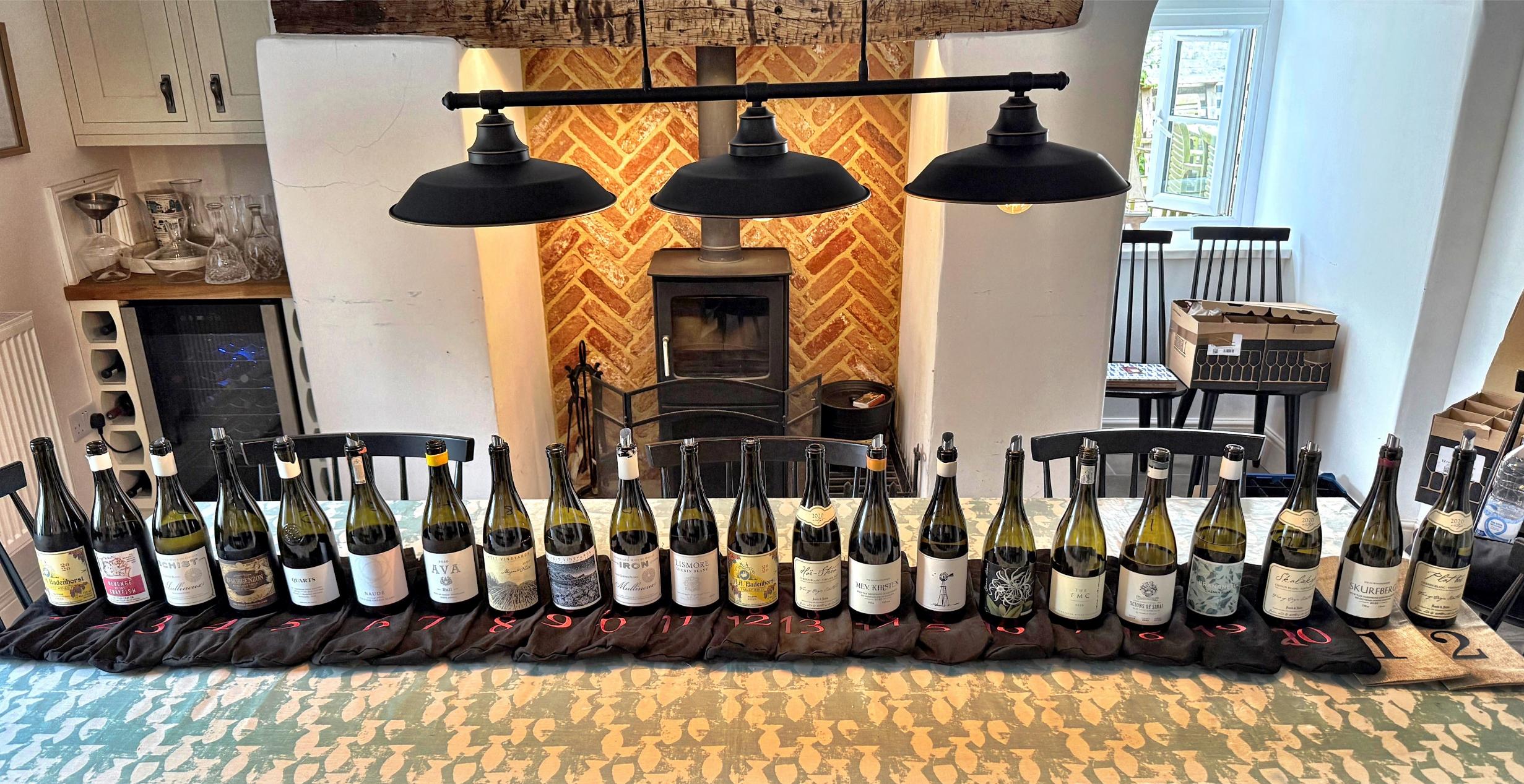
I have recently written a lot about the phenomenon of the Judgement of Wimbledon Blind Grenache Tasting held in London and its enduring growth, success and longevity – 2026 marking its 10th anniversary and it still going strong, mirroring the global rise of premium Grenache. But there is another ongoing tasting I’m involved with annually that is slowly building a steady head of steam: The Norfolk Wine Weekend (NWW).
This three-day, full-immersion wine weekend, held every June or July at a fellow South African friend’s Norfolk “cottage”, allows six or seven collectors and connoisseurs to gather each year to conduct a series of fabulous blind vertical and horizontal tastings. Some years, the main event is a Bordeaux Cru Classé blind horizontal; other years, a Skurfberg Chenin Blanc vertical – but always a diverse, enlightening selection that’s a lot of fun.
Already a few years back, out of respect for the premium category of South African Chenin Blanc, the group at the NWW started to assemble an annual blind Chenin Blanc horizontal tasting, and last year saw the 2020 vintage placed under the spotlight for assessment and analysis. I was reminded of that tasting after a mate recently pulled a case of 2020 from a prominent producer only to be disappointed by the condition of the wine…
At NWW 2025, 22 premium examples were assembled, rated by the seven tasters using the 100-point scoring system, with the lowest score for each wine discarded to help reduce “outliers” once the scores were averaged.
Of course, the 2020 vintage in South Africa will forever be defined by a paradox: a near-perfect growing season for premium Chenin Blanc that collided with the most existential crisis in the history of the Cape wine industry. To understand this vintage is to look at a year of “pristine isolation”, where the absence of heatwaves and a long, moderate ripening period produced wines of crystalline purity – even as wineries themselves faced the prospect of total collapse due to COVID-19 lockdown restrictions.
The 2020 Vintage
For premium Chenin Blanc, the variety that has become the torchbearer for South Africa’s “new wave”, 2020 supposedly represented a pivot towards elegance and structural longevity, marking a departure from the heavier, more tropical profiles of the drought-stricken years that preceded it. With this perception firmly lodged in tasters’ minds, we were all keen to see if it rang true, and whether the COVID-19 vintage would ultimately be viewed as a great success under duress.
In general, the 2020 vintage – which followed the gruelling multi-year drought (2015–2019) that had tested the resilience of South Africa’s old vine heritage – was promoted as a turning point for the industry, with reservoirs replenished after improved winter rains. However, the defining characteristic of the 2020 growing season was not just water, but temperature profile.
Unlike many recent vintages marred by sudden, searing February heat spikes, 2020 was characterised by a cool, moderate summer. This was supposedly particularly beneficial for Chenin Blanc, a grape notoriously sensitive to sunburn and rapid sugar accumulation. The lack of extreme heat should have allowed for excellent acid retention, slow and steady flavour concentration with lower alcohols, and smaller berries contributing extra weight, texture and grip.
Obviously, one cannot critique the quality of the 2020 vintage without acknowledging the logistical nightmare endured by producers and growers. On 26 March, South Africa entered one of the world’s strictest lockdowns. Initially, the wine industry was deemed “non-essential”, threatening to leave 20% of the crop to rot on the vines. A last-minute concession allowed the harvest to continue, but the psychological and financial strain on winemakers remained immense.
With tasting rooms closed and exports banned, winemakers were confined to their cellars – forced into singular focus, free from the usual distractions of marketing and tourism that accompany harvest in February, March and April. The assessment at the time was that this isolation might result in meticulously attentive winemaking, with every decision taken with almost monastic focus and intensity.
Looking back, the Cape wine industry’s impression of the 2020 Chenin Blancs was emphatically positive. The wines were widely hyped, described as possessing “vibrancy and nerve”, with “freshness, structural elegance and clear terroir transparency” – a vintage to buy for the cellar.
Conclusions and Scores
At this point, I should probably reveal a few hard truths and conclusions from this fascinating 22-wine tasting. But first, the line-up, with average blind scores (lowest outlier removed):
AA Badenhorst Kelder Steen 2020 – 93.4/100
AA Badenhorst Klipkop Steen 2020 – 91.4/100
Alheit Magnetic North 2020 – 90.4/100
Alheit Nautical Dawn 2020 – 92.2/100
Bernard Bredell Scions of Sinai Granietsteen 2020 – 93.25/100
Botanica Mary Delaney 2020 – 95/100
David & Nadia Hoë Steen 2020 – 90.6/100
David & Nadia Skalliekop 2020 – 92.2/100
DMZ Divas 2020 – 93.4/100
Domaine Belargus Quartz 2020 (Anjou, France) – 94.2/100
Donovan Rall Ava 2020 – 91.8/100
Ken Forrester FMC 2020 – 95.8/100
Lismore 2020 – 89.6/100
Mullineux Iron 2020 – 94.2/100
Mullineux Schist 2020 – 90.8/100
Naudé Old Vine Chenin Blanc 2020 – 89.4/100
Sadie Mev Kirsten 2020 – 91.6/100
Sadie Skurfberg 2020 – 96.6/100
Sakkie Mouton Revenge of the Crayfish 2020 – 90.6/100
Savage Never Been Asked to Dance 2020 – 93.2/100
Thistle & Weed Brandnetel 2020 – 92.4/100
David & Nadia Platbos 2020 – N/S (oxidised)
If truth be told, the tasting proved very, very interesting. If it can be summed up in one word, it would have to be “underwhelming”. Of course, the usual caveats apply: scores tend to come in a point or two lower when tasted blind, and averaging across tasters suppresses extremes. What matters more are the trends and group observations.
Some readers – and perhaps a few winemakers – may feel the scores are unduly harsh compared to release ratings. To that I’d say: shift them all up a point or two if you like; it won’t materially change the overall picture.
At release, the wines were described as those that “do not shout with the exuberant ripeness of a hot year; rather, they whisper of their site and soil with a clear, resonant voice.” Sadly, five years on, that whisper has, in some cases, faded to more of a whimper. The showing may also challenge the notion that hotter, drier, riper years are necessarily inferior for Chenin Blanc – the 2016 vintage being a case in point, combining depth and ripeness with remarkable freshness.
Overall, 2020 proved a relatively level playing field. Stellenbosch expressions varied subtly by terroir, particularly in Polkadraai Hills and the would-be ward of Helderberg, yielding wines with freshness, granitic spice and fynbos-tinged sapidity. Swartland wines tended towards precision over power, reflecting the realities of dry-farmed bush vines in warm conditions.
Mullineux’s single-terroir wines showed particularly well, while Sadie Family Wines Skurfberg and Mev. Kirsten displayed their characteristic mineral austerity and “salted lemon” intensity – though, as ever, the latter clearly requires more time in bottle.
The broader trend, however, pointed to acidities that, in some wines, felt a little flat. Acidity, of course, underpins vibrancy, minerality and structure, and without it, the “whisper” of terroir becomes harder to discern.
Across my notes and those of the group, recurring phrases included “lacks complexity”, “light on acid”, “slightly unfocused”, “straightforward” and “needs more acid”. On the plus side, oak usage was generally intelligent and sympathetic, and the wines were texturally sleek, soft, supple and harmonious. In short, many are drinking well now and will continue to do so over the next two to three years.
Many Winemag readers periodically grumble that not enough guidance is offered on when to drink premium South African whites. In this case, the consensus was clear: drink sooner rather than later – not because the wines are about to fall apart, but because they are unlikely to improve significantly, and many lack the acidity for extended ageing.
It has been suggested that any critique of Chenin Blanc – South Africa’s “golden child” – may not be well received. To that I would counter: these are not inexpensive wines, and consumers deserve to know how they are performing.
To the victors, the spoils. Hats off to the top five:
- Sadie Family Wines Skurfberg 2020
- Ken Forrester FMC 2020
- Botanica Mary Delaney 2020
- Mullineux Iron 2020 (tied with Domaine Belargus Quartz 2020, Anjou)
- AA Badenhorst Kelder Steen 2020
Lastly, I can report that among the seven NWW tasters, a considerable amount of premium 2020 Chenin Blanc remains in cellar. We all resolved – without exception – to break the shackles of collector hesitancy and start drinking more of these wines now. Readers should feel confident to do the same.
Next year, we move on to the much-anticipated 2021 vintage. That should be a tasting not to be missed.
- Greg Sherwood was born in Pretoria, South Africa, and as the son of a career diplomat, spent his first 21 years traveling the globe with his parents. With a Business Management and Marketing degree from Webster University, St. Louis, Missouri, USA, Sherwood began his working career as a commodity trader. In 2000, he decided to make more of a long-held interest in wine taking a position at Handford Wines in South Kensington, London, working his way up to the position of Senior Wine Buyer over 22 years. Sherwood currently consults to a number of top fine wine merchants in London while always keeping one eye firmly on the South African wine industry. He qualified as the 303rd Master of Wine in 2007.
-
Share:

Comments
29 comment(s)
Please read our Comments Policy here.
Leave a Reply to Greg Sherwood Cancel reply
Related articles
Opinion & Analysis
Greg Sherwood MW: The great Grenache revival
12 March 2026
Over the years, I’ve taken part in numerous blind comparative tastings, some organised purely for fun, others as part of a commercial exercise. But whatever the motivation, none has proved...
Opinion & Analysis
Greg Sherwood MW: Is the fine wine market starting to bounce back?
18 February 2026
After this year’s highly successful Wine Paris wine trade fair, the wine world seems to have rediscovered a notional amount of new momentum and positivity. How long this sentiment will...
4
Opinion & Analysis
Greg Sherwood MW: Dry January, No/Lo growth and wine’s awkward moment
14 January 2026
It’s that time of year again, when my social media feed is clogged up with proud South African parents posting endless pictures of their young ones heading off to primary...
Gareth | 26 March 2026
Thanks Greg, this is incredibly useful for those that have a very limited number of bottles and seek the right time to pull the cork.
I recently had a 21 Skurfburg and was blown away by how good it was, but the 2020 Mev. Kirsten I had at a similar time was a little disappointing. Your article seems to suggest leaving the latter longer rather than being in a rush to drink. Is that correct, and if so, what improvement / changes would you expect?
I’m also surprised that magnetic north hasn’t seemed to age all that well. Same boat as Mev. Kirsten or time to drink?
BvR | 26 March 2026
Gareth – I would definitely encourage you to enjoy all your 20’s Chenins sooner than later. Including Magnetic North. This is not a reflection of MN in general or it’s ageability, but a reflection of this vintage. Right after the tasting we opened the MN 19 (winner of the NWW24 Chenin Shootout) and it was in a different class, though a year older. I’ll be opening a few Alheit 2017 Chenin’s over the coming week or two and will revert here on what shape they are in, but I suspect they will still be banging.
Gareth | 26 March 2026
Thank you BvR. It would be interesting to put the magnetic north next to the declassified 2022 and see where they both sit.
Greg Sherwood | 26 March 2026
Anyone drunk a Gone South recently? It was beautiful the last time we drank it in the UK a couple years ago. Many still think Chris was wrong to declassify it. I would be curious to hear how it is developing.
Josua | 26 March 2026
Had one last year and it was superb, I still have a few bottles left and I feel that 22 might go down the same as the 20’s with regards to aging, so I’ll finish them in the next 2 years.
I am in no way disappointed that he declassified them given the price drop. That said, I would not have been disappointed at all if he hadn’t. I prefer them over the 22 Huilkrans.
Jamie Johnson | 26 March 2026
I’m in the same camp having also had both in the last couple of months.
Gareth | 26 March 2026
I had one soon after release and didn’t care for it, but I had one two months ago and my goodness what a difference! It’s rounded out beautifully and is an absolute cracker now
Ryan Coetzee | 26 March 2026
Hi Greg – great article. I have to say anyone who puts a 2020 next to a 2019 Chenin will immediately tell the difference. 19s in a class of their own. I am planning to have a 2020 event soon to help clear them out!
PS: love that the Mary Delaney did so well. Such an underrated wine!
Kwispedoor | 26 March 2026
Indeed, Ryan – much like 2014, nobody ever talks about 2019 as a vintage. Yet, the wines are consistently good!
Ginny Povall | 28 March 2026
You’re not the only one who appreciates that the Mary Delany chenin did so well : ) My wine seems to do well in blind tastings so it says something about me, I guess….
RUDI KOTZE | 26 March 2026
Thanks Greg, great article.
Interesting that this “drink sooner rather than later – not because the wines are about to fall apart, but because they are unlikely to improve significantly” seems to be a regular take-out from similar tastings.
Greg Sherwood | 26 March 2026
Being mindful that many of these wines are offered on strict allocations of one ot two bottles, it then becomes much more difficult to decided when to drink them. They were all very pleasant, some quite impressive, but generally, we could not see how most of the wines are going to “improve” other than simply to drift into the more teriary sphere… which is great… if the wines remain fresh, nervy and vibrant. Sadly, the acids are simply not there for extended ageing with confidence. Some of the wines will undoubtedly prove me wrong, but I don’t want to sit on a cellar full of flabby, honied Chenin Blanc when I could have enjoyed them at their peak.
For clarity, the next NWW is later this summer 2026… not next year… and we will be tasting as many top 2021s as we can realistically get our hands on. Should be facinating as well.
Gareth | 26 March 2026
Thanks Greg, with limited allocation in mind could you please clarify your take on the Mev. Kirsten 2020? Drink now or needs time?
Greg Sherwood | 28 March 2026
Out of all the wines, the Mev Kirsten 2020 was probably the one wine that we thought will definitely get better with more ageing. These super old vines make a very structured, tight wine and providing it has a good natural acidity, which the 2020 did, this wine needs to be aged. For example, I hear the 2015 Mev Kirsten is finally starting to drink well at the moment, 11 years on. I have drunk all my bottles too young and they were not at their full potential yet.
Jamie Johnson | 29 March 2026
Neal Martin just did a SA vs France tasting and Mev Kirsten 2021 was a standout, whereas 2020 is still closed. Will be interesting to see how the 2020 develops in time.
Thapelo Mangope | 26 March 2026
Interesting read, Greg!
Some food for thought for those who might’ve overdone it a tad with stocking up on the 2020’s on the back of the massive plaudits that 2019’s garnered…
Greg Sherwood | 26 March 2026
Indeed. But I am a massive fan of the 2019 wines. They are still fresh, powerful and structured. Drink your 2020s before you 2019s or even before your 2017s etc. Forget your 2021s for now too. I will report back later in the year on the 2021s… which a lot of collectors stocked up on obviously.
Jamie Johnson | 26 March 2026
Very helpful article, thanks Greg. Obviously early days but what does your instinct tell you about how the 23/24 Chenins will hold up in comparison?
Greg Sherwood | 26 March 2026
Interestingly, I am in the Eben Sadie camp on the ’23/24 debate. The whites from 2023 were all generally harvested long before the rains came and are quite dense, muscular, powerful concentrated wines. In comparison, the 2024s seem to feel fresher, lighter and more crystalline with juicy fruit but don’t seem to have quite the same power or dry extract concentration that the 2023s have. Now the above is particulary true for Swartland Chenins, but might not ring true for some other cultivars like Elgin Sauvignons or Agulhas Sauv/Sem blends etc. I have had some 2024s from these cooler coastal sites that I actually preferred to the 2023 from the same producer. My gut feel is the 2024 Chenins specifically will be for drinking earlier than the 2023s in general.
Jamie Johnson | 26 March 2026
Thanks, makes sense. We haven’t tried many 24 whites yet but did find Rotsbank 24 to already be quite accessible and too irresistible so opened a few bottles this season already 🙂
Jamie Johnson | 26 March 2026
So it seems the odd/even year trend continues from 2017.
Simon | 26 March 2026
great piece
Gerhard | 27 March 2026
With respect to all the wine competitions/wine judges out there, the fairest way to judge any wine is to do it blind, in a flight, with other same cultivar wines. It is just human to be biased when visiting a well known brand/winemaker to taste their wines. You build up a personal relationship with the owner/winemaker/brand, and over time you may feel reluctant to not give a high score to the wines. Without mentioning names, some of these wines got 96 plus points by a well known wine fundi, and now they get low 90 scores. This is confusing for the consumer out there. Who must they now believe if it is really a good wine or just an average wine? Also, by judging blind, it gives the unknown brands/winemakers a chance to get into the spotlight with their wines. In years to come a good wine will still be good, but as proven, also the other way around.
Wessel Strydom | 28 March 2026
Gerhard, I agree 100% with you – tasting blind take away absolutely any subjectivity whatsoever
keith | 28 March 2026
Most 2020 whites I have tasted recently have been very disappointing, including a Skerpioen , my first bottle of a 12 bottle case. Am hoping that a few more years bottle age may help, but after reading your excellent piece, I am not so sure .
Marcelo Solá | 28 March 2026
Why would you not consider the lowest score to remove outliers but not do the same with the highest?
Greg Sherwood | 28 March 2026
It’s a common practice to drop the lowest score for each wine to help get a more accurate and representative final score. It seems to be a well tested and suported practice. However, when someone really likes a wine, people should be enthusiastic with their scores and not sit on the fence… else everything would score 90 or 91 when averaged. To be honest, it’s just something we do when tasting blind. The scores are naturally a little lower than when tasting sighted as you don’t have a label and a producer pedigree to guide scores.
BvR | 29 March 2026
So regarding the question about age ability of Chenin. Which I think is important to address that the article refers to the vintage as opposed to the cultivar. Myself and a few other heroes did some very important work this weekend. Tasting all the Alheit single vineyard Chenins from 2017. And I’m happy to report they were spectacular. Some brief notes below.
Nautical Dawn – slight tertiary muskiness on the nose, yet the acidity is still high. Drink soon to get the best out of it.
Fire by Night. Also a slight tertiary nose but it blows off quickly. Incredible balance and acidity. Also consider drinking soon.
Radio Lazarus. Young and fresh still. A flintiness that shouts Chablis, not Stellenbosch. Plenty of time to go.
Huilkrans. Amazing. Fresh, fruity with crazy acidity. So complex. Still closed to some degree. A pleasure but could be kept for a while.
Magnetic North. One of the most memorable wines I’ve had this year. Close to perfection for a white wine. Struggling not to give this top marks. Will likely still improve with age.
Greg Sherwood | 30 March 2026
Thanks BvB. All the 2017s I’ve had lately have been excellent. The 2018s good but variable, and the 2019s generally excellent. Drinkers can’t discount the vintage conditions. Simply put, not EVERY vintage is a keeper. Some are good to drink over 3-5 years.