
Greg Sherwood MW: Was 2021 SA’s greatest Chenin Blanc vintage yet?
By Greg Sherwood, 8 July 2026
-
Share:





8
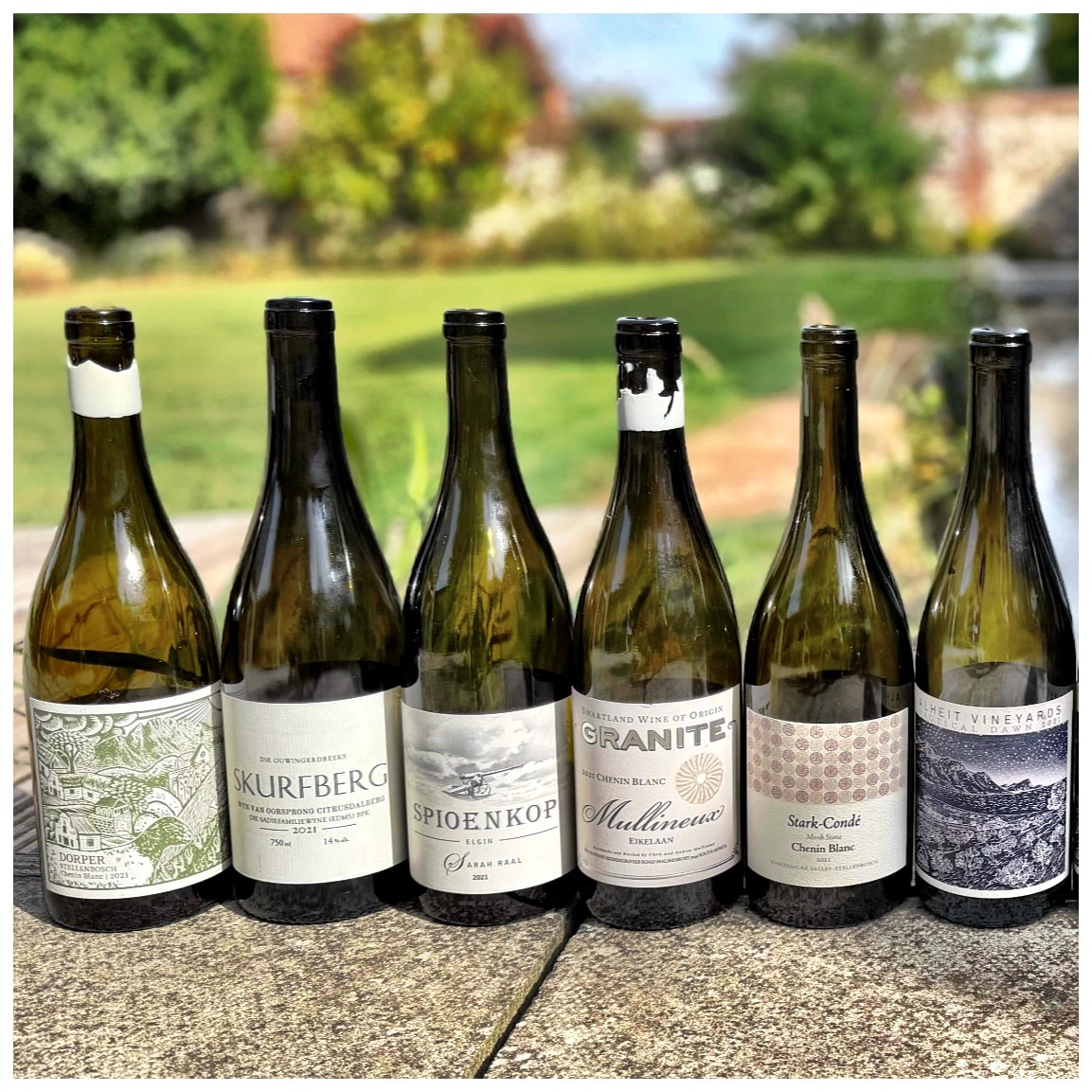
Few vintages in recent South African memory have been discussed with as much quiet confidence among wine producers, and in particular, Chenin Blanc producers, as 2021. Following several seasons shaped by drought, recovery, and erratic weather, it is considered a season of harmony and balance, and Chenin Blanc, the Cape’s most widely planted and most historically significant white cultivar, was arguably one of the greatest beneficiaries of this near ideal growing season.
For the past several years, it has become customary for our annual blind tasting gathering, otherwise known as the Norfolk Wine Weekend, to include a dedicated blind Chenin Blanc line-up featuring as many premium examples as we are reasonably able to source from provenanced storage and private cellars. Last year, the 2020 Chenin Blanc line-up results seemed to make unnecessarily large waves among Winemag readers, and indeed among producers themselves.
To reiterate, what the 2020 blind Chenin Blanc tasting results revealed, as confirmed by a subsequent Winemag blind tasting, is that 2020 is a plush, well rounded, harmonious, quality vintage that is, at six years old, drinking very well now.
If the wines have any subtle flaws in their character, it is perhaps the slight lack of freshness and vivacity, components recognized as being so critical in premium expressions produced from cultivars like Chenin Blanc and indeed Chardonnay. So, not a poor vintage, not a dud vintage, just perhaps a vintage to enjoy slightly earlier than some critics may initially have indicated on release.
With most of the eight experienced blind tasters having already drunk and enjoyed numerous bottles of 2021 Chenin Blanc from their cellars over the past few years, it would be an understatement to say that they were all very excited by the prospect of tasting a sizable line-up of these wines blind in one continuous sitting.
A Season Built for Chenin Blanc
Looking back at the vintage conditions, South Africa’s growing season was defined by moderate-to-warm conditions that persisted into a cool, extended Autumn. This combination was close to ideal for Chenin Blanc, which depends on hang-time to develop textural complexity and flavour without sacrificing the natural acidity that gives the variety its characteristic energy and ageability.
Vintage assessments of the period noted that the extended, temperate ripening window favoured white varieties, particularly Chardonnay, Chenin Blanc and Sauvignon Blanc, with elevated acidities across the board. For a grape whose finest expressions hinge on the tension between ripeness and freshness, the 2021 vintage was close to a best-case scenario across most significant regions.
While the critics may have overestimated the 2020 vintage whites, the results for 2021 were widely described by commentators as an “elegantly fresh” vintage. When Decanter Magazine conducted one of its largest-ever South African Chenin Blanc panel tastings – rating 223 wines submitted by producers and UK agents – I was the panel chair over three days (incidentally Decanter’s first ever three-day panel tasting) tasting alongside the very capable expert and ex-Michelin Starred chef, Roger Jones.
On this occasion, the panel found the quality and consistency of winemaking across the Cape genuinely impressive, with 28 wines scoring 95 points or higher, panel judge Jones noting the breadth of styles on display, from crisp unoaked bottlings to more textural, barrel-influenced expressions. The panel’s conclusions, which I was tasked with summarising, was that the 2021 vintage showcased both exceptional quality and stylistic diversity, characteristics that have since become a consensus view among critics and drinkers alike.
The Old Vine Advantage
Part of what made 2021 so special was not just the weather, but where that weather pattern landed. We all know South Africa possesses an unusually deep bank of old, dry-farmed bush vines Chenin Blanc, much of it planted between the 1960s and the 1980s, across the Swartland, Citrusdal Mountains, Stellenbosch and even in the Western Cape’s more remote corners.
These low-yielding, deeply rooted vineyards tend to self-regulate better in more favourable seasons, and 2021’s conditions let that Old Vine character speak with unusual clarity. This is perhaps where many of the Cape’s leading producers distinguished themselves, producing wines unique to the vintage and unlike many other previous expressions.
Of course, top producers like Sadie Family Wines, still under Eben Sadie and Paul Jordaan at the time, continued to draw from South Africa’s most storied single site Chenin Blanc vineyards, including Mev. Kirsten in Stellenbosch, the country’s oldest recorded Chenin Blanc block located in the Jonkershoek Valley, as well as Skurfberg situated in Wine of Origin Citrusdal Mountain.
The Mullineuxs, also based in the Swartland, released their terroir-specific Schist, Iron and Granite Chenin Blanc bottlings to great fanfare and tasting their 2021s again, these wines continue to rank among South Africa’s most collectable examples, prized for their precision and site-transparency, characteristics that Andrea Mullineux seems to have a real knack at harnessing with her winemaking.
Alheit Vineyards, one of the producers most closely associated with articulating South African terroir through Chenin Blanc, continued its multi-vineyard approach in 2021, sourcing fruit from parcels across Stellenbosch, the Swartland, and Citrusdal Mountain. Winemaker Chris Alheit often describes Chenin Blanc as a grape uniquely capable of communicating both the site and season with great transparency, an idea that the 2021 vintage’s clarity of acid and pure fruit definition seemed to bear out particularly well during our tasting.
Style and Character of the Vintage
Across producers, 2021 Chenin Blancs tend to share a certain ‘family resemblance’, namely vivid acidities; a purity of white citrus and yellow orchard fruits (think green apple, pear and white peach) rather than the more tropical or baked / poached fruit nuances of hotter, drought-affected vintages; and, in the Old Vine bottlings, a mineral, often saline finish that reflects both terroir and the care taken in low-intervention winemaking, with producers like Ian Naudé, Sakkie Mouton, and Bernard Bredell clear examples.
Oak, where used, tends to play a textural rather than flavour role, which is perhaps a reflection of a broader stylistic shift in Cape Chenin Blancs toward restraint – further reinforced industry-wide by the Chenin Blanc Association’s introduction, around this vintage’s release, of a “Fresh – Fruity – Rich” style indicator intended to help consumers navigate the variety’s range of styles produced.
A Vintage That Confirmed Chenin Blanc’s Standing
If anything, 2021 functioned as a confirmation rather than revelation, proof that South Africa’s investment over the previous 15 to 20 years in reviving and championing old, dry-farmed Chenin Blanc vineyards has paid off, and that in a genuinely favourable season, the Cape’s top producers could deliver wines that stand comparison with the world’s finest white wines, regardless of grape variety. For collectors and critics alike, 2021 has become an unofficial benchmark vintage against which subsequent Cape Chenin Blanc releases will be measured.
The 2021 Chenin Blanc Blind Tasting Results
With regards to the blind tasting protocols followed, the wines were opened and arranged in a random order by one person and then randomly bagged by another person. Also, as a little test of tasting and scoring consistency, two bottles of Alheit Vineyards’ Nautical Dawn 2021 Chenin Blanc from the Helderberg were entered into the line-up unbeknownst to the judges, one in flight one, and the second bottle in flight three. The tasting consisted of four flights of six wines.
The top 10 wines and scores were:
1 Sadie Family Wines Skurfberg 2021
Fairly restrained, neutral aromatics initially with pear and green apple, dried herbs, and a subtle stony minerality. Palate is delicate and subtle, seamlessly cool, mineral and beautifully balanced with wet stone minerality, intense saline acids and a long, tart finish. Quite intense. Wow. (97+/100 GSMW)
Group Average Score: 97.38/100
2 Dorper 2021
Dusty mineral granitic aromatics with dried herbs, subtle reductive smoky struck match notes. Steely, briney, pithy and saline with yellow grapefruit, tart pear and a gentle sapidity on the finish. Very impressive. (96/100 GSMW)
Group Average Score: 97.25/100
3 Spioenkop Sarah Rall 2021
Spicy, sappy greengage fruits, white citrus, orange peel zest plus some granadilla. Impressive granadilla intensity, deliciously tangy and concentrated and a mellow pure, crystalline finish. (96/100 GSMW)
Group Average Score: 96.38/100
4 Mullineux Terroir Series Granite 2021
Quite serious, restrained mineral aromatics showing pithy white citrus, bees wax, orange peel and granitic spice. Palate reveals hints of kiwi fruits, salty green apples, liquid minerality and a hint of passion fruit on the finish. Deliciously complex. (94/100 GSMW)
Group Average Score: 95.81/100
5 Alheit Vineyards Nautical Dawn 2021 (Bottle2)
Delicate crystallised lemon peel, lime jelly, lemon grass and honeycomb. Good saline yellow fruit concentration, tangy acids and a cool, steely, mineral finish. A restrained classical expression. (95/100 GSMW)
Group Average Score: 95.19/100
6 Alheit Vineyards Nautical Dawn 2021 (Bottle 1)
Opulent, sweet honeysuckle, lime peel, orange blossom, tangerine and passion fruit complexity. Super concentrated palate, pithy lemon and lime cordial notes, massive glycerol concentration with a beautifully harmonious saline length. (95+/100 GSMW)
Group Average Score: 95.06/100
7 Stark Conde Monk Stone 2021
Delicious fragrant white blossom aromatics full of passion fruit, white peach and green apple. Delicately savoury with deliciously tangy acids, wet stone minerality, crystalline and bright with a saline finish. Really classy. (96+/100 GSMW)
Group Average Score: 94.94/100
8 Sadie Family Wines Mev. Kirsten 2021
Quite a tight, mineral led, neutral aromatics initially with delicate passion fruit hints lurking beneath. Cool, slightly reductive palate with subtle struck flint hints, crushed gravel and a delicately herby wet stone minerality. Taut, tight, steely style. Very serious. (95/100 GSMW)
Group Average Score: 94.81/100
9 Mullineux Terroir Series Schist 2021
Quite a lean, mineral, steely style, restrained, stony with hints of yellow citrus, bran flakes and lemon grass. Sweet fruited and honied on the palate with a fleshy peachy opulence, honeycomb and wet stone minerality on the finish. (94/100 GSMW)
Group Average Score: 94.63/100
10 Alheit Vineyards Fire by Night 2021
Delicately savoury and sappy, even peppery with stalky nuances, crushed Granite and dried herbs. Tangy and crystalline on the palate, there’s a notable glycerol concentration, a delicate struck flint reduction and a long mellow tangy finish. Mouth wateringly delicious. (95/100 GSMW)
Group Average Score: 94.63/100
The other scores:
11 Naudé Family Wines 2021 – 94.38/100
12 Donovan Rall Noa 2021 – 94.19/100
13 Raats Family Wine Eden 2021 – 93.81/100
14 Roodekrantz Die Kliphuis 2021 – 93.63/100
15 Donovan Rall Ava 2021 – 93.56/100
16 Thistle & Weed Duwweltjie 2021 – 93.56/100
17 Bellevue Estate 2021 – 93.38/100
18 Beaumont Hope Margarite 2021 – 93.38/100
19 Scions of Sinai Granietsteen 2021 – 92.75/100
20 David & Nadia Platbos 2021 – 92.75/100
21 Roodekrantz Brand se Berg 2021 – 92.63/100
22 JC Wickens Tiernes 2021 – 92.38/100
23 Thistle & Weed Brandnetel 2021 – 92.06/100
24 Sakkie Mouton Revenge of the Crayfish 2021 – 90.25/100
Final Conclusions:
There was a notable uniformity to the four flights. Purity, freshness, minerality and terroir transparency all shone. ALL WINES SHOWED WELL… even if some producers’ averaged scores might seem a little lower than expected (or hoped for). This is very common in blind tastings versus sighted tastings. The silly two decimal points was left in to show how closely scored many of the wines actually were.
Also, after the double Alheit Nautical Dawn entry was revealed, all eight judges were relieved to pass the ‘calibration test’ with flying colours. I myself was only a + or 0.5 of a point different. Finally, the top 10 wines are surely showing more opulence and flare right now, but I firmly believe the bottom 10 are showing more strictness and tightness, representing more closed, mineral laden expressions that in many cases are still slightly reductive… all characteristics that bode well for further beneficial cellaring. Quite simply, if you can find these wines on the market, buy them. It is a benchmark vintage that will not be match until the stellar 2025s are in full circulation.
- Greg Sherwood was born in Pretoria, South Africa, and as the son of a career diplomat, spent his first 21 years traveling the globe with his parents. With a Business Management and Marketing degree from Webster University, St. Louis, Missouri, USA, Sherwood began his working career as a commodity trader. In 2000, he decided to make more of a long-held interest in wine taking a position at Handford Wines in South Kensington, London, working his way up to the position of Senior Wine Buyer over 22 years. Sherwood currently consults to a number of top fine wine merchants in London while always keeping one eye firmly on the South African wine industry. He qualified as the 303rd Master of Wine in 2007.
-
Share:

James | 8 July 2026
When do you think the 2021s are at the peak?
Greg Sherwood | 8 July 2026
Probably depends on the wine producer and the style, but presuming you are talking the top producers and big boys of Chenin… I’d happily keep my 2021s for another decade or more. But 10 years old is ALWAYS a sweet spot for SA white and red wines from good vintages. So 2031… with a few cheeky bottles quaffed between now and then? 😉
James | 8 July 2026
Amazing, thanks Greg! Definitely a few cheeky bottles before then 😉
Gareth | 8 July 2026
Very interesting, thanks Greg.
Did the Crayfish just come across as a little out of place in the lineup?
Greg Sherwood | 8 July 2026
The Crayfish was super tight and youthful, quite saline as you’d expect. I just think the wine needs a bit more time in bottle. Several judges scored it 92 or 93… some a bit lower. But I can assure you, once revealed, the bottle did not last long. Reading Christian Eedes column about rating wines, some wines just need to be tasted sighted to fully understand andappreciate their terroir, styling, and ambition. I think the Crayfish is just one such wine.
Keith Prothero | 10 July 2026
Who were the others tasters Greg ? Interesting to see how consistent the quality was across so many producers although must confess the Dorper is a new one to me .
Amazing that two bottles of the Nautical Dawn were so consistent as we all know how variable wine can be even from the same case .
Thanks for posting .
Greg Sherwood | 12 July 2026
Keith, the other tasters are all very experienced collectors and drinkers, some of whom also participate in the Judgement of Wimbledon Blind Grenache Tasting. One is a winery co-owner, one judge is an associate Judge at Michelangelo Awards, and the remainder of the 8 are just very obsessive, attentive, professional enthusiats. Not you average drinkers… let’s just say! All love the academia of blind tasting and judging.
Jay Huber | 11 July 2026
Great piece, thanks Greg. I had Thorne & Daughters Cat’s Cradle Chenin ‘21 last month and it was outstanding.