
Jamie Goode: Viticulture is at a crossroads – but are new varieties really welcome?
By Jamie Goode, 5 March 2026
-
Share:





3
I’ve been following wine for a long time now, and since 2008 I’ve made my living entirely from communicating about it. I’ve learned a few things from my travels around the wine world, but one of the recurring messages is that while it’s challenging to make good wine – and I have full admiration for winemakers who consistently turn out sound, well made wines – it’s even harder to sell it. This is especially true now.
Climate change is forcing a rethink
There are some wineries whose bottles are in such demand that they can choose who they sell to, and they allocate their production. Their biggest challenge is managing expectations: customers become upset when they don’t get as many bottles as they’d like. But this is not the norm. For many wineries, selling their full production is really hard work, especially in a situation where global wine supply exceeds demand.
I carry this thought with me when I write about planting new grape varieties and recovering lesser-known varieties, a topic I’ve frequently addressed. This is an important concept at the moment, as climate chaos is starting to make viticulture very tricky in many regions around the world.
It’s clear that, for the future, we need to re-think viticulture as it is currently practised. We need more resilient vineyards, because weather patterns are becoming unpredictable. And for many regions, we are looking at a warmer, drier future. Water availability is becoming a huge challenge for many. And we also need true sustainability, because the way that viticulture is practised now isn’t truly sustainable, and is becoming less so with climate chaos.
So one part of this future is going to be shifting to grape varieties that are more appropriate for current and future conditions, and also which promise higher levels of sustainability.
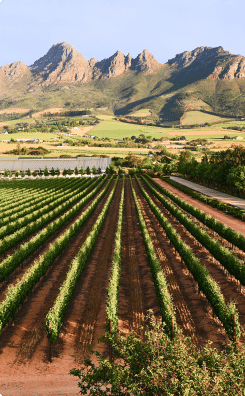
It makes little sense to grow Merlot and Sauvignon Blanc in Mediterranean-style climates, when there are varieties much better suited to hot, dry conditions. In South Africa we are seeing increased interest in the likes of Grenache (both white and red), Clairette, Roussanne and Marsanne, for example, which have the ability to make fresh wines in hot conditions. And the likes of Assyrtiko and Xinomavro could also work well. It’s a no-brainer from a viticultural point of view to see what works in long-established regions with similar climates when it comes to choosing varieties, so for many of South Africa’s regions, Greece, southern Spain, the southern Rhône are sensible scouting grounds. Bordeaux and the Loire? Less so. You want a grape variety for a region with growing season rainfall? Then take a trip to Rías Baixas or Vinho Verde and see what works there.
And if we are talking sustainability, then there’s a very strong case for ditching Vitis vinifera altogether, and adopting disease-resistant varieties. Vinifera varieties will never have true (R gene) resistance against these maladies. It would be a dream not to have to spray against powdery and downy mildew, in terms of the cost savings, the environmental benefit, and also the reduced soil compaction. Decades of breeding work has resulted in some sophisticated hybrids that make wines that don’t taste terrible. Many of them are best suited for cooler climates (these are often where the disease pressure is highest), but there’s now quite a bit of work to produce longer-cycle resistant varieties that can be grown in warmer regions. The sustainability benefits of these varieties are unquestioned.
I’m encouraged to see people choosing grape varieties better adapted to their climates than the famous French varieties that have become so commonplace around the world. The likes of Torres in Spain and Plaimont in southwest France have both embarked on successful quests to rediscover lost varieties that are more suitable for today’s conditions, and this is great to see. And I’m excited about the new disease-resistant varieties, widely referred to as PIWIs (short for Pilzwiderstandsfähige Reben, German for ‘fungus-resistant vines’), that are being adopted by forward-thinking growers. Champagne has even authorised one of these varieties, Voltis, and there are plans to authorise a second, even more exciting variety in the region.
Commercial reality may slow the necessary shift
But I am also worried that commercial concerns might limit the take-up of these newer varieties that we urgently need, and also might slow the transition to more suitable varieties in warm, dry climates.
After all, people have to sell wine. And the fact that the wine world has focused so much on just a few well-known (and almost always French) varieties tells us that the name of a famous name on a label clearly helps as a buying cue for consumers, especially at the entry level.
So what will happen? Will commercial necessity delay or block the much needed shift in varieties? In regions that are strongly attached to specific varieties, perhaps it will. It is hard to see Napa moving away from Cabernet Sauvignon, or Burgundy shifting from Chardonnay and Pinot Noir. And Barolo and Nebbiolo are strongly intertwined.
But there are plenty of regions where blends are the norm, such as Bordeaux, the Douro, the Languedoc, Stellenbosch, Rioja and Champagne. Here the transition is much easier to envisage. And it is beginning, with new vinifera varieties and also disease resistant varieties being trialled in some.
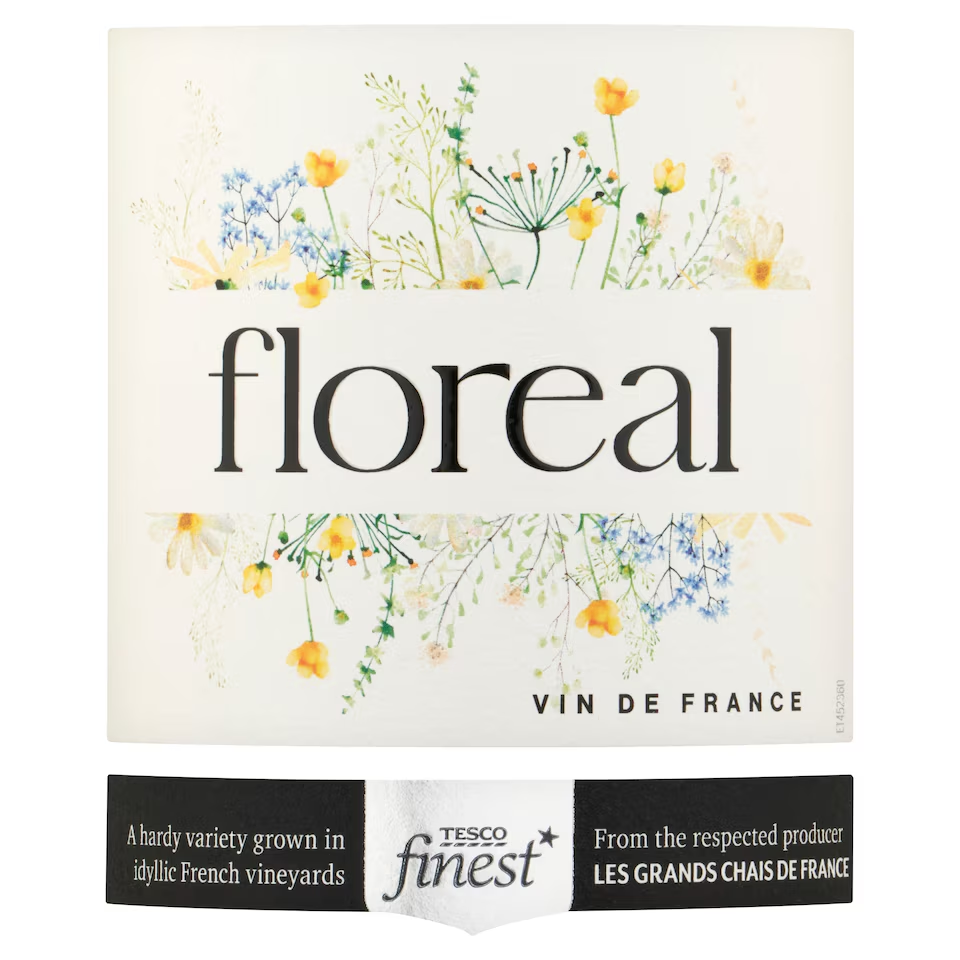
And we have the question: when it comes to consumers, is it all pull, or is there some push? In the UK, supermarkets and retailers have had the courage to begin pushing new disease-resistant varieties rather than hiding them away in brands. Tesco have lanched a Floreal (disease-resistant white variety) that tastes really good, Waitrose have begun selling a Vidoc (red variety) and most recently Laithwaites have launced a Voltis white grown in Chablis. This is really encouraging to see.
I think that this sort of push is needed, especially when the communication is good. Some customers are risk averse, but I suspect more than we give credit for are up for trying something new.
- Jamie Goode is a London-based wine writer, lecturer, wine judge and book author. With a PhD in plant biology, he worked as a science editor, before starting wineanorak.com, one of the world’s most popular wine websites.
-
Share:

Comments
3 comment(s)
Please read our Comments Policy here.
Leave a Reply to Paul Vandenberg Cancel reply
Related articles
Opinion & Analysis
Jamie Goode: Is wine really too complicated – or just too expensive?
2 February 2026
There’s quite a lot of discussion about the role of education in the wine world at the moment. Wine education is a thriving business. There seems to be a hunger...
7
Opinion & Analysis
Jamie Goode: Kiss the dirt – the truth about what makes great wine
9 December 2025
One of the biggest changes in viticulture over the last decade has been an increasing interest in what happens under the surface of the soil. We used to see vineyard...
3
Opinion & Analysis
Jamie Goode: Why watering the vine deserves a smarter debate
6 November 2025
Irrigation has the potential to be one of the wine world’s controversial topics. I say it has the potential: by this I mean it would be controversial if people from...
Paul Vandenberg | 6 March 2026
I’m in the process of retiring after 42 years of winegrowing, most of it organic.
I would be hard pressed to consider planting V vinifera again.
The hybrids coming out in the last 20 years are making beautiful wines and doing it without pesticides is much easier.
“not terrible “? I don’t get out much but I’ve found many hybrid wines that are truly delicious, lovely….
Now that we can “see” the genes, plant breeding is becoming much faster and cheaper. We can see if an actual seed has the needed genetics.
I suggest an exploration into these new wines.
Yeah, it’s mom and pop operations that don’t have much budget for wining and dining, you have to pay your own way. I’m sure the wine and home cooked meals will be good.
Paul Vandenberg
Paradisos del Sol Winery and Organic Vineyard
? The World’s only Zero Pesticide V vinifera estate winery, yeah, we ingredient label too
Donald Griffiths | 7 March 2026
Chenin Blanc seems to be a cultivar that is very adaptable to a range of climatic conditions and is probably one of the reasons why it makes great wines whether planted in the Loire or the Swartland? Old vine Chenin in particular seems to thrive in a relatively hot, dry and dusty climate (many are bush vines) and make remarkable wines. I think a cultivars adaptability to a range of soils and climatic conditions will be key going forward as even in South Africa these are very diverse.
Jonathan Rodwell | 16 March 2026
Top white wine of the Los Angeles Wine Show this year -the American grape variety – ITASCA .