
Michael Fridjhon: What happens to signature wines when their creators step back?
By Michael Fridjhon, 11 February 2026
-
Share:





1
There are always turbulent undercurrents in the world of wine: seething just below the surface, and occasionally breaking into plain sight, are a handful of perennial controversies. They include, in no particular order, the importance of origin, the role of technology, the winemaker as celebrity, whether objective judgment about wine quality is even possible (and if so, can there be any process other than blind tasting), whether the rules of entry into the “club” of wine aficionados are too arcane for the good of the industry and how much bending of the rules of wine production should be allowed before it’s called “cheating.” This is by no means a definitive list, but it’s broad enough for everyone to recognise that in the past year or so many of these subjects have been ventilated in the wine media in South Africa.
We also know that there’s very little new under the sun, and that most of these themes have been around for decades: the ground shifts, and some issues become more or less prominent. It’s safe to say that from at least the mid-20th century onwards, these debates have been in the public domain. For many the lines appear to be quite clear. Take the issue of cheating: adding flavourant to enhance aromatics, or diethylene glycol or create the impression of sweetness are out, even if the additions were to pose no health risk to consumers. There’s a code of honour and, like golf, it’s served primarily by personal integrity coupled with hard sanctions when you get caught.
But what about the legal additives supplied openly by international companies trading in South Africa, components which enhance the impression of oak, or smooth out the tannins. What about oak chips – aren’t they a flavourant in another guise? And would consumers who eschew membership of the Wine Nerds Club care as long as whatever is added makes the wine taste better, hopefully at a lower selling price?
Perhaps a good starting point would be to separate the positions of the two key factions. On the one side are aligned the purists, and on the other side the bacchanalians. The purists disapprove of short cuts, of tech interventions, but approve strongly of terroir and origin, care little for blind judgements (but not wine ratings) and, on average, see success in the world of wine as the triumph of authenticity. In this world “origin” is centrestage, and the cult of winemaker reigns supreme.
We expect Eben Sadie to source his fruit from old vineyards located in the god-forsaken corners of the country (because that is his brand). But we are open to his launching a new wine from his relatively recently planted vineyards on his own property in the Swartland because the imprimatur of celebrity legitimises this.
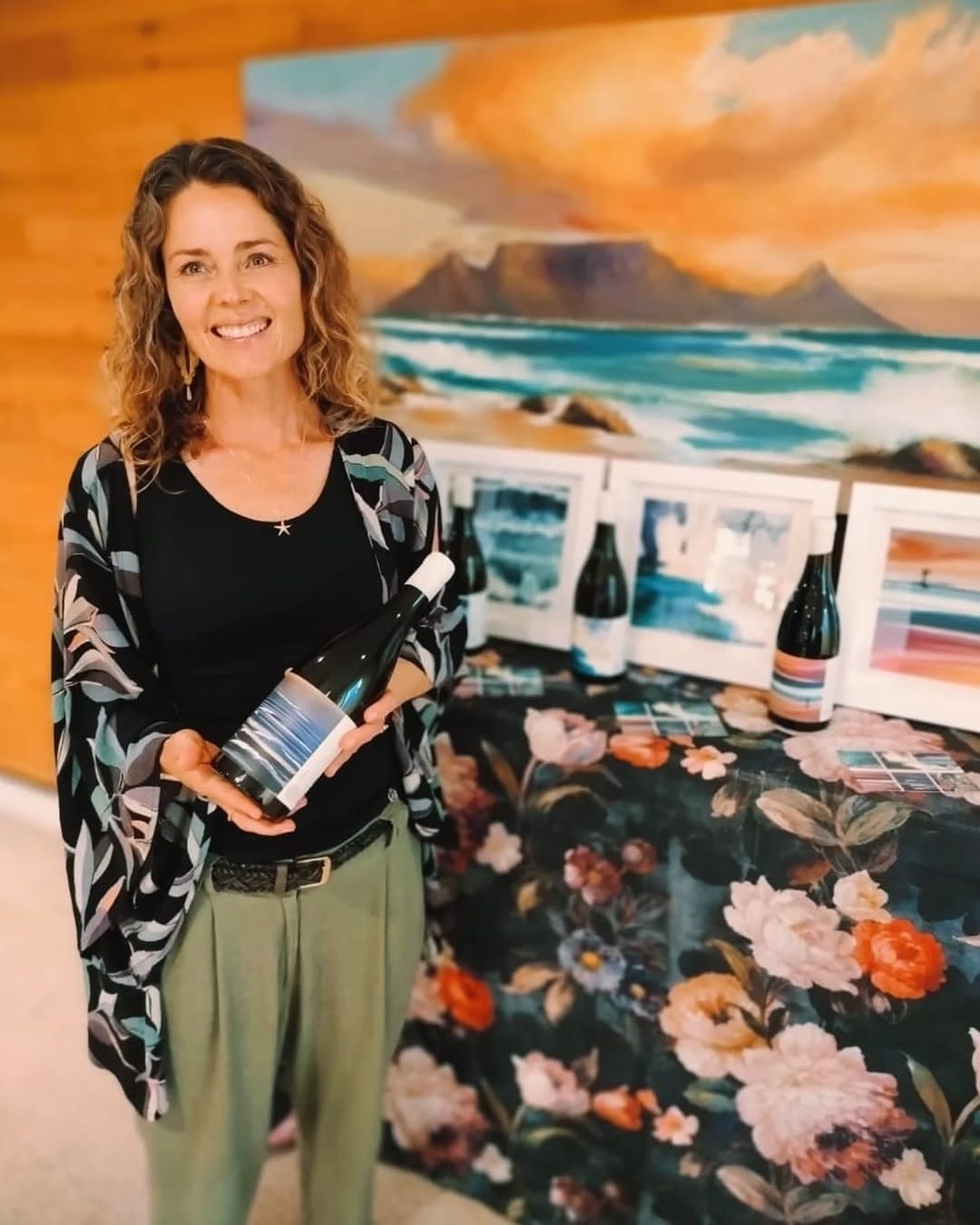
Likewise when Trizanne Barnard markets a range of wines produced from vineyards located in sight of the sea, from appellations which were largely unknown until she did so, we accept that her judgement counts for more than the track record of the sites. I am not saying that either Eben or Trizanne are wrong, or are deceiving us – merely that we have chosen to authorise these deviations on account of their status.
Curiously, we don’t really expect celebrity winemakers to expose what they make to blind tasting: we even justify this by saying that their brand is too important to be put at risk. But what exactly do we mean by that? Are we subscribing to the idea that the true test of faith is not to demand, in times of great crisis, the miracle which would prove the existence of our god, or is it that we fear that if the miracle does not appear, we will be left bereft, without faith, forced to acknowledge that the light failed?
Celebrity, legacy, and the survival of wine brands
These are important questions to ask because the gods of our generation are not immortal (nor did they ever claim to be). Many of the celebrity winemakers whose annual production is sold out on allocation have been practising their craft for a couple of decades – having previously served their apprenticeships in less celestial cellars. Most have reached their half century, or are about to. They are unlikely to go on forever. Will we wait for a new cohort to descend from Olympus? If so, how will we make sure that they see the world through the same eyes as the gods who came before them?
From this arises another, quite obvious question: how many of our icons have built brands which will survive them? When an artist represents the very pinnacle of craft how can the institution survive? When the artist Raphael died, so did his studio. The extension of life, into a kind of immortality, depends on transformation into a brand: Enzo Ferrari, Christian Dior, Louis Vuitton – and all of these were resurrected through their acquisition by brand-building specialists.
Perhaps, beyond the lifetime of their founders, a few of our celebrity-driven brands will have a second coming in the vinous equivalent of a Richemont or an LVMH. But those which don’t will vanish in a few decades, along with Aimé Guibert of Mas de Daumas Gassac, the British Imperium, and Ozymandius.
- Michael Fridjhon has over thirty-five years’ experience in the liquor industry. He is the founder of Winewizard.co.za and holds various positions including Visiting Professor of Wine Business at the University of Cape Town; founder and director of WineX – the largest consumer wine show in the Southern Hemisphere and chairman of The Trophy Wine Show.
Winemag doesn’t charge for most of what it publishes. Subscriptions exist to protect the one thing that can’t be sponsored: independent judgement. Join today.
-
Share:

Related articles
Opinion & Analysis
Michael Fridjhon: Why is Burgundy 10 times more expensive than the Cape?
14 October 2026
One of the abiding lessons from the famous Judgement of Paris tasting hosted 50 years ago by the late Steven Spurrier in Paris is the discrepancy between the price points...
12
Opinion & Analysis
Michael Fridjhon: The great wine shakeout
16 September 2026
The world of wine is shrinking. Pretty much in every country – with very few exceptions – more vines are being removed than replaced. Less wine is being drunk, and...
3
Opinion & Analysis
Michael Fridjhon: Wine scores haven’t failed – we’ve debased them
12 August 2026
Christian Eedes’s recent piece on judging, scoring and the role of the critic was a masterly summary of the issues being debated in the admittedly rarefied space where people ponder...
Louis | 11 February 2026
Excellent reflection. Perhaps the fate of “signature wines” depends less on preserving a fixed taste profile and more on preserving philosophical continuity. When vision, vineyard logic, and stylistic intent are embedded in the team, brands endure; when they reside only in one palate, drift is inevitable. The real test is not replication, but integrity across succession.