
Tim James: A candid look at some notable SA wines with a bit of age
By Tim James, 1 December 2025
-
Share:





2
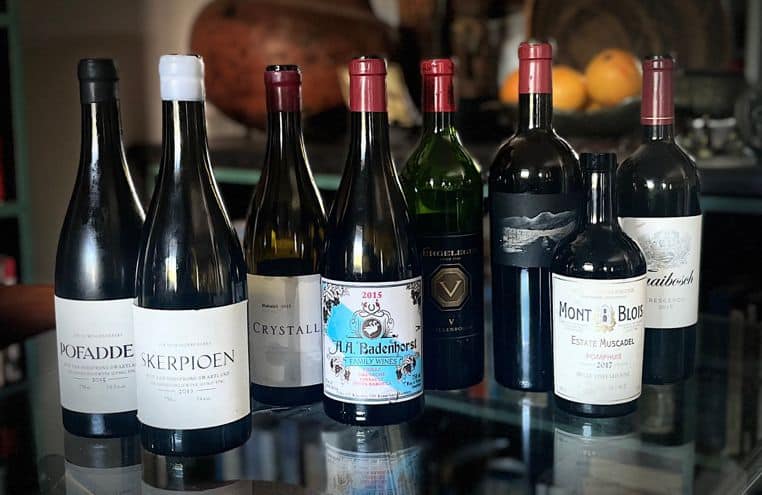
Some recent comments about older Sadie Treinspoors, made to a column of mine from as far back as 2019 (before Covid!), reminded me that there are always at least some readers who appreciate reports and discussions about mature wines as much as I do. So here goes with a motley collection from drinking over the past month or two.
One of the comments referred to above mentioned that retailer Wine Cellar had told him that the 2013 Treinspoor was “riddled with brett” – something not mentioned, however, in the Strauss & Co auction notes on that wine, closely associated with Wine Cellar though Strauss is. I wasn’t aware of brett “accusations” about 2013 Sadie wines, though I do know from personal experience that at least some bottles of some of the reds from 2015 seemed to suffer from it (critics and commentators are usually pretty reluctant to publicly call out famous producers in such circumstances, and you and the three wise monkeys will find that the Platter’s guide omits three of those reds from its report on this producer’s wines of that vintage).
So, for interest’s sake, this last weekend I opened a bottle of Sadie Pofadder 2015, the Swartland cinsault. I couldn’t discern any brett spoilage on this bottle (though I’m never the most eager of the brett police), with some pure fruit as well as savoury notes on the nose. It’s beautifully structured wine, but I was slightly disappointed overall, as it seems to lack some expected lingering fruit density (could it have been heavily filtered, for reasons I can understand?), and I found just a touch of bitterness on the finish. I did enjoy the wine, but wouldn’t recommend keeping it much longer.
As to the 2013 vintage mentioned above, I had in fact noted in an October article something not dissimilar on a double magnum of Columella 2013 that had been good but a touch disappointing: “nothing wrong, really, it just lacked intensity and oomph”, I said. However, last week, Skerpioen 2013, the chenin-palomino blend from chalky soils near Elands Bay on the West Coast, was still drinking beautifully. With a just-deepening medium-straw colour, it showed development, as expected, but it was all in the direction of complexity of flavour and structural harmony. Elegance is not really what this richly textured, full flavoured wine is about, but at nearly 13 years old, it is still delicious, with a little kernel of sweet fruit that I loved, and there’s no need to rush to drink well-stored bottles.
Back to 2015 for two mentions. Crystallum Mabalel from this vintage I loved from the first, and I’m happy to still have another bottle – though I think it’s about time to unhurriedly drink that too. I had wondered back then, in fact, if Peter-Allan Finlayson’s way of making pinot to be so delighful early might mean a payment in a shorter life, but this wine remains very good, with some gain from its time in bottle. In fact, it rather showed up the Cuvée Cinéma from the same vintage, which I’d had a glass of not long before. I’d have expected otherwise, but the Cinéma was less graceful and showing its age a bit more.
Badenhorst Red 2015 also might have been better a few years back, though it’s developed pleasingly. Just starting to dry out, a touch hollow, but well balanced and still most enjoyable to drink.
A year younger in vintage terms, Shannon Black 2016, the single-clone Elgin merlot, is even younger in drinkability. Still luxurious but with a well-balanced acidity, the oaking well absorbed and the tannins (never egregious) integrating well. I remember welcoming this as being less sumptuous and powerful than the Mount Bullet from Shannon when I tasted them together. Certainly one of the grandest and longest-lived of the often-maligned local examples of the variety (in an appropriately dark and handsome livery), and I don’t think anyone would object to a few of its much-too-heavy bottles lingering a bit longer in the cellar.
From another Elgin producer in 2016, but from further-flung grapes, is the maiden vintage of Richard Kershaw’s GPS Klein River Syrah. Very different from the style of syrah that I tend to prefer these days, this is probably not over the hill, but it’s too thick, heavy and savoury for me to have explored far down the bottle. But balanced well enough – except in terms of oak. I think subsequent vintages used less than the 50% new of 2016, and that would have helped.
Also not exactly my preferred style of wine, but undeniably impressive and still on the youthful side (the tannins still big and a bit oaky), is André van Rensburg’s Vergelegen V 2016. It’s rich, dense, balanced enough, and packed with flavour. Pretty delicious I must admit, but a few glasses were enough for me. A long way to go, and I rather wish I’d rather given it a chance in another five years, when it’ll still be in better shape than me.
A decent cab or cab franc should still be pretty youthful and vigorous, though approachable, at about seven years, and that’s the case with the maiden Taaibosch Crescendo from 2018, including 5% of the former, 65% of the latter, with merlot filling the gap. (It also should be free of cork taint, but my first bottle wasn’t.) Treading as always a nice balance between elegance and plushness, firm structure and juiciness, the wine now adds a more savoury note to the sweet fruit. A good way to go, but pleasing already.
As to the 2017 single-vineyard muscadel Mont Blois Pomphuis from Robertson (which I forget to mention until a reader spotted it in the pic and alerted me), that should last as well as some of the great muscadels of the past. Ideally it should be kept for a decade or more to acquire some ethereality and apparent dryness – it already has a feeling of lightness compared with some others of the disappearing genre – without losing its lusciousness and intensity of flavour. I hope it keeps, or recognisably transmutes, its distinctive hint of humbug. But I wonder if this is the last vintage made, as I see it is still available (R190 from the estate). Muscadel is not a great seller these days.
- Tim James is one of South Africa’s leading wine commentators, contributing to various local and international wine publications. His book Wines of South Africa – Tradition and Revolution appeared in 2013.
-
Share:
Related articles
Opinion & Analysis
Tim James: 40 years on, the few who changed SA wine
17 December 2025
The closing months of this year saw the deaths of two notable members of the immediately past or waning generation of winemakers – heroes of that radical change in South...
2
Opinion & Analysis
Tim James: Rooibos-preserved wine? Checkers thinks it’s the next big thing
8 December 2025
The notification of sulphitic presence on (nearly all) bottles of wine is, more than anything useful, a sign of lurking prohibitionist tendences on the part of governments around the world....
1
Opinion & Analysis
Tim James: SA wine reputation grows – awards, buying trends point to change
24 November 2025
Recently I asked Eben Sadie what had meant the most to him of the many international or local accolades or lofty ratings he’d achieved. He was in no doubt: it...
RUDI KOTZE | 1 December 2025
Thank you Tim. No mention of the Mont Blois pictured?
Tim James | 1 December 2025
Hah! Thanks – fix on the way.