
Tim James: Obscure and mostly moribund grape crosses in Cape vineyards
By Tim James, 2 November 2026
-
Share:


I was pleased to see Malu Lambert report, in her piece on palomino, that Adi Badenhorst is “propagating” colomino, a local cross of palomino and colombar. It seems to have been a largely unappreciated variety since some boffin in a lab had thought it a good idea and sent it through all the hoops to get to market. Perhaps it will still prove to have been a good idea. But I had once, looking at the changing shape of the Cape vineyard this century, wistfully hoped Adi would take up the claims of an equally obscure cross called brakboseiland, which I think would somehow have better suited his beard and sense of humour. Incidentally, there appears to be a pretty nondescript geographical feature in the Northern Cape with this name, presumably with some connection to the grape.
Unfortunately, however, brakboseiland has disappeared from the list of permitted vine cultivars, as per the latest update of the Wine of Origin Scheme. Actually, colomino is not there either, so, according to my understanding, Adi couldn’t sell any wine under that name until it’s reinstated. If I look at the list of plantings for 2010, I see that Brakboseiland had no plantings recorded, while there had been 0.75 hectares of the stuff ten years earlier. And colomino was moving in the same direction: 4.58 ha in 2010, down from 16.03. A further decline left only 0.03 ha in 2025 (I wonder if those are Adi’s vines?).
The vanishing crosses
Looking through those lists of vinifera grape varieties, one is struck by the number of the more obscure names that refer to deliberate grape crosses – that is, varieties intentionally created by the wine industry, rather than having emerged and been selected over centuries of “natural”, spontaneous life in the vineyards. The aim of such crosses is to combine different characteristics, frequently high quality and high productivity, but also resistance to temperature and disease. (NB, these are not hybrids – that term refers to crosses between different species, with an offspring that is, in this case, not part of the vinifera species.)
Some in the list refer to crosses created elsewhere – ruby cabernet, for example, which was bred in California from cabernet sauvignon (for quality) and carignan (productivity and heat tolerance), and is still the ninth-most-planted variety here. But most crosses on the list (and increasingly falling off it, it seems) are local creations. By far the best known, of course, is pinotage, which is locally and internationally unusual for being a cross that is widely regarded as a grape that can and does produce high-quality wine. And also for being so successful, comfortably in the top half-dozen plantings here and generally on the up, rather than the down.
Decline is a far more common story for even the most successful of deliberate crosses: Müller-Thurgau, bred at Geisenheim Grape Breeding Institute in Germany in the late 19th century from riesling and madeleine royale (though it took later DNA research to ascertain madeleine’s role), has been widely and intensively planted round the world to cover great areas (but never tried here as far as I know), although hectarage was markedly in decline in recent decades.
After pinotage, the highest place for a local cross on our list is nouvelle, jogging along at around 360 ha. Bred from crouchen and ugni blanc by Chris Orffer (our preeminent grape breeder, who clearly enjoyed the process), it dates back some 60 years, but took off in a small way this century. In 2000 there was less than 2 ha of it, but someone no doubt recalled that it could contribute some extra pyrazenes and grassiness to sauvignon blanc, qualities rather more admired then than now. Nouvelle has that character in a big way. I doubt if it ever appears in anything other than a blend.
The local crossing that comes next in terms of plantings is roobernet, from cabernet sauvignon and alicante bouschet (the latter itself a French cross), again by Orffer. A fascinating and instructive story about this was recently told on Wine Goggle by Emile Joubert, who discusses the significance of its being the same crossing as the earlier Odesa Black, bred in the Ukraine. It’s a good story (though perhaps Emile and I are both unusually eccentric in finding these minor bits of local wine history fascinating); but I think he’s wrong in concluding that these two are “the same cultivar” and that ruby cab is “not a Stellenbosch invention”. All these crosses involve sexual, not vegetative, reproduction, and crossing the same parents will result in offspring at least as different as human siblings are from one another, and just as worthy of different names. Ruby cab deserves its place on the list – while it’s there, as it is a fading presence, albeit still robust. And it undoubtedly should have been included in the great Jancis Robinson et al book on Wine Grapes, which it is not.
The also-rans of the breeding programme
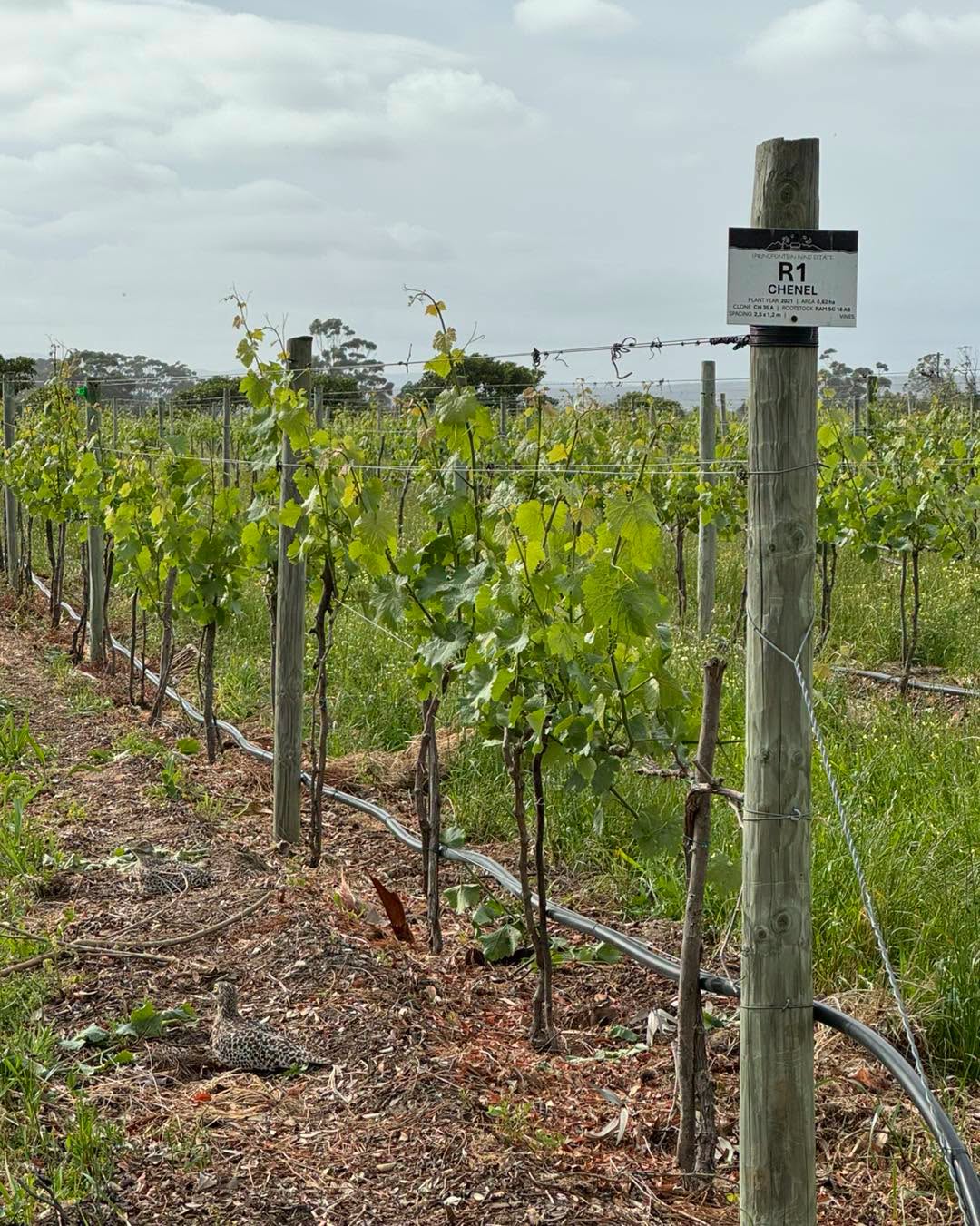
As to the few other local crossings which linger on but are essentially moribund, there’s nothing much to say, except (seeing as I’m here) to mention them dutifully. Chenel (chenin and ugni blanc, the last bit of its name recalling Elsenburg) was once widely planted but there’s little of it left. Grachen (more pyrozenes, reportedy; I notice the name is more or less an anagram of grenache, but I have no idea if that’s relevant) seems to have been one of the later Orffer offerings, but I’d never even heard of it till perusing these lists. Weldra (Welgevallen + dra (carry/bear)) is another chenin-ugni blanc cross, bred to provide high yields for the brandy industry but clearly in even more dire straits than brandy. Neither of these two made it to Robinson’s Wine Grapes, which seems wrong but not worth making a fuss about as they’re almost dead – though, strangely, at least weldra did appear in Jancis’s much earlier Guide to Wine Grapes.
Good luck to Badenhorst-revived colomino, though my hopes are of the faintest. I do still want to hear more about mysterious brakboseiland, and hope that what appears to be its passing (without ever having been properly noticed!) might not be the case.
- Tim James is one of South Africa’s leading wine commentators, contributing to various local and international wine publications. His book Wines of the New South Africa – Tradition and Revolution appeared in 2013.
-
Share:

Comments
0 comment(s)
Please read our Comments Policy here.