
Editorial: Wine and young drinkers? They’ll be alright (probably)
By Christian Eedes, 17 February 2026
-
Share:





12
There’s a persistent anxiety among wine commentators over 40: the fear that the under-40s simply aren’t interested in wine. Read a highbrow editorial or attend a tasting and you’ll hear it murmured, half in sorrow, half in irritation: “They just don’t get it.”
Sometimes this is voiced with genuine concern – what becomes of wine culture without fresh converts? More often, though, it slips into something less flattering: a faintly patronising disdain for those deemed insufficiently initiated into the finer points of terroir and typicity. It might reflect not so much care as a more private anxiety about losing cultural authority.
I’m not convinced wine and generational cohorts (Boomers vs Gen X vs Millennials vs Gen Z) are the issue they’re made out to be. Wine doesn’t care about birth certificates or supposed predetermined mindsets based on age. It responds to curiosity as much as anything. A 70-year-old with no interest in provenance will glance at a label and move on. A 25-year-old with an open mind might suddenly find that a Chenin Blanc or Shiraz speaks to them in ways Spotify, Netflix and TikTok never will. My pivotal moment was encountering Meerlust Red 1985 in my early 20s. If this was not quite grand enough for the Rubicon, then the property’s top label must be very fine indeed, I concluded. The fixation on age brackets as a predictor of tasting ability or willingness to engage with the subject is a category error – one that too many otherwise sensible wine people continue to make.
What I am prepared to concede is that in a world where anxiety levels have probably never been higher, drinkers may gravitate toward experiences that feel immediate, bright, and uncomplicated. Equally, the market has gone nuts with choice. Artisanal coffee, craft beer, and cocktails with playful names and emojis all compete for attention. Everyone, regardless of age, might reasonably want something a little more uplifting in the glass.
Wine, by contrast, can be messy. The drinking experience is shaped by ostensibly unfriendly things like acidity and tannin. Its beauty lies in imperfection: a dusty patch of vines, an awkward vintage, a bottle that smells slightly wrong before it comes right. That kind of unpredictability can feel alien – even faintly hostile – when the rest of life already feels chaotic enough.
However, I’m still not sure how this equates to a generational gap. Rather, it’s a cultural framing problem. What if nobody – least of all the young – is rejecting wine at all? What if they’re simply looking for experiences that feel alive and meaningful, rather than dutiful and instructional? When wine is at its best, it surprises, unsettles, seduces. It hints at a life less ordinary. Wine has always belonged to people who are open to being moved by flavour and story, to those willing to follow a thread of romance through a glass. Age is beside the point. What matters is temperament: a readiness for contradiction and a little glorious mess.
And yet the over-40 contingent too often interprets the absence of younger faces at traditional tastings and dinners as a crisis. “They’re not drinking, so the industry must be dying,” goes the refrain. This is concern cosplaying as stewardship. Obsessing over who is and isn’t showing up is really about our own unease with relevance and authority. Wine doesn’t need gatekeepers, and younger drinkers don’t need validation. They need room to explore, to be surprised, to form tastes without being told what counts as correct.
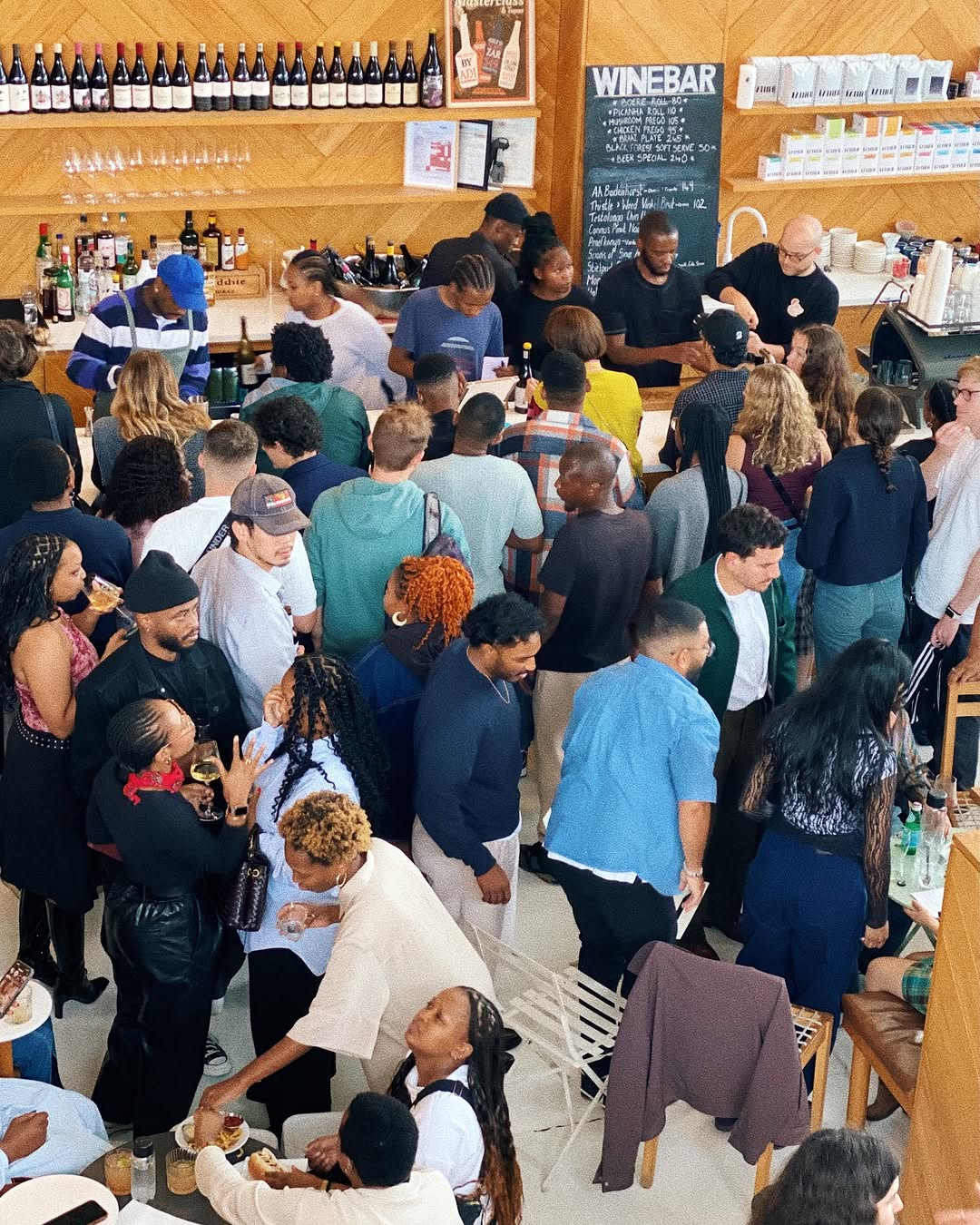
There is, I suppose, a lesson in this for producers and communicators, though it isn’t especially complicated. If you want to reach curious drinkers under 40, you need to meet them halfway: guide without lecturing, intrigue without pandering. Being told what to value rarely goes down well, and inherited ideas of prestige often sound more like habit than insight, especially when the big names are out of reach for all but the wealthiest. Wine isn’t just about where it comes from or who made it; it’s also about a willingness to try something unfamiliar. That impulse isn’t generational – check out any inner-city wine bar scene if you want evidence of this.
Yes, many might be gravitating toward things that are cleaner, sunnier, more immediately comprehensible. But that doesn’t make such consumers the problem. It simply challenges wine to show its best side: its capacity for pleasure, intrigue and enchantment. The people who will keep wine alive – whether they’re 25, 35 or 65 – are the ones who approach it with curiosity, who prefer diversity to uniformity, who are willing to entertain a little disorder in the glass. Wine rewards attentiveness, not conformity.
So let’s stop diagnosing generational divides and start talking about wonder. Wine belongs to anyone prepared to take a chance on it – on an unfamiliar grape, a slightly eccentric producer, a bottle that seems odd until it suddenly makes sense. Wine will do what it has always done: find its way to the openminded and free-spirited.
- Winemag doesn’t charge for most of what it publishes. Subscriptions exist to protect the one thing that can’t be sponsored: independent judgement. Join today.
-
Share:

Related articles
Opinion & Analysis
Clash of the titans: Bordeaux 2016 vs South Africa 2017
16 October 2026
A wine can look very good in isolation. Put it alongside its counterparts from the rest of the world, and the context changes. In a tasting billed as “Clash of...
3
Reviews
Kruger Family Wines new releases
15 October 2026
Want to read this? Christian Eedes’ latest wine reviews are initially reserved for subscribers. Get full access now. SUBSCRIBE NOW Already subscribed? Login
News
12 top restaurants set for Taste of Cape Town
14 October 2026
Taste of Cape Town takes place at Green Point Cricket Club on 28 and 29 November, with 12 restaurants including La Colombe, FYN, Vuur, Upper Union, EDGE Africa and Basson...
keith | 18 February 2026
Hmmmmmmm. Not so sure about this . Alcohol gets such a bad rap nowadays in the press and social media that more and more people, especially the young, are turning off alcohol and/or looking at low alcohol alternatives. Wine of course is not only expensive but also relatively high in alcohol and taxation policies of many countries is exacerbating the situation.
I am a glass half full guy but would not be an investor in a winery nowadays, as I was 20 years ago.
NOmeth17 | 18 February 2026
My observation has always been advertising and marketing has always missed the 12-18% ABV selling point of wine, it has missed the fact that most wines increases your appetite unlike beers, that red wine goes well with a high fat meal, and also spontaneously increases your creativity and that as sometimes we drink for appreciation and good conversation not to forget our problems.
On the first point, how do people skip a whole 12-18% ABV right to 30% or 45% that is from 5%? 10-20% is a market and it seems nobody actually understands that. I am 100% certain that young people would drink and enjoy a vermouth, a Muscat, an aperitif, and obviously champagne and sparkling wine. For all intents and purposes Those are still wines. In my book, wine doesn’t necessarily mean red wine you can fall in love with white wine and only drink that.
Maybe next time you can do n article, on young people…. How many drink or would drink red wine, white wine and other categories. I bet by the time you are done, you will realise the issue is with red wine not wine in general. In my opinion.
Christiane von Arnim | 18 February 2026
I’d be curious to know how many commentators under 40 there are on this platform compared with those over 40. This might provide meaningful insight into the extent to which people < 40 actively engage intellectually with the topic. Or, coming to think of it, perhaps the question about "intellectual engagement" is exactly the wrong one…
James | 18 February 2026
Im under 40 and many of my friends are too, along with being passionately engaged with the wine industry, absorbing as much content as possible.
As commented on in an earlier article, new wine bars are popping up left, right and centre in cape town and they are filled with young people.
Jamie Johnson | 19 February 2026
I’ve no idea about the demographics of WineMag but in the UK the largest active fine wine buying community that I’m familiar with, WineEP, the average age when last polled was around 35 with 1/3 of the members under 30 and 80% under 40.
GillesP | 18 February 2026
It’s great to see more wine bars popping up around the world , no denying we can see that, but at the same time , most restaurants have bumped up wine price to a level making it exorbitant for the most mortals wine passionates. As such discouraging patrons to discover any wine above what they believe is sensible to their budget or staying at home to drink it as best vase scenario. We can witness it heavily on the Cape Town restaurant scene and it is now a big turn off to even want to go to a restaurant knowing you will either only afford a plonk or empty your bank account. I feel we are being robbed in broad daylight. Clearly they are doing not doing anything to support the wine industry.
Wessel Strydom | 19 February 2026
GillesP, I enjoy dining out, but refuse to go to restaurants where I am not allowed to bring my own wine. I will gladly pay the corkage fee and be sure the wine is what I want to enjoy and that it has been cellared correctly .
GillesP | 19 February 2026
Hello Wessel. I am like you trying to bring my own wine to restaurants allowing corkage fee. The places allowing for it have shrinked quite a lot though. Besides the fact that my wife gives me he’ll for doing it when I can! (LoL)
Greg Sherwood | 20 February 2026
You will be saddened yet unsurprised to hear that a relative intolerance towards Corkage is growing through out the UK. on trade recently. Seems to be a growing trend as more and more restaurants now demand that extra margin for their own wines… even when they could make a lot more Cash margin by simply allowing corkage at £50, £60 or £100 per bottle. When pulling out a DRC Echezeaux 2015, paying £100 corkage hardly matters. But when they say NO, we don’t do corkage, I simply move on and book somewhere else.
Keith Prothero | 21 February 2026
Same here Greg
Gareth | 24 February 2026
Same here
Trevor Gray | 21 February 2026
You Smashed it out of the park! As a long time wine sales and marketer, I believe that the restaurant industry has done extreme harm to the wine consumption aspect.
Ordinary wine lists with chunky glassware and wine by the glass options that are stupid prices for box wine.
I don’t order wine in a restaurant and rather drink a beer(sadly) Even heard of a restaurant who charge corkage though they do not have a liquor licence? Bizarre!
And before the fine folk running restaurants raise a lynching party, YES some venues work hard at their wine list and YES it costs money for glassware. The difference is the straight % mark up is a deal breaker.