
Michael Fridjhon: Why is Burgundy 10 times more expensive than the Cape?
By Michael Fridjhon, 14 October 2026
-
Share:





1
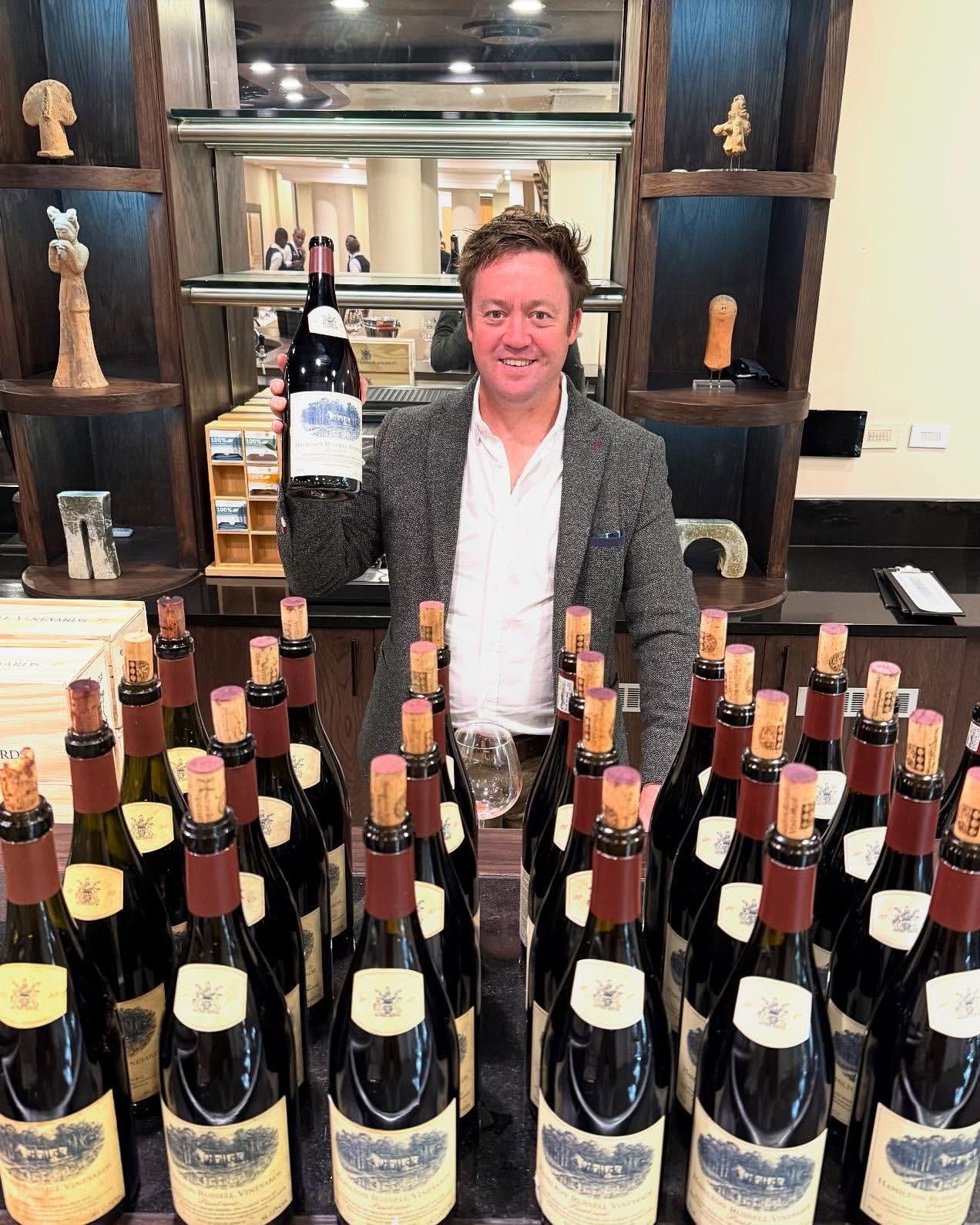
One of the abiding lessons from the famous Judgement of Paris tasting hosted 50 years ago by the late Steven Spurrier in Paris is the discrepancy between the price points of New World producers and those of their competitors in the Old World. “Unknown” (not just to the French but also to all international markets) Californian wines, selling for a fraction of what people were paying of top French wines, outperformed many of the world’s best-known wines from legendary appellations. Amongst the vanquished were Chateaux Mouton Rothschild and Haut Brion and a Batard Montrachet from Ramonet.
Very little has changed since then. Yes, a few “iconic” international wines (Grange, Opus One) have seen their prices increase to align with the middle to upper end of the market (mainly in the last two decades), likewise some “unobtainable” cult wines (Harlan and Screaming Eagle, for example). But the gap between the leading New World producers and their European counterparts has not narrowed since then. Rather, it has increased significantly over the last half century.
Quality isn’t the problem
There are no technical reasons for this pricing discrepancy. Jancis Robinson recently reported on a series of blind tastings hosted by Smith and Sheth (the new big name in Kiwi Chardonnay) of their top cuvées lined up against some Burgundy collectibles. The most expensive New Zealand wine sells for under £100. The most expensive French wine – Domaine Leflaive Montrachet 2023 – retails for over £1,100. The only wine she scored above 18/20 (it finished on 18.5/20) was the Smith and Sheth Les Graviers 2024. Almost all of the Burgundies – and certainly all of the premiers and grands crus – price well into £250+ territory. These are not small pricing differentials – you could be talking about the produce of two different planets.
Meantime a very interesting study, published originally in the International Journal of Wine Business Research, analysed production practices and business strategies between Burgundy, New Zealand and South Africa. “Beyond terroir: a comparative analysis of Pinot Noir producers and business strategies in Burgundy, New Zealand and South Africa” (Depetris Chauvin, Pinède, & Priilaid, 2024) compared human capital, equipment and the working environment. The results were not necessarily surprising, though the extent of the differences is worth sharing: “92.9% of surveyed South African Pinot Noir wineries employ staff with formal oenology degrees (versus 39.5% in Burgundy), and 60.7% hold business degrees (versus 26.7% in Burgundy). • Technological Sophistication: South African producers post the highest winery equipment index across all three regions (60.1% vs. 49.6% in Burgundy), combining modern cellar automation with meticulous hand-harvesting (96.2%).”
There’s nothing surprising about either of these two outcomes – the Chardonnay tasting or the quantification of the technical competences of New World versus Old World producers. And this is actually where we should pause, and allow ourselves the surprise which would be the most likely reaction of a Martian presented with this evidence.
The price gap has widened
Fifty years after the Judgement of Paris tasting, half a century into an era in which it is widely recognised that fine wine does not have to come from a few appellations in France, the pricing differential in favour of the Old World has actually widened considerably. In the mid-1970s you could buy DRC Montrachet for R25-00, Jadot Montrachet for R15-00 and Chevalier Montrachet for R10-50. Krug cost R9-50 per bottle, Cristal R12-50, Chateau Leoville Lascases R10-50 and Chateau d’Yquem R25-00. At the same time Alto Cabernet sold for R3-50 and Theuniskraal Gewürztraminer (the highest priced SA white wine on the list I consulted) R1-90. These numbers tell us that R25-00 per bottle was the upper limit of price tolerance even for the world’s most iconic wines, and that South Africa’s most expensive cabernet sold for exactly one third the price of a Bordeaux Super Second.
Today – and if you exclude tiny volume wannabe cult wines whose pricing is not a reliable indicator of demand – this gap has widened. Currently Kanonkop Cabernet sells for one tenth the price of Leoville Lascases. The most expensive Cape chardonnays – say Delaire-Graff Terrace Block, Kershaw Deconstructed, or Capensis – hover around R1,500, which again is no more than 10% of the price of high-end (but not unobtainable) white Burgundy.
What happens next?
Two patterns are instantly discernible: the first is that the Old World has powered ahead price-wise despite the undisputed quality of the New World offering; the second is that the stratospheric pricing is simply a measure of demand from collectors and investors. This may have peaked, and could even be on the decline. There’s also no certainty, given climate change and the economics of fine wine, that the blue-chip purchases of 2026 will occupy the top slots on the ladder in 2076. But if prices really ease (and they should – much of what has fuelled their disproportionate increases has been worldwide demand for limited resource commodities) it’s also not certain that the New World will usurp these elevated price-points: if the bubble bursts it could lead to a complete realignment for everyone.
The past half century may have broadened the supplies of fine wine (and vastly increased the number of sites supplying them) but the primary beneficiaries have been the established producers of the Old World. This means that despite everything, the New World is still playing catch-up. Maybe with climate change (New Zealand’s chardonnays grow in a place which today is much cooler than the Cote de Beaune) the virtues of these more faraway appellations will become more evident. It’s possible that the Cape and the Antipodes will be the new centres of luxury wine in 2076, and the Old World’s best producers will be battling to make a living. What is clear however is that for now the pre-eminence of the Old World, as measured in retail price premium, remains unassailed.
- Michael Fridjhon has over thirty-five years’ experience in the liquor industry. He is the founder of Winewizard.co.za and holds various positions including Visiting Professor of Wine Business at the University of Cape Town; founder and director of WineX – the largest consumer wine show in the Southern Hemisphere and chairman of The Trophy Wine Show.
-
Share:

Related articles
Opinion & Analysis
Michael Fridjhon: The great wine shakeout
16 September 2026
The world of wine is shrinking. Pretty much in every country – with very few exceptions – more vines are being removed than replaced. Less wine is being drunk, and...
3
Opinion & Analysis
Michael Fridjhon: Wine scores haven’t failed – we’ve debased them
12 August 2026
Christian Eedes’s recent piece on judging, scoring and the role of the critic was a masterly summary of the issues being debated in the admittedly rarefied space where people ponder...
4
Opinion & Analysis
Michael Fridjhon: Fine wine fame is earned one visitor at a time
15 July 2026
Many South African wine producers, especially those who are relatively recent arrivals on the international stage, lament the years of isolation – not just the 1980s as an era, but...
Louis | 14 October 2026
Burgundy and Bordeaux are in a league of their own, with history, prestige and collector demand driving prices far beyond quality alone. The same could be said of Eben Sadie’s wines within South Africa.
A more meaningful comparison would be between Cape Pinot Noir and its counterparts in New Zealand, Australia or Argentina. How do they compare on quality, recognition and price?
I still maintain that, in the price-sensitive international market, South African wines are often relatively expensive, competing with better-known regions or producers offering organic and biodynamic credentials. The value proposition of SA wines isn’t always as compelling as we might think.