Reviews and ratings - only R55 per month.Subscribe
Magazines might be dead but media isn’t
According to Google Analytics, we had 28 477 users in June, an increase of 20.5% year on year. We are proud of this given the generally tough trading conditions for media – we are once again saddened to see magazine title closures and consolidations, this time at Media24.
At the end of last year, we began a reader funding drive to cover some of our costs and continue to provide coverage of an industry we all care deeply about. We suggested an amount of R600 a year or R50 a month per individual with a view to achieving a total audience contribution of R300 000 per annum. To date, we’ve had just over 140 people pledge their support. We are most appreciative, but we still have a long way to go to reach our above-mentioned target by the end of 2020.
Although Cabernet Sauvignon has been cultivated in South Africa since at least the late part of the 19th century, the Cape Bordeaux Red Blend is a relatively recent phenomenon, Paarl winery Welgemeend producing the first in 1979. For those attempting to work within the idiom of Bordeaux, Merlot is often key and it would appear that this wasn’t widely planted until the 1970s – Overgaauw in Stellenbosch is credited with first varietal bottling in 1982.
Why the rise of the Bordeaux-style red blend? The 1970s and 1980s finally saw a reaction to the concentration of power that had prevailed in the wine and spirits industry until then – the introduction of Wine of Origin legislation in 1973 focused attention in South Africa on the potential of the individual property, rather than multi-regional, branded wine. Whereas low-price table wine made by large producer-wholesalers had long been the hallmark of the South African industry, there was now a movement towards quality. The authority that Bordeaux held in the world at large was an obvious reference point and such wines sprang up in an attempt to leverage that authority in a South African context – after Welgemeend, came Rubicon from Meerlust in 1980, Paul Sauer from Kanonkop a year after.
Perhaps an even more interesting question is: Why the continued predominance of the Cape Bordeaux Red? To an extent, it’s because of the proven success of such wines. Over time, Rubicon and Paul Sauer have been joined by De Toren Fusion V, Rupert & Rothschild Baron Edmund and the Series C and Series M from Vilafonté to name just a few examples.
Still, it’s a little curious that Cape Bordeaux Red Blends are so entrenched, especially given two not insignificant drawbacks, the first being that these wines are inevitably derivative and the second is that they typically include Merlot, a variety that has fundamental growing challenges under local conditions leading to a critical reputation that is generally less than stellar.
In the world of wine were supposedly authenticity is all, it might be considered unfortunate that so many of South Africa best producers feel compelled to ape a region in France in order to be taken seriously. Moreover, Cape Bordeaux Red Blends demonstrate that there are still stylistic divides with the ranks of South Africa’s fine wine producers, this genre very much the preserve of the Establishment. It’s is difficult to think of anybody who might even be vaguely construed as New Wave who chooses to make such a wine bar perhaps Bruwer Raats who turns out both the acclaimed MR De Compostella as well as some more unconventional offerings such as the Cape White Blend known as Harlem to Hope under the B Vintners label. Miles Mossop, too, has the Bordeaux-style Max to accompany his Cape White Saskia but for all his accomplishments during his previous tenure at Tokara, you wouldn’t have typically described his wines under that label as “radical”…
And yet, here we are. The New Wave may argue that all manner of varieties other than Bordeaux are better suited to local growing conditions but these conditions are fundamentally moderate (at least prior to the onset of climate change) and just about any variety grows well enough here so why not those that demand a premium in the market place?
Merlot may be fickle in the vineyard but it should be noted that it still manages to be South Africa’s eighth most widely planted variety with 5 371ha in the ground at the end of 2019. In addition, it may very well be that the best Merlot is most frequently used in blends rather than appearing as a single-variety wine (of course, the challenge is on to make a consistently good stand-alone Merlot, a challenge that the likes of Laibach in Stellenbosch and Shannon in Elgin have embraced). When contemplating South Africa’s very best red wines, then it seems that cheap talk and rhetoric don’t get you as far as money and Cape Bordeaux for many is where the money’s at.
Hannes Storm started out at Hamilton Russell Vineyards before going on his own in 2012, working with Chardonnay and Pinot Noir to articulate the differences in the site that make up the greater Hemel-en-Aarde area. It is interesting to note that Storm feels his 2018 Pinots have “slightly more perfume and opulence” than the 2017s to which I would say they perhaps don’t have quite the same intensity and energy. His two Chardonnay offerings from the 2019 vintage, meanwhile, are sensational. Tasting notes and ratings for the current releases as follows:
Storm Vrede Chardonnay 2019 W.O. Hemel-en-Aarde Valley. An utterly compelling nose showing lime and lemon, blossom, a hint of struck match and some yeasty complexity. The palate is extraordinarily vivid – excellent fruit concentration, bracing acidity and a pithy finish. Provides great intensity of flavour while being entirely harmonious.
CE’s rating: 96/100.
Storm Ridge Chardonnay 2019 W.O. Hemel-en-Aarde Ridge. Aromatics of pear, peach and citrus with a hint of earthiness. Slightly sweeter and rounder than its counterpart above but hardly weighty. Lovely fruit expression matched by bright acidity, this has a winning sleekness about it.
CE’s rating: 94/100.
Storm Vrede Pinot Noir 2018 W.O. Hemel-en-Aarde Valley. Cherry, strawberry, musk, earth and some chariness on the nose. The palate is relatively rich and broad with an almost creamy texture, the finish remaining savoury.
CE’s rating: 92/100.
Storm Ignis Pinot Noir 2018 W.O. Upper Hemel-en-Aarde Valley. The nose shows musk, red fruit and white pepper. The palate is light bodied with good fruit definition, fresh acidity and a gently savoury. Pure, balanced, blemish-free.
CE’s rating: 92/100.
Storm Ridge Pinot Noir 2018 W.O. Hemel-en-Aarde Ridge. A pretty nose showing red fruit, rose, fynbos and spice while the palate is relatively lean with nicely sour acidity and fine tannins, the finish having a saline quality to it.
CE’s rating: 92/100.
Find our South African wine ratings database here.
Attention: Reviews like this take time and effort to create. We need your support to make our work possible. To make a financial contribution, click here. Invoice available upon request – contact info@winemag.co.za
I know what the regulations say but I am not yet ready to return to restaurants. I will continue to support struggling food businesses by purchasing takeout but actually eating-in still feels frightening. I am aware that such anxiety is a #richpeopleproblem. I know that, while I fuss and fret, many South Africans (including many restaurant workers) are destitute and hungry but I am simultaneously scared by rising rates of Covid-19 and put-off by the procedures that restaurateurs are required to impose in order to prevent infection. The idea of all that telephone number taking and masked waitering amidst half-empty dining rooms doesn’t appeal. Besides, my pleasure in eating out is significantly reduced if I am not allowed to do it with a glass of wine in my hand.
Above and beyond all of the above hunkering down at home is my standard seasonal behaviour. Where I live we are definitely in the deep mid-winter. Even in the healthiest of Covid-19-free years, I do go to restaurants much in June and July. The only exception to the winter stay-in-and-cuddle-up-on-the-couch-with-comfort-food behaviour pattern is my annual school holidays sun, sea and sandcastles sojourn in KZN. eThekwini not only has all year warm weather but also delicious Durban Diaspora style curries which are well worth getting off the sofa for. I have spent many a happy holiday messily munching on Jeera restaurant’s crab curry at the Suncoast Towers or staining my fingers turmeric yellow on the Britannia Hotel’s magnificent mutton bunny chow.
For a variety of reasons, there will almost certainly be no seaside for me this year. Fortunately, I have found a very pleasant way to partially gratify wanderlust while I wait. And also support at least one of the businesses that I would normally be buying from at this time of year. I can’t go to Durban but thanks to the magic of online shopping Durban can come to me. Well, sort of. The Harie family have owned their fabulous Spice Emporium on Monty Naiker Road in the city’s CBD for 3 generations. The shelves of their real-life shop are piled high with every Indian and Indian Diaspora ingredient imaginable. They are open for walk-in business but for those of us who can’t get to them a visit to SpiceEmporium.co.za allows for lovely virtual and actual epicurean escapism. First, there is the online store diversion of picking then clicking on all the delicious products and then, three days later, there is the pleasure of aromatic parcels actually arriving via courier.
Take no prisoners.
Inspired by the free delivery for purchases over R750 I didn’t hold back on pickles and preserves. The Spice Emporium do sell the posh, imported-from-India Swad chutney range but my preference is for the hotter, redder, oilier local ranges made in Durban with names like Halima’s Homemade and Mr Sarkhot’s Premium Pickles. These are take-no-prisoners style relishes. I ordered many, many jars of startlingly strong crunchy carrot, masala mango and kumquat flavoured sauces (R39 for 375grams). These Durban delights inevitably leak a little in transit. If you have recently received a parcel with splotches of orange tinted oil, it probably shared a delivery van with my pickles.
Add an instant hit of heat.
It is perfectly possible to make one’s own curry pastes but it is wonderful to have a stack of ready-made spice-laden sachets in the cupboard. They are a brilliant way of adding an instant hit of peppery heat and punchy tastes to the most ordinary of quickly pulled together weeknight winter stews. Thanks to the Spice Emporium website my pantry is now piled high with a plethora of Nimkish spice pastes in a multitude of flavours (prices range from R31 to R60 per 50g sachet). Curiosity prompted my purchase of 100g each of spice blends labelled Mauritian masala, Durban Delight masala and Harie Krishna masala (R70 per kg).
In complex and confusing times, lucky people retreat into sulking and snacking. Saturday night Netflix binges are better with a packet of masala marinated, locally foraged wild figs (R23.50) or rice flour and cumin deep fried murukku snacks (R9.50 for 10 spirals). Those with the patience to open a box, add water, stir and wait while the pre-mix steams will adore the soft, spongy, super-delicious, chickpea flour, chilli, ginger, mustard seed and yoghurt curd khaman dhokla cakes. Each box includes lovely little packets of green chutney and tamarind relish. I ordered 5 boxes (R25 per 180g).
This wretched virus and its associated restrictions on travel for pleasure are set to continue for the foreseeable future. The bad news is that nothing can really replace the terroir-specific joy of eating at Sunrise Chip ‘n Ranch (also known as Johnny’s) in Sydenham, Durban. There is no way to replicate the feeling of eating a late-night roti roll off the hood of a car with doef doef music blasting in the background. The good news is that ordering online from Spice Emporium is nearly as nice.
Dr Anna Trapido was trained as an anthropologist at King’s College Cambridge and a chef at the Prue Leith College of Food and Wine. She has twice won the World Gourmand Cookbook Award. She has made a birthday cake for Will Smith, a Christmas cake for Nelson Mandela and cranberry scones for Michelle Obama. She is in favour of Champagne socialism and once swallowed a digital watch by mistake.
Attention: Reviews like this take time and effort to create. We need your support to make our work possible. To make a financial contribution, click here. Invoice available upon request – contact info@winemag.co.za
Large and in charge.
Tempranillo, the dominant grape in Rioja, Spain’s most famous wine is not widely planted in South Africa, total area under vineyard amounting to 104ha at the end of last year. Dornier in Stellenbosch have been inclined to bottle a single-variety table wine from it for a while now, the latest incarnation being the Reserve 2016, matured for 44 months in barrel – 12 months in new and second-fill French oak, 12 months in new and second-fill American and then 20 months in second-fill French!
The nose shows dark fruit, dried flowers, vanilla, earth and spice plus a little nuttiness – it’s oxidative but not excessively so. The palate, meanwhile, is rich and broad but not without freshness. Creamy in texture and possessing layers of flavour, the finish long and gently savoury, this has plenty of interest. Price: R225 a bottle.
CE’s rating: 93/100.
Find our South African wine ratings database here.
Attention: Reviews like this take time and effort to create. We need your support to make our work possible. To make a financial contribution, click here. Invoice available upon request – contact info@winemag.co.za
The Site-Specific range from Wellington cellar Bosman Family Vineyards consists of three wines, these being the Optenhorst Chenin Blanc vineyard planted in 1952, the third oldest in the country; Fides Grenache Blanc, winemaking involving extended skin contact and Twyfeling Cinsaut.
The current-release Optenhorst 2017 rated 93 in August last year and the Fides 2017 92 in the Alternative Varieties Report released in the preceding April. The 2018 vintage of Twyfeling Cinsault is now out, tasting notes and rating as follows:
Bosman Family Vineyards Twyfeling Cinsaut 2018
Price: R240
Grapes from a 2003 vineyard. 10% whole-bunch fermentation. A complex nose with a top note of candy floss before strawberry, cherry and plum plus some earthiness and a little reduction in the background. The palate meanwhile is relatively full (alcohol is 14.29%) with moderate acidity and soft tannins. Plenty of flavours and a pleasure to drink.
CE’s rating: 91/100.
Find our South African wine ratings database here.
Attention: Reviews like this take time and effort to create. We need your support to make our work possible. To make a financial contribution, click here. Invoice available upon request – contact info@winemag.co.za
The following received via email from Simon Shear, who is a writer, editor and “recovering entrepreneur” based in Johannesburg:
It could be fresher, lighter styles of classic blends or the use of underappreciated varieties; sometimes it is distinguished by low intervention methods, and sometimes pushing the boundaries of established methods. It might mean using concrete eggs or amphora or adding wood where no one would have thought to add it before, or removing it where it was previous de rigueur. The wines may be self-consciously unpolished, or sometimes a kind of grownup juice for millennials (I’m looking at you, Cinsaut). Often, New Wave wines are as refined and elegant as wine gets.
In many ways, the New Wave may be as much an attitude as a style, but there’s also a definite type, even if not reducible to any single characteristic, which maybe is defined in the negative: whatever a traditional Stellenbosch Cab is, it’s not that.
Some of the prime suspects. From left to right: Stompie Meyer, Marelise Niemann, Duncan Savage, Thinus Krüger, Peter-Alan Finlayson, Francois Haasbroek, Trizanne Barnard, Mick Craven and John Seccombe. Front: Chris and Suzann Alheit.
At the same time, the New Wave is also… a bunch of folks in rumpled t-shirts and jeans.
It’s no real surprise that people who spend their time in Stellenbosch and surrounding areas aren’t wearing cravats and monocles, but I can’t help do a double-take when I realise the new field blend described with such breathless enthusiasm in the FT was made by that sunburnt guy in cargo shorts with the scruffy beard.
That’s not a criticism. SA’s young winemakers seem unusually nice, and there’s a profound camaraderie where one might expect rivalry. They’re absolutely dedicated to their craft, without displaying any bombast and pompousness, passionate without being self-serious.
I’m not exaggerating when I say it’s a model of the good life. A community striving towards perfection, without being constrained by pompous formality, sharing knowledge and genuinely doing what they love.
Which is not to say it’s easy. Producing small batches of fine wine, even with the support of a community, takes real talent, plus blood, sweat, tears and risk, with the real possibility of catastrophic failure. And that was before lockdown.
It also takes – and this should not be controversial in a South African context – a degree of privilege. You need, among other things, access to capital and some degree of financial breathing room. It also helps to know the right people. In a country that is by some measures the most unequal on earth, it should go without saying that opportunities for participation in any sector, not least in a sector producing luxury goods for a niche target market, are relatively scarce. (Putting aside for the moment the uniquely fraught history of the agricultural sector.)
After all, pouring tastings of your R800 syrah in shorts and slops may be a uniform of outsider status, but it’s also a sign of the precise opposite: a group comfortably located in its milieu.
They’re mavericks, but they’re not here to upend our sense of the good and the beautiful; they’re here to extend and advance them: to broaden the ways in which wine can be fine, to realise the potential of new techniques and terroir, and to have fun doing it.
That’s especially impressive not just because of the relatively staid state of South African wine just a couple of decades ago, but also because the standards of fine wine are globally determined and it takes a lot for young pretenders to reconfigure.
Sommelier Rajat Parr and Jordan Mackay make the point succinctly, and in no uncertain terms, in their book Secrets of the Sommeliers: “If you want to be a good taster, you must have reference points. You must know the Old World regions backwards and forward. Most great wine being made elsewhere in the world – from Napa to New Zealand – gets its style and identity from the wines that came before it. This is why we focus on regions – Bordeaux, Burgundy, Champagne, Tuscany – whose wine styles are as consistent and relevant today as they were twenty or forty years ago or even longer.”
It’s not simply that to appreciate wine, one must have tasted ‘the greats’. More fundamentally, there is a classical canon, and the art of wine is understood in terms of how it fits in, or is adjacent, to that canon: “To understand the essence of Pinot Noir, begin with Burgundy. If you want to know what Merlot should taste like, try wines from Pomerol.”
Think also of the way we discuss and evaluate wine. If typicity necessarily means comparisons with Old World benchmarks, at least at the highest levels of the international wine trade, the ways we make those comparisons are also given to us. If the essence of Pinot is Burgundy, that essence is captured in metaphors that don’t always sound like metaphors (cherries, blackcurrant, truffle) and ones that do (forest floor).
To appreciate fine wine – or rather, to participate in the institutional appreciation of fine wine – you need to familiarise yourself with a body of descriptors that may or may not match your everyday experience. (Sommeliers in Luanda, Delhi, Manila or Pretoria may associate ‘red fruit’ with raspberries and strawberries or other sets of fruits altogether.)
Which is no bad thing. Expanding your powers of perception and descriptive categories is as compelling, as description of the role of culture as any. And if you want to understand how Pomerol winemakers think about their production process, which surely you do better to understand their wines, it helps to know what French plums taste like, and the cultural associations they provoke.
But that expansion overwhelmingly goes in one direction. Who gets to define what it means to perceive wine ‘properly’?
In the ‘New World’ (a term that denotes hierarchy almost as much as temporality), it is a select group of people with sufficient knowledge or at least a sense of cultural tranquillity. (What does it mean to say a local white blend has hints of fynbos? I have no idea, but I don’t let it bother me.) Someone who didn’t grow up drinking fine wine, who may be much more familiar with entirely different culinary traditions, and whose home language employs different metaphorical nuances from the ways English and Afrikaans attempts to map onto French and Italian, should ideally be able to enrich the ways we think about and describe wine; realistically, they will be expected to suppress those influences and swap them for the orthodox ones.
It’s important to be clear about the kind of privilege we’re talking about. Very few of us will ever own a bottle of Petrus, and that’s just too bad. But that is very different from the invisible barriers that exist from introducing new types of cultural awareness into a dominant aesthetic framework.
Of course, cultural capital and the more literal kind of capital are intertwined. At the height of his influence, Robert Parker could probably have said Bordeaux should taste more like Pepsi and producers would have tried to work in some cola notes, but then he is an attorney with an extremely fine palate wielding massive influence over consumers in a dominant import market.
On the other hand, when the MD of Cristal lamented his product’s popularity in the hip hop world, his not so subliminal racism was shocking enough to make one forget that champagne as a luxury good is a pretty kitsch product itself, with it’s carefully tended branding, its commercialised consistency, the gold coiffe and hyperstylised advertising (it’s no coincidence that the LVMH brands form a coherent ‘lifestyle’ package.)
What is the right kind of kitsch? Silly hats at the Royal Ascot but not Miami Cuban link chains at the club?
(I type this with a view of the pathos drooping over my vintage bookshelf, carefully positioned for Instagrammability: an unintentional self-parody of millennial aesthetic sensibilities.)
Let us not pretend that parts of the winelands are not a kind of Disneyland for adult bourgeoisie – it’s part of the fun! A designer wine estate where you can gawk at Tretchikoffs may be a pleasurable day out, but it’s hardly a highbrow application of critical faculties (and why should it be?)
Precisely the reaction against that kind of kitschy spectacle is part of what makes the New Wave so appealing, though doubtless as it becomes more brandable, the movement risks congealing into its own set of aesthetic tics. Which is cool; it’s how fashion works. But only a select few get to participate at Fashion Week.
Inclusivity is not diversity
There’s no need to demystify wine in some banal way. Engagement with an arcane body of inscrutable terms is part of the fun of many enthusiasms. But nor should we be satisfied with merely making the culture ‘more inclusive’.
Consider the ways in which fine wine is like classical music: technique and taste developed through time.
Anyone wishing seriously to participate in the production or assessment of Western classical music would be expected to have attained a degree of technical mastery and deep familiarity with the canon. It’s hard to see how it could be, or ought to be, otherwise.
You don’t need to master its jargon or play by its rules to make music, but you will always operate outside the institutions of prestige if you do not. Which is not to say the only way in is to emulate old masters. On the contrary, you shouldn’t sound exactly like Bach to be considered an original talent, but you will need the vocabulary to defend, say, your theory of atonal composition. If you want to be taken seriously as a maverick, it helps to have graduated from Juilliard.
What if you want to make participation at the highest level more accessible? Not just because you think it’s the socially responsible thing to do, but because your love of the art form moves you to want as many people as possible to be able to participate. (Or simply because you want to expand the pool of interested consumers.)
You might invest in education, offer scholarships to previously excluded communities, organise outreach and institute a plan to hire a more diverse workforce. Looking inwards, you may engage in soul searching or sensitivity training to help create communities and institutions more welcoming to the previously excluded.
And that’s all great, as far as it goes, but it’s a limited sense of inclusivity that aims to make a greater number of ‘outsiders’ just like insiders, without necessarily expanding the range of what it means to operate on the inside.
For example, at least some institutions and communities dedicated to the performance and understanding of Western classical music have sought not merely to widen their community, but to decolonise their communities and forms of practice.
I imagine that term will raise the hackles of many readers, because of the crude way decolonisation, in this sense, is used in popular media. But – bear with me – the work of decolonising a field of endeavour, at least in the modest way I am using it here, is not to reject the received canon, but to recover suppressed influences, to pay close attention to how power is concentrated in terms of gatekeeping (cultural as much as financial) and to open the canon to multiple modes of influence, appreciating the historically contingent ways in which taste is made and enforced. And we’ve seen precisely those efforts, by institutions that theorise and practice Western classical music, which, far from compromising on excellence and rigour, enrich, enhance and foster creativity.
That’s a lot of big words to talk about making and drinking wine. But practically speaking, it just means that creating a more equitable society demands more rigorous reflection on what it means to be part of a community and taking commensurate action. It also means that if we take wine seriously enough to think it culturally important, then we should want to enrich that culture, not retreat into stagnation.
But I must end with an important caveat. This conceptual sketch counts for little without detailed accounts of what it is actually like to work in the industry, in different roles and different levels, as a ‘previously marginalised’ person or ‘outsider’.
If nothing else, I hope to encourage those with the power to do so to seek out and elevate those voices, and to take them seriously.
That is not a radical programme. A truly radical programme of redistribution would render these considerations moot. But that is a conversation for another time.
Topic for discussion.
Paulus Wine Co. is an undertaking by Paul Jordaan, winemaker at Sadie Family Wines, and his French partner Pauline Roux, Bosberaad 2019 the second vintage of a Chenin Blanc from old-vine Paardeberg grapes.
It currently presents as very subtle. Pear, citrus and white peach along with hints of hay and dried herbs on the nose before a palate that is clean and fresh with a lightly savoury finish. There is a sense of more to come with time in bottle. Approximate retail price: R310 a bottle.
CE’s rating: 92/100.
Find our South African wine ratings database here.
Attention: Reviews like this take time and effort to create. We need your support to make our work possible. To make a financial contribution, click here. Invoice available upon request – contact info@winemag.co.za
Here are our top wines of last month:
Anysbos Disdit 2019 – 97 (read the original review here)
Sons of Sugarland Syrah 2019 – 97 (read the original review here) Thorne & Daughters Rocking Horse 2019 – 97 (read the original review here)
Gabriëlskloof The Landscape Series Magdalena 2018 – 96 (read the original review here)
Gabriëlskloof The Landscape Series Syrah on Sandstone 2018 – 96 (read the original review here)
Boschkloof Epilogue Syrah 2018 – 95 (read the original review here)
Carinus Family Vineyards Polkadraai Heuwels Chenin Blanc 2019 – 95 (read the original review here)
Crystallum Cuvée Cinéma Pinot Noir 2019 – 95 (read the original review here)
Gabriëlskloof The Landscape Series Syrah on Shale 2018 – 95 (read the original review here)
Miles Mossop Saskia 2017 – 95 (read the original review here)
Leftover food in the room of migrant from Zimbabwe, April 2020. Source: AP Images.
Okay. So let’s start with art, again.
At the food stores, the presence of need lingers outside in the tattered figures who ask for bread, jars of peanut butter, fish paste. Negotiating this confrontation of want is so different from the ritual that played out with the car guards in a previous era. Was it four months ago? In this time of the virus, the history of the present has taught a tough lesson: Hunger is on the pavement, starvation lingers, for now, just out of sight.
In this time of need, a local auction house recently sold a painting by a what-should-be upcoming artist for a blistering R120 000. To be honest, it is an engaging work – of the sort that demonstrates that a talented youngster can bring something new to view, prick the imagination. And thank goodness for that. But at R120 000?
Leave aside for a moment the argument that handing over such a large sum to a young artist at the start of a career may be sending out a wrong message – boosting expectation, signalling a warped sense of value or worth, hijacking a creative vocation in the making, yet to become, to be nurtured. But consider the mind, motivation and, perhaps the ethics at play when someone is prepared to pay that amount of money for something that would look nice on a wall.
Think of an amount that would, for a long, long time, take care of the families of those that now ask for a loaf of bread, a jar, when we walk out of the Spar, Checkers, Woolies.
In the Cape Town suburb of Grassy Park, Voice of the Voiceless, run by Howard Downes, currently feeds more than 300 people daily. In nearby Lavender Hill, Philisa Abafazi Bethu, run by Lucinda Evans, hands out food to 1 500. The Lavender Hill Sports & Recreation Foundation looks after children, the disabled, those with HIV and the elderly. Some 500 people get food each day.
The average cost of a cup of soup, those who provide say, is around R1.20. That prices the painting at 100 000 people meals.
At this stage, if you’ve read this as a visitor to the Winemag website, you would have reacted – shrugged your head and given up on my assertion; or, maybe come up with a hothead economic argument in defence of the art collector, supporter of new talent, who may or may not have bought a loaf of bread and a jar when last leaving the shop with a grocery bag.
The Covid-19 pandemic has kicked up many arguments trying to justify the high life. It had to when hunger isn’t sticking to the established city and social geography. The argument is usually a variation of the neoliberal hobbyhorse of ‘trickle-down’ paradigm.
This mostly discredited Chicago School of economic theory has been a key for most of the superficial arguments about the effect of the lock-down on restaurants, small businesses, etc. Staff losing jobs, etc., trickle-trickle down the line. Of course, on the face of it, it is true and sad, even tragic. But there are, thankfully, more voices pointing out that at the heart of the problem is a structural dysfunction.
Whatever your opinion and argument for, against, or about the One Percent – the rich with the clout, the outrage of contemporary capitalism – is, the present pandemic’s social upheaval is a visceral signal of that dysfunction.
Going further than Anna Trapido’s call for ‘Luxe Ubuntu’ in the restaurant business, the Nigerian-American activist writer/cook Tunde Wey has stirred up controversy by calling for the demise of the current restaurant hierarchy. (And let’s take wine as a hanger-on here.)
Wey calls it “An industry where on the higher end is great food at fat prices in spaces that drive up real estate values, pushing property prices higher and poorer people further. And on the lower scale, working poor people, making barely enough to keep them going, serve low nutrition meals to other working poor people, who can’t afford quality housing because of predatory development. Let it die …this old god prioritizes the capital of a few people over the labor and lives of many.”
The fat price is of particular note – to get back to the beggars outside our stores today and tomorrow.
I wonder what one of those ragged people would say to the art collector who forked out that R120 000 for a painting, perhaps ordered a lockdown food hamper from Luke Dale-Roberts for R1 800, and maybe even paid R30 000 for the six bottles of Alheit Radio Lazarus 2016 (that’s 4 166 people meals per bottle) at a recent Strauss & Co wine auction.
In this time of need, I suppose some have other needs.
Melvyn Minnaar has written about art and wine for various local and international publications over the years. The creativity that underpins these subjects is an enduring personal passion. He has served on a few “cultural committees”.
Attention: Articles like this take time and effort to create. We need your support to make our work possible. To make a financial contribution, click here. Invoice available upon request – contact info@winemag.co.za

 At the end of last year, we began a reader funding drive to cover some of our costs and continue to provide coverage of an industry we all care deeply about. We suggested an amount of R600 a year or R50 a month per individual with a view to achieving a total audience contribution of R300 000 per annum. To date, we’ve had just over 140 people pledge their support. We are most appreciative, but we still have a long way to go to reach our above-mentioned target by the end of 2020.
 In the world of wine were supposedly authenticity is all, it might be considered unfortunate that so many of South Africa best producers feel compelled to ape a region in France in order to be taken seriously. Moreover, Cape Bordeaux Red Blends demonstrate that there are still stylistic divides with the ranks of South Africa’s fine wine producers, this genre very much the preserve of the Establishment. It’s is difficult to think of anybody who might even be vaguely construed as New Wave who chooses to make such a wine bar perhaps Bruwer Raats who turns out both the acclaimed MR De Compostella as well as some more unconventional offerings such as the Cape White Blend known as Harlem to Hope under the B Vintners label. Miles Mossop, too, has the Bordeaux-style Max to accompany his Cape White Saskia but for all his accomplishments during his previous tenure at Tokara, you wouldn’t have typically described his wines under that label as “radical”…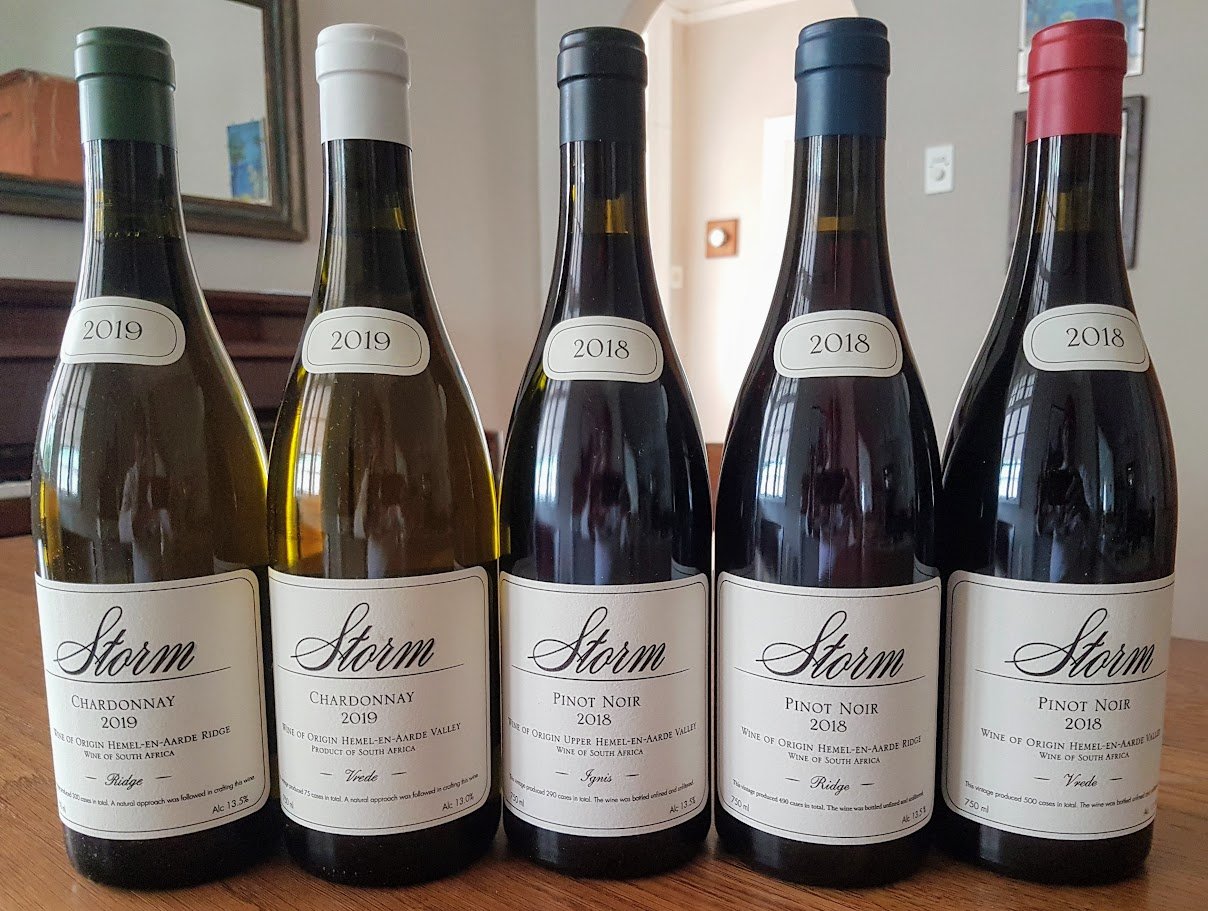



 The Site-Specific range from Wellington cellar Bosman Family Vineyards consists of three wines, these being the Optenhorst Chenin Blanc vineyard planted in 1952, the third oldest in the country; Fides Grenache Blanc, winemaking involving extended skin contact and Twyfeling Cinsaut.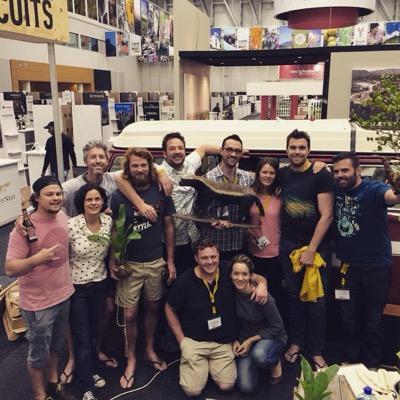

 Here are our top wines of last month: