
FermTech briefing: What if Bordeaux matters more than we think?
By Clayton Reabow, 1 July 2026
-
Share:




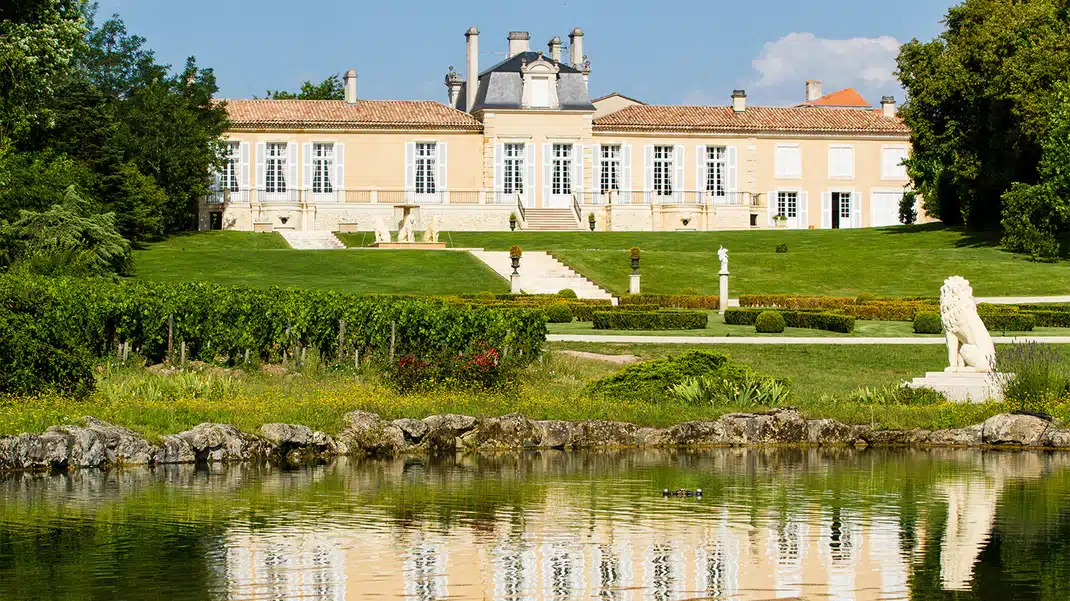
An article earlier in the year by Michael Fridjhon on the collapse of Bordeaux speculation left me thinking long after I had finished reading it. Not because of the financial implications of the Bordeaux market itself, but because it raised a much larger question in my mind: what role do the world’s great wine regions actually play in the survival of the global wine industry?
The article centred around the decline of Bordeaux as an investable commodity. For decades, the Bordeaux machine functioned almost as its own financial ecosystem. Futures campaigns, collectors, investment funds, storage facilities and speculative purchasing all fuelled an enormous rise in prices and prestige. However, as consumption patterns shifted and younger generations became less interested in collecting wine as an asset, cracks in the system began to appear. Prices softened, demand slowed, and suddenly the conversation around Bordeaux became one of decline rather than dominance.
Luxury industries throughout history have almost always relied on aspirational flagships or cultural anchors to legitimise the broader category around them. Formula 1 does this for the automotive industry. Michelin-starred restaurants elevate food culture as a whole. These pinnacle ecosystems create aspiration, storytelling, pricing architecture and cultural relevance far beyond the small percentage of consumers who ever directly engage with them.
Wine is no different.
Whether we admit it or not, regions such as Bordeaux, Burgundy and Champagne have become more than simply places that produce wine. They have become symbols. Cultural reference points. Benchmarks of prestige. Even for consumers who may never purchase a First Growth Bordeaux or Grand Cru Burgundy, the existence of these wines elevates the perception of wine itself as something worthy of aspiration, collecting, discussion and cultural significance.
This raises a difficult but important question for the rest of us producing wine around the world. What happens if these anchors weaken?
As a South African producer and supplier to the wine industry, I don’t believe our industry relies on Bordeaux economically in any direct sense. South African wine is not financially dependent on Bordeaux sales, nor are we simply a secondary appendage to the French fine wine market. However, I do wonder whether we are all connected culturally in ways we perhaps underestimate.
When I first started studying wine at Stellenbosch University, I had not yet travelled internationally. Like many young South Africans at the time, my exposure to the world came largely through books, stories and the occasional imported product. Wine lectures became one of my first true windows into the wider world.
I can still remember tasting international wines for the first time and how distinct they felt. German Riesling was unmistakable. Barossa Shiraz was powerful, ripe and commanding. Sancerre tasted nervous and electric. Champagne carried an unmistakable texture and energy that immediately separated it from everything else. Through these wines, I was not simply tasting fermented grape juice. I was tasting identity, geography and culture.
Those wines made the world feel larger.
And perhaps that is part of what made wine so compelling globally for so many decades. Wine was not merely a beverage. It was transportive. It represented aspiration, travel, sophistication and place. A bottle could connect an ordinary consumer sitting in South Africa to Burgundy, Piedmont or Rioja without ever boarding a plane.
This is where I believe fine wine regions play a role that extends beyond economics.
They create aspiration for the category itself.
Without these reference points, does wine slowly risk becoming viewed less as a cultural product and more as another agricultural commodity competing for shelf space alongside countless other beverages?
Of course, Bordeaux itself is not without blame for some of its current struggles. The region became heavily financialised over the past three decades, and in many instances, wine drifted away from its original purpose of being consumed and enjoyed. Large volumes of top Bordeaux effectively disappeared into bonded storage facilities, investment portfolios and speculative markets. At a certain point, portions of the category became traded more frequently than they were actually drunk.
That model was always vulnerable if consumer behaviour changed.
And consumer behaviour has changed.
Younger consumers today appear less interested in collecting status products for cellaring over multiple decades. They consume differently, travel differently and interact with luxury differently. Experiences have increasingly replaced ownership as the modern aspirational currency.
Consumers may ultimately be drinking less, but they still appear willing to spend more on products they perceive to have authenticity, quality and meaning.
Because if wine’s future lies increasingly in premiumisation, authenticity and cultural identity, then the existence of iconic fine wine regions arguably becomes even more important, not less.
These regions continue to provide the aspirational framework that allows the broader category to maintain cultural prestige.
That does not mean the rest of the world should imitate Bordeaux or Burgundy stylistically. In fact, I would argue the opposite. The future of wine probably depends on greater regional individuality and authenticity rather than homogenisation. South Africa should taste like South Africa. Australia should taste like Australia. Germany should continue to taste unmistakably German.
But aspiration still requires anchors.
And perhaps this is where the conversation around Bordeaux becomes far more important than simply discussing falling futures prices or investment returns.
If the world’s great wine regions lose their cultural influence, does wine gradually lose some of its ability to captivate consumers emotionally?
Because ultimately, most people do not fall in love with wine through spreadsheets, futures campaigns or critic scores. They fall in love with wine through stories, places, travel, memory and emotional connection. Once this is satisfied, then parameters like terroir, pH, elevage etc become relevant, but certainly not from the outset, which I fear has become the adopted rhetoric.
They fall in love with the idea that wine can transport them somewhere, be it to that place or to that year.
This is why I believe the conversation around Bordeaux’s decline matters even to producers sitting thousands of kilometres away in Stellenbosch, Marlborough or Mendoza. Not because our industries are financially dependent on Bordeaux, but because we may all be participating in a larger shared ecosystem of cultural aspiration.
- Clayton Reabow owns FermTech Solutions, the South African distributor of 2B FermControl – a range of organic fermentation products for minimal-intervention winemaking. With more than 22 years’ experience in the local wine industry, Reabow combines winemaking expertise with a practical understanding of supply chains and production. His goal is to help producers maintain quality while staying efficient and competitive in a changing market.
-
Share:

Related articles
Wine
FermTech briefing: Smoke taint and the need for proactivity over reactivity
29 January 2026
Now that the literal smoke, dust, and ash have settled across the Boland after nearly three weeks of relentless fires, we find ourselves facing a difficult question: “What now?” While...

1
Reviews
Môreson Knoputibak 2012
30 October 2014
Want to read this? Christian Eedes’ latest wine reviews are initially reserved for subscribers. Get full access now. SUBSCRIBE NOW Already subscribed? Login
0
News
Franschhoek’s nascent Appelation Grand Prestige
1 November 2013
Today the first step towards the establishment of a special designation for Franschhoek’s best wines to be known as Appelation Grand Prestige. The initiative started by Môreson’s Clayton Reabow and...
Comments
0 comment(s)
Please read our Comments Policy here.