
Greg Sherwood MW: Rioja’s identity crisis -can tradition and modern winemaking coexist?
By Greg Sherwood, 18 November 2026
-
Share:


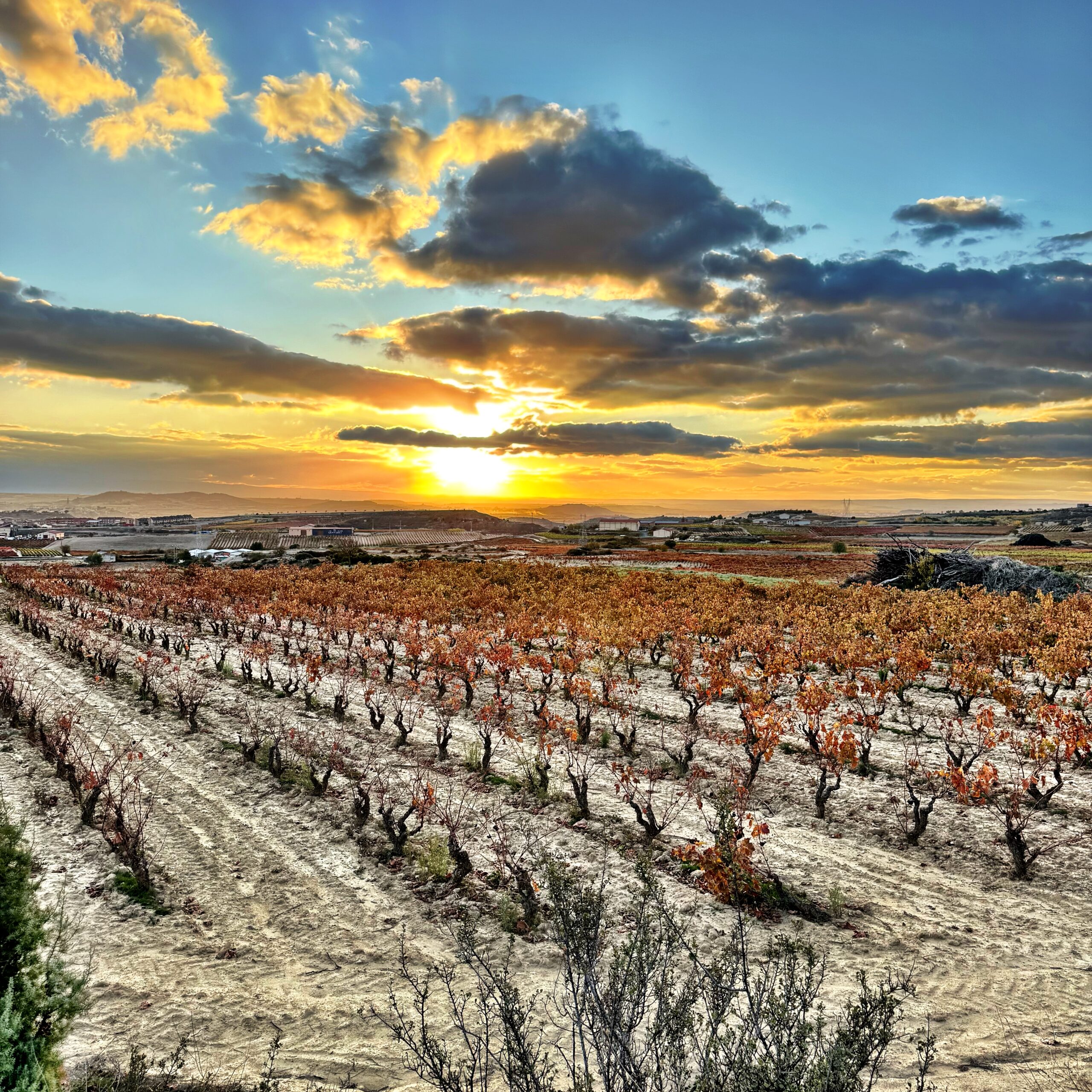
Few wine regions carry as much historical weight as Rioja. Spain’s first Denominación de Origen Calificada (DOCa), awarded in 1991, built its reputation on a system of classification based on time rather than place: Joven, Crianza, Reserva and Gran Reserva, each defined by minimum months in oak and time in bottle.
For generations this told consumers clearly what a wine would taste like, namely mellow, delicately vanilla-scented and usually ready to drink. Today the Consejo Regulador faces a harder task. It must protect that unique identity while also accommodating a new, younger generation that thinks about Rioja in an entirely different way.
As a fine wine buyer for over 25 years, the wines of Rioja naturally featured boldly for me both in a daily retail sense but also as a fine wine investment proposition for my private clients. Incredibly, all these years later, Rioja still stands as one of the best value and most collectable fine wine categories available to collectors with most producers resisting the new release pricing excesses of Bordeaux and Burgundy.
Having visited the region many times previously, more specifically to meet particular producers I was collaborating with, a unique opportunity recently arose for me to participate in the highly lauded programme of the Rioja Academy in Logroño. Run by the Consejo, this was an unmissable opportunity to experience the entirety of the region in a well-fashioned, deep-dive academic experience alongside 25 other candidates from 18 countries.
Two visions of Rioja
The traditional producers, many of them large, historic houses in Haro and Logroño, built their success on blending. Grapes from Rioja Alta, Alavesa and Oriental (formerly Baja) were combined to produce consistent wines, and long barrel ageing, often in American oak, was the signature. Houses such as López de Heredia, La Rioja Alta, C.V.N.E. and Muga have shown that this approach can yield some of the world’s most compelling wines. For these producers, the existing categories are a valuable brand language that took a century or more to build, and they are generally wary of anything that dilutes it.
The new wave sees things quite differently. Winemakers such as Telmo Rodríguez, Artadi and a growing circle of small growers argue that Rioja’s real treasure is its mosaic of old vineyards, diverse soils and varying altitudes. They tend to favour lower yields, native yeasts, concrete, larger old oak barrels and shorter ageing, often using grapes from a single village or single parcel, following much the same path as South Africa’s own ‘young guns’ almost two decades ago.
Their reds are often fresher and more site-expressive, and their whites, made from Viura, Malvasía, Garnacha Blanca, Tempranillo Blanca and other rediscovered local varieties, have reshaped what Rioja Blanco can be, making it one of the fastest growing sub-categories in the region. Many of these wines, unsurprisingly, don’t fit the old time-based classification categories. A vibrant, lightly oaked Garnacha from a high-altitude village in Rioja Oriental might be labelled simply as Rioja without an ageing designation, even though its quality exceeds that of many Reservas.
The structural problems and the 2017 reforms
The Consejo’s difficulty is partly structural. It is a body of grape growers and wineries, where large cellars with significant volume and political weight have naturally dominated. Small producers often feel underrepresented, and the interests of growers (who want fair prices for grapes) and bodegas (who want flexibility in sourcing and style) do not always align. Change requires consensus among groups with real economic differences.
The tension has had visible consequences. Over the past decade, several prominent producers have left the DOCa or distanced themselves from it. Artadi withdrew in 2015, frustrated that the system did not recognize a single-vineyard origin, and Telmo Rodríguez’s Remelluri followed later. Such departures are costly to the denomination’s image, since they signal that the people most interested in terroir feel the Consejo cannot accommodate them.
The reforms approved in 2017 were an attempt to answer these critics without alienating the traditionalists. The Consejo added a geographic hierarchy to the existing age-based one. Viñedo Singular (single vineyard) was the most demanding of the new categories, with vineyards required to be at least 35 years old, subject to reduced yields, hand-harvested, delimited and registered, and the resulting wines had to pass a tasting panel. These rules were designed to ensure the label actually meant something, and they appealed to those who believed Rioja’s greatest sites deserved recognition. But the thresholds were stringent enough that some small growers felt, and still feel, the category is out of reach, while some larger houses worry about the implied hierarchy among their own existing vineyards.
Vino de Municipio (village wines) allowed wines to carry the name of a specific village, with grapes sourced from that municipality. This category speaks to a Burgundian sense of identity, in which origin rather than ageing defines the quality. It is especially useful for growers in celebrated villages such as Ábalos, San Vicente de la Sonsierra and Labastida, and it gives producers a way to highlight differences between Rioja Alta, Alavesa and Oriental without leaving the denomination itself. Its challenge is political however, as not every village has equal prestige, and defining boundaries and rules inevitably invites disagreement.
Espumoso de Calidad de Rioja (sparkling wine) was the third addition. Made by the traditional method with extended time on lees, it was approved to give the region a place in a market it had largely ceded to Cava. Sparkling Rioja is a bet on diversification, but it raises its own questions. Some traditionalists wonder whether the region should chase a category dominated by others, and Cava producers themselves had to be placated about the overlap in the Rioja area. In reality, the Gran Ańada 2020 from Conde Valdemar Finca Alto Cantabria Vińedo Singular Brut Nature was one of the most exciting wines we tasted all week!
Why compromise is often so difficult
The 2017 changes layered new categories on top of old ones rather than replacing them, which preserved the peace but also created more complexity. A single bottle can now carry a zone, a village, a vineyard, a style of ageing and a producer’s own brand identity. For wine professionals, this is an enriched vocabulary, but for ordinary consumers it undoubtedly risks confusion. A younger consumer buying a Viñedo Singular may not know how it relates to a Gran Reserva, and the Consejo has struggled to communicate that these are different axes of quality, not a single linear ladder.
There is also the question of what each camp believes the reforms represent. Traditionalists could read them as a diplomatic concession that leaves the core system intact, while the new generation could see them as a first step that stops short of a full Burgundy-style reform, one that might eventually let place outrank time and ageing entirely. Obviously, neither reading is entirely wrong, which is why the compromise leaves both sides partly satisfied but also partly wary. Meanwhile, commercial pressures, from fluctuating demand to the economics of grape prices, add urgency to every debate about Rioja’s future identity.
Conclusions
The Rioja Consejo is trying its best to manage a transition that most great wine regions eventually face, namely, how to evolve and modernise without discarding the reputation that made the region famous in the first place. The 2017 reforms for village wines, single vineyards and sparkling wines were undoubtedly a significant achievement, expanding what Rioja can say about itself while keeping the traditional categories intact.
Yet they are also an unfinished solution. Success will depend on whether the Consejo can keep both groups inside the tent, giving traditionalists confidence that their heritage remains valued and younger producers confidence that origin, terroir and individuality will keep gaining further recognition. If it can, Rioja’s diversity may become its greatest strength rather than a potential source of division. What is certainly not in doubt is the sheer wonder and value-for-money quality of all the incredible wines from this much-loved Spanish region.
- Greg Sherwood was born in Pretoria, South Africa, and as the son of a career diplomat, spent his first 21 years traveling the globe with his parents. With a Business Management and Marketing degree from Webster University, St. Louis, Missouri, USA, Sherwood began his working career as a commodity trader. In 2000, he decided to make more of a long-held interest in wine taking a position at Handford Wines in South Kensington, London, working his way up to the position of Senior Wine Buyer over 22 years. Sherwood currently consults to a number of top fine wine merchants in London while always keeping one eye firmly on the South African wine industry. He qualified as the 303rd Master of Wine in 2007.
-
Share:

Related articles
Opinion & Analysis
Greg Sherwood MW: Value or prestige wines – where should South Africa’s current focus be?
4 May 2022
The end of April signaled the completion of yet another Bordeaux En-primeur tasting campaign for a greatly reduced number of hardy wine merchants. Drawing to a close just ahead of...
Opinion & Analysis
Greg Sherwood MW: SA fine wine now highly suitable as an investment
13 October 2021
It’s been a very interesting couple of weeks in London for buyers in the wine trade. Just when you think Covid-19 has destroyed the very essence of your day-to-day existence,...

13
Reviews
Lanzerac Pinotage 1963
18 March 2013
Want to read this? Christian Eedes’ latest wine reviews are initially reserved for subscribers. Get full access now. SUBSCRIBE NOW Already subscribed? Login
Comments
0 comment(s)
Please read our Comments Policy here.