
Letter to the editor: Wine in the time of self-optimisation
By Christian Eedes, 20 June 2026
-
Share:





7
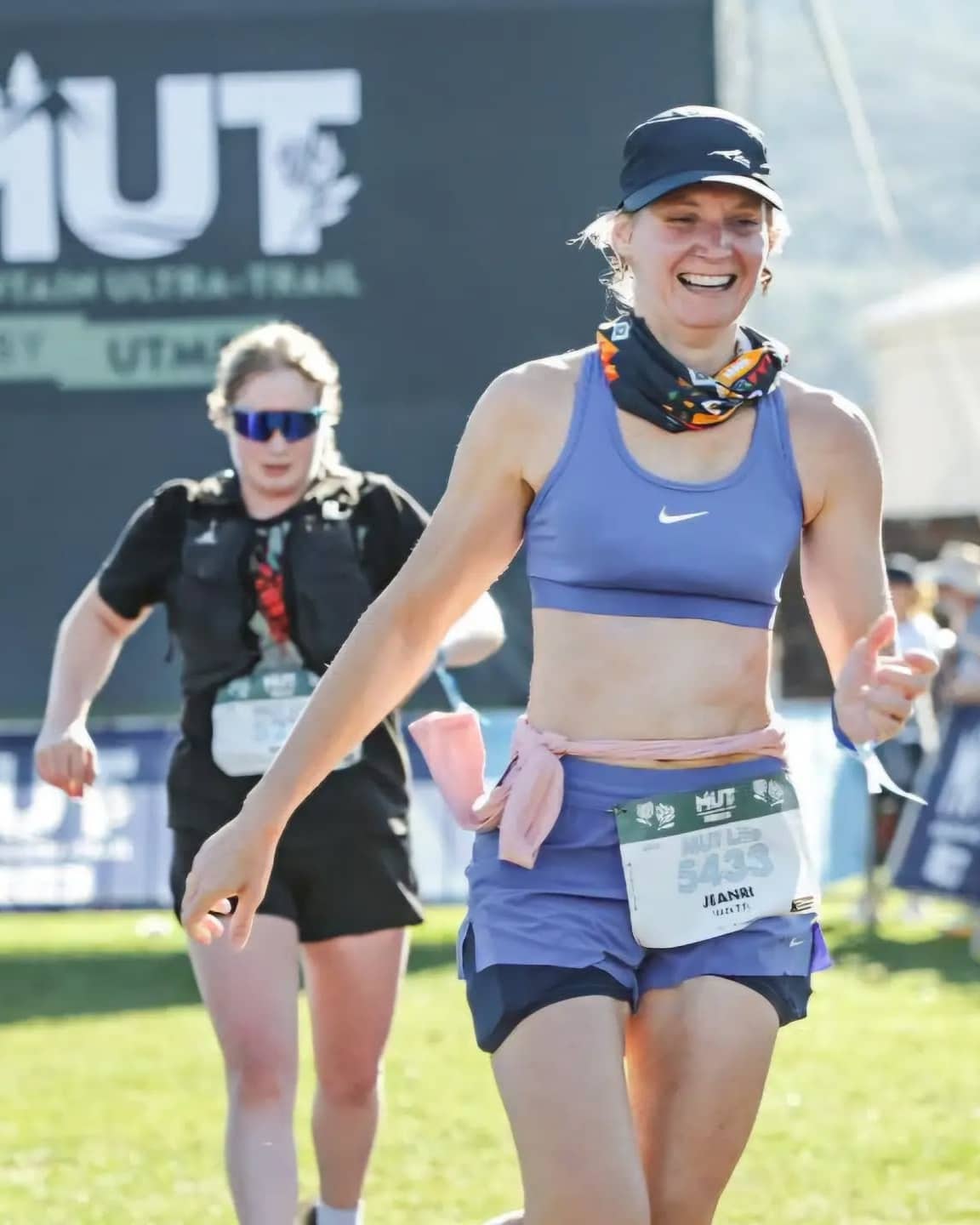
Jeanri-Tine van Zyl.
The following received via email from Jeanri-Tine van Zyl, owner of Feed That Bird PR, a communications consultancy specialising in the wine and hospitality sectors. She is also a wine collector and fitness enthusiast:
Tech millionaire, WHOOP investor and host of The Diary of a CEO, Steven Bartlett, claims that three glasses of wine ruined three days of his life – a ‘derailment’ he could track metric-for-metric on his WHOOP band. We find ourselves in the age of self-optimisation and hyper-quantification, and somewhere in this pursuit of perfection, we are all becoming perfectly lost.
My father was a runner. He collected coupons from Milo tins so he could exchange them for a Milo-branded digital watch that tracked his time.
When he ran, it was just him, long open roads, and a simple watch to clock him – no Strava kudos, no zone readings, no VO₂ max tests or cortisol readings. On Saturdays we would trek to obscure small dorpies and farmer festivals across the Free State in search of his next race. My dad was fit, lean and fast.
The only thing that could rival my father’s passion for running was his passion for wine. And, even as a medical professor, he never thought these two couldn’t coexist.
Once, the morning after a rather extensive vertical wine tasting with his trusted wine club, he had to run a 10km race. He admits they opened a few good ones. Had his Milo watch been tracking anything beyond time, it might have advised him to stay in bed.
Instead, he pulled a blêddie Gerda Steyn and blasted through that race in 36 minutes. His best time ever.
He is turning 71, and he still runs. He still dances with his wine, and with life.
From a young age, my father instilled in me an appreciation for wine as part of our family life. Wine anchored moments. It was there for gatherings and celebrations, for homecomings and Sundays.
As children, we watched my parents’ wine culture coexist comfortably with an active, healthy life. The backdrop was the ’90s, when biohacking meant wearing a mood ring. A colour chart set in fake silver was the only metric we needed to understand our bodies. Self-optimisation wasn’t a concept. There were no influencers selling us the idea – not even Jane Fonda doing glute bridges in her leg warmers.
It certainly wasn’t trending when I became a student. My friends and I paid what we could to explore wine and enter its world. We were on the wine-curiosity train together, with no app telling us to get off at the next station.
Fast forward to my apprenticeship at WINE Magazine, where a bottle of Thelema Cabernet Sauvignon 1997 solidified my life-long love for wine.
What followed is one of the most gratifying growth experiences of my life. It isn’t something data can measure. Through wine I’ve been introduced to people and places that have exponentially contributed to the quality of my life. When I taste wine I engage my senses, I recognise patterns, I activate memories, and all of that fires up my brain’s cognitive system. The pleasure measure? Enough to make a WHOOP band malfunction.
Here’s the kicker: I’m serious about fitness, too, and as committed to my hybrid training as I am to wine. Which is why I feel compelled to say something about the self-optimisation trend and the underlying threat of wearable technology. In this data-hungry age, instead of trusting your body, we are made to believe that it is safer to have sensors collect your data every breathing moment. It is ‘healthier’ to allow data centres dictate your personal life. To outsource your metrics to hungry dragons who can spin this ammunition into claims that a moment of connection – or God forbid, indulgence – can cause you irrevocable misery. It is unfortunate that this is a narrative increasingly held by health lobbyists and reinforced by gym culture. At the hands of wearable technology we risk having a rich life turn into a series of math equations. Sleep scores, step counts, heart rates, calories. Health metrics that turn wellness into a competition. Wine into physiological stress.
Can wine share a leaderboard with wellness? Tragically, the numbers seem to suggest not.
Wine consumption is declining, with global demand now at its lowest level in decades. If wine wore a bio-tracker, its HRV reading would be perpetually below baseline.
Fitness, meanwhile, is surging. HYROX, the world series of fitness racing launched in 2017, has grown into a billion-dollar industry. Run the numbers and wine’s decline looks dismal against the fitness industry’s explosive growth, a rise amplified by social media.
When COVID closed the gyms, Instagram filled the void. People turned their screens on themselves, documenting their at-home fitness journeys. The screens never turned back. Wellness and fitness influencers multiplied, feeding a relentless stream of workouts, recovery rituals, health metrics and #wellness content into algorithms that followed every digital breadcrumb and served up more of the same. In this world, wine lives and dies in 30-second edits that cast it as wellness’ great saboteur.
The verdict on the benefits and dangers of moderate wine consumption is a pendulum that swings whichever way your AI, algorithm, or confirmation bias, dictate. Some studies highlight the moderate intake of wine and its positive impact on long-term neuroprotection, others point out toxins and harsher medical realities.
What is undeniable is that a healthy community is vital for human health. Connection is our basic mechanism for survival. Social ties are our buffer against decline. This is something wine has known for centuries, and the very reason for its existence. Isolation, in contrast, destroys.
Community and pleasure sits at the core of both the wine and the fitness fraternity – yet both of these industries risk losing its heart. One with its overbearing reliance – and perhaps perception – of elitism and barrier language, the other with its obsessive closed digital loops of competitiveness, self-monitoring and self-referencing.
Both can be isolating.
It shouldn’t ever be this complicated. Wine should step down from its tower and meet the consumers where they are. Industry insiders should stop positioning wine knowledge as the gateway to wine enjoyment. Bump the elitism like a heavy plate. Speak honestly about moderation. Market the cultural – but also contemporary – value of wine. Leave the echo-chambers and justify wine’s place in society.
The wellness community should face up to the dark side of the self-optimisation culture and stop treating wine like the match being struck at the foot of every hallowed fitness goal. Tech can measure but it can’t give you balance.
Both industries should cancel screen culture and self-obsession.
Wine and wellness don’t need to be mutually exclusive: imagine wine brands sponsoring sports gear. Branded hydration vests. Congratulatory packs shipped to fitness enthusiasts with a bottle of fine wine and something restorative. Messaging that includes and supports wellness, and people in this sphere who advocate for balance – not a life measured in metrics, and certainly not a life lived on screens.
And here’s a novel thought: perhaps the watch does not always need to have the final word.
My father collected coupons for the watch. He never allowed the watch to collect his memories.
-
Share:

Van Zyl Dorette | 21 June 2026
So well- written!!!
I thorougly enjoyed reading this. And you certainly make a super argument!
Lauren Cohen | 21 June 2026
A life well-lived, in my books – actually, a day – must include both exercise and great wine. Beautifully written, as always, thank you for sharing your thoughts. I have also seen research recently saying if you are fit, it cancels out the negative impacts of moderate consumption. Sorry WHOOP but I choose to believe this rather.
Mike | 22 June 2026
Excellent article – really just common sense, but said so well.
Samarie Smith-Meletiou | 22 June 2026
I devoured every word and my watch didn’t clock a single calorie! Well said and superbly written! Refreshing too.
Chantelle | 23 June 2026
As someone who spent many years working in wine marketing, I found this piece thought-provoking.
What resonated with me is the reminder that not everything that matters in life can be measured. Shared meals, celebrations and connection are important parts of a life well lived.
At the same time, my own experience has been that as I focused on improving my health and fitness, my alcohol consumption naturally decreased. Not because I consciously decided to stop drinking, but because my priorities shifted. Better sleep, improved recovery, more energy and ultimately significant weight loss became motivating factors.
For me, the data isn’t there to tell us how to live. It’s simply a tool that helps us understand the impact of our choices. The real challenge is finding the balance between optimising for health and still making room for enjoyment and connection – this is something that a few elite local health and wellness influences have conveyed to their audiences and are educating about it. Perhaps an opportunity for wine brands to collab as Jeanri’s suggested? I think so!
Jamie Johnson | 23 June 2026
Very well written article. As someone who works in the health & performance space and also enjoys fine wine, it was an interesting read. Having started over a decade ago using CGMs and HRV monitoring before the likes of Whoop, Oura, Apple Watch etc hit the mass markets – it has now become a bit of a trend and I find many clients are overwhelmed with noise and avg quality data. Knowing what is and isn’t relevant to action.
The Harvard Study of Adult Development is also an interesting study to look into. It one of the longest-running longitudinal studies ever conducted. It began in 1938 and has followed participants and, later, many of their descendants for more than 85 years.
What they found, similar to the Blue Zones is that the strongest predictor of a long, healthy, and happy life was not wealth, fame, IQ, social class, or even many traditional health measures. The study repeatedly found that the quality of a person’s close relationships was one of the most important factors associated with health, well-being, and longevity. People who were more meaningfully connected to family, friends, and community tended to be happier, healthier, and live longer.
The biggest challenge for many is being totally honest with themselves and being able to moderate. I encourage clients to increase the quality of what they are consuming while decreasing the quantity. Rather have an outstanding glass of wine to look forward to following days than regret having overdone it the next day.
Annual comprehensive bloodwork and tracking key metrics can help keep you in the right lane and avoid you falling too far outside health boundaries.
Jeanri-Tine | 23 June 2026
Some really insightful additions to this debate; thanks for reading! It is a really valuable conversation to have – like Mike says, it shouldn’t be this hard. And as Chantelle and Lauren add, a balanced life is already ‘programmed’ into your body. I’m going to read up on that research, Jamie, and what I really value about your comment is that it adds a practical suggestion on how you can integrate wine with fitness / wellness – the industry can do with more of that. Appreciate the support from die-hard wine lovers like you too, Samarie. (Special side note of thanks to my mom in the comments too – as supportive in life as you are next to our sport fields.)