
Tim James: Looking at Platter’s 2026 and fearing for its future
By Tim James, 9 February 2026
-
Share:





20
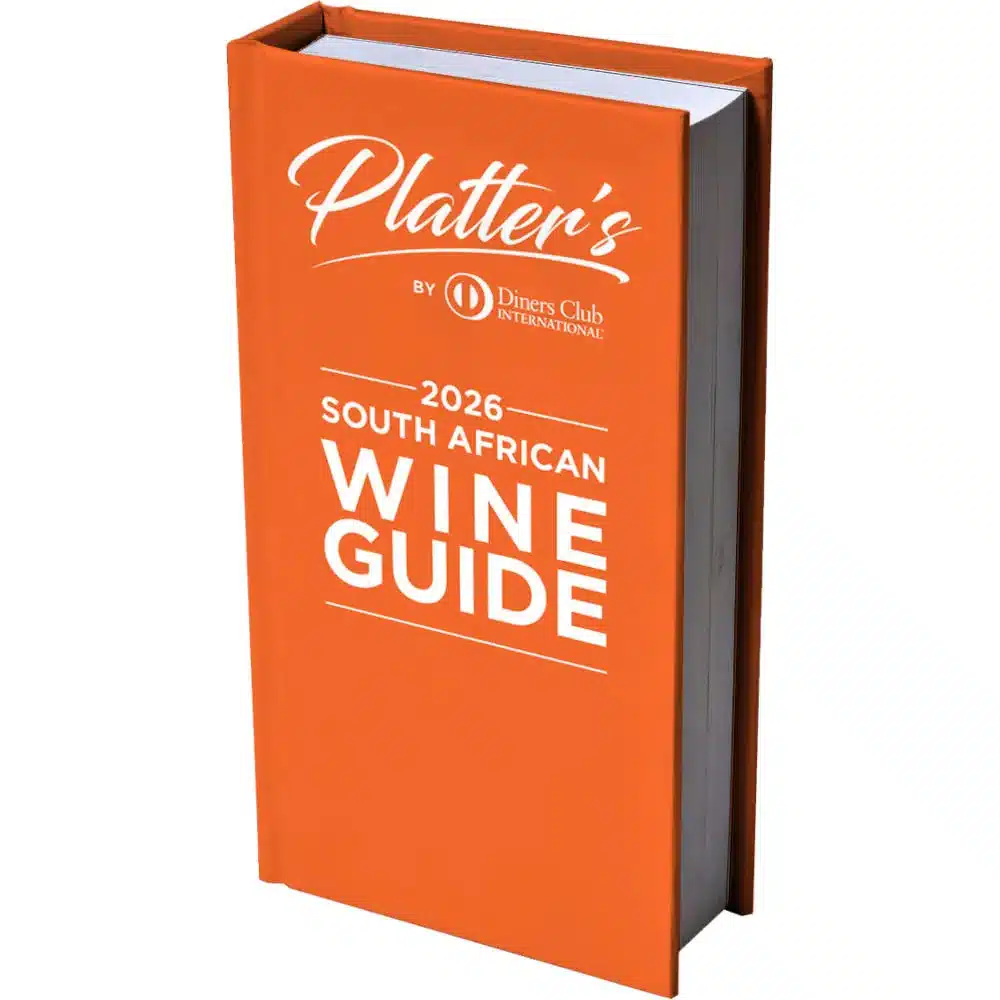 For the first time in some 25 years, I recently bought a copy of what I still think of as just Platter, although (perhaps because?) it has changed its formal title a good few times since the John Platter South African Wines it was when I first started tasting and writing for the guide in 2001. As a contributor, and later Associate Editor, I was given a copy each year until I resigned after the 2024 edition. I didn’t buy a copy last year – I think I was still feeling a bit tender after the resignation (a biggish thing to do after devoting a good deal of effort to the book’s production for a quarter-century) and writing about it here (a bit of journalism I thought useful but was taken badly at HQ).
So I thought I’d buy a copy of the 2026 guide, and see what, if anything has changed – not expecting a lot of that, given the track record: with a little trimming and tacking, Platter has sailed resolutely onward against the winds of change brought about by the internet and competing guides, not much changing in its essential approach, or even its rather lacklustre presentation (bright covers apart), for the last few decades.
I must confess I’d been surprised this year when it was announced that the Top Performing Winery of the Year was Diemersdal. It had seemed more than likely to be either Sadie or Mullineux, who’ve alternated in getting that award since 2019, apart from one surprise win by Kleine Zalze. But this year, Sadie was down to five five-stars, and Mullineux plummeted to a mere three. It had seemed that they were the only two wineries sufficiently large enough (only producers of big ranges stand a chance) and of sufficiently high quality to be likely winners. But that’s reckoning without a few good outsiders, and reckoning without the inconsistency of performance that’s made likely by the final blind tasting of five-star contenders (coming after sighted tastings), at which just about anything can happen, as at all such large line-ups. So a nice triumph for Diemersdal and sauvignon blanc.
The last years have, in fact, seen a few new overall awards in compensation for the dullness of approach which simply rewarded the best ratings performance in the guide. The Editor’s Award looked set to reward other factors and produce the occasional happy surprise, but has mostly been firmly conservative, giving the award to well-established, successful and renowned producers. So no surprises there: Alheit Vineyards, this year, doesn’t quite come across as a clever discovery. The Newcomer Winery of the Year is also fixated on the number of high ratings, so, again, a thunderously good new producer of one wine doesn’t have much chance. The highest-scoring wines in the varietal/stylistic categories have also been noted for some years, to add a little variety and interest to the front end of the book.
So, basically, there’s nothing much to say in a review. But the most important development is one that I highlighted before, and it is fundamental: the continuing erosion of participating wineries. There have long been significant refuseniks – Lismore was one of the first, apparently in resentment of the lowish welcome it was given by the guide on its first outing (leading to one of the more important Platter tweaks, apparently recognising the justice of Lismore’s complaint: no longer would a new winery-entrant be at the mercy of only one taster).
But the number of non-participants has grown, and numerous new wineries have never taken part. It has reached a level where one must ask about the viability of the guide. Take the current award of the Pinot Noir of the Year as one example. No one would quibble with the Crystallum name featuring, as it does this year. But surely any real gleam is tarnished by the absence of Newton Johnson, Storm and Restless River (the ones I noticed) from the guide’s ratings. That sort of absence wouldn’t matter in a competition, where no one expects all the major players to participate, but it does matter in something offering itself as a general guide.
People at the boycotting wineries will, in my experience, sometimes mention shortcomings they find in Platter (methodology, unevenness in the capacity of tasters, inconsistency of results, for example). Their withdrawals, though, tend to basically come down to either a feeling that they don’t get the results they think they deserve, or that entering Platter doesn’t fit in with their marketing approach. It seems doubtful that many of them care to look hard beyond their own immediate interests, to consider the damage they are helping to inflict on an institution that has served the wine industry very well in the past and possibly the present (and could, if properly encouraged, recover to unquestionably do so again). Such wineries are not only helping collapse the institution, but, I’d suggest, also failing the wine-drinking community and tourists.
And, what I personally feel particularly strongly, by abandoning Platter as the most faithful record of South African wine, year by year, they are greatly damaging any future historical perspective on the industry. I know how invaluable past editions of the guide have been to me in understanding many aspects of the past, answering questions that are emphatically not going to be answered in any easily accessible form elsewhere. (A very simple example for admirers of online research: try googling for a pretty definitive answer as to how many producers of, say, cinsaut there were in 2000 versus 2010 and 2020.) I feel, on behalf of future researchers, at least, anger at the non-participating, individualistic wineries for not having the imagination and public-spiritedness to participate in this collective endeavour, but retreating from it instead of helping to fix it.
Meanwhile, rumours swirl about what the owners of the guide, Diners Club, intend to do with it, even at a stage where the next edition is normally being planned and worked on. It seems that long-serving editor Philip van Zyl is to retire and no plans have been announced how to fill that enormous hole, and of possible new tasting and editing procedures. The rumours are not encouraging. Understandably: the actions and non-actions of Diners Club in the dozen years since it purchased Platter have not been such as to give confidence that a happy future is likely for an endeavour that was once uniquely excellent in the world as a reliable guide to a country’s wines.
- Tim James is one of South Africa’s leading wine commentators, contributing to various local and international wine publications. His book Wines of South Africa – Tradition and Revolution appeared in 2013.
Winemag doesn’t charge for most of what it publishes. Subscriptions exist to protect the one thing that can’t be sponsored: independent judgement. Join today.
-
Share:

Related articles
Opinion & Analysis
Tim James: Who really wins at wine auctions?
12 October 2026
The Strauss & Co wine auctions began in 2019, in good time to benefit, as is clear in retrospect, from the pandemic that was soon to hit us. The stated...
6
Opinion & Analysis
Tim James: Why do we drink? And why do I?
5 October 2026
We all drink alcohol, it’s surely fair to say (unless there are some teetotal voyeurs – liseurs? – readingthis; “we” being the readers, extended to “people generally”). But why? That’s...
Opinion & Analysis
Tim James: A visit to Callie Louw’s Sonkop
28 September 2026
Fans of Callie Louw – there are many, and I think “fan” is the right word – will be pleased to know that all is going well at his new...
Keith Prothero | 9 February 2026
100% agree with you Tim. I recall trying to persuade Sam O’Keefe on at least two occasions , quite a few years ago, to participate but she refused to budge . To be honest, I don’t see how Lismore would not win Winery of the Year in their first year as I am confident they would have done long before the fire .
It is such a shame that so many don’t participate. Perhaps the editor should try and get the main ones together and find out what it would take to persuade them to reconsider .
Certainly, as you point out, it’s a great shame for the Industry and especially tourists visiting here , many of whom treat this as a bible .
Of course the Guide still provides a lot of useful information but if this trend continues it can no longer claim to be the definitive Guide .
Pete | 10 February 2026
Let’s be honest. The fact that the tastings are not blind, and there is little or no interaction with the winemakers, lessens the authenticity of the guide, particularly where there are allegations of favouritism and prejudice.
Thomas | 10 February 2026
But even with reduced participation there are >8000 wines that are assessed. Is it logistically feasible to conduct all of the tastings blind? I’m not suggesting that that there isn’t need for change, but I don’t know that blind tasting is one that is practically possible given the resources available to Platter’s. I know that internationally there are blind tastings conducted on more ambitious scales, but they tend to be much better resourced. Decanter for example is able to draw on 250+ professional tasters (tasting >18,000 wines). To achieve the same ratio, Platter’s would need to involve >111 tasters. I think there are other more achievable ways in which Platter’s can improve.
Tim James | 10 February 2026
In fact, I’d suggest that it’s the blind tasting element (the final 5-star selection) that is one of the continuing problems. I can’t think of any guide, as opposed to competition, that tastes blind (eg Tim Atkins’s one). It’s unlikely to be useful to raise this thorny old issue again here. And, of course, a lot of those other assessments are also made without the “interaction” Pete talks of. Furthermore, any of the Platter tasters have plenty of interaction with Cape winemakers, living here as they do.
Sebastian Vannevel | 10 February 2026
A few remarks on Platter’s, partly from experiences with producers, partly form own experience. Calling yourself a guide while simultaneously handing out scores and organising 5* tastings undermines the statement of being a “guide”. As mentioned, some wineries don’t participate as they feel they are being ‘misjudged’ and sometimes rightfully so. How do you explain wines scoring top scores in competitions worldwide but then failing to do so in Platter’s, or wines being served in 2 and 3* Michelin restaurants in Europe but receiving 3 and 3,5* in Platter’s. Or a winery being told their wines are too old school by a judge for a higher rating. All these contribute to wineries pulling out of the “guide” as it’s seen as a mockery for these wineries. As for the blind tasting, this is a blessing and a curse at the same time. Wines are inevitably influenced by the wine(s) that come before it so you would have to blind randomise every tasting which becomes impossible to do without proper manpower and scientific approach.
In spite of all of these challenges, I do believe it has a future as a guide and should perhaps move to being that more than the competition it is becoming. Perhaps Platter’s should be the guide that includes all wineries and wines but not necessarily rate them. Have the info out there for the people and protect the ability to go back to specific years in the future and get all the info out of it.
Thomas | 10 February 2026
Isn’t there an inherent tension between calling simultaneously for blind tastings on the one hand, and more interaction with the winemakers on the other hand? The object of blind tasting is to remove context and subjective understanding from the assessment. The object of more interaction with the winemaker is to add more context and subjective understanding from the assessment. They are sort of the opposite of one another.
Remington Norman | 10 February 2026
Tim Atkin is the most credible source of SA wine assessment.
Wessel Strydom | 11 February 2026
Hi Remington, I am but still a novice on all things wine related. I heard from a reputable source that Tim Atkin charge a certain amount for every wine he has to taste and score. My logic would then suggest that should he give a low score to a producer that that producer would think twice the following year to pay Atkin for his assessment. This will result in Atkin earning less…and hence subjectivity could come into play.
James | 11 February 2026
It would be good to understand this, for full transparency. What I will say about Tim, having followed him for the last 7 years, is that he tastes and scores all of the very best of south africa and I think largely calls in correctly. I can only think of Rust and Vrede that chooses not to submit (in terms of heavy weights) and Meerlust did not submit for a time period but have subsequently come back and I think it has resulted in far more interest since. I honestly think you miss out if you are not submitting, such is his influence .
He has made some big calls in the past (Glenelly Lady May 2015 being one such wine that stands out – rated 94, before he retasted a year later (97) and actually apologised for getting it wrong). We all knew the vintage was a good one and Lady May has great pedigree – so I think he calls it as he sees it.
Naturally every competition, critic, writer has some bias – I think it’s impossible not to, but I think on the whole, Tim has a fantastic job and flies the flag for SA wine.
Alan Glass | 12 February 2026
I subscribe to Platters and Tim Atkin and find their commentaries and ratings useful. Tim is also a great supporter of SA wines, and I love the technicality in his comments. I have found a laziness creep in with Platter’s reviews, with a copy and paste process from the previous year seemingly followed in some cases, but this is probably down to the volume of wine having to be tasted every year.
James | 11 February 2026
Not knowing everyone on the panel and their pedigree – is everyone well qualified to be judging blind? One glaring embarrasment a year or two back was Alheit wines not recieving a single 5 star rating. For someone with his history and worldwide validation, that raised plenty of credibility questions.
Tim James | 14 February 2026
I’m afraid not everyone, in my opinion. (I will point out that for quite a few years before I resigned competely, I declined to take part in the final blind tasting because I disliked the process and also because I was aware that I didn’t trust myself sufficiently to always offer confident judgements in such circumstances.) And yes, indeed the Alheit results did raise credibility questions – certainly about that blind tasting, and probably about blind tasting results in general. Have a look at the results from prestigious competitions worldwide if you doubt my latter point.
keith | 14 February 2026
2012 Platter
3 wines (shiraz) all from same tank! – Kaapzicht
Catch of the Day – 3 stars
Ernst Gouws – 3 & half stars
Kaapzicht – 4 stars
massive bias if not blind-tasted
Tim James | 14 February 2026
You must at least get your facts right, Keith. Go back to Platter 2012, as I have just done, and you’ll see that the Kaapzicht Shiraz tasted was 2007; Catch of the Day was 2008; Ernst Gouws was 2009. Same tank, Keith?
keith | 15 February 2026
the bottling was done on same run – merely changed bottles and labels
i was there
Vernon | 13 March 2026
Keith, are you actually suggesting that Kaapzicht were bottling the same wine as coming from 3 different vintages … let alone with different labels?
John Weaver | 14 February 2026
There are so many stunning wines from South Africa that I am totally unable to drink them all, let alone afford to buy them all. So my philosophy is to only get the ones tasted and rated in Platter where I can get reliable ratings in one place. So, cellars that do not submit, I do not buy, and I am not pleasure-poorer for that decision. My take is that those winemakers that do not submit to Platter think their wines are better than they actually are. A good second reason not to buy them
GillesP | 14 February 2026
Irrespective of the star rankings and all the politics being raised above, I think the Platter’s guide is the most unappetising wine guide in the world to read because of its format . It’s dull, it’s the most boring read ever. It should have been buried years ago. Certainly not something which is going to have any appeal to younger generations
Beyers Pape | 12 March 2026
Many winemakers do not want to take part in in the Platter tasting. And that is their choice. There are many reasons for that decision. Not having blind tasting done is one of the biggest reasons. Whether you agree with it or not, this does have an affect on the outcome.
Another point that is also one of intrest is the fact that like any other wine, brandy, whiskey etc, it comes down to personal perseption/taste. One wine that stands out for one taster, does not tick all the boxes for the next.
Bottom line, drink what you enjoy.
Mike Froud | 12 March 2026
For wine producers to not want to have their wines assessed in a guide to their country’s wines is one thing, but for them to not want to be listed at all in the guide is quite another. Some would argue that the publishers should rate the wines anyway, but there should be no hesitation about publishing the names and basic info about each and every wine producer in the country who sells wine to the public – not if it’s supposed to be a national guide.