 A bottle of Grand Constance 1821, thought to be one of one only 12 bottles to still exist globally, reached a record-breaking R420 000 (unaudited and excluding VAT) at the Cape Fine & Rare Wine Auction this past Saturday, the lot acquired by a UK-based client.
The event (previously the Nederburg Auction) was held in association with acclaimed house Christie’s at the Rupert Museum in Stellenbosch, bidders placing their bids in person and online from across the world in the auction’s first ever hybrid format event. At the end of play, total sales stood at R2.22 million (110 lots) for just under 2 140 litres of wine sold compared to R2.62 million for just under 3 000 litres of wine (124 items) in 2019. This year, the auction high rand per 750ml bottle was R778 on average – an 18% increase against 2019’s R660.
The average price per bottle of white wine was R 490 for a 750 ml bottle. The best white wine performers were DeMorgenzon Reserve Chardonnay 2016, David & Nadia Hoë-Steen Mixed Case and DeMorgenzon Divas 2017.
For red wines, the Cabernet Collective 2009 mixed case of 12 fetched at an impressive R21 500. The average price per bottle for red wines was R804.
For fortified wines, highest bid received was for Monis Vintage Tawny Port 1990 at R1000 per bottle. The average for fortified was R662 per bottle.
For sweet wines, hightes bid received was for the Nederburg Edelkeur 1999. The average on sweet wines was R1 812 per bottle (correcting for the price on the Grand Constance 1821, which isn’t factored into the average).
82% of all sales by value went to South African buyers.
The next Cape Fine & Rare Wine Auction is set for 8 October 2022.
 All the nice things about Pinotage. As made by Daniël de Waal, now of Super Single Vineyards, this wine came from 50-something-year-old vineyards on what was then the family farm in Stellenbosch and was matured in new oak for 15 months according to the 2005 edition of the John Platter South African Wine Guide.
A complex nose with notes of red and black cherry, stewed plums, vanilla, chocolate, spice, earth, and boot polish while the palate still shows deep and succulent fruit with tannins that have resolved wonderfully well so that the wine comes across as smooth and mellow in the best sense – very much alive two decades later (alcohol a mere 13% contrary to what was the norm back then).
CE’s rating: 93/100.
Check out our South African wine ratings database.
Help us out. If you’d like to show a little love for independent media, we’d greatly appreciate it. To make a financial contribution, click here. Invoice available upon request – contact info@winemag.co.za
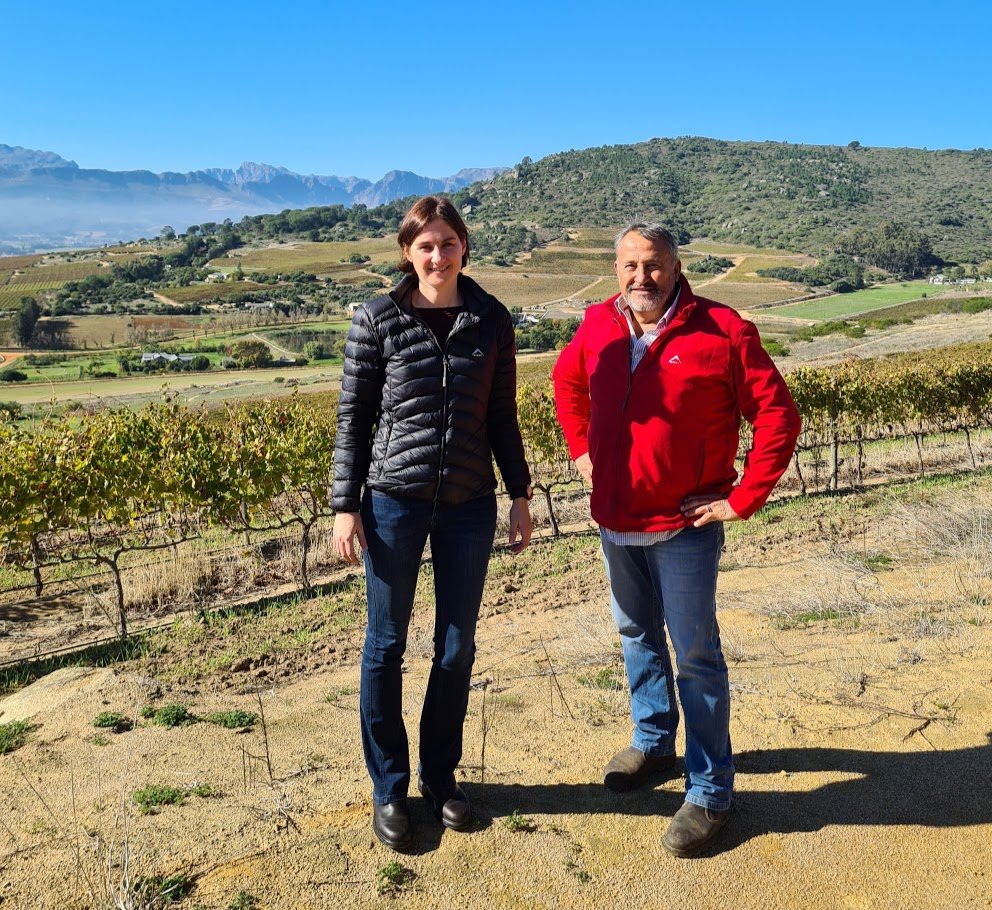
Construction company ASLA acquired Paarl property Rhebokskloof in 2006 with a view to developing a boutique hotel as well as luxury residential units but rezoning approval has been an issue ever since and instead, they found themselves with a wine business that needed to justify itself.
Rolanie Lotz has been the winemaker since January 2007 but saw viticultural consultants come and go over the ensuing years. A more settled chapter seems to lie ahead with Martin Gebers, previously of Warwick, installed as general manager, and André Rousseau, who was so successful at Constantia Uitsig, the new viticulturist.
There is currently 36ha under the vineyard of which the major plantings are Shiraz, Pinotage, Chenin Blanc, and Chardonnay. The top-end range is called Black Marble Hill, tasting notes and ratings for the current releases as follows:
Rhebokskloof Black Marble Hill Chardonnay 2019
Price: R250
Spontaneously fermented and matured in barrel, 50% new. A floral top note before citrus and peach plus hints of vanilla and spice on the nose. The palate is medium-bodied with fresh acidity and a gently savoury finish. Well balanced and nicely understated.
CE’s rating: 90/100.
Rhebokskloof Black Marble Hill Syrah 2018
Price: R350
Matured for 24 months in French oak, 80% new. Blackberries, earth, pepper, and spice. The palate is full and flavourful – plenty of fruit depth, bright acidity, and firm tannins. Will find favour with those who like a powerful style.
CE’s rating: 91/100.
Rhebokskloof Blanc de Blancs 2016 which placed Top 10 with a rating of 91 in the Prescient Cap Classique Report earlier this year has been repositioned under the Black Marble Hill label and now sells for R350 a bottle.
Check out our South African wine ratings database.
Help us out. If you’d like to show a little love for independent media, we’d greatly appreciate it. To make a financial contribution, click here. Invoice available upon request – contact info@winemag.co.za

The Cape Fine & Rare Wine Auction (CFRWA) takes place this coming Saturday and there’s a bottle of Grand Constance 1821 up for grabs.
‘A treasure of this calibre presents itself perhaps once in a lifetime, and anyone lucky enough to secure this wine at auction will be rewarded with an unbelievably valuable piece of wine history,’ says Nederburg MD and CFRWA director Niël Groenewald.
‘The chance to acquire and drink a bottle of wine 200 years after its birth is sensational,’ says Charlie Foley, the Christie’s auctioneer who will be wielding the gavel on Saturday, describing the Grand Constance 1821 as ‘a true unicorn wine’.
It is hoped that this bottle – one of perhaps only a dozen still in existence worldwide – will reach a price of at least R80,000 (and you, too, can place a bid if you register here).
The bottle’s more recent history (disclaimer: I researched this on behalf of the CFRWA) is that it was part of an auction lot sold in London in the early 1980s. The head of the wine department at Sotheby’s, Patrick Grubb MW, was asked to place a bid on behalf of his South African friends at Stellenbosch Farmers Winery (Distell today), and three bottles of Grand Constance 1821 (including this one) have been stored in the Tabernacle at Distell’s Adam Tas production facility ever since.
The hand-blown black glass bottles had their only outing in 2019 when they were expertly recorked by sommelier Jean-Vincent Ridon, overseen by Amorim Cork CEO Joaquim Sá and wine authority Michael Fridjhon, who were able to confirm that the wines still appeared to be in pristine condition. The recorking should preserve them for years to come, with alphanumeric identification on their new closures and seals to ensure their traceability going forward.
Where, exactly, these 1821s spent more than a century and a half before coming up for auction in London remains a bit of a mystery. It seems noteworthy that all three of them, as well as the bottle acquired by Groot Constantia via Catawiki in 2016, bear a label stating ‘décanté en 1883’. The use of French suggests that their decanting (from different bottles? from cask?) might have taken place in France – and certainly the Catawiki bottle was said to be ‘from a French private collection’.
That there have been notable French collectors of Constantia over the centuries shouldn’t come as a surprise. The cellar book at Versailles records that in November 1782, Louis XVI and Marie Antoinette had more Constantia in their cellar than Burgundy: 1,794 bottles of ‘Vin du cap de Constance (rouge)’ and 840 bottles of ‘Vin du cap de Constance (blanc)’, to be precise.
That puts the ill-fated royals in the same league as Napoleon, who famously drank up to a bottle of Constantia daily while in exile on St Helena, reportedly even requesting a glass on his deathbed. And although his death on 5 May 1821 meant there was suddenly quite a bit more Constantia available, it would easily have found a market – in France, as elsewhere. In his Physiologie du Goût, published in 1825, the famous gastronome Jean-Anthelme Brillat-Savarin included Constantia among the wines to be expected at a top-notch French restaurant: ‘The fortunate gastronomer has thirty kinds of wine to select from, passing over the whole scale from Burgundy to Tokay and Constance,’ he wrote.
Genuine ‘Constance’ only ever came from two producers, namely Groot Constantia and Hoop op Constantia (in fact, the latter was the larger producer of the two in 1821, according to merchant and philanthropist William Wilberforce Bird in his State of the Cape of Good Hope in 1822). At Groot Constantia, Jacob Pieter Cloete had taken the reins following the death of his father, Hendrik Junior, in 1818 (in 1823 his mother would sub-divide the property, with the 134-hectare portion we know as Klein Constantia going to his younger brother, Johan Gerhard).
It’s impossible to imagine what young JP Cloete was thinking while bringing in the 1821 harvest at Groot Constantia, but thanks to Professor DJ van Zyl’s doctoral thesis, entitled Die Geskiedenis van Wynbou en Wynhandel in die Kaapkolonie, 1795-1860, we at least know the winemaking techniques he shared 20 years later with a German botanist named Ferdinand Krauss, who visited Groot Constantia in February 1841.
To paraphrase Van Zyl’s summary and translation of Krauss’s report Über die Constantia-Weinberge:
Cloete’s sweet wines had to be prepared with utmost care and perfect timing, as fermentation took place very quickly due to the hot climate and high sugar content. After the grapes had been pressed, the juice and skins were thrown together in a large barrel and stirred thoroughly every day until fermentation began (within two to ten days, depending on weather conditions). After a day or two of fermentation, the must was separated from the skins, drained into a barrel that had been dried out and sulphured beforehand. When the ‘stormagtige’ fermentation had subsided, after eight or ten days, the wine was poured into fresh, clean, sulphured barrels.
To prevent further fermentation taking place in these barrels, Cloete first poured in only six to eight gallons of wine, then threw in a piece of burning sulphur (about a foot long and a hand-width wide). The barrels were then plugged and rolled and shaken until all sulphuric acid odours had disappeared. After that, they were topped up and checked daily to make sure fermentation didn’t resume (in which case the wine was poured into fresh barrels). To fine the wine, it was racked into clean, dry, sulphured barrels six weeks later. This was repeated every three months during the first year in which the wine was aged.
‘According to Cloete, his sweet wine treated in this way could already be sold after the second year, but the wine was best when it was from three to six years old,’ records Van Zyl. ‘According to him, it was not advisable to let Constantia wine get older than six years old because it then became thick and sticky.’
From ‘thick and sticky’ at six to ‘one of the most precious, scarce and coveted wines in the world’ at 200, the Grand Constance 1821 has been on quite a journey so far. It’s next destination? We’ll find out on Saturday.
Help us out. If you’d like to show a little love for independent media, we’d greatly appreciate it. To make a financial contribution, click here. Invoice available upon request – contact info@winemag.co.za
 The name’s a mouthful and so is the wine. The Dry Land Collection Courageous Old Vine Barrel Fermented Chenin Blanc from Paarl cellar Perdeberg has always been made in a rich and ripe style and the 2019 continues in that vein.
Matured for 10 months in French oak of which 10% was new, the nose shows yellow peach, pineapple, lots of yeasty complexity, and some spice while the palate is thick textured with layers of flavour and a gently savoury finish – 5g/l of residual sugar plays off nicely against a total acidity of 6.1g/l while alcohol is 13.63%. Price: R130 a bottle.
CE’s rating: 91/100.
Check out our South African wine ratings database.
Help us out. If you’d like to show a little love for independent media, we’d greatly appreciate it. To make a financial contribution, click here. Invoice available upon request – contact info@winemag.co.za

Banele Vakele of Tembela Wines.
Banele Vakele was born in the Eastern Cape and grew up in Khayelitsha. Fascinated by the ability of a simple berry to produce something as complex as wine, he gained a B. Agric degree from Elsenburg in 2015 before participating in the Cape Winemakers Guild Protégé Programme. In late-2019, he took over as assistant winemaker at Savage Wines and has now launched his own label called Tembela Wines named after his late mother. Tasting note and ratings as follows:
Tembela Verdelho 2020
Price: R230
From Stellenbosch grapes. Matured for 11 months in an old 500-litre barrel. The nose shows apple, naartjie and spice with a hint of leesy reduction in the background while the palate has good depth of flavour with driving acidity and nicely grippy quality to the finish. Long and savoury. Total production: 600 bottles.
CE’s rating: 92/100.

Tembela Syrah 2020
Price: R250
From Stellenbosch grapes. 30% whole-bunch fermentation and maturation as above. The nose is fiercely peppery but there also notes of red and blackberries as well as fresh herbs while the palate shows striking concentration, punchy acidity and very grippy tannins. Dramatic stuff!
CE’s rating: 90/100.
Check out our South African wine ratings database.
Help us out. If you’d like to show a little love for independent media, we’d greatly appreciate it. To make a financial contribution, click here. Invoice available upon request – contact info@winemag.co.za

The government’s deep distrust of the wine industry, often vehemently expressed by ministers during the various lockdowns, should serve as a clarion call to producers to ensure our house can withstand the kind of scrutiny reserved for the disliked and unloved. Despite the extraordinary efforts of the many wine industry players to mitigate the impact of the lockdown on unemployed workers and their families, it has become clear that the government does not see the wine farmers of the Western Cape as contributing to the economy, or to the livelihoods of several hundred thousand South Africans.
This should come as no surprise to any of us. As far as I can tell no one in government has even the faintest idea of what it is like to have to work for a living. This means that they can have no possible idea of the lived experience of those lucky enough to have a real job. It is precisely because of this that in its policy application the ANC disregards the contribution the wine industry makes to the economy, seeing it as an obstacle to its plans in the Western Cape, rather than as a contributor to the general good of the country.
In turn, this means that wine producers may have to re-assess what is important, moulding economic and social objectives to fit better with government priorities. This is not quite as cynical as it sounds. If you want people to listen to what you are saying it’s best to speak in a language they understand. This set me thinking about what the industry has been doing in matters of transformation. We keep hearing about the lamentable lack of progress in areas of ownership and management, in viticulture and in wine production. It seemed that it might be time to call up a scorecard if only to decide if it’s worth presenting. The alternative would be to resort to the age-old excuse of school children in the pre-email era: collect embarrassing school reports from the post box before parents return home and simply destroy them.
What has emerged is a pretty messy picture, of failed initiatives, or funds poorly spent, of money misdirected. But there is also another component to this: the real achievements of hard-working people trying to make a difference – and make a living – in an industry that is tougher than most people realise. The real attrition amongst those who are experienced and who have grown up in the industry should serve as a warning sign to newcomers hoping to survive: over 40% of the growers delivering fruit to the industry in 1994 have abandoned grape farming. Between 2016 and 2019 alone over 30 wineries ceased to operate – in other words, in the period ahead of the Covid-induced devastation.
Understanding what could have been better done has already been researched – so that a few years ago a completely new approach was adopted in the industry. Prior to that the portion of the levy funds designated for transformation was allocated to WoSA, WineTech and SAWIS and was reallocated back to empowerment schemes by the entities in question. Without the in-house skills and competences to assess and manage these projects much of this investment yielded only a limited return. Now a 20% portion (up from 10% previously) of the levy fund is allocated directly to empowerment and managed by entities such as the South African Wine Industry Transformation Unit (SAWITU).
Under Wendy Petersen, SAWITU assesses funding applications for black-owned brands and farms and allocates resources to enterprise development, market access, skills development, and mentorship programmes. Those who receive funding have to meet performance criteria, but they are also assisted to ensure that, over time, they grow to become sustainable. The first crop of beneficiaries is expected to see five of their number graduate from this process soon.
On the farming front, SAWITU has an active Service Level Agreement with Vinpro. Under this agreement Vinpro Enterprise Development (Phil Bowes), Technical Services (Conrad Schutte) and Wine Management Systems (Christo Spies) are actively involved in addressing technical assistance, mentorship and skills development to empower existing black owners and to facilitate entry into grape growing for workers trusts and beneficiaries of land restitution claims. There are now approximately 60 and 80 black growers (a number whose vagueness is a more a matter of how the beneficiaries are counted – as schemes or as individual owners within schemes – than an inability to do the counting).
So far, so not-so-good, using the metrics of numbers of successful entities, rather than visible transformation, and bearing in mind that around R200m of industry money has been spent getting here. However, this doesn’t include the extent to which employment equity quotas have been met – so it might be instructive by way of an example to look to Distell’s annual report. Here another picture emerges, in the sponsorship of the Small Business Development Academy, the Ranyaka Community Transformation, the ForGood volunteer programme and in the percentage of previously disadvantaged individuals in new appointments in the various levels of the business: in 2020, 56% of new senior appointments, 92% of middle management, 94% of junior staff.
At the same time, and to be even-handed, it would be useful to quantify the state’s achievement over the same period – after all, the fiscus has taken around R90bn from the industry in excise and taxes over the same 27 year period. That’s before you add the cost of the sheer incompetence which led to the minister losing/giving away the R400m SAWIT fund secured from the transformation of the KWV in the late 1990s. That money – half designated for advancing the industry’s business competitiveness, half for development and transformation – could have played a crucial role in making the metrics of transformation look better than they do. A large chunk of the money vanished into unsavoury arrangements entered into by the minister’s appointed chairman of the Trust. The balance was simply hijacked into an empowerment shareholding in the KWV which would never have been approved by any sentient human being.
There’s a particular relevance to this as the long-awaited EU compensation for the Port-Sherry Intellectual Property issue – around 15m Euros – is poised finally to reach the country more than 21 years after it was promised. Given recent revelations it would be naïve to exclude the possibility that government will want to place the funds where they are most accessible to light fingers, or in institutions whose administrative track record resembles the navigation skills of the captain of the Titanic.
Everyone – including the European Union’s Agricultural Commissioner – should be watching what happens to this money: correctly used, its interest income alone could help to double the amount the industry currently invests annually in transformation. Like the levy funds, it’s industry money in the first place. It could change lives in many communities, achieving real transformation objectives, training viticulturists who specialise in managing heritage vineyards, funding farming projects, building black-owned brands. It mustn’t be allowed to vanish into the swag bag of our failing state, or to fund fancy cars for well-placed cronies.
Help us out. If you’d like to show a little love for independent media, we’d greatly appreciate it. To make a financial contribution, click here. Invoice available upon request – contact info@winemag.co.za
The team at Hemel en Aarde Valley property Hamilton Russell Vineyards pride themselves on making wines that clearly express vintage conditions, 2020 cooler than fire-affected 2019, and phenolic ripeness at lower alcohol than usual. Tasting notes and ratings for the current releases as follows:
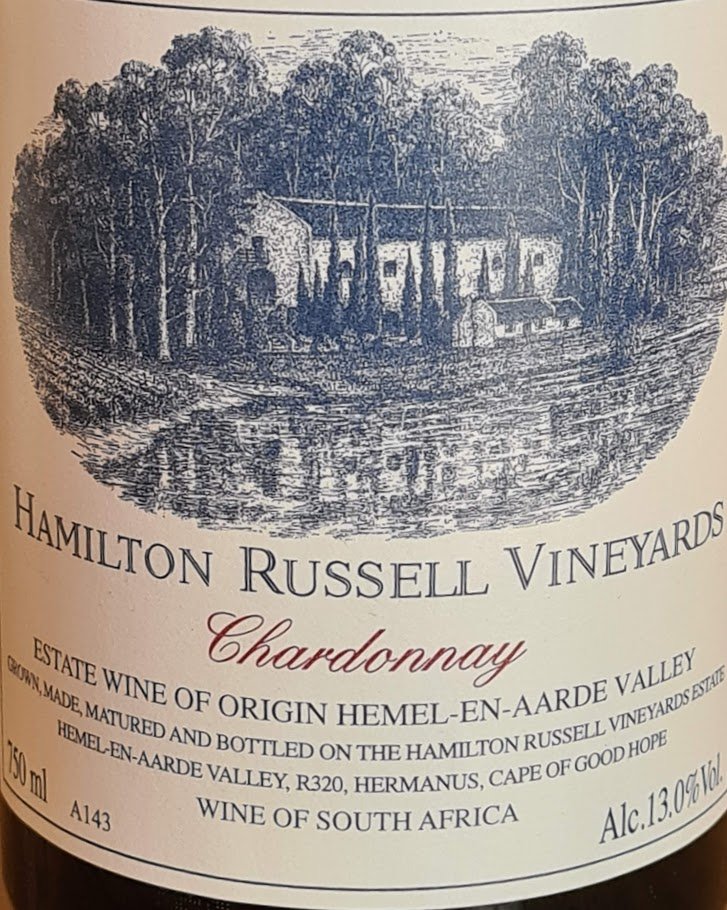 Hamilton Russell Vineyards Chardonnay 2020
Price: R550
Fermented in mostly 228-litre French oak barrels, 24% new but also a small portion in foudre before maturation lasting nine months. Aromatics of citrus, an attractive herbal note plus hints of struck-match reduction and vanilla. Most definitely a lighter vintage but the palate shows great purity of fruit and racy acidity before a dry finish – taut and energetic. Alcohol: 12.9%. Total production: 51 516 bottles.
CE’s rating: 93/100.
Hamilton Russell Vineyards Pinot Noir 2020
Price: R600
Matured for 10 months in 228-litre French oak barrels, 25% new. Cranberry, wild strawberry, musk, fresh herbs and white pepper on the nose while the palate is light and very fresh with crunchy tannins – delicate and discreet. Alcohol: 12.8%. Total production: 31 092 bottles.
CE’s rating: 90/100.
Check out our South African wine ratings database.
Help us out. If you’d like to show a little love for independent media, we’d greatly appreciate it. To make a financial contribution, click here. Invoice available upon request – contact info@winemag.co.za
To demonstrate how carefully crafted the Southern Right Sauvignon Blanc from Walker Bay is, winemaker Emul Ross yesterday showed five components that will go to making up the 2021 blend: 1) vineyards on sandstone soils, juice fermented with an endemic Sauvage yeast; 2) vineyards on decomposed granite/sandstone soils, juice fermented with an organic Alba Fria yeast; 3) vineyards on clay and iron-rich shale soils, juice fermented with native yeasts; 4) fermented in neutral barrel with native yeast; and 5) fermented in neutral barrel with Sauvage yeast.
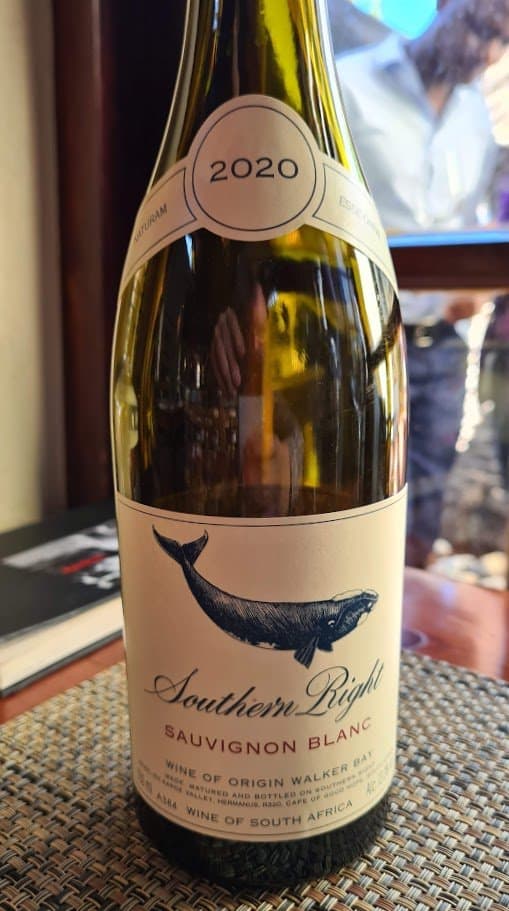 Production of this wine varies between 10 000 and 15 000 cases and it has an approximate retail price of R130 a bottle. The currently available 2020 has subtle aromatics of pear, lime, fynbos, sea breeze and black currant while the palate is lean and fresh with a pithy finish. As ever, it’s a restrained rendition of the variety that will benefit from some bottle maturation – Ross also presented a vertical from 2015 to 2020 and both the 2017 and 2019 have gained by virtue of some ageing.
CE’s rating: 90/100.
Check out our South African wine ratings database.
Help us out. If you’d like to show a little love for independent media, we’d greatly appreciate it. To make a financial contribution, click here. Invoice available upon request – contact info@winemag.co.za

Those brilliant flashes one gets at times when one can’t do much with them – often when dreaming or drunk…. If you’re a writer with copy to submit in a few days and not much idea of what to write about, I’ve found, it’s only occasionally worth going to the trouble of noting down some vague gist of it all. A late Saturday night produced, for me, the following little self-reflective riff (now a little trimmed):
Things are complicated. I’m not always entirely sure what I like, even when it could, perhaps should, be a purely sensual pleasure, like enjoying a glass of wine. But reflections on the process tend to intrude. Things can indeed get complicated when you’ve had, as they say, a glass or two (even simple things like wine can get complicated, let alone the Big Questions). Sometimes they can get easier, of course, especially when you’ve had rather more than a glass or two – and you can blithely click “send” on that email or WhatsApp that in soberer moments you’d realise deserved a bit more hesitation. But even in those moments of greater simplicity you often have a little tinge of realisation that tomorrow morning, when you check what you did the night before, you made your life a whole lot more difficult.
I had the foresight to append “Or whatever!” to that late night paragraph. But when I came to look at it on the morning after the night before, I couldn’t recall what it was that I was finding so complicated. And then I noticed some notes I’d scribbled about the bottle of Reyneke Reserve 2010 red that I’d been drinking. This was the last of the Reyneke Reserve that was half cab, half syrah, before they moved to the brilliant straight syrah version. Because I’ve always thought the 2010 a splendid wine, I bought a case on auction a year or two back, and have been greatly enjoying it emptying it. But recent bottles show the wine at, or perhaps just past, its peak. So, although the texture of the resolved tannins is lovely, the weight of the ripe richness (14.5% declared alcohol) outweighs any freshness. While I have a great fondness for even slightly over-the-hill old-fashioned Bordeaux, say, which can be a bit lean and dry in its elegance, richer reds like the Reyneke can get a little sweetly heavy. Good and interesting flavours though.
My scrawled note got a bit portentous: “There’s a fascination, amidst the doubts, that is more important than simple gratification” (that reflects what I felt at the time, perhaps too anxiously regretful that I wasn’t thoroughly enjoying the bottle). Then, with a bit of underlining, I asked myself specifically: “Can interest outweigh obvious pleasure?”
And now I’ve been thinking about scores and how they can obscure significant observations about the character of a wine. There’s a nice example of the problem in Christian Eedes’s recent note about Radford Dale Nudity Syrah 2019, which he describes as (amongst other things) “lean, sour and grippy” – adding that “that’s either your thing or it isn’t”, while his score of 92 made it clear that it was, certainly, “his thing” (it’s not mine – I’ve never much liked or admired the Nudity). However, a clearly exasperated or bewildered reader compared this note and score with a recent one (just one point more) for a vastly nicer-sounding Mullineux Syrah … and the debate rumbled on a bit.
Of course, the crucial thing here is that the score should not be regarded without the accompanying note, and Christian didn’t intend that it should. That’s what those who score wines always insist upon – including Robert Parker (remember him?), who’s more responsible than anyone for the reign of scores in public/commercial wine appreciation. But, of course, scores frequently start having lives of their own, quite divorced from the words that initially qualified and explained it.
So why not have a more complex score system? I fully realise, by the way, that this is impossible – the punters want simplicity above all: one score, no nuances – but still, let me persist. I actually partly recall a book that appeared 15-20 years back (a valiant book about “real wine”, I blurrily recollect, though the name and the author have slipped away – as has the book, which I once owned), one which had a double scoring system: one score for enjoyment/(quality?), one for “interest”, as I recall.
And I’ve always admired the scoring system that the late Michael Broadbent used in his magisterial “Great Vintage Wine Book” – which I do still possess, as it’s very useful when I want to compare our reactions to 1847 Chateau Margaux or 1808 Malmsey Madeira. Broadbent, writing about his tastings of fine wine, would give a star-rating, out of a modest five, for the wine as drunk now, plus some additional stars in brackets if he reckoned the wine would be worth more at the full maturity it deserved. Ch. Lafite 1982, as tasted in 1989, rated **(***). And I’m delighted to say that Broadbent gave, for example, most of the fine 1988 top Bordeaux reds four stars, tasted in late 1990, four stars– but all of the stars in brackets, suggesting that (of course!) the wines are undrinkable in extreme youth. Wouldn’t even that be a major advance on the part of our scoring wine critics, who’re happy to assert elsewhere theoretically that fine wines need maturing, but still describe and score them as though they’re ready on release (and seldom bother to speak about ageing potential in their notes)?
One could get even more complex in scoring, I suppose, but just these few additions would be nice. And of course, it could be done in the 100 point system. So, someone might rate a young hipster colombard 89/89/92 – 89 for general pleasingness and quality now, the same score as it’s not going to improve much and is fine for drinking now, and 92 for interestingness. And a serious but conventional old-style Stellenbosch cab: 88/94/87.
OK, it’s just a thought.
Help us out. If you’d like to show a little love for independent media, we’d greatly appreciate it. To make a financial contribution, click here. Invoice available upon request – contact info@winemag.co.za
Subscribers receive daily reviews and in-depth reports before release to the public. Cancel any time.
